Japan 14-Day Itinerary 2026: Tokyo to Kyoto, Osaka & Cherry Blossoms
Quick answer: A 14-day Japan first-timer route covers Tokyo (4 nights), Hakone (1), Kyoto (4), Osaka and Hiroshima as day trips, and a final Tokyo night. Buy a 14-day JR Pass before flying to ride Shinkansens between cities. Late March to early April delivers cherry blossoms; mid-November paints maples crimson. A couple budget runs Rs 3-5 lakh including flights, ryokan night, and rail. eVisa for Indians is now fully digital.
Japan stayed off most Indian travel lists for a long time because it felt expensive, complicated and visa-heavy. Two changes are flipping that in 2026 – the yen sitting at historic lows against the rupee, and direct flights from Delhi and Mumbai to Tokyo Narita that have brought airfares to Bangkok-comparable levels in shoulder seasons. A trip that used to need INR 4 lakh per person can now be done at INR 2.2 to 2.6 lakh including flights, which is finally bringing first-time Indian visitors in real numbers.
Fourteen days sounds long but Japan rewards depth. Tokyo alone could swallow a week between Shibuya, Shinjuku, Asakusa, Akihabara, Harajuku and the day trip to Mount Fuji. Kyoto is the cultural heart, all wooden temples and geisha streets and tea ceremonies. Osaka does food and theme parks. Hiroshima carries the heaviest history. Hakone is a hot-spring retreat. Stretching across the country is the famous shinkansen bullet train network that makes city-hopping feel routine.
Getting there
Japan tourist visa applications for Indian passport holders go through VFS Japan Visa Application Centres in Delhi, Mumbai, Chennai, Bengaluru, Kolkata, Hyderabad and Puducherry. The single-entry tourist visa costs INR 720 in 2026 plus the VFS service fee of INR 1,510. You need a detailed day-wise itinerary, hotel bookings, return tickets, bank statements covering six months, ITRs for the past two years and a tour deposit slip if booked through an agent. Processing takes 5 to 7 working days.
Direct flights from Delhi (DEL) to Tokyo Narita (NRT) operate on Air India and ANA, return fares around INR 76,000 to 92,000 in 2026. One-stop options on Thai Airways via Bangkok, Cathay Pacific via Hong Kong and Singapore Airlines via Singapore run INR 58,000 to 72,000. Flight time direct is roughly 7.5 hours.
Day-by-day itinerary
Days 1-4 Tokyo: Take the Narita Express to Shinjuku, JPY 3,250. Stay in Shinjuku or Ueno. Day 2 covers Senso-ji temple at Asakusa, Akihabara electronics district, evening at Shibuya crossing. Day 3 is Meiji Shrine, Harajuku for Takeshita Street and the Yoyogi Park, Omotesando shopping. Day 4 is a day trip to Mount Fuji via Hakone or the Five Lakes – bus tour from Shinjuku for JPY 13,000.
Days 5-6 Hakone: Take the Romance Car from Shinjuku to Hakone Yumoto, 85 minutes, JPY 2,470. Stay in a traditional ryokan with tatami floors, futon beds and onsen baths. Open-air Hakone shrine, the pirate ship across Lake Ashi, sulphur fields at Owakudani. Two nights of slow living between hot spring soaks.
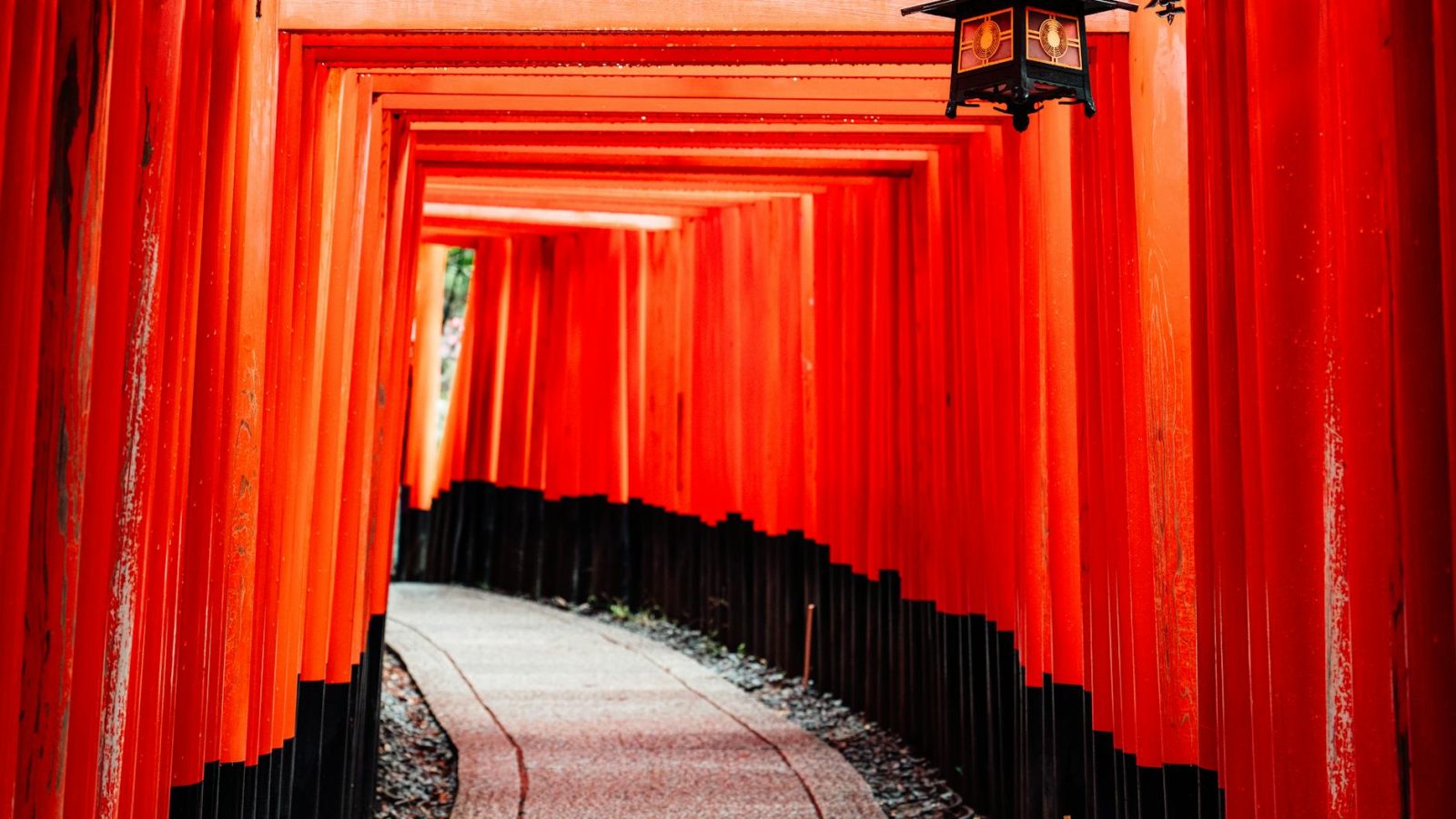
Days 7-9 Kyoto: Bullet train from Odawara to Kyoto, 2 hours, covered by JR Pass. Fushimi Inari shrine at dawn (6 AM if you want photos without crowds), Kinkaku-ji Golden Pavilion, Arashiyama bamboo grove, Gion district at dusk to maybe spot geishas. Day trip option to Nara for the deer park and Todai-ji.
Days 10-11 Osaka: Twenty minutes from Kyoto by bullet train. Universal Studios Osaka has the Super Nintendo World – book tickets two weeks ahead at JPY 8,600 for a one-day pass. Dotonbori at night for the famous Glico man neon sign. Osaka Castle in the morning. Try the takoyaki-okonomiyaki street food belt (octopus and savoury pancakes – veg versions available).
Day 12 Hiroshima: Bullet train from Osaka, 90 minutes. Peace Memorial Park, the A-Bomb Dome, the museum (allow 3 hours – it is deeply moving). Day trip extension to Miyajima island for the floating torii gate at high tide. Stay in Hiroshima.
Days 13-14: Return to Tokyo on bullet train, 4 hours. Final shopping at Don Quijote in Shibuya, last conveyor-belt sushi or veg ramen. Fly out.
Where to stay
In Tokyo, Hotel Gracery Shinjuku (the Godzilla hotel) is JPY 18,500 per night – around INR 10,800 in 2026. Citadines Central Shinjuku at INR 9,400 is good for families. Capsule hotels like Nine Hours and First Cabin run INR 2,800 to 4,200 for budget travellers. In Kyoto, Hotel Granvia Kyoto is INR 14,200 and the traditional ryokan Hiiragiya is INR 32,000 with kaiseki dinner. Osaka has Hotel Granvia at INR 11,800 and APA Hotel Namba at INR 5,800. Hakone ryokans range INR 16,000 to 38,000 per night with meals included.
Common mistakes
- Buying a 14-day JR Pass without checking if it makes sense. The pass costs JPY 80,000 (around INR 47,000) in 2026 after the 2023 price hike. For most 14-day Tokyo-Kyoto-Osaka itineraries the math now favours buying individual tickets.
- Trying to do Tokyo in two days. The city has six distinct neighbourhoods worth a half-day each.
- Not booking restaurants in advance. Popular Kyoto and Osaka spots are reservation-only with no walk-ins, especially for kaiseki and high-end sushi.
- Wearing shoes inside ryokans and some restaurants. Always look for the shoe rack at the entrance.
- Tipping. Tipping is considered rude in Japan. Service charge is built into the bill.
Vegetarian food
Japan is harder for veg eating than Korea but easier than people think with prep. Most miso soup uses dashi (fish stock) so always ask. Safe bets are yasai tempura (vegetable tempura), zaru soba (cold buckwheat noodles with vegetable dipping sauce), inari sushi (rice in tofu pouches), kappa maki (cucumber roll), agedashi tofu, and yaki-onigiri (grilled rice balls).
Dedicated veg and vegan restaurants in Tokyo include T’s TanTan in Tokyo Station (vegan ramen, JPY 980), Ain Soph chain across the city, Saishoku Kenbi in Shibuya. Kyoto has shojin ryori Buddhist cuisine at temple-restaurants like Shigetsu in Arashiyama for JPY 3,500 set meals. Indian restaurants are plentiful – Moti, Nataraj and Samrat have multiple branches in Tokyo. Carry packet meals from MTR and Haldiram for backup days. Pair with South Korea if you want to extend the East Asia trip.
Money, SIM and connectivity
The yen rate in early 2026 is around INR 0.55 per yen, historically favourable for Indian travellers. Japan is still cash-heavy compared to Korea or China – 7-Eleven ATMs are the most reliable for international cards. Carry JPY 30,000 to 50,000 in cash for daily use. IC cards like Suica and Pasmo are essential for trains and buses, available at any station kiosk.
Pocket WiFi rentals from Ninja WiFi or Japan Wireless are JPY 8,400 for two weeks, picked up at the airport. Tourist SIMs from Sakura Mobile cost JPY 5,800 for 14 days with unlimited data. Public WiFi is good at stations and convenience stores.
Packing checklist
- Comfortable walking shoes – expect 18,000-22,000 steps daily
- Slip-on shoes for shrines and ryokans where you remove footwear often
- Layers – April morning can be 8 Celsius, afternoon 22 Celsius
- Power bank, Japan adapter (Type A, two flat pins)
- Hand towel – public restrooms often don’t have hand dryers
- Cash wallet (separate from card wallet)
- Indian veg food pouches for transit days
FAQs
When should I visit for cherry blossoms? Late March to early April for Tokyo and Kyoto. Sakura forecasts get accurate by mid-February. Book hotels by November because rates double in peak week.
Is the JR Pass still worth it? Only if you are travelling on three or more bullet train segments. For Tokyo-Kyoto-Osaka loop, individual tickets often beat the pass cost.
Can I use Indian credit cards? Visa and Mastercard work in cities. American Express has lower acceptance. Many small restaurants and temples are cash-only.
How early should I apply for the visa? Start the process 4-6 weeks before travel. Peak season (March-April) sees longer queues at VFS.
Is English widely spoken? Limited outside hotels and tourist zones. Google Translate camera mode is essential. Restaurants have picture menus, which helps.
What is the safest way to carry cash? Japan has near-zero pickpocket risk. Use 7-Eleven ATMs to withdraw as you go rather than carrying large sums.
Sample budget breakdown (14 days, per person)
- Flights (Delhi-Tokyo one-stop return): INR 64,000
- Visa and VFS fees: INR 2,230
- Hotels (mix of mid-range and one ryokan, 13 nights): INR 1,18,000
- Bullet trains and local transport: INR 32,000
- Food (mix of veg restaurants and convenience stores): INR 38,000
- Sightseeing and theme parks: INR 16,500
- SIM, miscellaneous, shopping: INR 12,000
- Total: INR 2,82,730 per person