South Korea Visa-Free 2026 for Indians: Seoul Itinerary
Quick answer: South Korea remains effectively visa-free for Indians in 2026 under the K-ETA exemption (apply free online before flying). Hit Seoul for palaces and street food, take the KTX to Busan for beaches and seafood, then fly to Jeju for volcanic coastlines. No direct flights from India – connect via Bangkok or Hong Kong, with return airfare around Rs 52,000-68,000. Best seasons: cherry blossom April or autumn foliage October-November.
South Korea has quietly become one of the most talked-about destinations among Indian travellers in the post-pandemic years, and a big reason is the relaxed entry rules that continue into 2026. If you are travelling with a registered Korean group tour operator, you can enter the country for up to 30 days without a regular tourist visa, and the K-ETA requirement has been suspended for Indian passport holders through December 2026 as confirmed by the Korea Tourism Organization office in Mumbai. This single change has pulled Korea into the same shortlist that earlier had Thailand and Vietnam.
The country itself feels like a strange hybrid that Indian travellers tend to love. Seoul is dense, neon-lit and obsessed with skincare and coffee. Busan is a coastal city with hot springs and beach cafes. Jeju is a volcanic island full of waterfalls and tangerine farms. You will hear Hindi songs in some Itaewon restaurants, see Indian tourists posing in hanbok at Gyeongbokgung, and still feel like you have stepped into a country that has its own very firm identity. Ten days is enough to do all three cities without rushing.
Getting there
Direct flights to Seoul Incheon (ICN) operate from Delhi (DEL) on Korean Air and Air India, with one-stop options from Mumbai (BOM), Bengaluru (BLR) and Chennai (MAA) via Bangkok, Hong Kong or Singapore. Return fares for a January-to-March 2026 window are sitting around INR 52,000 to 68,000 on direct sectors and INR 38,000 to 48,000 on one-stop carriers like Thai Airways and Cathay Pacific. Flight time on direct is roughly 7 hours from Delhi.
To use the visa-free 30-day entry, you must travel as part of a Korea-registered group tour with at least three people sharing the booking, made through an authorised travel agency. Solo travellers still need either a regular C-3 tourist visa from the Korean Embassy in Chanakyapuri, Delhi or one of the consulates in Mumbai and Chennai. The visa fee is INR 3,720 for single entry and processing takes 5 to 7 working days.
Day-by-day itinerary
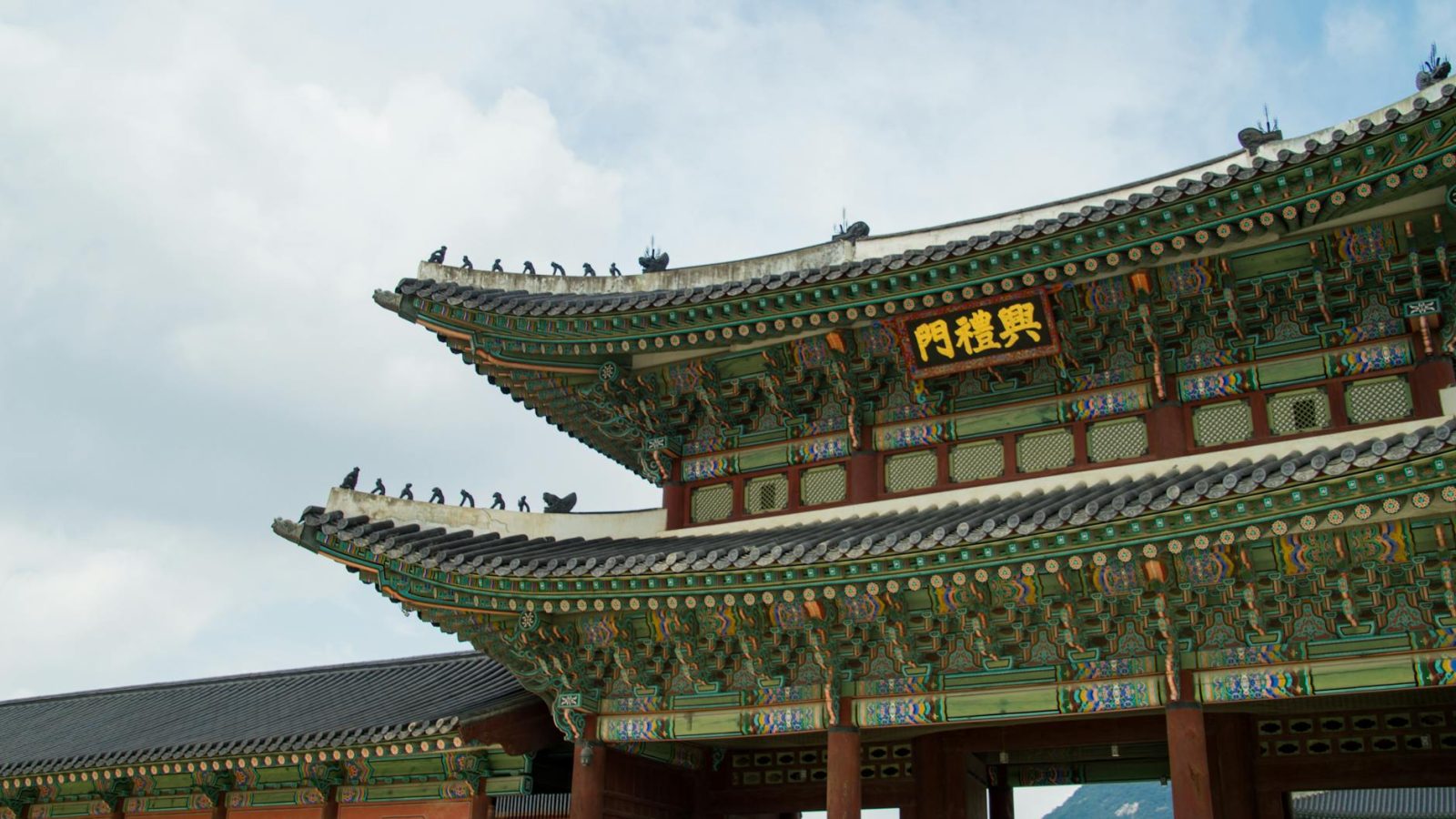
Day 1-4 Seoul: Land at ICN and take the AREX express train into the city, about 43 minutes and KRW 11,000. Base yourself in Myeongdong or Hongdae. Day 2 covers Gyeongbokgung Palace with the noon changing-of-the-guard ceremony, then Bukchon Hanok Village and Insadong for tea. Day 3 is for the N Seoul Tower cable car, Dongdaemun Design Plaza and a K-pop dance class in Hongdae. Day 4 is Lotte World theme park or the DMZ tour to the North Korean border, which most Indian agencies bundle at INR 4,800.
Day 5-6 Busan: Take the KTX bullet train from Seoul Station to Busan, 2 hours 40 minutes, KRW 59,800 in economy. Stay near Haeundae Beach. Visit Gamcheon Culture Village (the painted hillside that everyone Instagrams), Jagalchi fish market, Haedong Yonggungsa temple by the sea and ride the Skyline Luge at Haeundae. A Japan 14-day itinerary pairs well with Korea if you want to extend.
Day 7-9 Jeju: Fly Busan (PUS) to Jeju (CJU), 50 minutes, KRW 45,000 on Jeju Air or Jin Air. Rent a car (Indian licence with International Driving Permit accepted) or hire a Korean driver through Klook at INR 9,800 per day. Hit Seongsan Ilchulbong sunrise peak, Manjanggul lava cave, Cheonjiyeon waterfall and the Jeju Loveland or Hello Kitty Island depending on who you are travelling with.
Day 10: Fly Jeju to Incheon, 1 hour 10 minutes, KRW 38,000. Last-day shopping in Myeongdong for cosmetics and Dongdaemun for street fashion. Fly out.
Where to stay
In Seoul, L7 Myeongdong by Lotte runs at INR 9,400 per night in 2026 and is steps from the shopping district. Nine Tree Premier in Insadong is INR 7,800 and quieter. Hongdae Boutique Hotel is INR 5,200 for budget travellers. In Busan, Park Hyatt Busan is the splurge at INR 18,500 with marina views, while Ibis Ambassador Haeundae is INR 6,400 right by the beach. In Jeju, Shilla Stay Jeju is INR 7,200 and Jeju KAL Hotel is INR 6,800, both in Jeju City near the airport.
Airbnbs are widely available but Korea regulates short-term rentals strictly, so book only listings marked as licensed guesthouses to avoid last-minute cancellations.
Common mistakes Indians make
- Assuming K-ETA is required and paying for it. As of 2026 it is suspended for Indian passport holders, but check the official site within a week of travel because policy can shift.
- Trying to wing the food situation. Korea is not vegetarian-friendly by default and dashi (fish stock) hides in most broths. Plan veg meals in advance.
- Not carrying a T-money transit card. Single-journey subway tickets are slow and expensive in comparison.
- Booking a Jeju resort far from the airport without a car. Public transport on Jeju is patchy and taxis add up fast.
- Wearing slippers or sandals to restaurants where you sit on the floor. Many traditional places require you to remove shoes and clean socks are non-negotiable.
Vegetarian food
Pure vegetarian Korean food is a real challenge. Most stews use anchovy or beef stock even when there is no visible meat. The safest bets are Bibimbap (rice bowl with vegetables and gochujang, easy to order without egg), Japchae (sweet potato noodles, ask for no meat), Kimbap (Korean rice rolls, the vegetable version), Pajeon (scallion pancake) and Korean BBQ where you can grill mushrooms, tofu and corn yourself.
Buddhist temple cuisine restaurants like Sanchon in Insadong and Balwoo Gongyang near Jogyesa Temple are completely vegetarian. Mr Lee Indian Restaurant in Itaewon, Namaste Indian Restaurant near Hongdae and Everest in Dongdaemun all serve roti, dal and proper sabzi at INR 900 to 1,400 per meal. Carry Maggi cups and theplas for the first two days while your stomach settles.
Money, SIM and connectivity
One Indian rupee equals about 16 Korean won in early 2026. ATMs accept international cards but charge KRW 3,500 per withdrawal, so carry some cash exchanged at the airport or in Myeongdong money changers, which give slightly better rates than banks. Most places accept cards, but small street stalls and traditional markets are cash-only.
Pick up a KT or SK Telecom tourist SIM at Incheon airport – 30 days unlimited data is KRW 55,000 (about INR 3,400). Pocket WiFi rentals are KRW 4,400 per day if you are travelling as a family. T-money cards are sold at every convenience store and cover subway, buses, Jeju ferries and even taxis.
Packing checklist
- Power adapter (Korea uses Type C/F, same as Europe)
- Comfortable walking shoes – you will average 15,000 steps daily
- Light thermals if travelling November to March (Seoul drops to minus 5 Celsius)
- Hanbok rental is free at palaces if you wear one – book online at gyeongbokgung.go.kr
- Ready-to-eat Indian meals (MTR, Haldiram packets) for veg backup
- Universal travel adapter, power bank under 100Wh for cabin luggage
- Sunscreen and sheet masks for the dry winter air
FAQs
Is the K-ETA still suspended for Indians in 2026? Yes, the Korean Ministry of Justice has extended the K-ETA waiver for Indian passport holders through December 31, 2026 as part of the tourism boost programme. Check before departure.
Can I travel solo on the visa-free scheme? No. The 30-day visa-free entry applies only to registered Korean group tours of three or more travellers. Solo travellers need a C-3 tourist visa.
Is Seoul safe for Indian women travellers? Yes, Seoul has one of the lowest crime rates in Asia. Late-night solo travel on the subway is generally fine. Standard precautions apply.
When is the best time to visit? Cherry blossom season runs late March to mid-April. Autumn colours peak in late October. Both are stunning but very crowded.
Do I need to know Korean? Basics help. Most signs in Seoul are in English but Busan and Jeju have less English signage. Download Papago app for instant translation.
Can I use Indian credit cards? Visa and Mastercard work almost everywhere. American Express has spotty acceptance. Notify your bank about international use to avoid fraud blocks.
Sample budget breakdown (10 days, per person)
- Flights (Delhi-Seoul one-stop return): INR 42,000
- Hotels (mid-range, 9 nights): INR 68,000
- Internal travel (KTX, Jeju flight, transit): INR 14,500
- Food (mix of veg restaurants and convenience stores): INR 22,000
- Sightseeing and entry tickets: INR 9,500
- SIM and miscellaneous: INR 4,500
- Total: INR 1,60,500 per person