Bali for Indian Travellers 2026: Visa, 7-Day Itinerary & a Real Budget
Quick answer: Bali offers Indians a visa-on-arrival at $35 (IDR 500,000) at Denpasar (DPS) airport. Best time is May-September (dry season, clear skies). No direct flights; connect via Singapore, Kuala Lumpur, or Bangkok. A 7-day itinerary covers Ubud (culture, rice terraces), Seminyak (beaches), and Nusa Penida (island hop). Budget ₹65,000-90,000 per person including flights, mid-range stays, and scooter rentals. Carry IDR cash and download Grab app.
Bali is the rare international destination that an Indian traveller can pull off without rehearsals. The flights are cheap by international standards, the visa is on arrival, the food agrees with you, and most things you want to do — temples at sunrise, rice terraces, an island hop, a beach with bean bags — are clustered close enough that a week is enough.
This is a planning guide for a 7-day Bali trip from India in 2026. Real fees and fares, a visa walkthrough, where to actually stay (and where to skip), an itinerary built for first-timers, and a per-person budget you can sense-check before you hit “Book.”
Why 2026 is a fine year to go
The Indonesia government simplified the e-Visa on Arrival process in 2025, and by 2026 most Indian travellers can do everything from the immigration paperwork to the tourist levy from a phone before they leave home. Flights from Delhi, Mumbai, and Bengaluru have stabilised. The “tourist levy” that came in for Bali in 2024 is small, predictable, and going partially towards better waste management on the island.
The trade-off is that Bali is more popular than it has ever been. Ubud’s main strip has been Instagrammed into a queue and the Canggu beach clubs sometimes outnumber Canggu’s actual surfers. The fix is not to skip Bali — it is to plan around the crowds. This guide will show you where.
The visa — what you pay and how
Indian passport holders are eligible for the Visa on Arrival (VoA) or the e-Visa on Arrival (e-VoA). Both cost the same. The difference is whether you stand in a separate queue at Denpasar Airport or whether everything is sorted before you fly.
The 2026 costs, in writing
- Visa on Arrival fee: IDR 500,000 — roughly ₹2,700–₹2,900 depending on the day’s exchange rate
- Bali Tourist Levy: IDR 150,000 — roughly ₹800 — separate from the visa, paid per person, applies to every international visitor
- Validity: 30 days from entry, extendable once by another 30 days at any Indonesian immigration office
- Passport rule: Minimum 6 months validity from your date of arrival
The e-VoA, step by step
- Visit the official portal evisa.imigrasi.go.id. Bookmark this URL — there are many lookalike scam sites.
- Create an account and select Visa on Arrival.
- Upload a scan of your passport bio page and a passport-style photo (recent, white background).
- Fill in your travel dates, accommodation address, and return flight details.
- Pay the visa fee using a debit or credit card (Visa, Mastercard, JCB).
- Download the PDF e-VoA. Print one copy and save another on your phone.
Separately, pay the Bali Tourist Levy at lovebali.baliprov.go.id before or after arrival. Carry both barcodes — both are checked at immigration.
Flights from India in 2026
There are good direct options now from three Indian metros, plus convenient one-stop fares from many others.
- Delhi (DEL) → Denpasar (DPS): IndiGo direct, around 8 hours, fares ₹22,000–₹35,000 return depending on lead time
- Mumbai (BOM) → Denpasar (DPS): IndiGo direct, around 7 hours 30 minutes, fares ₹24,000–₹38,000 return
- Bengaluru (BLR) → Denpasar (DPS): Direct or one-stop via Kuala Lumpur on AirAsia, fares ₹26,000–₹40,000 return
- Other cities → DPS: Best one-stop options route through Singapore, Bangkok, or Kuala Lumpur on Singapore Airlines, Thai, or AirAsia. Add ₹3,000–₹6,000 over the direct fares.
Cheapest months to fly are February, May, and September. Avoid late June through August (European summer + Australian school break) and December (Christmas peak). Book at least 8–10 weeks ahead and the price gap is often ₹8,000–₹12,000.
Choosing your stay zones
A common mistake first-timers make is booking one hotel in Kuta for the whole trip. Bali is the size of a small Indian state and each zone has its own character. Split your week across two zones for the right experience.
Seminyak / Canggu — the beach strip
This is where the beach clubs, sunset bars, and surf spots are. Younger crowd, lively evenings, decent food scene. Hotels and villas from ₹2,500 mid-range to ₹15,000 premium. Best for the first half of your trip when you are also recovering from the flight.
Ubud — the inland cultural heart
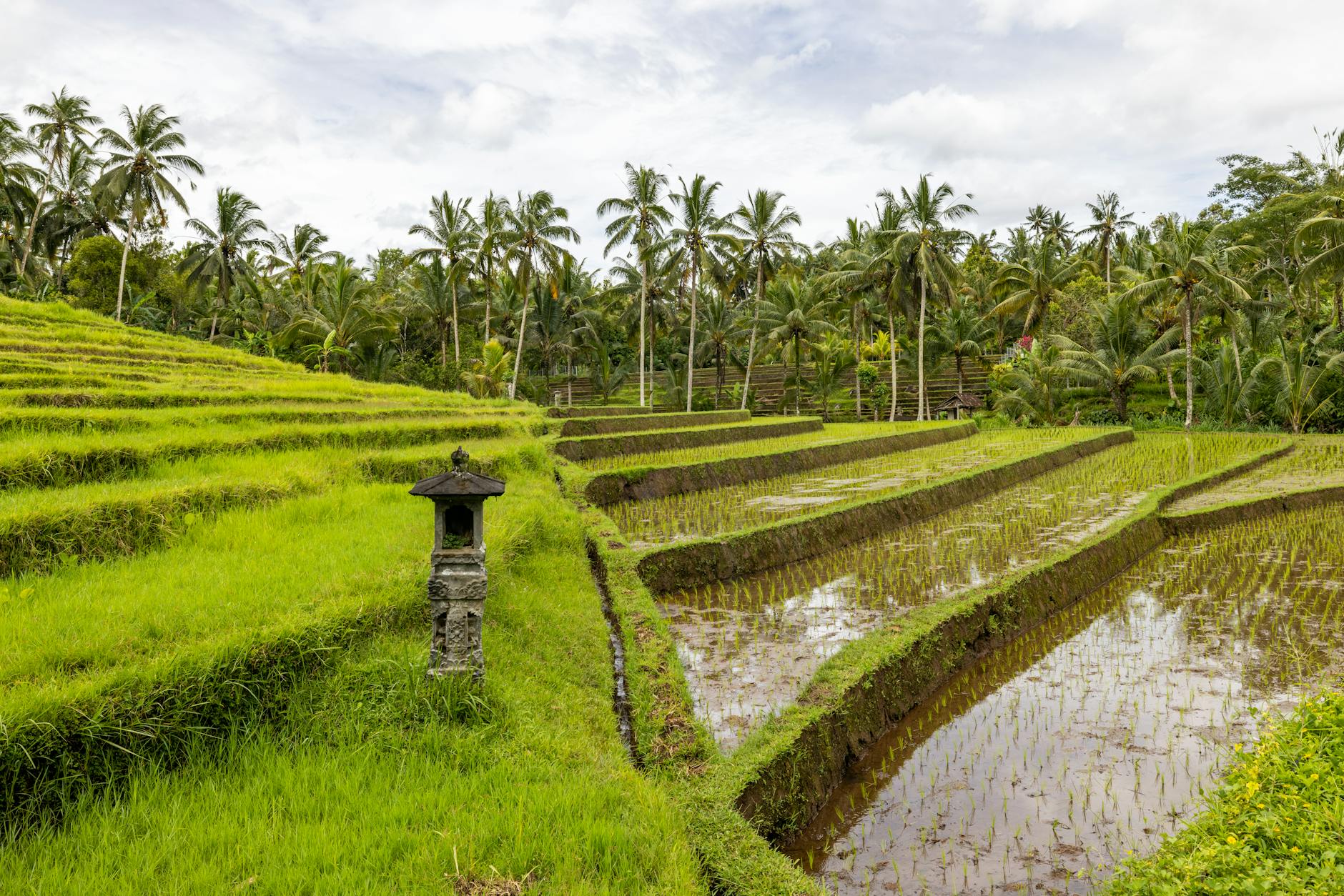
Inland, surrounded by rice terraces, full of temples, yoga studios, vegan cafés, and small art galleries. Calmer, greener, cooler at night. Stay in a small guesthouse on the outskirts of Ubud town (Nyuh Kuning, Penestanan, or Sayan) rather than in the dead centre — same prices, half the noise.
Uluwatu — clifftop south
If you want one premium night in a clifftop room, the Bukit peninsula (Uluwatu, Bingin, Padang Padang) has the most spectacular options. Sunset at Uluwatu Temple with the Kecak fire dance is the single most iconic Bali experience. Two nights here is enough.
Nusa Penida and Nusa Lembongan — the off-Bali islands
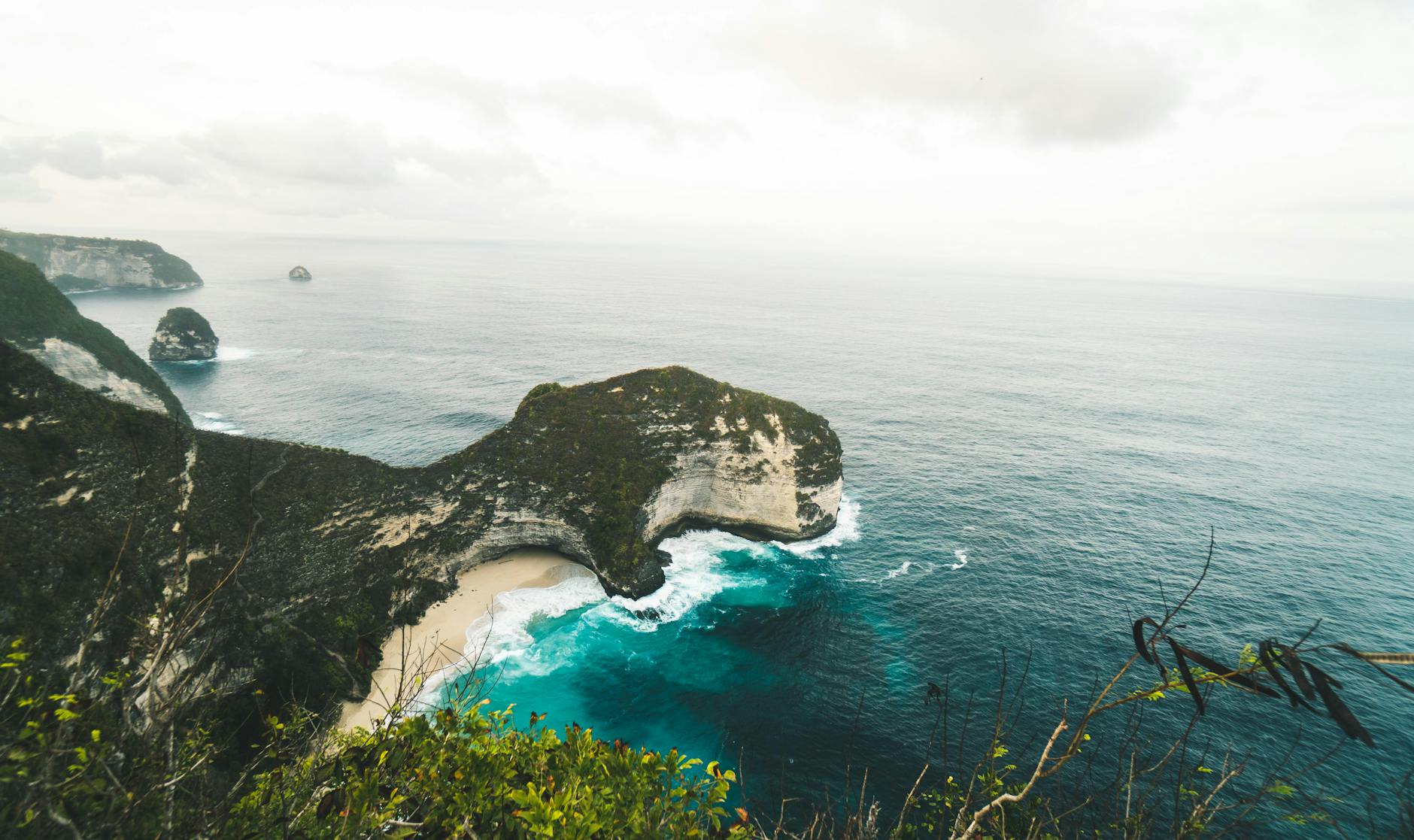
30–45 minute fast-boat ride from Sanur. Wilder, cliffier, less developed. Best done as one long day trip or as a 1-night overnight. The cliffside lookouts (Kelingking, Diamond Beach, Broken Beach) are the photos that made Bali viral on Indian Instagram.
A first-timer 7-day Bali itinerary
This is the version that works with one flight in, one flight out, and two hotel changes inside the week.
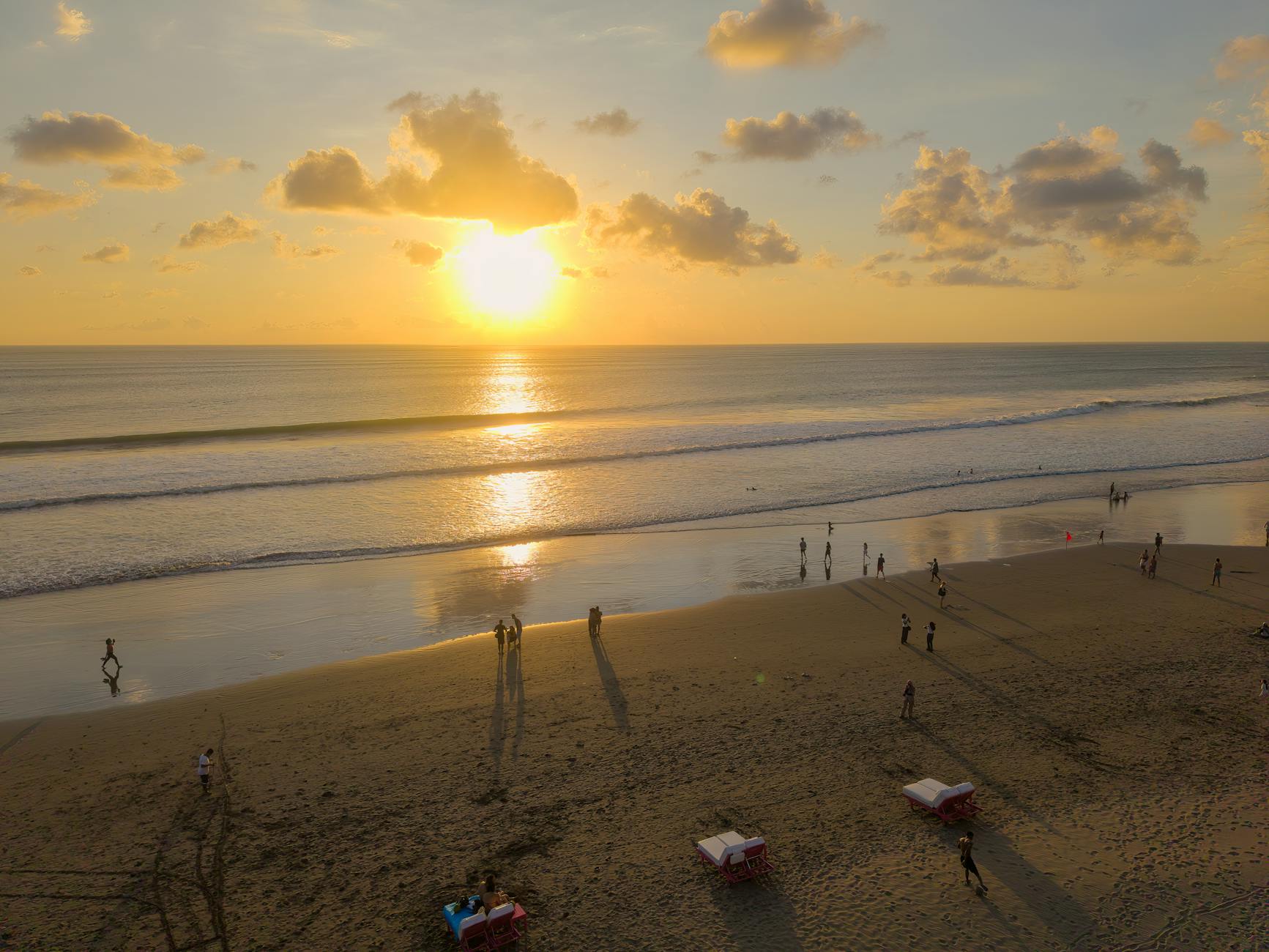
- Day 1 — Arrive and settle, Seminyak / Canggu. Land at Denpasar by mid-morning. Pre-arranged airport taxi to Seminyak (45 minutes, around ₹900–₹1,200). Check in, swim, eat at a beachfront café. Sunset at La Plancha or Seminyak beach. Early dinner. Sleep.
- Day 2 — Beaches and surf. Morning surf lesson at Seminyak or Echo Beach (₹1,500–₹2,500 per person including board). Lunch at a warung. Afternoon at a beach club (Potato Head, La Brisa, or the cheaper Ku De Ta day pass). Sunset cocktails. Dinner.
- Day 3 — Uluwatu day, transfer to Ubud at night. Hire a private driver for the day (₹2,200–₹3,000 for 10 hours, English-speaking). Stop at Padang Padang Beach. Visit Uluwatu Temple before 5 p.m. for the Kecak fire dance (₹500 entry). Late dinner at a Jimbaran beach grill on the way back. Transfer to Ubud by 11 p.m. (~₹1,400).
- Day 4 — Ubud rice terraces and waterfalls. Sunrise at Tegalalang Rice Terrace (avoids the crowd). Coffee at Karsa Kafe. Visit Tirta Empul water temple. Drive to Tegenungan or Tibumana Waterfall. Late lunch at a riverside warung. Evening Yoga at one of Ubud’s open studios. Dinner at Locavore To Go or a Penestanan cafe.
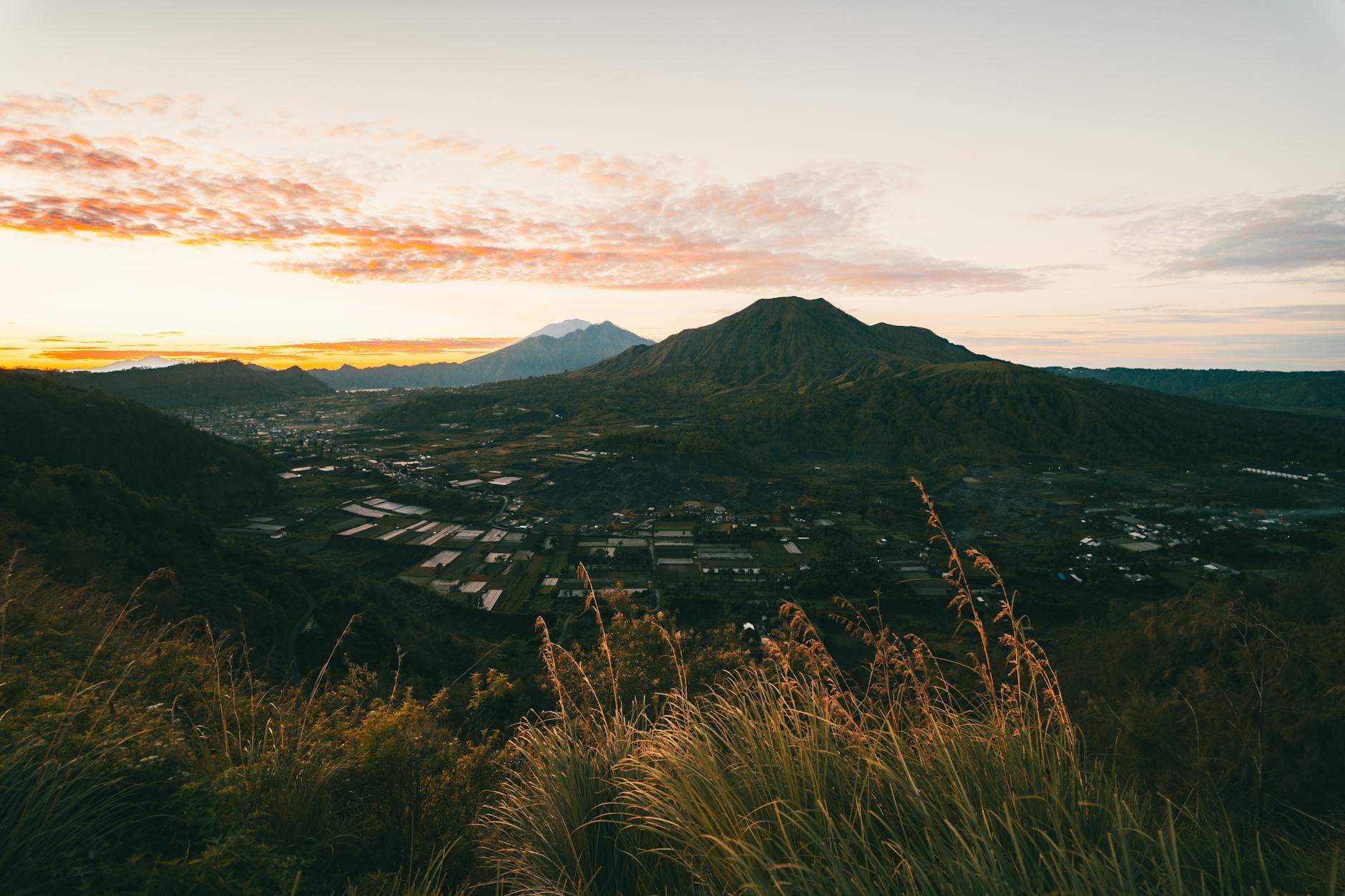
- Day 5 — Mount Batur sunrise OR slow Ubud day. Two options. Adventurous: pre-dawn Mount Batur sunrise trek (₹3,000–₹4,500 per person, hard 2-hour climb, life-list views). Easier: late breakfast, Monkey Forest, walk the Campuhan Ridge in the morning, a cooking class in the afternoon (₹2,000–₹3,500), evening Legong dance at Ubud Palace (₹500).
- Day 6 — Nusa Penida day trip. Pre-booked fast-boat from Sanur or Padang Bai (₹1,200 round trip). On Nusa Penida, hire a scooter (₹700/day if you ride confidently) or a driver-jeep (₹3,000–₹4,000 for 8 hours). Hit Kelingking Beach early before noon, then Broken Beach + Angel’s Billabong, lunch, then Diamond Beach. Last boat back to Sanur by 5 p.m. Transfer to Ubud or Seminyak.
- Day 7 — Slow morning, fly out. Massage at a Balinese spa (₹1,200–₹2,000 for 90 minutes). Last lunch. Airport transfer (~₹1,400 from Ubud). Fly home.
If you have 10 days, add Sidemen (genuine village life), a north-Bali side trip to Munduk for waterfalls and Tamblingan Lake, or a 1-night stop in Amed for snorkelling.
Day trips worth taking, and one to think twice about
- Worth it: Mount Batur sunrise if you are fit, Tirta Empul holy spring (genuine ritual, not just a photo op), Tegalalang Rice Terraces at first light, the Kecak fire dance at Uluwatu, Nusa Penida if you do not get seasick.
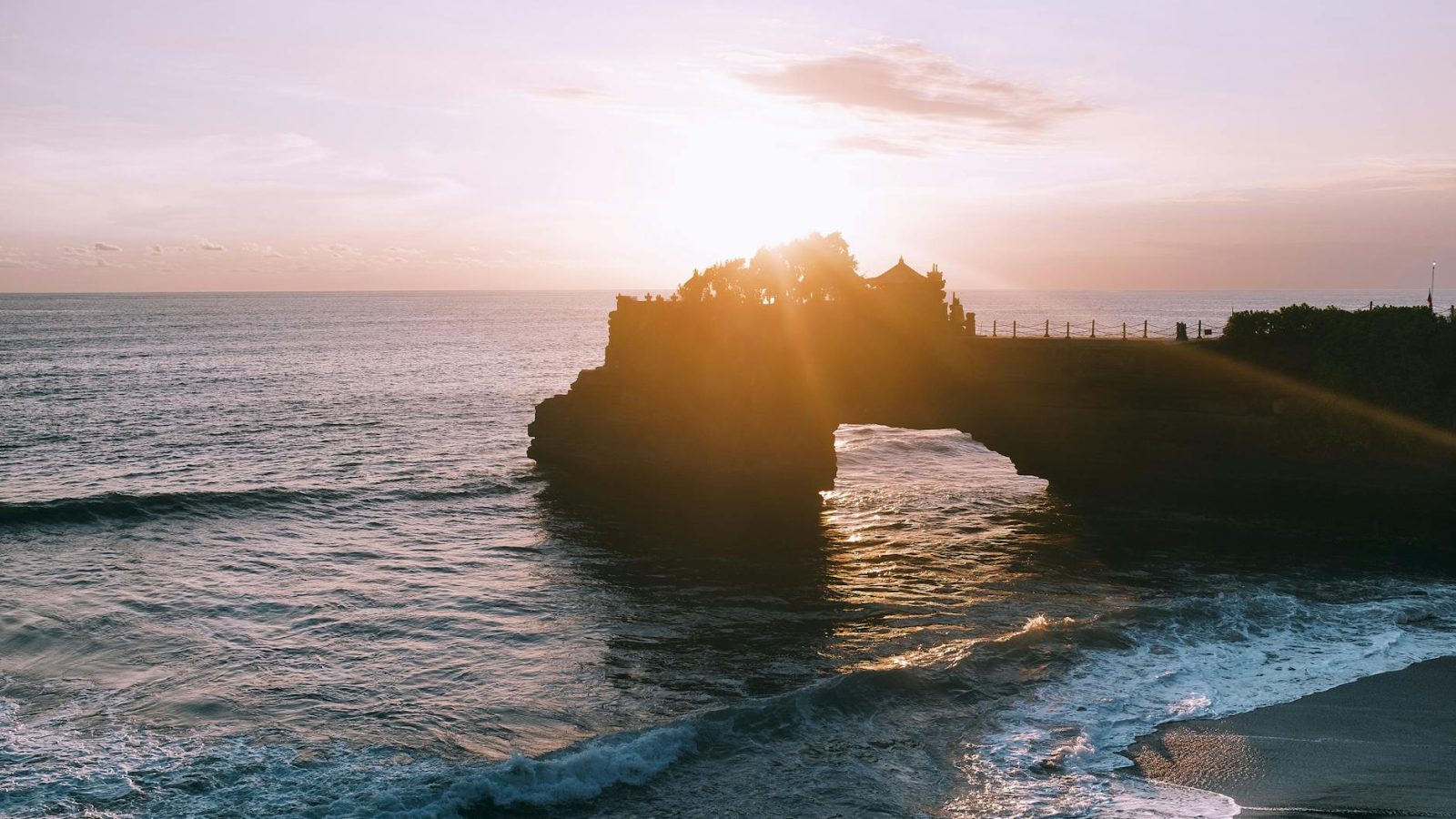
- Skip if you are short on time: Tanah Lot at sunset — beautiful but always packed and the temple itself is just OK once you have seen Uluwatu. Monkey Forest if you have already done one in India. Bali Swing — the photos look great but it is a manufactured tourist setup with steep extras.
What things actually cost in Bali in 2026
- Indian breakfast at the hotel: usually included; if buying, ₹250–₹450 for eggs/toast/coffee
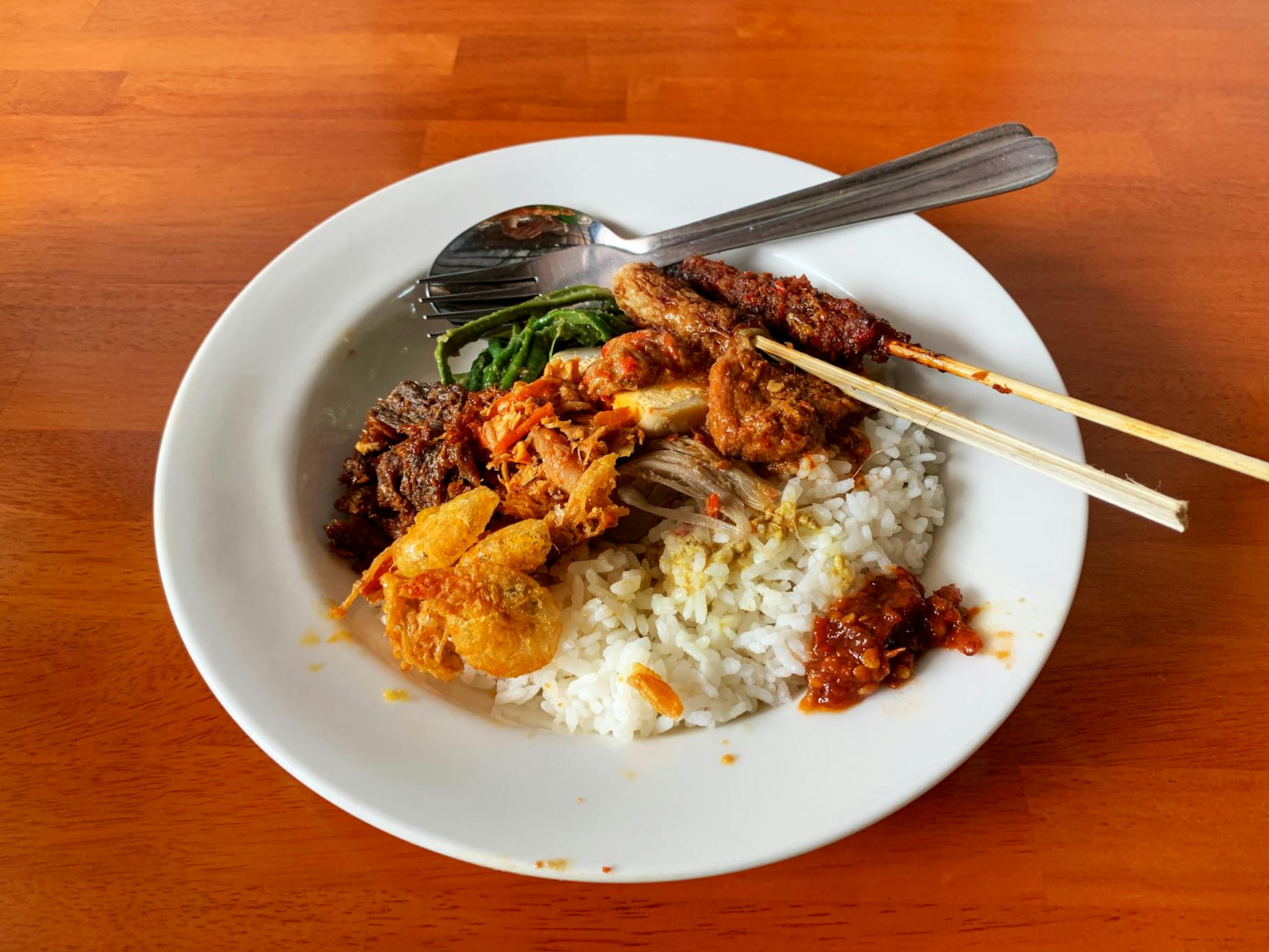
- Warung meal (nasi goreng, mie goreng, satay): ₹150–₹350
- Café main with drink: ₹400–₹700
- Premium dinner (Locavore, Cuca, Mosaic): ₹2,500–₹5,500
- Bintang beer at a beach bar: ₹150–₹250
- Scooter rental per day: ₹400–₹700 (only if you have a valid IDP — see warning below)
- Private driver for the day: ₹2,200–₹3,000
- Massage / spa 60 min: ₹800–₹1,500 at local spas
- Yoga class drop-in: ₹700–₹1,000 at top Ubud studios
- Domestic SIM (Telkomsel 25GB): ₹1,200 at the airport, slightly cheaper in town
The 7-day budget — three tiers
Budget (₹55,000–₹65,000 per person)
Direct round-trip flight from Delhi/Mumbai (₹25,000) + budget hotels/hostels at ₹1,500/night for 6 nights (₹9,000) + warung-only food (₹4,500) + scooter and shared taxis (₹3,000) + activities including Nusa Penida day (₹6,000) + visa + tourist levy + SIM (₹4,500). Total: ₹52,000–₹58,000.
Mid-range (₹75,000–₹95,000 per person)
Direct flight (₹30,000) + mid-tier hotels at ₹3,500/night, mix of Seminyak + Ubud (₹21,000) + mix of warungs and cafés (₹8,000) + private driver some days + Grab cars (₹6,000) + activities + cooking class (₹10,000) + visa + levy + SIM + small extras (₹7,000). Total: ₹78,000–₹92,000.
Premium (₹1,30,000–₹2,00,000 per person)
Direct flight in premium economy (₹50,000) + boutique villas at ₹8,000–₹12,000/night including breakfast (₹60,000) + premium dining 50/50 (₹20,000) + dedicated driver every day (₹20,000) + experiences including private cooking, sunrise trek, and a clifftop Bukit night (₹25,000) + extras (₹10,000). Total: ₹1,85,000–₹2,15,000.
The Bali things that catch first-timers
- The scooter trap. The default beachside hustle is renting you a scooter without asking if you have an International Driving Permit. You can use it freely until a traffic check. The fines and “settlement” for riding without a permit are real and can ruin a trip. If you have not arranged an IDP from your RTO at home, use Grab and Bluebird taxis.
- The “fixed price” taxi at the airport. Pre-book your Denpasar pickup from your hotel or use Grab (works at the airport). The white-shirted airport taxi monopoly charges 2–3x the meter rate.
- The temple sarong “donation.” Most temples include the sarong rental in the entry fee. If someone hands you one separately and asks for “donation,” it is optional — small change is fine.
- Currency exchange rates. Use authorised changers (the official PT Central Kuta booths) or withdraw from CIMB Niaga ATMs. Avoid the small Kuta lanes that advertise impossible rates; some quietly short-count.
- Belly Bali. Tap water is not drinkable. Use sealed bottled water for drinking and brushing teeth on the first two days. Most warungs are fine but stick to busy ones with high turnover.
What to pack for Bali
- Light cotton clothes — Bali is humid 24/7. T-shirts, shorts, one set of loose trousers for temples
- A long-sleeve cover-up — temples expect shoulders covered for both men and women
- Two swim outfits — one always drying
- Reef-safe sunscreen — most beaches now ask for it
- Mosquito repellent with DEET
- Sturdy sandals + one pair of trainers for Mount Batur or scooter
- A copy of your e-VoA, tourist levy barcode, and travel insurance card on paper
Is 2026 a good time for your first Bali trip?
If you have a passport, six months on it, ten days of leave, and ₹60,000 to ₹90,000 to spend, Bali is one of the most rewarding international first-timers’ trips you can take. It is more developed than most of South-East Asia, friendlier to Indian travellers, and forgiving of small planning mistakes.
The trade-off is that you will share most sights with hundreds of other people. Mitigate that with timing — early mornings at temples, weekday day trips, off-peak months. Lean into the things tourists pass over — a slow morning at a Penestanan café, an unhurried village walk in Sidemen, a sunset on the quieter side of Canggu instead of the crowded one.
And take photos for yourself rather than for the algorithm. Most of what makes Bali special is in the small lulls between the famous places.
Related guides on PunyaPaths
- Indonesia: Komodo Island guide
- Thailand 2026: 60-day visa-free + Bangkok & Phuket itinerary
- Vietnam 2026: 90-day e-Visa & 10-day itinerary
Sources: Indonesia immigration e-Visa on Arrival portal (evisa.imigrasi.go.id); Bali Tourist Levy portal (lovebali.baliprov.go.id); Skyscanner and aggregator fares for Delhi / Mumbai / Bengaluru ↔ Denpasar in May 2026. Visa fees and route fares change — verify on the official portal before booking.