Mathura Vrindavan 2026: Krishna Janmabhoomi, Banke Bihari & Govardhan
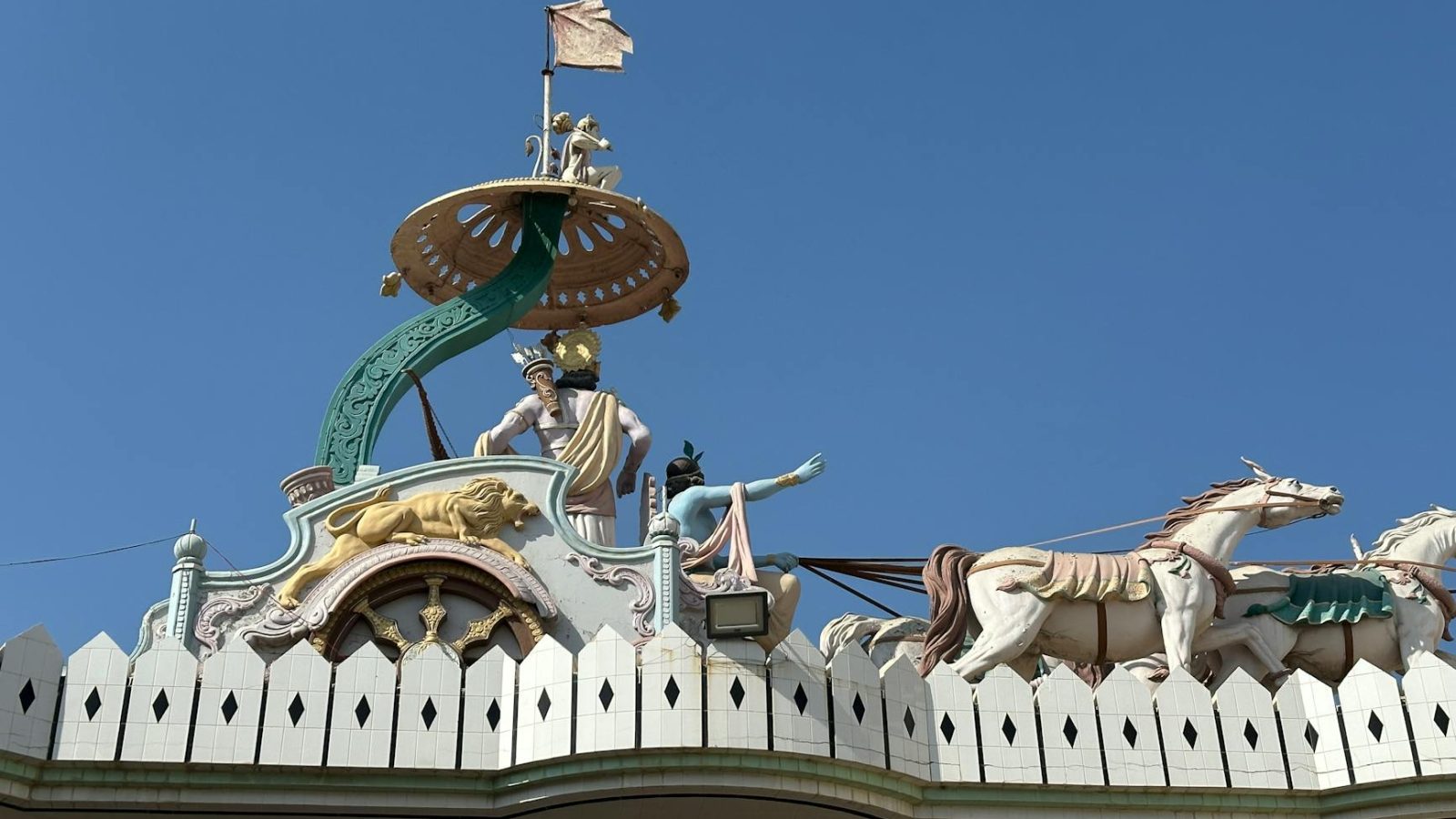
Quick answer: Mathura-Vrindavan, Krishna’s twin birthplace and playground in Uttar Pradesh, sits 3.5 hours from Delhi. Visit Krishna Janmabhoomi, queue for Banke Bihari aarti in Vrindavan, attend ISKCON Vrindavan kirtan, and walk part of the 21km Govardhan Parikrama. Janmashtami and Holi are spectacular but crowded; weekday off-season visits are calmer. A 2-night couple weekend costs around Rs 25,000 including transfers, hotel, priest, and Mathura peda tastings.
Mathura-Vrindavan in 2026 is a different town from what it was even three years ago. The Yamuna Expressway has made it a 3-hour drive from Delhi, the new Vrindavan Chandrodaya temple is partially open, and Prem Mandir continues to outshine almost every modern temple in India for sheer scale and lighting. But the magic that pulls families here generation after generation is unchanged — the same Banke Bihari ji peeking out behind the curtain every two minutes, the same parikrama paths worn smooth by millions of bare feet.
This guide is for the Krishna devotee planning a family pilgrimage, and for the Delhi-NCR weekender who wants to combine darshan with the Prem Mandir light show. Not ideal if you want a quiet meditative retreat — these are crowded, loud, intense temple towns, especially around festivals.
Getting there
The closest airport is Agra (AGR), 60 km / 1.5 hours from Mathura. Delhi (DEL) is 180 km / 3-3.5 hours by Yamuna Expressway. Jewar Noida International Airport (DXN) is expected to be fully operational by mid-2026 and will cut Delhi-Mathura drive time to 90 minutes via the new connector.
By train, Mathura Junction (MTJ) is on the Delhi-Mumbai trunk route — connected to almost every Indian metro. Shatabdi from Delhi takes 2 hours (Rs 600-900 chair car). Gatimaan Express is even faster. From the station, Vrindavan is 12 km / 25 minutes by autorickshaw (Rs 200) or Uber.
By road from Delhi via the Yamuna Expressway, fuel costs about Rs 800-1,000 one way for a sedan, toll Rs 415. Bus options: UPSRTC Volvo from Delhi Sarai Kale Khan ISBT (Rs 350-450).
Day-by-day itinerary (3 days)
Day 1 — Mathura arrival and Janmabhoomi. Reach by lunch. Check in. Afternoon visit Krishna Janmabhoomi temple complex — note that mobiles, cameras, wallets, even pens are not allowed inside the main shrine. Locker facility at the gate (Rs 20). The site sits right next to the Shahi Eidgah mosque and security is heavy — allow 90 minutes for the queue. Evening: Vishram Ghat for Yamuna aarti at 6:30 pm in winter, 7 pm in summer. Boat ride Rs 100 per head.
Day 2 — Vrindavan temples. Move base to Vrindavan or commute (Mathura-Vrindavan auto Rs 250). Start at 7 am with Banke Bihari temple — the deity is shown for only a few seconds at a time behind a curtain (jhalak), which is the unique tradition of this temple. Mangla aarti is at 5 am for serious devotees. Then ISKCON Vrindavan (Krishna Balaram Mandir) for kirtan and prasadam. Lunch at ISKCON Govinda’s. Afternoon: Radha Vallabh temple, Nidhivan (the magical grove that is locked at night), Seva Kunj. Evening at Prem Mandir — entry is free, light and fountain show starts at 7 pm in winter, 7:30 pm in summer. Plan to reach by 6 pm to see it in daylight first, then watch the entire structure light up.
Day 3 — Govardhan parikrama and return. Govardhan is 22 km from Vrindavan. The full parikrama is 21 km on foot (around 7-8 hours) or 8 km dandavat parikrama for the very devout. Most families do a partial walk or a vehicle parikrama (taxi Rs 1,500-1,800 with stops at Dan Ghati, Mukharvind, Mansi Ganga, Radha Kund). Lunch at any of the Govardhan dharamshala canteens. Drive back to Delhi/home by evening.
Where to stay
Vrindavan has the better-quality hotels for tourists. Nidhivan Sarovar Portico (Rs 5,000-7,500), Sterling Bhakti Vrindavan (Rs 4,500-7,000), and the new ISKCON guesthouse MVT Vrindavan (Rs 3,500-6,000 with vegetarian meals). For luxury, Anand Vrindavan Dham is the splurge pick at Rs 12,000-18,000. Budget pilgrims book dharamshalas near Banke Bihari for Rs 500-1,200 — basic, clean, no AC sometimes.
In Mathura, Hotel Brijwasi Royal (Rs 3,000-5,000) and Radha Ashok (Rs 4,500-6,500) are mid-range standards. Avoid hotels in old Mathura lanes — congested, hard to reach by car.
Common mistakes
- Going during Janmashtami without planning. Janmashtami in 2026 falls on Friday 14 August. The crowd at Janmabhoomi exceeds 10 lakh devotees. Either commit fully (book hotel 3 months ahead, accept 6-8 hour queues) or come a week before/after.
- Carrying mobile/wallet to Janmabhoomi. Only a small handkerchief and your slippers (left at the gate) are permitted. Locker queues are long. Bring only the essentials.
- Trying to see all Vrindavan temples in 3 hours. There are 5,000+ temples in town. Pick 6-7 main ones and do them well.
- Skipping the Prem Mandir night show. The fountain choreography starts after sunset — most day-trippers miss it because they leave too early.
- Doing full Govardhan parikrama in summer. 21 km barefoot in May-June heat causes blisters and dehydration. Go October-February only.
Vegetarian food
Mathura-Vrindavan is 100 percent vegetarian — even onion and garlic are absent in most temple-area restaurants. Brijwasi Mithai Wala on Holi Gate Mathura is legendary for pedas (Rs 400/kg), the local sweet identified with Krishna. Govinda’s at ISKCON does an all-you-can-eat thali for Rs 250 — vegetarian, satvik, no garlic. Hare Krishna Restaurant near MVT serves Italian-style pasta and pizza in pure satvik form. Try aloo tikki and chaat at the lanes around Banke Bihari — Shankar Mithai Wala has been there for three generations. Don’t miss Mathura-Vrindavan special kachori-sabzi for breakfast at Bharatpur Sweets, around Rs 60. Lassi at Madanmohan Mishtan is the signature drink — thick, malai-topped, Rs 80-100.
Money, SIM and connectivity
All networks work fine — Jio, Airtel, Vi. 4G stable across both towns. UPI everywhere including at small chaat stalls. ATMs of SBI, PNB, HDFC throughout Mathura and at major Vrindavan junctions. Carry Rs 100 notes for dakshina, parikrama priests and prasad shops — small denominations matter.
Packing checklist
- Modest clothing — shorts and sleeveless are tolerated but unwelcome inside temples
- Comfortable walking sandals (you will remove them 20+ times a day)
- Small drawstring bag for shoes
- Refillable water bottle
- Hand sanitiser and wet wipes
- Cap and sunscreen (parikrama exposure)
- Small notepad for temple timings if you are visiting many
- Cash in small notes
FAQs
When does Banke Bihari open? Summer: 7:45 am-12 pm, 5:30 pm-9:30 pm. Winter: 8:45 am-1 pm, 4:30 pm-8:30 pm. There is no mangal aarti unlike most temples — it is unique to this deity.
Is photography allowed inside temples? Banned at Banke Bihari, Janmabhoomi, Nidhivan. Allowed in courtyard of ISKCON and Prem Mandir.
How much time for Prem Mandir? 2-3 hours including the light show. Don’t rush.
Can I do Mathura-Vrindavan in one day from Delhi? Tight but possible — leave Delhi by 5 am, return by 11 pm. You will miss the night light show this way.
Are children allowed everywhere? Yes, including Nidhivan during day. Kids under 5 may struggle with the heat and crowds.
Is Holi a good time? Only for those who are okay with extreme crowds and 10 days of continuous celebrations. Lathmar Holi at Barsana is once-in-a-lifetime but very intense.
Sample budget breakdown (per person, 3 days, family of 4)
- Fuel + tolls from Delhi (round trip): Rs 600
- Hotels (2 nights, mid-range, shared): Rs 2,500
- Local transport, autos, Govardhan taxi (shared): Rs 800
- Food (3 days): Rs 1,500
- Temple offerings, prasad, lockers: Rs 600
- Shopping (pedas, dresses for deities, mala): Rs 700
- Buffer: Rs 500
- Total: approximately Rs 6,700 per person