
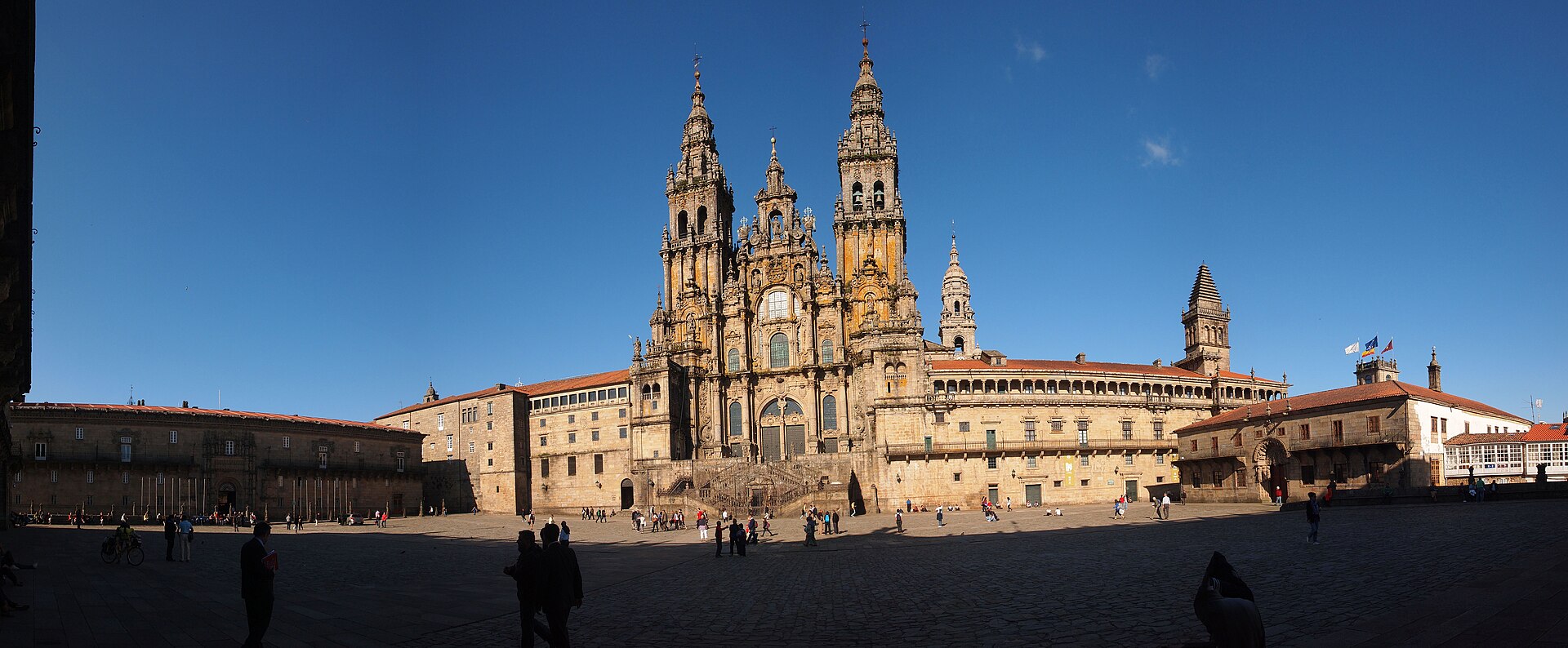
Photo: Wikimedia Commons
Yatra Guides
Camino de Santiago 2027 Holy Year: The Honest First-Timer's Guide — the Record Year, the Holy Door, and Which Route to Actually Walk
Camino de Santiago Holy Year 2027 for first-timers: the record year, the Holy Door opening 31 Dec 2026, real 2026 costs, routes and a 7-day Sarria plan — checked 17 Nov 2026.
Quick answer: 2027 is a Holy Year because 25 July, the Feast of St James, falls on a Sunday, and the Holy Door opens around midday on 31 December 2026 — but you do not need five weeks, a Catholic faith or a big budget to walk it. The last 100 km from Sarria takes five walking days, costs about €40–65 a day, and 2026 has already broken every record, with 564,006 Compostelas issued by 9 November.
Complete yatra blueprint
7-Day Camino de Santiago (Sarria to Santiago) — Complete Blueprint
Built for a first-time walker from the US, UK or EU planning a 2027 Holy Year walk. Five walking days, about 115 km, ending at the cathedral. Prices checked 17 November 2026; conversions at €1 = $1.10 (ECB reference rate, 16 November 2026).
Arrive Sarria → Walk to Portomarín
🛕 Temples & darshan
Sarria old town and the Magdalena monastery · Sarria, Lugo
The town where a third of all Camino walkers start. Climb to the old town above the river before you leave: the monastery of La Magdalena and the church of Santa Mariña sit on the hill, and the view back down the valley is the last quiet minute before the crowds join at the bridge.
Barbadelo and the church of Santiago de Barbadelo · About 4 km out of Sarria, on the Camino
A small Romanesque church with a carved doorway, and the first place the road goes properly quiet. Most walkers pass it without stopping. Stop.
The church of Santa María in Portomarín · Praza do Reló, Portomarín
A 12th-century Romanesque church that was taken apart stone by stone in the 1960s and rebuilt on higher ground, because the old town of Portomarín now sits under the Belesar reservoir. Stand on the steps at dusk and you are looking at a church that was moved to escape a lake.
🏨 Where to stay
Albergue de Peregrinos de Portomarín (Xunta)
€10 per night (about $11)
The Galician public albergue, 61 Google reviews at 4.0. First come, first served, no bookings, one night only. Arrive early in a Holy Year summer or have a private backup.
Albergue Ultreia
About €14–18 per night (about $15–20)
Small family albergue on Rúa da Deputación, 18 Google reviews at 4.6. Bookable by phone or WhatsApp a day or two ahead — the thing the public albergue cannot do.
Albergue Casa Cruz
About €15–20 per night (about $17–22)
44 Google reviews at 4.9, the best-rated bunk in town. Private rooms available. If you want one certain bed on this stage, this is the one to message first.
🍽 Where to eat
Menú del peregrino in the bars on the main square
€10–14 per person (about $11–15)
Must try: Caldo gallego, the Galician broth with turnip greens and beans
Every bar on the square serves the pilgrim menu: three courses, bread, wine or water. Eat before 9 PM — kitchens in these towns close early and do not reopen for late walkers.
- Do not start walking at noon. The Sarria stage is gentle, but a 22 km first day in afternoon heat is how blisters start, and blisters on day one ruin the week.
- The public albergue opens at 13:00 and the queue forms before that. If you want the €10 bed, walk in by 2 PM. After 4 PM in summer, assume it is full.
Portomarín → Palas de Rei
🛕 Temples & darshan
Gonzar and the climb out of the Miño valley · About 8 km from Portomarín
The morning's work: a steady climb out of the river valley through oak woods and hamlets. Gonzar has a Xunta albergue and a bar, and it is the natural halfway stop for coffee.
Palas de Rei old town · Palas de Rei, Lugo
A working market town, not a postcard village, and better for it. The Romanesque church of San Tirso sits on the Camino itself, and the main street has the first proper supermarket since Sarria.
🏨 Where to stay
Albergue de Peregrinos de Palas de Rei (Xunta)
€10 per night (about $11)
The Galician public albergue, renovated in 2022, on the Camino just before the main road. Same rules as everywhere: no bookings, 13:00 opening, one night.
Albergue Buen Camino
About €15 per night (about $17)
9 Google reviews at 4.9; TripAdvisor 4.7 with recent stays in 2026 praising the food and the hosts. Private albergue with its own café-restaurant, on the Camino in the town centre.
Albergue San Marcos
About €18 per night (about $20)
9 Google reviews at 5.0. Modern building on the Camino at the town entrance, with private rooms, laundry and a café. The most comfortable bunk in Palas.
🍽 Where to eat
Albergue Buen Camino restaurant
Menú del peregrino about €12–14 (about $13–15)
Must try: Homemade Galician dishes from local produce — regulars single out the food, not just the beds
TripAdvisor reviewers call the food the reason to stay here rather than anywhere else in town. Eat where you sleep tonight and save the walk.
- Tomorrow is the longest day of the week at about 29 km. Eat properly tonight, fill both bottles, and set out at 7 AM.
- If your knees are talking to you, split this stage at Ventas de Narón or Ligonde. There is no prize for arriving in Palas de Rei broken.
Palas de Rei → Arzúa — the Longest Day
🛕 Temples & darshan
Melide, the halfway town · About 15 km from Palas de Rei
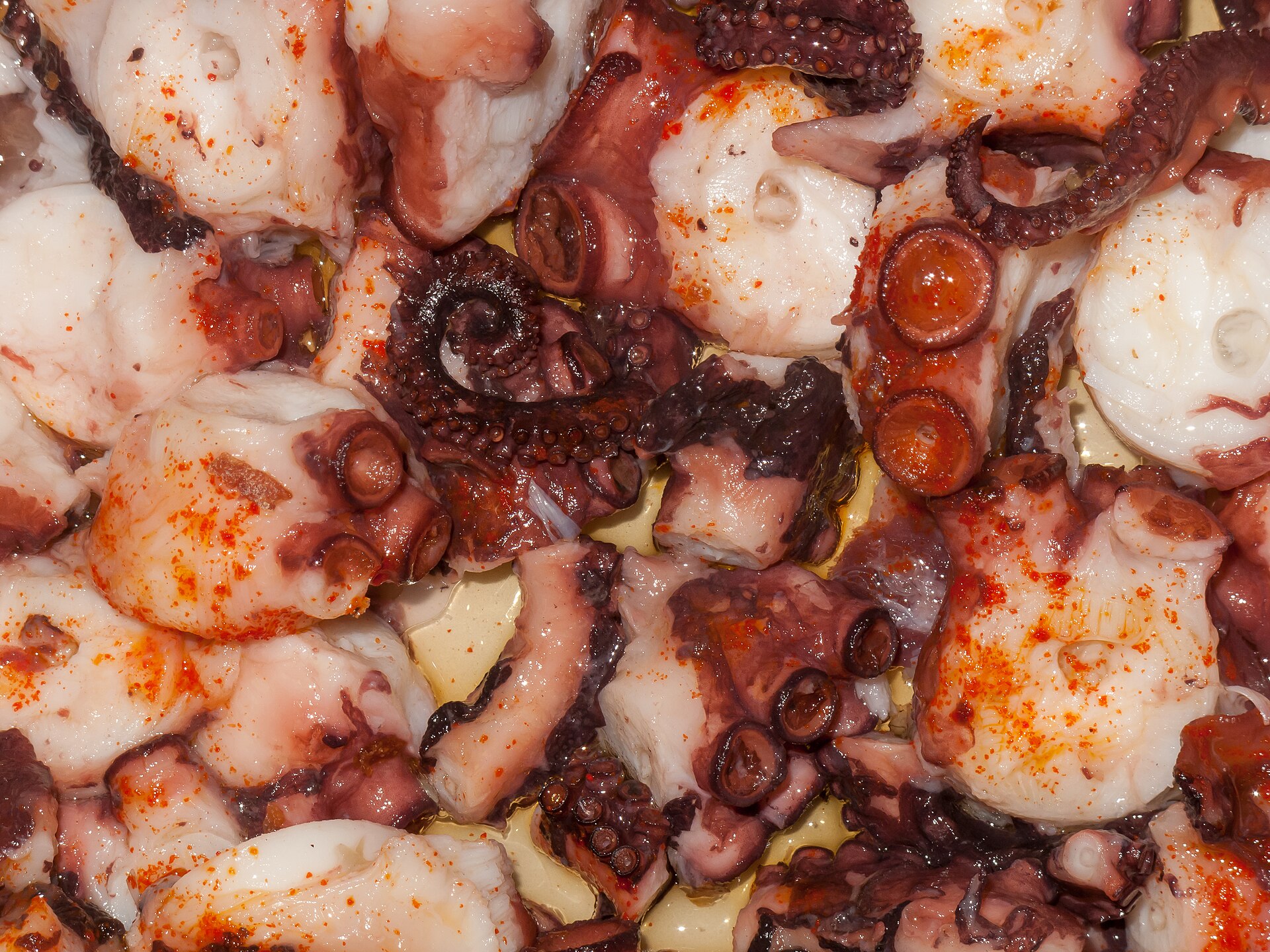
The geographical centre of Galicia and the place to eat pulpo á feira properly for the first time. Melide has the oldest pulperías on the route, and the octopus here is not a tourist dish — it is what the town does.
Ribadiso and the river crossing · About 3 km before Arzúa
A hamlet of stone houses beside the Iso river, with a medieval bridge and two small albergues. If Arzúa feels too far, Ribadiso is the honest place to stop — and the prettiest last two kilometres of any stage.
🏨 Where to stay
Albergue de peregrinos de Arzúa (Xunta)
€10 per night (about $11)
The Galician public albergue on Rúa Cima do Lugar. 48–56 beds, and in a Holy Year summer it is full by mid-afternoon most days. Do not count on it without a backup.
Albergue San Francisco
About €15–18 per night (about $17–20)
Right on the Camino in the town centre, rated 8.9 on Travelmyth for location, cleanliness and service. Breakfast from 7 AM for about €5 — coffee, fresh orange juice, thick toast.
Albergue Ultreia, Arzúa
About €16–20 per night (about $18–22)
Trip.com 4.6/5. Modern, clean, bunks with privacy partitions, and a restaurant serving a €16 menu of the day with gluten-free options. Walkers who have done ten Caminos call it the best albergue on the route.
🍽 Where to eat
Pulpería in Melide (midday stop)
Pulpo á feira about €13–15 a portion (about $14–17)
Must try: Pulpo á feira — octopus with paprika, sea salt and olive oil, on a wooden plate
Melide is where the dish belongs. Order it with cachelos, boiled potatoes, and a glass of Albariño, and do not rush it.
Albergue Ultreia restaurant, Arzúa
Menu of the day about €16 (about $18)
Must try: Queixo de Arzúa, the town's own soft cheese — Arzúa is literally the cheese town
Gluten-free options across the menu, which is rare on this route. Ask for the cheese board even if you are not staying here.
- 29 km is the day that ends walks. Tape hot spots before they become blisters, change socks at Melide, and walk the second half slowly.
- Arzúa is the bottleneck town of the whole last 100 km. If you have not booked a private bed, arrive by 2 PM or keep walking to Ribadiso.
Arzúa → O Pedrouzo — the Last Night Before Santiago
🛕 Temples & darshan
The eucalyptus forests after Arzúa · Between Arzúa and O Pedrouzo
The last stretch of proper walking before the city: eucalyptus forest, small chapels, and the smell of the trees after rain. It is the quietest morning of the week, because everyone is thinking about tomorrow.
O Pedrouzo town · O Pedrouzo, A Coruña
A modern town with no monuments and no charm, and everyone knows it. It exists for one purpose: to put you 20 km from the cathedral with a bed, a shower and a hot meal. Do not judge the Camino by it.
🏨 Where to stay
Albergue Edreira
About €13–14 per night (about $14–15)
22 Google reviews at 4.8, 32 beds, quiet location off the main road. The best-regarded albergue in O Pedrouzo. Check in from noon; book by phone.
Albergue Cruceiro de Pedrouzo
About €10–12 per night (about $11–13)
94 beds with individual lockers, lights and plugs, plus shoe lockers with ventilation. Open March to November. No credencial required to stay.
Hotel Amiuka
About €70–90 per night (about $77–99)
The comfort option on the edge of town, with a proper breakfast before the early start. If you want one good night's sleep before the final day, this is where to take it.
🍽 Where to eat
Pensión Myriam — Restaurante Parrillada
Menú del peregrino about €12–14 (about $13–15)
Must try: Grilled meats and the pilgrim menu — the parrillada is the house style
A pension with a grill restaurant attached, on the main street. Eat early: tomorrow starts before dawn for most walkers.
- Set your alarm for 6 AM. The walk into Santiago takes four to five hours, and the cathedral square is a different place at 11 AM than at 3 PM.
- Take a photo of every page of your credencial tonight. If it gets wet or lost tomorrow, the photo is the difference between a certificate and an argument.
O Pedrouzo → Santiago de Compostela — Arrival Day
🛕 Temples & darshan
Monte do Gozo (Mount of Joy) · About 5 km before the cathedral
The hill where, for a thousand years, pilgrims have caught their first sight of the cathedral towers. There is a monument to the visit of John Paul II and a sprawling albergue complex. Stop, look, and take the photograph everyone takes — it is a cliché because it is true.
Praza do Obradoiro and the Cathedral · Santiago de Compostela old town
The granite square, the twin towers of the Obradoiro façade, and the end of the walk. The cathedral nave is free to enter, daily 7:00 AM–9:00 PM through the Praterías door. Walk in, sit down, and let the week catch up with you before you do anything else.
The Pilgrim's Reception Office and your Compostela · Rúa das Carretas 33, a few minutes from the cathedral
Present your stamped credencial, fill in the online form for a QR code and a turn number, and collect the Compostela (free) or the Welcome Certificate. The Distance Certificate costs €3 extra. The office closes at 19:00, and the queue is shortest before noon.
🏨 Where to stay
Albergue La Credencial
About €12–15 per night (about $13–17)
Small and quiet, on the arrival route into the city, so you can drop your pack before you reach the cathedral. The practical choice for arrival night.
Hotel Praza Quintana
From about US$54 per night (about €49)
Steps from the cathedral on the Quintana square, the quiet side of the old town. The cheapest proper hotel this close to the square.
Parador de Santiago — Hostal dos Reis Católicos
From about US$155–176 per night (about €140–160)
Trip.com 9.2/10. The 15th-century pilgrim hospital on Praza do Obradoiro itself, facing the cathedral — the splurge night every walker dreams about on the Meseta. Book months ahead for Holy Year summer. Note: visits to its courtyards and chapel are suspended for restoration work (October 2026).
🍽 Where to eat
O Sendeiro
€30–40 per person (about $33–44)
Must try: Chorizo and chestnut croquettes (€8) and the thinly sliced pulpo á feira (€12.40)
Google 4.8 from 3,239 reviews; TripAdvisor 4.7 from 1,507. Modern Galician cooking in an old stone house on Rúa do Olvido, 22, a short walk from the old town. The tasting menu is what people come back for. Book ahead in summer.
Mesón do Pulpo
Pulpo á feira about €13 a portion (about $14)
Must try: Pulpo á feira, the house speciality, with fried mussels (€9)
A traditional restaurant in the San Pedro quarter, about ten minutes' walk from the old town. The octopus here is the reason to make the walk.
- Get the Compostela first, celebrate second. The office queue grows all afternoon, and a 3 PM arrival can mean an hour standing in line.
- Do not book your flight home for the morning after arrival. Give Santiago a full day — the city earns it, and your legs will thank you.
Santiago — the Cathedral, the Rooftops and the Old Town
🛕 Temples & darshan
The Pórtico de la Gloria · Inside the Cathedral, through the museum entrance
Master Mateo's 12th-century carved portico, the Romanesque masterpiece the cathedral was built around. Visits are capped at 25–30 minutes to protect the stone, with an audioguide. There are also free unguided passes between 4:00 and 5:30 PM, booked as an invitation on the cathedral ticketing site.
The Cathedral rooftops and Torre da Carraca · Meet at the Pazo de Xelmírez, Praza do Obradoiro
A guided walk of about 60 minutes across the stone roofs, 140 steps up to about 72 metres, ending on the Carraca tower with the whole old town below. The same ticket gives seven days of free entry to the Cathedral Museum, the Diocesan Museum and the MuSar.
Mercado de Abastos · Rúa das Ameas, old town
Santiago's covered market, busiest on Saturday mornings: fish, cheese, vegetables, and the stalls outside selling pulpo and empanada to eat standing up. It is the most honest meal in the city and the cheapest.
🏨 Where to stay
Same base as day 5 — do not change hotels
No extra cost beyond the second night
Two nights in the same Santiago bed is the right call. Moving hotels on your rest day wastes the morning you should spend on the rooftops.
🍽 Where to eat
Casa Marcelo
Tasting menu about €60–70 per person (about $66–77)
Must try: The tasting menu — Galician, Peruvian and Japanese cooking in one sitting
Michelin-starred, communal tables, and the one splurge meal in the city that is worth the money. Book well ahead in Holy Year summer.
Pulpería os Concheiros and Los Sobrinos del Padre Benito
Pulpo á feira about €13–16 a portion (about $14–18)
Must try: Pulpo á feira at a wooden table with a glass of Albariño
Two rustic joints the locals name when asked where the best pulpo in Santiago is. No booking, no fuss, cash helps.
- The Botafumeiro, the giant censer, is out of service since 24 August 2026 — scaffolding for the lantern-tower restoration covers its mechanism, and the cathedral has given no return date. Do not plan your day around seeing it swing.
- Since 16 October 2026 the pilgrim's masses at 9:30 AM, noon and 7:30 PM are held in the church of San Agustín, not the cathedral, because of main-chapel remodelling. The 7:30 AM mass is in the cathedral's Communion chapel.
Finisterre Day Trip — or Depart
🛕 Temples & darshan
Cabo Finisterre, the end of the world · Finisterre, A Coruña
The lighthouse on the cliff where the land runs out, and the traditional end of the Camino for walkers who keep going after Santiago. Burn nothing — the ritual burning of clothes at the lighthouse is banned and fined. Walk to the point, look at the Atlantic, and be done.
Muxía, the alternative ending · Muxía, A Coruña
A fishing village with the sanctuary of the Virxe da Barca on the rocks, where the sea comes right up to the church door. Walkers who choose Muxía over Finisterre say it is the more beautiful ending. The two are connected by a day's walk.
🏨 Where to stay
No stay needed — depart, or one more night in Santiago
No extra cost if you depart; one more night from about US$54 if you stay
Fly out of Santiago airport (SCQ) or take the train to Madrid. If your flight is early, sleep near the airport, not the old town — the first bus is not as early as you think.
🍽 Where to eat
Seafood lunch in Finisterre harbour
About €15–25 per person (about $17–28)
Must try: Grilled sardines and percebes, goose barnacles, if the boats came in
Eat in the harbour, not on the road to the lighthouse. The harbour restaurants cook what the boats brought in that morning, and the lighthouse café does not.
- The Finisterre walk needs three to four extra days and a pack that is already broken in. Do not decide on the morning of day seven — decide before you fly to Spain.
- Keep your credencial. The walk to Finisterre has its own certificate, the Fisterrana, issued in Finisterre town hall — the quietest souvenir of the whole trip.
The Camino de Santiago is having the biggest year in its history, and 2027 is the year everyone is planning for. By 9 November 2026 the Pilgrim's Office in Santiago had issued 564,006 Compostelas — already 33,000 more than the whole of 2025, which was itself a record. September 2026 was the busiest month the route has ever seen, with 91,127 pilgrims arriving. And on 31 December 2026, around midday, the archbishop will strike the sealed Holy Door of the cathedral three times with a silver hammer, and the 2027 Holy Year will begin.
That is the news. Here is the part the news leaves out: none of it means you need five weeks, a Catholic faith, or a large budget. The walk that most first-timers actually do is five days long, costs about €40–65 a day, and starts in a small Galician town called Sarria. This guide is the honest version of that walk — what it costs in November 2026 prices, which route to pick, where the beds really are, and what the guides written for tour companies do not tell you.
What is a Holy Year — and why is 2027 the one to plan for?
A Holy Year, or Xacobeo, happens whenever 25 July, the Feast of St James, falls on a Sunday. It happens about 14 times a century, on an irregular cycle of 6, 5, 6 and 11 years. The last one was 2021, extended into 2022 because of the pandemic. The next one after 2027 is 2032.
What changes in a Holy Year is one door. The Holy Door — the Porta Santa, on the wall of the cathedral facing the Praza da Quintana — stays sealed shut in every ordinary year. In a Holy Year it stands open for the whole year, and walking through it is the point of the year for many pilgrims. The Spanish government has declared the 2027 Xacobeo an Event of Exceptional Public Interest, which is bureaucratic language for real money going into the routes, the towns and the cultural programme.
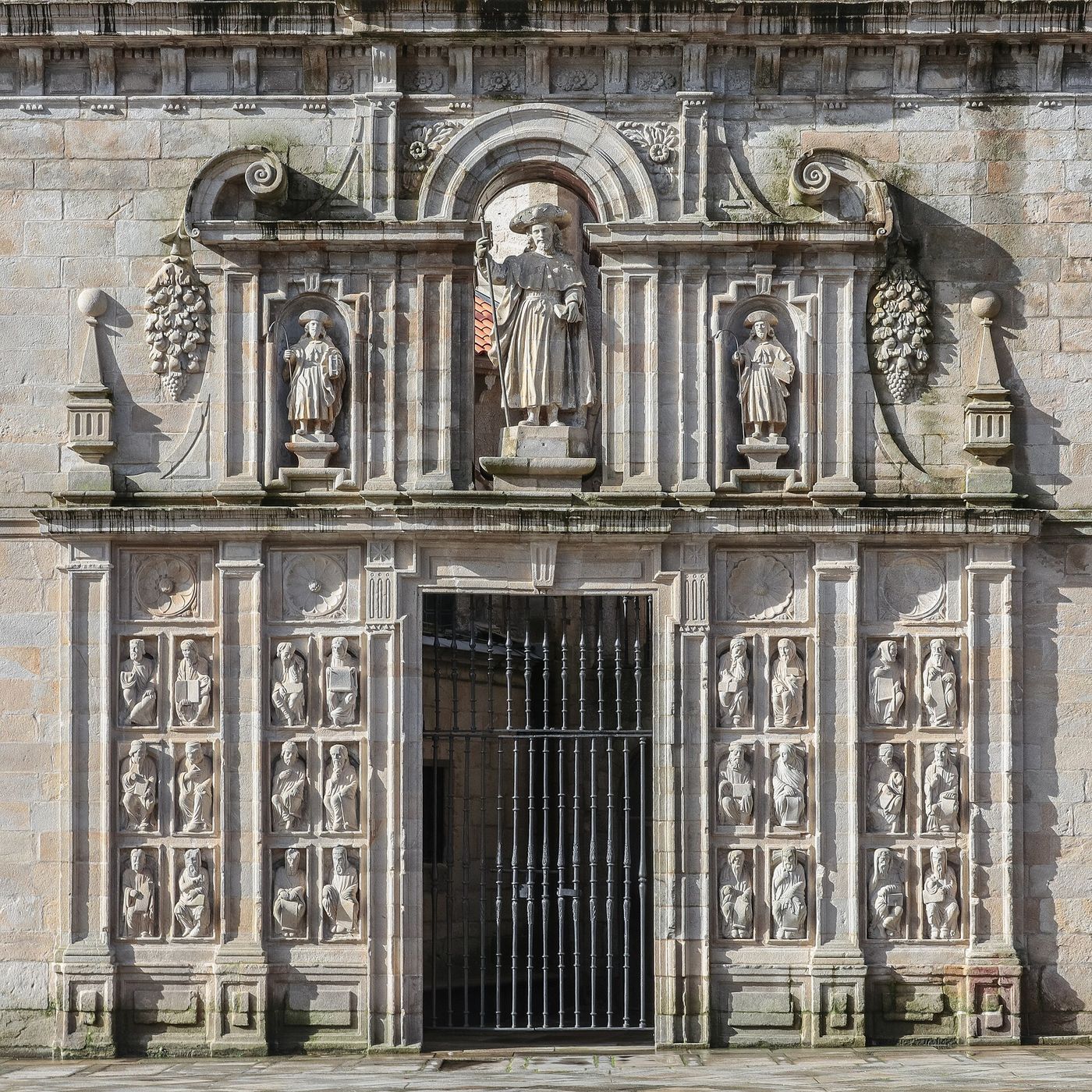
Three dates matter, and plenty of pages get the first one wrong. The door opens on 31 December 2026, not 1 January — the archbishop brought the ceremony forward to around midday on 24 September 2026, and has not given an exact hour. The Holy Year itself runs 1 January to 31 December 2027. The door is sealed again on 31 December 2027. If you want to be in Santiago for the opening, you need to be there on New Year's Eve, not New Year's Day.
One more thing the cathedral has not published yet: the full official programme for 2027. The motto was presented in September 2026, but the detailed calendar of events was still unpublished when this guide was checked on 17 November. Any page that lists the 2027 programme in detail is guessing. Check catedraldesantiago.es before you book anything around a specific event.
How many people are actually walking it right now?
More than ever, and the numbers are not close. The Pilgrim's Office dashboard, read on 10 November 2026, showed 564,006 Compostelas issued in 2026 — against 530,987 for the whole of 2025. The daily series since then adds about 2,600 more by 15 November, putting the running total past 566,000 with six weeks of the year still to go. The 500,000th Compostela of the year was handed over on 4 October, to a Mexican pilgrim who had walked from Sarria.
The monthly figures tell the same story. September 2026, with 91,127 arrivals, was the busiest month in the Camino's history — it took the title from August 2022, which was itself a Holy Year. October 2026, with 72,125, was the best October ever. In 2025, 53.45% of pilgrims were women and 57% came from outside Spain. The United States is now the second-biggest sending country after Spain, at about 9%.
One number you will see quoted is bigger: the Xunta de Galicia announced in September 2026 that sensors along the routes put the year's walkers at about 736,000. That is not a contradiction. The Compostela counts people who finish and collect the certificate; the sensors count footfall, including anyone who walks a single stretch, anyone short of the 100 km, and anyone who arrives and never asks for the paper. The Xunta's own ratio is about 1.6 to 1.7 walkers per Compostela. Use the Compostela number when you want a count you can trust, and the sensor number when you want to know how crowded the path itself feels.
No authority has published a forecast for 2027. Anyone who gives you a number for next year is inventing it. What is certain is that the last 100 km from Sarria — already 30.5% of all Compostelas in 2025, with 161,882 starters — will be the most crowded 100 km in Europe next summer.
Do I need five weeks — or is a week enough?
A week is enough, and for most first-timers it is the right choice. The rule is simple: walk at least the last 100 km on foot, or 200 km by bike, on one recognised route, with a stamped credencial, and the Pilgrim's Office hands you the Compostela. Sarria to Santiago is about 115 km. Five walking days, at 20–29 km a day, with a rest day in Santiago at the end. That is the plan in the blueprint at the top of this guide, and it is the walk a third of all pilgrims do.
Two things about the rule changed in February 2025, and older guides still get them wrong. First, the 100 km no longer has to be the literal final stretch: any continuous 100 km on one and the same recognised route counts, as long as the stage that completes that count is the one immediately before arrival at the cathedral. Second, the two-stamps-a-day requirement now applies to your whole walk, not just the last 100 km — one stamp in the morning, one in the afternoon, from day one. Albergues, churches, cafés and town halls all stamp, so collect them as you go.
The credencial, the folded pilgrim passport, costs €2–3 from a national confraternity, a pilgrim office, or along the route. E-bikes do not count towards the 200 km cycling minimum — conventional bikes only. And if you start on foot outside Spain on a recognised route, the rule sets a different floor: the continuous kilometres on Spanish soil must not be less than 70, though the office has not said publicly whether the total must still reach 100.
The full Camino Francés, from Saint-Jean-Pied-de-Port over the Pyrenees to Santiago, is 768–784 km depending on which source you trust, and takes 30–35 days at 20–25 km a day. It is a wonderful walk. It is also five weeks of your life, and most people reading this guide do not have five weeks. The honest advice is to do the Sarria week first, and decide on the full Francés after you know what a week of walking does to your feet.
Which route should a first-timer pick?
Pick by crowd, not by fame. The Camino Francés is the classic route and the best-marked trail in Europe, but in a Holy Year its last 100 km is a queue with scenery. The alternatives give you the same Compostela with half the people.
| Route | Distance | Days | Share of 2025 Compostelas | Who it suits |
|---|---|---|---|---|
| Camino Francés (Saint-Jean → Santiago) | 768–784 km | 30–35 | 45.6% (241,996) | First-timers who want the full walk and the most infrastructure |
| Camino Francés, last 100 km (Sarria → Santiago) | About 115 km | 5 walking days | 30.5% of all pilgrims start in Sarria | Anyone with one week — the plan in this guide |
| Camino Portugués Central (Porto → Santiago) | About 240 km | 10–12 | 19.0% | Walkers who want a second city and a gentler start |
| Camino Portugués Coastal (Porto → Santiago) | About 280 km | 11–13 | 16.9% | Walkers who want the Atlantic |
| Camino Inglés (Ferrol → Santiago) | About 118 km | 5–6 | 5.7% (30,200) | First-timers who want the Compostela without the Sarria crowds |
| Camino Primitivo (Oviedo → Santiago) | About 320 km | 13–14 | 5.25% | Fit walkers who want mountains and fewer people |
| Camino del Norte (Irún → Santiago) | About 820 km | 32–35 | 4.05% | Experienced walkers who want the coast and the hills |
The numbers to watch are the trends, not the totals. The Portuguese routes together now carry about 40% of pilgrims against the Francés's 43%, and they are still closing the gap. The Camino Inglés passed 30,000 Compostelas on 23 October 2026 — it had barely 9,000 in 2015. If you want the certificate, the scenery and a bed without a queue, the honest alternatives for 2027 are the Portugués from Tui (117 km, about 6 days) or the Inglés from Ferrol (112–118 km, 5–6 days). Both qualify for the Compostela. Both are half as crowded as Sarria in July.
The extension most walkers add is Finisterre and Muxía: another 87–91 km past Santiago to the Atlantic, three to four days on foot, or a bus day trip. It is in the blueprint as day seven.
How much does it really cost?
Budget €40–65 a day if you sleep in albergues and eat pilgrim menus. That is the range every serious 2026 cost survey lands on, and it is a long way from the €20 a day that older guides still quote. Bed prices on the Francés have climbed roughly 15–25% since 2024, and pilgrim menus 12–15%. Budgeting against the old number is the single most common reason first-timers run out of money in León.
| Item | 2026 price | In dollars |
|---|---|---|
| Galician public (Xunta) albergue | €10 per night, flat | About $11 |
| Municipal albergue elsewhere | €7–12 per night | About $8–13 |
| Private albergue bed | €12–25 per night | About $13–28 |
| Private room in a pensión | €35–60 per night | About $39–66 |
| Hotel room on the route | €50–120 per night | About $55–132 |
| Menú del peregrino (3 courses, bread, wine or water) | €10–15 | About $11–17 |
| Breakfast at a bar (coffee and toast) | €3–6 | About $3–7 |
| Supermarket self-catering, per day | €8–12 | About $9–13 |
| Baggage transfer, per stage | €4–6 | About $4–7 |
| Credencial (pilgrim passport) | €2–3, once | About $2–3 |
| Compostela certificate | Free | Free |
| Distance Certificate | €3 | About $3 |
Three budgets that actually work, on the trail only, before flights:
- Lean, about €30–40 a day ($33–44): public albergues, supermarket cooking, one pilgrim menu a week. Disciplined, doable, and the way a lot of young walkers still do it.
- Normal, about €45–65 a day ($50–72): a mix of public and private albergues, coffee out, pilgrim menu most nights. This is the budget the blueprint is built on.
- Comfortable, €90 and up a day ($99+): private rooms every night and restaurant dinners. The walk is the same; the sleep is better.
The full Francés, 30–33 days on the trail, works out at €1,500–2,800 before flights. The Sarria week in this guide costs roughly €300–450 on the trail. Santiago itself adds €65–95 a day at budget level and €140–215 at mid-range, hotels and restaurant meals included. All conversions at €1 = $1.10, the ECB reference rate of 16 November 2026. Cash still matters: small bars and village shops take cards more often than they used to, but the taxi driver and the donativo albergue do not, so carry €50 in notes and coins.
Where do I sleep — and why can't I book a bed?
This is the one thing that surprises every first-timer, and in a Holy Year it is the thing that decides whether your walk is pleasant or miserable. The bed is the bottleneck, not the walking.
Galicia's public albergues — the Xunta network, 76 hostels and more than 3,000 beds — do not take bookings. Not by phone, not online, not for a higher price. The price is a flat €10 a night, the doors open at 13:00, beds are taken in order of arrival, you leave before 8:00 the next morning, and you stay one night only. The same rule, with small exceptions, applies to municipal and parish albergues across Spain and Portugal. Your credencial is what gets you in; without it, no bed.
Private albergues can be booked, and the way that works is a WhatsApp message to the number listed on Gronze — the directory pilgrims actually use — one or two days ahead, not months. Booking.com is for the first night, the cities, and the cases where nobody answers. In a Holy Year, book private beds for the Sarria–Santiago stretch at least a few days ahead in summer, and for the summer months, book them now: the stage towns have a fixed number of beds, and the queue for the public albergue forms before the doors open.
Two warnings from the ground. First, one night in September 2026 Sarria ran out of beds entirely and the town council had to open a sports centre. That was not a Holy Year. Second, the two public albergues you should not count on are Barbadelo, just after Sarria, closed since 2024, and Casanova on the Palas de Rei to Arzúa stage, whose status is unclear — check before you plan to sleep in either.
The practical shape of a Holy Year walk is therefore this: short stages that get you into town by early afternoon, a private bed booked a day ahead wherever the stage ends in a bottleneck town, and the public albergue as your backup, not your plan. Walk 20–25 km days, not 30 km heroics. The person who walks 30 km arrives at 5 PM to a full town; the person who walks 22 km arrives at 2 PM to a choice of beds.
Can I walk it in winter?
The last 100 km, yes. The full Francés in deep winter, only if you know what you are doing. The fact that decides it is a legal one: from 1 November to 31 March, the Government of Navarre bans the Napoleon route over the Lepoeder pass, the high crossing out of Saint-Jean-Pied-de-Port, after years of rescues in fog and blizzards. The closure was confirmed again for this winter on 1 November 2026. Walkers go through the lower Valcarlos valley instead, next to the road, even when the sun is out. The pass tops out at 1,450 metres; the Valcarlos route crosses at 950 metres. The ban covers about five kilometres of trail from the French–Spanish border to the pass, and it is enforced.
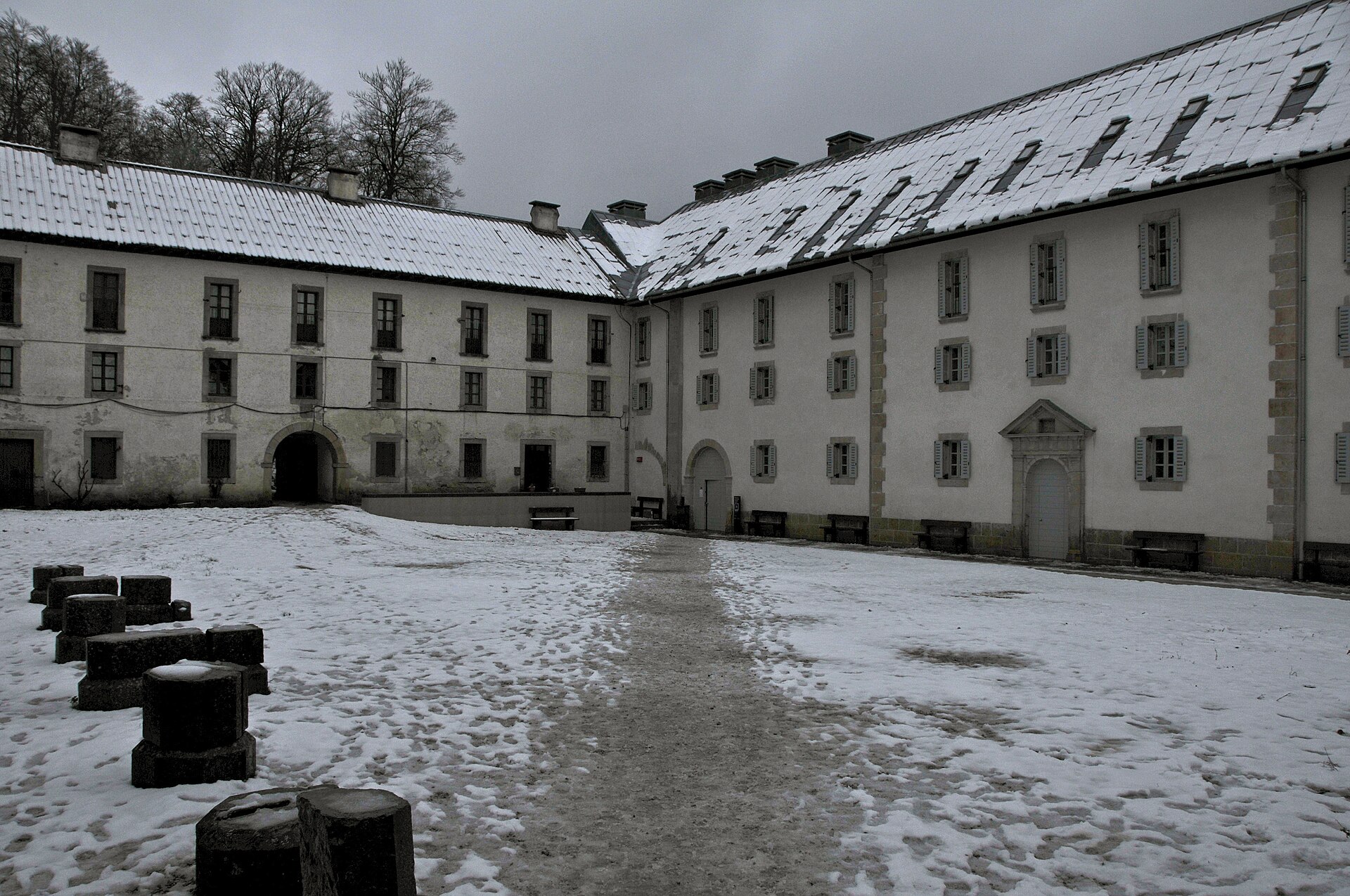
Winter changes everything else too. Many private albergues shut from November to March, though the Xunta public ones stay open all year. Daylight is short, the Meseta is cold and exposed, and the numbers fall off a cliff: October to November drops between 74% and 87% depending on the route. On the Francés, November arrivals were 5,433 against October's 29,890. That is the trade-off in one line — the first week of November is already a different Camino, empty and quiet, and that is precisely when things stop being open.
The honest winter option is the Sarria week, or the last 100 km of the Portugués from Tui. Both are low, both have towns with services, and both are walkable in December and January with a proper jacket, waterproof boots and a merino base layer. Do not walk the full Francés in deep winter unless you have winter mountain experience and a flexible schedule. The mountain does not negotiate.
Do I need to be Catholic?
No. You need to walk, and you need to be honest on the form. The Pilgrim's Office issues three different documents, and the difference is the motivation you declare:
- The Compostela, free, in Latin. It requires declaring a religious or spiritual motivation, in the formula devotionis affectu, voti vel pietatis causa. This is the certificate most people picture.
- The Welcome Certificate, also free. This is what you receive if you walked for reasons that are not religious or spiritual — sporting, cultural, personal. It records that you reached the cathedral, and it asks for the same minimum: 100 km on foot or 200 km by bike.
- The Distance Certificate, €3, on parchment. An additional document anyone can buy once they hold one of the other two. It records where you started and how far you walked.
Nobody at the office quizzes you on theology. You fill in the online form, you state your motivation, and you get the document that matches it. The thing that does get checked is the credencial: two stamps a day, on one continuous route, ending in Santiago. Walkers who split the route across years can still qualify, as long as they resume exactly where they stopped — the route must be continuous geographically, not continuous in time.
How do I get there from the US, UK or EU — and what about Indian passport holders?
Fly to the start, walk to Santiago, fly home from Santiago airport (SCQ) or take the train to Madrid. For the full Francés, the usual airports are Biarritz (with the bus to Bayonne, then on to Saint-Jean-Pied-de-Port), Pamplona, Bilbao, Madrid or Paris. For the Sarria week in this guide, fly into Santiago itself, then take the Renfe train to Sarria via Lugo. Check the day's times on renfe.com — they change with the season, and the honest advice is to arrive in Sarria the evening before you start walking, not the morning of.
For US, UK and EU passport holders, no visa is needed for the walk: Schengen allows 90 days in any 180-day period. What has changed is the border. The EU Entry/Exit System (EES) is fully operational since 10 April 2026: at your first Schengen airport, officers photograph you and scan four fingerprints, free, with no form to fill in advance, and no passport stamp afterwards. Allow extra time at the border on your first crossing. ETIAS, the separate online authorisation for visa-exempt visitors, is not operating, has no launch date, and is not accepting applications — do not pay anyone who claims to sell you one. The planned fee, when it eventually launches, is €20.
Indian passport holders do need a Schengen visa, applied for in advance at the Spanish embassy or consulate, with the usual proof of funds, travel insurance and accommodation. Apply early: a Holy Year summer is the worst time to discover that visa appointments are booked out. The EES biometric registration applies to visa holders as well, at the border, on arrival.
Is it safe for solo women?
Yes, and the numbers are the answer to the question. More than half the pilgrims who collected a Compostela in 2025 were women, and thousands of women walk the routes alone every year, in every month, at every age. The Camino is one of the few long walks in the world where a woman walking alone is unremarkable, because she is everywhere.
The risks are practical, and they are the same for everyone. Blisters and overuse injuries from too-long early stages end more walks than anything else. Bed bugs turn up in dormitories: check the mattress seams, keep your pack off the bed and off the floor, and never put your sleeping bag on a mattress you have not looked at. Theft in dorms is opportunistic: lock valuables in your pack, keep your phone and passport on your body, and never leave a phone charging unattended. Heat on the Meseta in July and August is real — carry two litres of water and walk the exposed stretches before noon.
The scams to know by name: taxi drivers at Sarria offering "shortcuts" that skip the walking; anyone selling a "guaranteed Compostela"; and fake donativo pressure — donativo means give what you can, it is not free, and it is not a fixed price, and anyone who tells you otherwise is running a business, not a hostel. Emergency number across Spain is 112.
What does Santiago itself cost once I arrive?
The cathedral is free to enter — the naves, the high altar and the crypt with the Apostle's tomb, every day from 7:00 AM to 9:00 PM, through the Praterías door. What costs money is everything around it, and the prices were read on 13 November 2026:
| Visit | Full price | Reduced |
|---|---|---|
| Cathedral Museum (permanent collection) | €9 (about $10) | €7 |
| Museum + Pórtico de la Gloria (with audioguide) | €15 (about $17) | €12 |
| Rooftops + Torre da Carraca (guided, about 60 min) | €15 (about $17) | €12 |
| Combined ticket (Pórtico + tower + rooftops + museum) | €23 (about $25) | €19 |
| Guided tour, Museum + Pórtico | €20 (about $22) | Single rate |
The reduced rate applies to accredited pilgrims, students, unemployed visitors, large families, disabled visitors and over-65s, with proof at the door. Book timed entry online at visitas.catedraldesantiago.es or at the ticket office in Praza do Obradoiro, open 10:00 AM–8:00 PM. The rooftop ticket also gives seven days of free entry to the Cathedral Museum, the Diocesan Museum and the MuSar, one visit each.
Two things that have changed recently and that most guides have not caught up with. The Botafumeiro, the giant censer that swings across the transept, has been out of service since 24 August 2026 — scaffolding for the lantern-tower restoration covers its mechanism, and the cathedral has given no date for its return. And since 16 October 2026, the pilgrim's masses at 9:30 AM, noon and 7:30 PM are held in the church of San Agustín, not the cathedral, because of main-chapel remodelling; the 7:30 AM mass is in the cathedral's Communion chapel. If you timed your arrival for the noon mass in the cathedral, check before you go.
For food, Santiago is the best eating on any Camino, and the cheapest good meal is in the market. The Mercado de Abastos, liveliest on Saturday mornings, sells pulpo and empanada from stalls to eat standing up. For a proper sit-down meal, O Sendeiro on Rúa do Olvido is the modern Galician restaurant the city keeps recommending — Google 4.8 from 3,239 reviews, €30–40 a person, chorizo and chestnut croquettes and thinly sliced pulpo. For the classic plate, Mesón do Pulpo in the San Pedro quarter does pulpo á feira for about €13. And if you want the splurge, Casa Marcelo holds a Michelin star for a tasting menu that mixes Galician, Peruvian and Japanese cooking.
What nobody tells you before you go
The Holy Door opening is at midday on 31 December, not at midnight. The archbishop strikes the wall around noon, and the ceremony is over long before the New Year's Eve fireworks. If you want to be there, book a Santiago hotel for 30 and 31 December, not for 1 January.
Nobody has published a 2027 forecast, and the 730,000 number is not one. The Xunta's sensor estimate for 2026 is about 736,000 walkers, and it measures footfall, not people. Any page that tells you how many pilgrims will walk in 2027 is guessing, and the Pilgrim's Office has said so.
The programme is unpublished. The cathedral presented the 2027 motto in September 2026, but the full official programme was still not published when this guide was checked on 17 November. Do not build a trip around a specific 2027 event until the cathedral publishes it.
Your feet decide your route, not your ambition. The Sarria week is five days because the stages are 20–29 km, and the 29 km day is the one that ends walks. Walk the short days, arrive by 2 PM, and take the bed that is there — the person who walks 30 km arrives at 5 PM to a full town.
The Botafumeiro is not swinging, and the noon mass is not in the cathedral. Both changed in the autumn of 2026, and both are the kind of detail that ruins a carefully timed arrival day if you only find out at the door.
The public albergue is not a booking system. It is a queue that opens at 13:00. In a Holy Year summer, the queue is the plan, and the private bed you booked on WhatsApp yesterday is the backup that saves the day.
The last 100 km is the most crowded walk in Europe next summer, and the alternatives are half as busy. The Portugués from Tui and the Inglés from Ferrol give you the same certificate, the same cathedral, and a bed without a race. If you can only walk one week in 2027, pick the route by the crowd, not by the postcard.
Your seven days at a glance
Day one: arrive in Sarria, get your credencial stamped, walk 22 km to Portomarín and look at the church that was moved stone by stone to escape a lake. Day two: 25 km to Palas de Rei, resupply in the market town, and eat properly — tomorrow is the long one. Day three: 29 km to Arzúa, lunch on pulpo in Melide, and the cheese town by evening. Day four: an easy 20 km to O Pedrouzo, charge everything, lay out clean clothes, and sleep early. Day five: 20 km into Santiago, Monte do Gozo, the square, the cathedral, and the Pilgrim's Office before noon. Day six: the Pórtico, the rooftops, the market, and the best meal of the trip. Day seven: Finisterre and the Atlantic, or the flight home. The full day-by-day plan, with real albergues, real restaurants and real prices, is in the blueprint at the top of this guide.
For the same honest first-timer's playbook elsewhere, see our Kedarnath guide for international visitors, our Varanasi guide for international visitors, our Puri guide for international visitors and our Bodh Gaya guide for international visitors.
Prices, timings and rules checked 17 November 2026 against the Pilgrim's Reception Office dashboard via santiago.es (564,006 Compostelas by 9 November 2026), the Cathedral of Santiago and santiago.es cathedral guide (ticket prices read 13 November 2026; Botafumeiro out of service since 24 August 2026; pilgrim's masses moved 16 October 2026), the Government of Navarre winter closure of the Lepoeder pass (1 November 2026, Europa Press / Diario de Navarra), EU EES and ETIAS status (checked 10–17 November 2026), the 2026 cost surveys at caminantes.co, camino-mio.com and globalsummitguide.com, and Google, TripAdvisor, Trip.com and Booking.com ratings for the stays and restaurants named. Exchange rate: €1 = $1.10 (ECB reference rate, 16 November 2026). Cathedral programmes, albergue opening dates and train times change with the season. Confirm on the day.
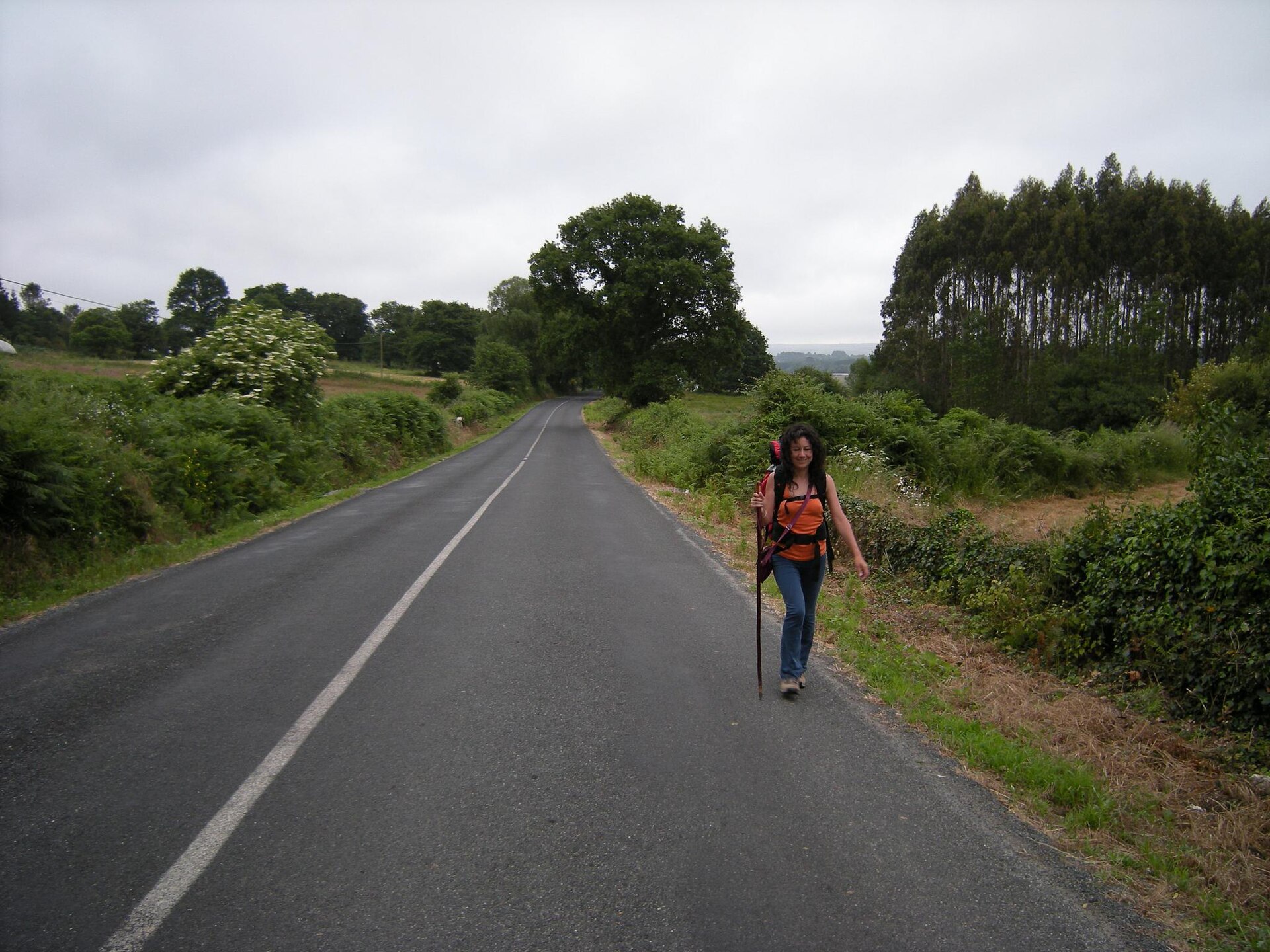
Photos: Santiago Cathedral from the Praza do Obradoiro by Davidh820 (Wikimedia Commons, CC BY-SA 3.0 ES); the sealed Holy Door by Luis Miguel Bugallo Sánchez (CC BY-SA 4.0); Roncesvalles under snow via Panoramio (CC BY 3.0); pulpo á feira by Luis Miguel Bugallo Sánchez (CC BY-SA 4.0); pilgrim on a Galician road by José Antonio Gil Martínez (CC BY 2.0).
Frequently asked questions
When does the Holy Door open for the Camino Holy Year 2027?
Around midday on 31 December 2026, when the Archbishop of Santiago strikes the sealed wall three times with a silver hammer in the Praza da Quintana. The door stays open for the whole of 2027 and is sealed again on 31 December 2027. The next Holy Year after 2027 is 2032, because a Holy Year only happens when 25 July, the Feast of St James, falls on a Sunday. Do not plan to arrive on 1 January for the opening: it happens the night before.
How much does the Camino de Santiago cost in 2026 and 2027?
Budget €40–65 a day if you sleep in albergues and eat pilgrim menus. A bed in a Galician public albergue is a flat €10 a night, a private albergue bed runs €12–25, and the three-course menú del peregrino costs €10–15. The full Camino Francés, 30–35 days on the trail, works out at €1,500–2,800 before flights. The five-day Sarria week in this guide costs roughly €300–450 on the trail, and Santiago itself adds €65–95 a day at budget level. Prices checked 17 November 2026; €1 is about $1.10 at the ECB reference rate of 16 November 2026.
How long does the Camino take — do I really need five weeks?
No. The Compostela, the certificate handed over in Santiago, needs only the last 100 km on foot (or 200 km by bike) on one recognised route, and the most popular way to do that is Sarria to Santiago in five walking days, about 115 km. The full Camino Francés from Saint-Jean-Pied-de-Port is 768–784 km and takes 30–35 days. Since February 2025 the 100 km no longer has to be the literal final stretch: any continuous 100 km on one route counts, as long as the stage that completes it ends in Santiago.
Do I need to be Catholic to walk the Camino and get the Compostela?
No. Anyone can walk it, and the Pilgrim's Office issues a certificate to everyone who completes the minimum distance with a stamped credencial. The Compostela itself, free and in Latin, is given to walkers who declare a religious or spiritual motivation. If your reasons are sporting or cultural, you receive the Welcome Certificate instead — same walk, same office, different wording. A third document, the Distance Certificate, costs €3 and records where you started and how far you walked.
Can I walk the Camino in winter?
The last 100 km, yes, with preparation. The full Francés in deep winter is a different walk: the Napoleon route over the Lepoeder pass is closed by law from 1 November to 31 March, so the first stage out of Saint-Jean-Pied-de-Port goes through the lower Valcarlos valley instead, many albergues shut, and daylight is short. November arrivals fall off a cliff — October to November drops 74–87% depending on the route. The honest winter option is the Sarria week, or waiting for spring.
Is the Camino safe for a solo woman traveller?
Yes, and the numbers back it up: 53.45% of the pilgrims who collected a Compostela in 2025 were women, and thousands of women walk the routes alone every year. The real risks are practical, not criminal: blisters from too-long early stages, bed bugs in dormitories, and theft in shared rooms. Walk the stages in the plan below, keep valuables locked or on your body, never leave a phone charging unattended in a dorm, and in a Holy Year summer, book private beds ahead — the danger is not people, it is arriving at 4 PM to a full town.
Keep exploring
 Yatra Guides
How to Check a Hotel Room for Hidden Cameras in 10 Minutes
A practical 10-minute hotel room check for hidden cameras: where they actually hide, the flashlight sweep, Wi-Fi scan and mirror test — and what to do if you find one.
 Yatra Guides
Bodh Gaya for International Visitors: The Tipitaka Ceremony, the Phone Ban, and the Buddha's Town Without the Guesswork
Bodh Gaya for first-time foreign visitors: the December 2026 Tipitaka ceremony, the temple phone ban, real costs, stays and scams — checked 14 Nov 2026.
 Yatra Guides
Puri for International Visitors: The Jagannath Temple You Cannot Enter — and the Sacred Coast That Is Still Worth the Trip
Puri for first-time foreign visitors: the Jagannath Temple entry rule, what to see instead, real costs, safety and scams — checked 12 Nov 2026.