
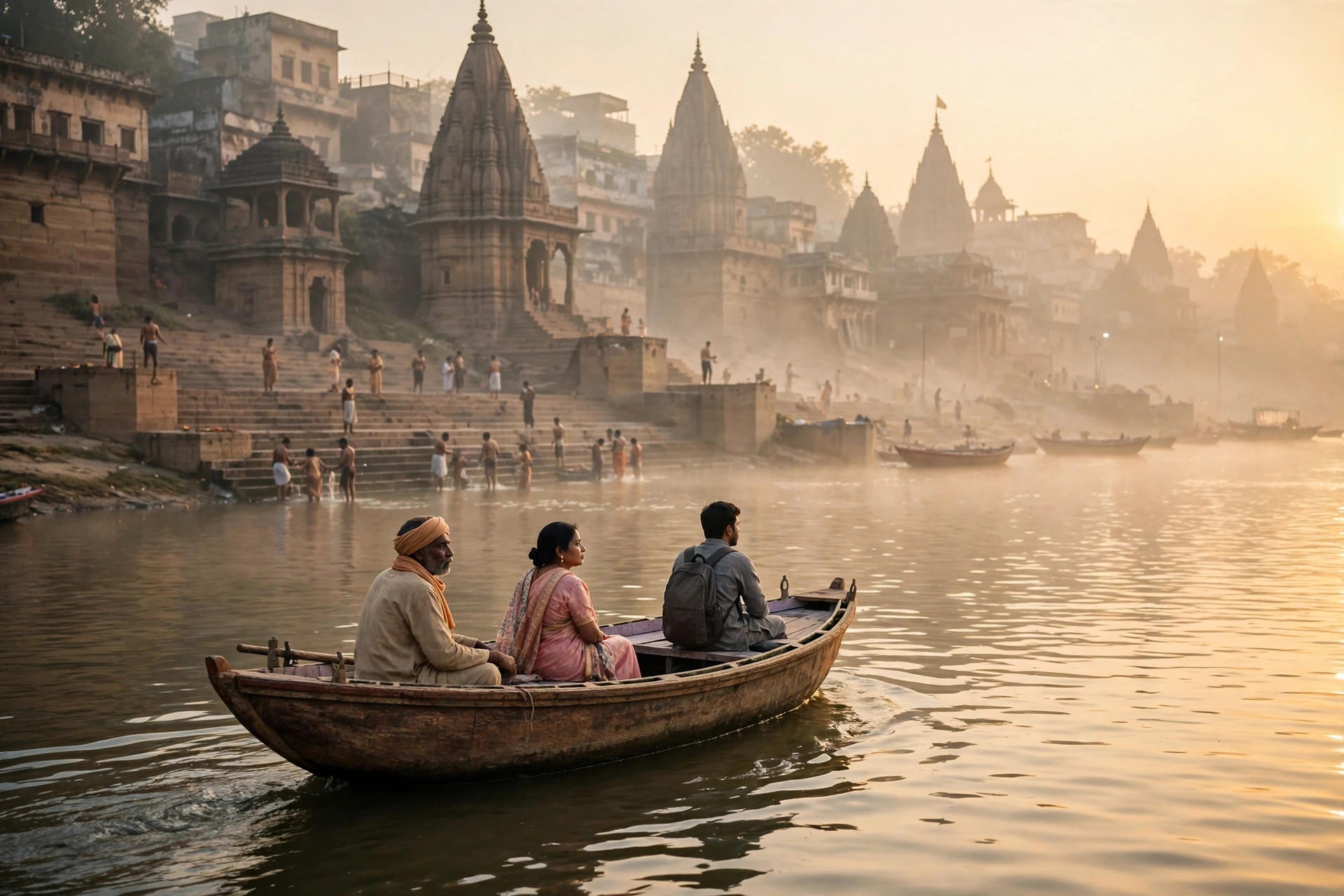
Photo: Wikimedia Commons
Yatra Guides
Varanasi for International Visitors: Visa, Costs, Safety, Scams, and the Ghats Without the Guesswork
First time in Varanasi from abroad? E-visa fees, the ₹300 Sugam Darshan ticket, real boat prices, safety, scams and a 3-day plan — checked 7 Nov 2026.
Quick answer: Varanasi is intense, not comfortable — and worth it. Come between October and March, get your e-visa online before you fly ($25 for 30 days), budget about $60–110 per person for 3 days on the ground at backpacker level or $150–280 in comfort, and spend your first morning on a dawn boat, not in a queue: a ₹300 Sugam Darshan ticket gets you into Kashi Vishwanath in 15–30 minutes instead of 3–4 hours.
Complete yatra blueprint
3-Day Varanasi for International Visitors — Complete Blueprint
Built for a first-time visitor from the US, UK or EU: arrive, do the dawn boat, get into Kashi Vishwanath without the queue, eat where locals eat, and spend a calm morning at Sarnath. Prices checked 7 November 2026; conversions at ₹94 to the dollar and ₹105 to the euro.
Arrive → Assi Ghat Evening → Ganga Aarti from the Steps
🛕 Temples & darshan
Assi Ghat — Evening Walk · Assi Ghat
The gentlest first hour in Varanasi. Wide steps, chai stalls, families, and the river at eye level. This is where you learn the city's pace before the old city tests it.
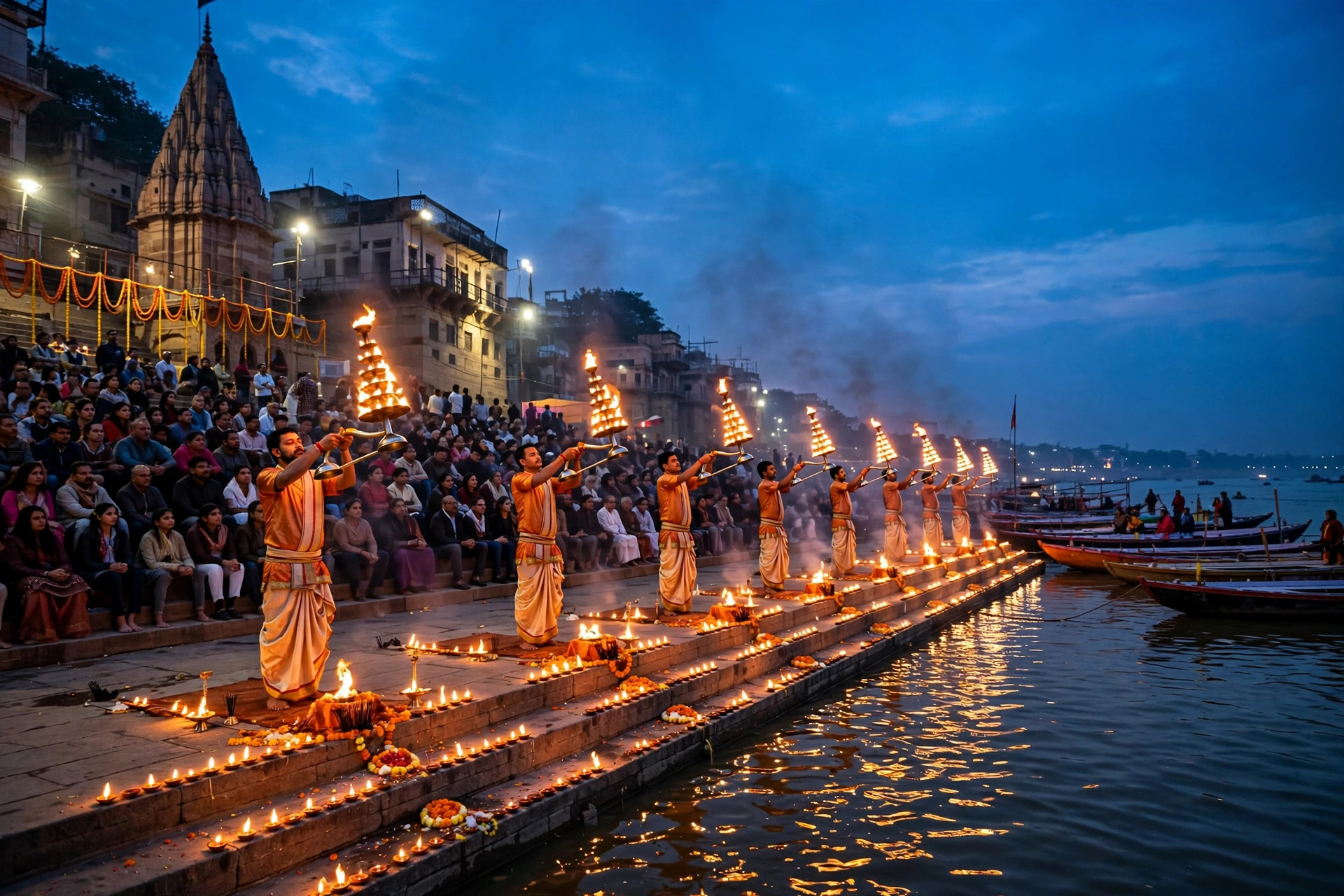
Ganga Aarti — Dashashwamedh Ghat · Dashashwamedh Ghat
Seven priests, tiered brass lamps, chanting, and a crowd on the steps. The aarti is the city's nightly show and its nightly prayer at the same time.
🏨 Where to stay
Moustache Varanasi
Dorms from ~₹1,800 / night (about $19; 8.5/10 on Trip.com, 1,105 reviews)
Near Assi Ghat; the safest budget bet for a first-timer — staff, common room, and other travellers to swap notes with.
Hotel Ganges View
₹1,500–2,500 / night (about $16–27)
Assi Ghat area; simple rooms, rooftop, and a 2-minute walk to the river.
BrijRama Palace, Varanasi — by the Ganges
₹10,000–18,000 / night (about $106–191; 9.3/10 on Trip.com, 76 reviews)
A 200-year-old palace on Darbhanga Ghat. The splurge that makes sense if this is a once-in-a-lifetime trip.
🍽 Where to eat
Pizzeria Vaatika Cafe
₹600–900 for two (about $6–10)
Must try: Wood-fired pizza, apple pie with ice cream
Assi Ghat; 375 reviews. The place every long-stay foreigner ends up at when they need a break from thalis. Gets packed — expect a wait at dinner.
Karki Restaurant
₹400–600 for two (about $4–6)
Must try: Paneer tikka, chai
Assi; a community cafe with a garden feel. Good first-night dinner when you are tired and do not want to think.
- No cars go into the old city. Your taxi stops at Godowlia or Assi, and you walk the last stretch with your bag over stone lanes. Pack a bag you can carry, not drag.
- Get your SIM at the airport with your passport, a photo and your hotel address. You will need it for maps, OTPs and calling your hotel.
- Change a little cash at the airport. Boatmen, chai stalls and auto drivers are cash-only, and the old city has few ATMs.
Dawn Boat → Kashi Vishwanath → Old-City Food Trail
🛕 Temples & darshan
Dawn Boat Ride — Assi to Manikarnika · Board at Assi Ghat
The single best hour in Varanasi. The city wakes up from the water: bathers, bells, smoke from the cremation ghats, and the temples turning gold. Board before 6 AM in winter.
Kashi Vishwanath Temple — Sugam Darshan · Kashi Vishwanath Corridor
One of the 12 Jyotirlingas, rebuilt as a grand corridor in 2021. The free queue runs 3–4 hours on a normal day; the ₹300 Sugam Darshan ticket cuts it to 15–30 minutes.
Kaal Bhairav Mandir · Old city, near the corridor
Local belief says no Kashi trip is complete without seeking Kaal Bhairav's permission first — the city's fierce guardian, and the reason many pilgrims visit him before the main temple.
🏨 Where to stay
Moustache Varanasi
Dorms from ~₹1,800 / night (about $19; 8.5/10 on Trip.com, 1,105 reviews)
Stay in the same place all three nights. Moving hotels in the old city costs you half a day.
Suryauday Haveli
₹3,500–5,000 / night (about $37–53)
Assi area; a haveli stay with a rooftop, for travellers who want character without palace prices.
Taj Ganges Varanasi
From ~₹7,000 / night (about $74; 8.9/10 on Trip.com, 108 reviews)
The reliable full-service option, a short drive from the ghats. Book it if you want a pool, a gym and a front desk that sorts out taxis.
🍽 Where to eat
Blue Lassi Shop
₹80–150 per lassi (about $1–2)
Must try: Seasonal fruit lassi
Kachauri Gali, near Manikarnika. Family-run for 75+ years, 70+ flavours, cash only. The tiny blue shop every guidebook names — and this once, the guidebooks are right.
Kashi Chaat Bhandar
₹100–200 per person (about $1–2)
Must try: Tamatar chaat
Near Dashashwamedh Ghat. The chaat stop locals name first. Eat standing up, like everyone else.
Brown Bread Bakery
₹500–800 for two (about $5–9)
Must try: European breakfast, banana pancakes
Pandey Ghat. One of the few places near the ghats serving non-veg food, with real coffee. The morning-after-a-late-night breakfast.
- Kachori-sabzi with jalebi is the Banaras breakfast. Eat it at a lane shop in the morning, standing at the counter — that is how it is meant to be eaten.
- In November, look for malaiyyo in the mornings: a saffron milk foam sold only in the cold months, gone by 10 AM. If you see a vendor with earthen bowls on the street, that is it.
- Do not photograph at Manikarnika, even from the boat. Your boatman will slow down there; look, and put the camera down.
Sarnath Morning → BHU → Depart
🛕 Temples & darshan
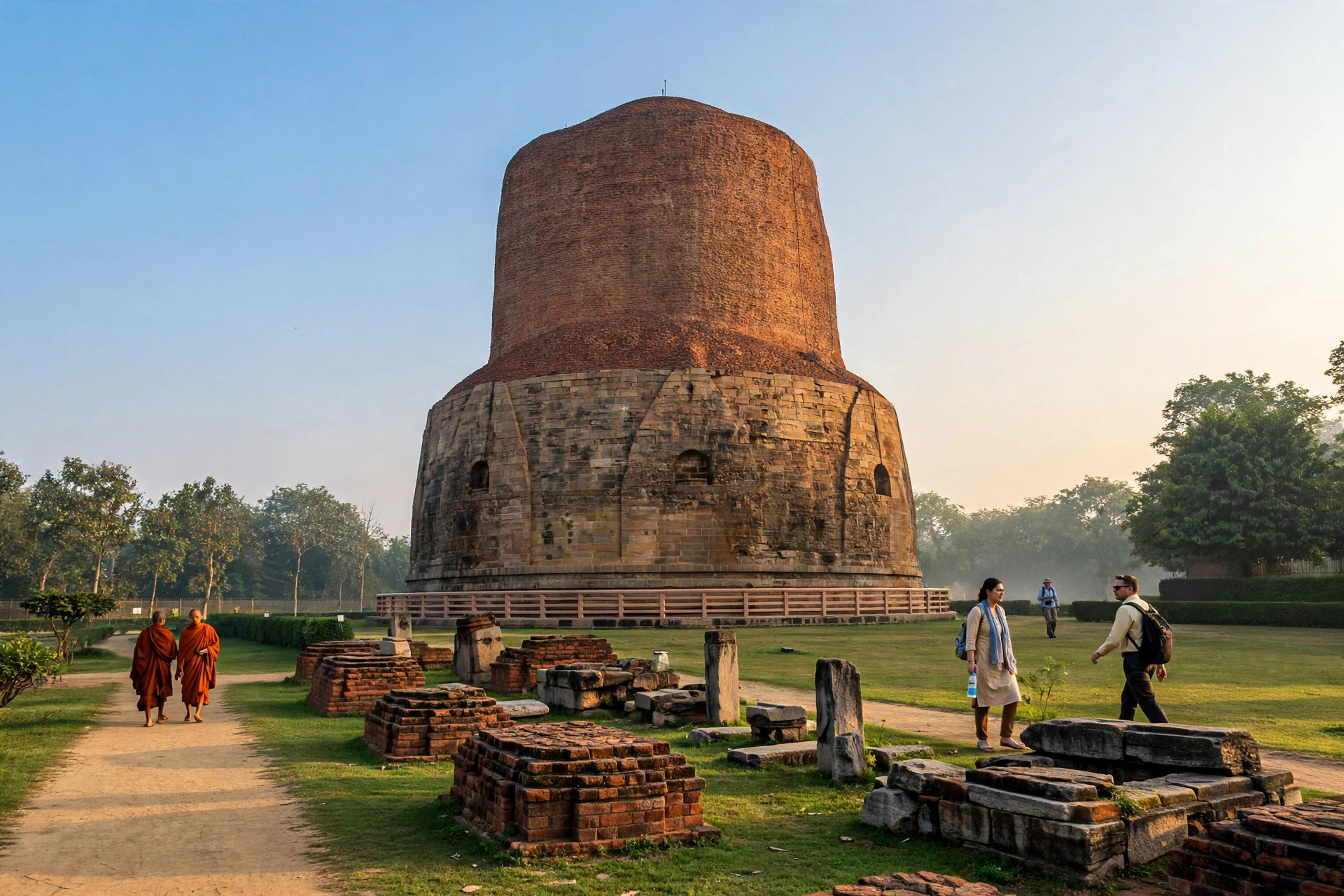
Dhamek Stupa and the Sarnath Ruins · Sarnath
Where the Buddha gave his first sermon. The brick stupa, the deer park and the quiet are the calm counterweight to two days of Varanasi noise — and the reason every serious itinerary includes it.
Banaras Hindu University and Bharat Kala Bhavan · BHU campus, Lanka
A green, spacious campus that feels like a different city, with a museum of miniature paintings and sculpture. Worth an hour if your train or flight is late in the day.
🍽 Where to eat
Brown Bread Bakery
₹500–800 for two (about $5–9)
Must try: Banana pancakes, strong coffee
Slow last breakfast before the airport run. Order the pancakes and take your time.
- Leave for the airport 3 hours before a domestic flight. The 25 km road can take an hour, and Varanasi traffic near the station is slow all day.
- If you are continuing to Bodh Gaya, it is 250 km by road, about 6 hours — the classic Buddhist-circuit link, and the reason Sarnath matters beyond itself.
Who is this guide for?
You have never been to India, you have three days, and you have read enough to know Varanasi is not a normal city break. This guide is the honest version: what it costs, what the queues are actually like, which scams to expect by name, and what to do when the plan breaks. It is written for a first-time visitor from the US, the UK or the EU, and every price in it was checked on 7 November 2026.
One line before the detail: Varanasi is intense, not comfortable, and worth it. If you want smooth and easy, go to Udaipur. If you want the oldest living city in the world, with the river, the fire and the noise all in one frame, come here — and come prepared.
Do you need a visa?
Yes, and there is no shortcut. Citizens of the UK, Ireland, every EU country, the US, Canada, Australia and New Zealand all need a visa before travelling to India. Nobody in this group gets a visa on arrival.
The standard route is the e-Tourist visa, applied for entirely online on the official portal, indianvisaonline.gov.in. That is the only official site. Lookalike sites charge their own fees on top of the government fee and buy you nothing, and the portal itself warns against anyone who claims to speed up an e-visa for money.
Apply between 4 and 120 days before you land, and your passport needs six months' validity from arrival. The visa arrives as an Electronic Travel Authorisation by email, and it is stamped into your passport at the airport. Two timing traps catch people every year: the 30-day visa runs from your first entry, but the 1-year and 5-year visas run from the date the ETA is granted, so applying 120 days early burns four months of a 1-year visa. And the 1-year and 5-year visas cap your total stay at 180 days per calendar year.
Fees, from the official e-Tourist fee table dated 8 September 2026, in US dollars, with a 3% bank charge added at payment (4% on PayPal). The fee is non-refundable whether the visa is granted or refused, and the figure shown on the portal at payment is the one that applies.
| Visa | US passport | UK passport | EU / Canada / Australia / NZ |
|---|---|---|---|
| 30-day, arrival Apr–Jun | $10 | $10 | $10 |
| 30-day, arrival Jul–Mar | $25 | $25 | $25 |
| 1-year, multiple entry | $40 | $40 | $40 |
| 5-year, multiple entry | $160 | $484 | $200 |
The UK 5-year figure is the one to notice: at $484, it takes four or more years of repeat visits before it beats buying a 1-year visa each time. For a single Varanasi trip, the 30-day visa is the right buy. Carry your passport and a printout of the visa at all times in Varanasi — hotels, the temple helpdesk and checkposts all ask for it.
One loose end, stated plainly: some travel advisories mention a separate e-Arrival Card for India. As of 7 November 2026 we could not confirm a mandatory one on the official portal, so check indianvisaonline.gov.in before you fly rather than trusting a third-party advisory either way.
When should you come?
October to March. That is the whole answer, and November 2026 is the best month of the year to be here. Diwali falls on Sunday 8 November, Chhath runs 13–16 November, Ganga Mahotsav runs 20–23 November, and Dev Deepawali lights all 84 ghats on Tuesday 24 November, with the lamp-lighting window from 5:08 to 7:47 PM. If you can only pick one week, pick 20–24 November: four evenings of music and culture, then the night the whole river catches fire.
Summer is the opposite. April to June runs 35–45°C, and the old city lanes turn into an oven by 10 AM. July to September is monsoon, when the river rises, the lower ghats flood, and boats are sometimes banned outright. Winter mornings are cold enough for a jacket — 8–10°C at dawn on the boat — so pack a layer even if you are coming from a cold country. The cold here is damp river cold, and it finds you on the water.
If you are coming for Dev Deepawali week, book your hotel now, not next week. Hotel rates in that week run two to three times normal, and the good rooms near Assi Ghat go first. Our own Dev Deepawali guide has the full festival plan.
How do you get there and get around?
Fly into Lal Bahadur Shastri International Airport, 25 km from the old city, 45–60 minutes by road. A flight from Delhi takes about 1 hour 10 minutes and costs ₹2,500–6,000 (about $27–64) if booked ahead. The overnight trains from Delhi take 8–12 hours; the Rajdhani is the comfortable option, and it needs booking well ahead in November.
From the airport, take a pre-paid taxi from the counter inside the terminal — ₹800–1,200 to Assi Ghat (about $9–13). Do not take the taxi touts outside the terminal. Inside the city, autos are the workhorse: agree the fare or use an app taxi before you get in, because the meter is rarely used and the first quote to a foreigner is rarely the real one. A short hop inside the city is ₹30–50; Assi to Godowlia is about the same.
And here is the fact that shapes every plan in this guide: no vehicles go into the old city. Your taxi stops at Godowlia or Assi, and you walk the last stretch with your bag over stone lanes. That is why the blueprint keeps you in one hotel for three nights, and why you should pack a bag you can carry, not drag.
What does the dawn boat actually cost?
This is the question every first-timer asks, and the answer is simpler than the touts make it sound. A shared sunrise rowboat costs ₹250–350 per person (about $3–4) for the classic 60–90 minute circuit: board at Assi Ghat, glide past Dashashwamedh, slow down at Manikarnika, and come back. A private rowboat for your own group costs ₹1,800–3,500. A shared motorboat seat is ₹200–400, but take the rowboat — the motor drowns the bells and the chanting, which is half the point.
Board between 5:30 and 6:00 AM in the October–March season. The government notice boards at Dashashwamedh display fixed hourly rates for hand-rowed boats, so the prices above are not a guess; they are what the boards and three live booking sources agree on this week.
Say this exact sentence before you step in: "How much, which route, how long?" Get the answer in full — price, route, duration — and agree it before boarding. The price-switch, where a boatman quotes one figure at the ghat and another mid-river, is the oldest Varanasi scam, and it only works on people who boarded without agreeing. A life jacket is your right, not a favour — ask for one.
Two more things. First, the boats are cheapest and calmest in the early morning, when the ghats are least crowded and the rowers give you their quiet best. Second, in Dev Deepawali week (20–24 November 2026) every boat price doubles or triples — shared seats ₹500–800, private boats ₹3,000–6,000 — so book that week ahead and do not haggle on the night itself.
How do you get into Kashi Vishwanath without a 4-hour queue?
General darshan is free for everyone, and the free queue on a normal day runs 3–4 hours. On a Monday or a festival day, it is worse. The ₹300 Sugam Darshan ticket is the honest way around it: book online at shrikashivishwanath.org, pick a slot between 6 AM and 6 PM, and you are through in 15–30 minutes with a Shastri escort. The price was ₹250 earlier in the year and was revised to ₹300; older guides still quote the old figure. Maximum five persons per booking, photo ID mandatory, and differently-abled devotees are not charged.
Foreign visitors have a second route. The temple portal lists a ₹600 ticket with Shastri assistance for foreign devotees, arranged through the temple helpdesk with passport verification. It exists, and it works — but the online Sugam ticket is simpler, cheaper and clearer, so book that first and treat the helpdesk as your backup, not your plan.
Inside, the rules are simple: shoes and phones go into the lockers at the corridor entrance, shoulders and knees covered, and no photography inside the sanctum. The corridor itself, rebuilt in 2021, is wide and well managed — the chaos is outside, in the lanes, not inside.
One more stop, and it is a matter of belief, not rules. Local tradition says no Kashi trip is complete without seeking Kaal Bhairav's permission first — the city's fierce guardian, whose temple sits a short walk from the corridor. Go if the queue is short. Skip it if it is not. The main darshan is the point of the day.
What does it actually cost?
Ground costs only — your international flight is extra, and so is the Delhi–Varanasi flight. Conversions use ₹94 to the dollar and ₹105 to the euro, the rates on 7 November 2026, and are rounded. The rupee figure is the one that matters on the ground.
| Expense (3 days, per person) | Budget | Comfort |
|---|---|---|
| Stay (2 nights) | ₹1,000–3,000 ($11–32 / €10–29) | ₹6,000–12,000 ($64–128 / €57–114) |
| Food | ₹1,500–2,500 ($16–27 / €14–24) | ₹3,000–5,000 ($32–53 / €29–48) |
| Boats (2 shared rides) | ₹500–700 ($5–7 / €5–7) | ₹1,800–3,500 private boat ($19–37 / €17–33) |
| Sugam Darshan ticket | ₹300 ($3 / €3) | ₹300 ($3 / €3) |
| Local transport (autos, airport taxi) | ₹800–1,500 ($9–16 / €8–14) | ₹1,500–2,500 ($16–27 / €14–24) |
| Sarnath + museum | ₹700–900 ($7–10 / €7–9) | ₹1,000–1,500 ($11–16 / €10–14) |
| Total | about $60–110 | about $150–280 |
Two things move the total more than anything else: your hotel, and the week you pick. A dorm bed near Assi is ₹500–800 a night; the palace on the ghats is ₹10,000–18,000. And Dev Deepawali week (20–24 November) roughly triples hotel rates and doubles boat prices, so the same three days cost far more that week — book early, or come the week after and pay normal prices for a normal city.
Cash is still king here. Cards work in hotels and bigger restaurants, but boatmen, chai stalls, auto drivers and lane shops are cash-only. Tips run ₹50–200 for a boatman and ₹200–500 for a half-day guide. ATMs at the airport are the safest; the old city has few, and some run dry in festival week.
Is Varanasi safe?
For a first-timer, the honest answer is: yes, with the same rules that apply anywhere in India. Violent crime against foreign tourists is rare. The real risks are pickpockets in crowds and on packed boats, aggressive touts, and inflated auto fares — the things this guide names one by one so they stop being surprises.
Stay near Assi Ghat, where the lanes are busy and well lit. Walk the ghats in the morning and evening, when they are full of people. Avoid isolated lanes after dark, and take a registered hotel rather than a cheap room down an unlit lane. Dress modestly in temple areas — shoulders and knees covered — and ask before photographing people at prayer or bathing.
For solo women, specifically: the Assi Ghat area is the right base, and the ghats themselves are busy and family-filled from dawn to late evening. The rules that matter are daylight travel, a hotel with a staffed front desk, no isolated stretches after dark, and a firm, polite no to anyone who attaches themselves to you as a guide. Women travel Varanasi solo every week of the year. The city rewards the careful, not the fearless.
Scams to avoid
Three, by name, because naming them is what makes them avoidable.
The silk shop. A friendly man at the ghats offers to show you his uncle's silk factory, or his brother's carpet shop, or a weaving workshop where his family has worked for generations. The shop is real; the prices are not. The pressure is gentle, the tea is free, and the silk costs three times the market rate. Walk away with a smile and a "no thank you" before you reach the door. If you want silk, buy it at a fixed-price shop in Godowlia, or ask your hotel for a name.
The boat price-switch. Quoted one price at the ghat, charged another mid-river. It only works if you boarded without agreeing. Agree price, route and duration before you step in, and if the figure changes on the water, pay what you agreed and walk away at the ghat.
The instant guide. Someone attaches themselves to you at the ghats, walks with you for ten minutes, tells you three facts, and then names a price. A polite no at the start saves an awkward negotiation later. If you want a guide, hire one through your hotel for a fixed half-day rate (₹500–1,000) and agree it in writing first.
Temple etiquette that actually matters
Dress modestly — shoulders and knees covered — in temples and on the ghats. Remove your shoes before entering any temple, and use the shoe-keeping counters (₹10–20) rather than leaving them at the door. Accept prasad politely when it is offered; it is a blessing, not a transaction.
Photography is fine on the ghats and at the aarti. It is not fine inside the Kashi Vishwanath sanctum, and it is not fine at Manikarnika or Harishchandra, the cremation ghats. That last one is not a posted regulation — it is a request from grieving families, and it matters more than a regulation. Put the camera away well before you reach them, and never point it at a funeral pyre or a family in mourning.
One more rule that is not written anywhere: do not step into the river to bathe unless you know what you are doing. Pilgrims bathe every morning, and the river is sacred to them. For a visitor, the Ganga is not a swimming pool — the current is real, the water is not clean by any standard you know, and the boat is the right way to be on it.
What nobody tells you
Google Maps does not work properly in the old city. The lanes are narrow, the GPS drifts, and every turn looks like the last one. On your first morning, hire a guide for two hours or walk with someone from your hotel — not because you cannot find the temple, but because getting lost with a local is a walk, and getting lost alone is a morning gone.
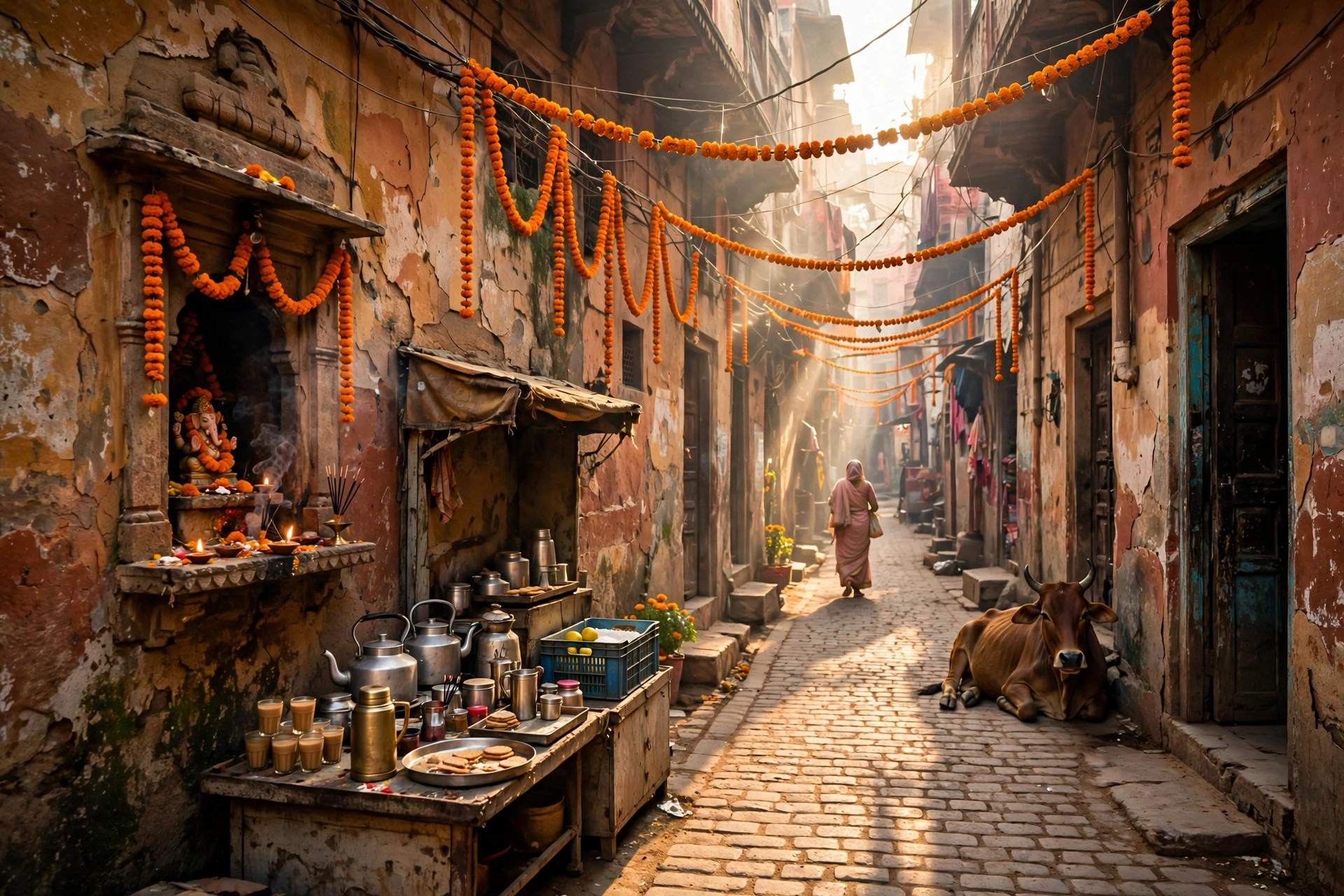
The second thing nobody tells you: the old city is disorienting even with a map, and that is part of it. The lanes are the city. The temples are small, the shrines are in walls, the tea stalls are in doorways, and the best hour of your trip might be the one where you stop trying to get somewhere and just walk.
The third: November mornings have malaiyyo. It is a saffron milk foam sold from earthen bowls on the street, only in the cold months, gone by 10 AM. If you see a vendor with bowls on a cart in the morning, that is it. Order one, eat it standing up, and thank the season.
Sarnath: the calm half-day
Ten kilometres from the noise, Sarnath is where the Buddha gave his first sermon, and it feels like it. The Dhamek Stupa rises out of green lawns and scattered ruins, monks walk the paths, and the whole place runs at half the speed of Varanasi. Go at 7 AM, before the tour buses, and give it a full morning.
The archaeological museum charges ₹25 for Indians and ₹300 for foreign nationals (ASI rates — confirm at the counter), and it is closed on Fridays. The deer park, the temples of different Buddhist countries, and the stupa itself are free to walk. If you are continuing to Bodh Gaya afterwards, this is the first stop on that road — 250 km, about 6 hours — and the reason Sarnath matters beyond itself.
The last word
Three days is the right length. One day to be overwhelmed, one day to find your feet, and one morning at Sarnath to breathe before you leave. Book the e-visa first, the Sugam Darshan ticket second, and the hotel third — in that order, because the first two are the ones that actually run out. Then come, get on the boat before sunrise, and let the city do the rest.
For the Indian pilgrim's version of this trip, with corridor darshan timings and Indian costs, see our Kashi Vishwanath Varanasi guide. For the festival week itself, see our Dev Deepawali Varanasi 2026 guide. And if Varanasi leaves you wanting the mountains next, our Kedarnath guide for international visitors plans that trip for May 2027.
Facts verified 7 November 2026. Dev Deepawali Tuesday 24 November 2026 (Kartik Purnima, deepdan muhurat 5:08–7:47 PM), Ganga Mahotsav 20–23 November 2026, Diwali Sunday 8 November 2026 — Drik Panchang via Beauty of Bharat (30 October 2026), HelloBanaras (checked 3 November 2026) and our own Dev Deepawali guide. E-visa: official e-Tourist fee table dated 8 September 2026 via indianvisaonline.gov.in; 30-day $25 (July–March) / $10 (April–June), 1-year $40, 5-year $200 ($160 US, $484 UK), plus 3% bank charge; apply 4–120 days before arrival. Sugam Darshan ₹300 per person, slots 6 AM–6 PM, max 5 per booking — shrikashivishwanath.org via Tripcosmos (checked 28 September 2026) and Pujapurohit (checked 3 August 2026); foreign-visitor ₹600 ticket with Shastri assistance per the temple portal via BookMyBanaras. Boat prices: shared sunrise ₹250–350 per person, private rowboat ₹1,800–3,500 — TasteYatra (verified July 2026), NaviX Kashi boat guide, Kashi Taxi (updated 14 October 2026); Dev Deepawali week 2–4x. Hotel and restaurant names, ratings and review counts: Trip.com, Holidify and NaviX Kashi listings, and Places lookups, as returned 7 November 2026 (BrijRama Palace 9.3/10 Trip.com, 76 reviews; Taj Ganges 8.9/10, 108 reviews; Moustache Varanasi 8.5/10, 1,105 reviews; Pizzeria Vaatika Cafe 4.0, 375 reviews; Karki Restaurant 4.7, 56 reviews). Currency conversions at ₹94 to the dollar and ₹105 to the euro (7 November 2026) and rounded. Distances are approximate road distances. The e-Arrival Card position could not be confirmed on the official portal on 7 November 2026 — check indianvisaonline.gov.in before you fly.
Frequently asked questions
Do I need a visa to visit Varanasi?
Yes. Citizens of the US, UK, EU, Canada, Australia and New Zealand all need an Indian visa before travel — there is no visa on arrival for these passports. Apply for the e-Tourist visa online at indianvisaonline.gov.in, 4 to 120 days before arrival. A 30-day visa costs $25 for July–March arrivals ($10 for April–June), a 1-year visa $40, and a 5-year visa $200 for most nationalities ($160 for US passports, $484 for UK passports), plus a 3% bank charge. The fee is non-refundable, and your passport needs six months' validity from arrival.
When is the best time to visit Varanasi?
October to March, when it is cool and dry. November 2026 is the best month of the year to come: Diwali falls on Sunday 8 November, Chhath runs 13–16 November, Ganga Mahotsav runs 20–23 November, and Dev Deepawali lights all 84 ghats on Tuesday 24 November. Avoid April to June (35–45°C) and July to September (monsoon, when boats are sometimes banned).
How much does a boat ride cost in Varanasi?
A shared sunrise rowboat costs ₹250–350 per person (about $3–4) for the classic 60–90 minute circuit from Assi Ghat past Dashashwamedh to Manikarnika and back. A private rowboat for your own group costs ₹1,800–3,500. Agree the price, the route and the duration before you step in. In Dev Deepawali week (20–24 November 2026) every boat price doubles or triples, so book ahead.
How do I get into Kashi Vishwanath without a long queue?
Book a Sugam Darshan ticket online at shrikashivishwanath.org — ₹300 per person, slots 6 AM to 6 PM, and it cuts the wait from 3–4 hours in the free queue to 15–30 minutes. General darshan is free for everyone. Foreign visitors can also use the temple helpdesk process: the temple portal lists a ₹600 ticket with Shastri assistance for foreign devotees, with passport verification at the helpdesk — but the online Sugam ticket is simpler, so book that first and treat the helpdesk as your backup.
Is Varanasi safe for a solo woman traveller?
Yes, with the same rules that apply anywhere in India. Stay near Assi Ghat, where the lanes are busy and well lit; walk the ghats in the morning and evening when they are full of people; avoid isolated lanes after dark; dress modestly in temple areas; and take a registered hotel rather than a cheap room down an unlit lane. Violent crime against foreign tourists is rare — the real risks are pickpockets in crowds, aggressive touts and inflated auto fares. Share your live location with someone back home.
Can I take photos at the cremation ghats?
Do not photograph at Manikarnika or Harishchandra ghats. It is not a posted regulation — it is a request from grieving families, and it matters more than a regulation. Put the camera away well before you reach them, and never point it at a funeral pyre or a family in mourning. Photography is fine on the ghats generally and at the aarti, but always ask before photographing people at prayer or bathing.
Keep exploring
 Yatra Guides
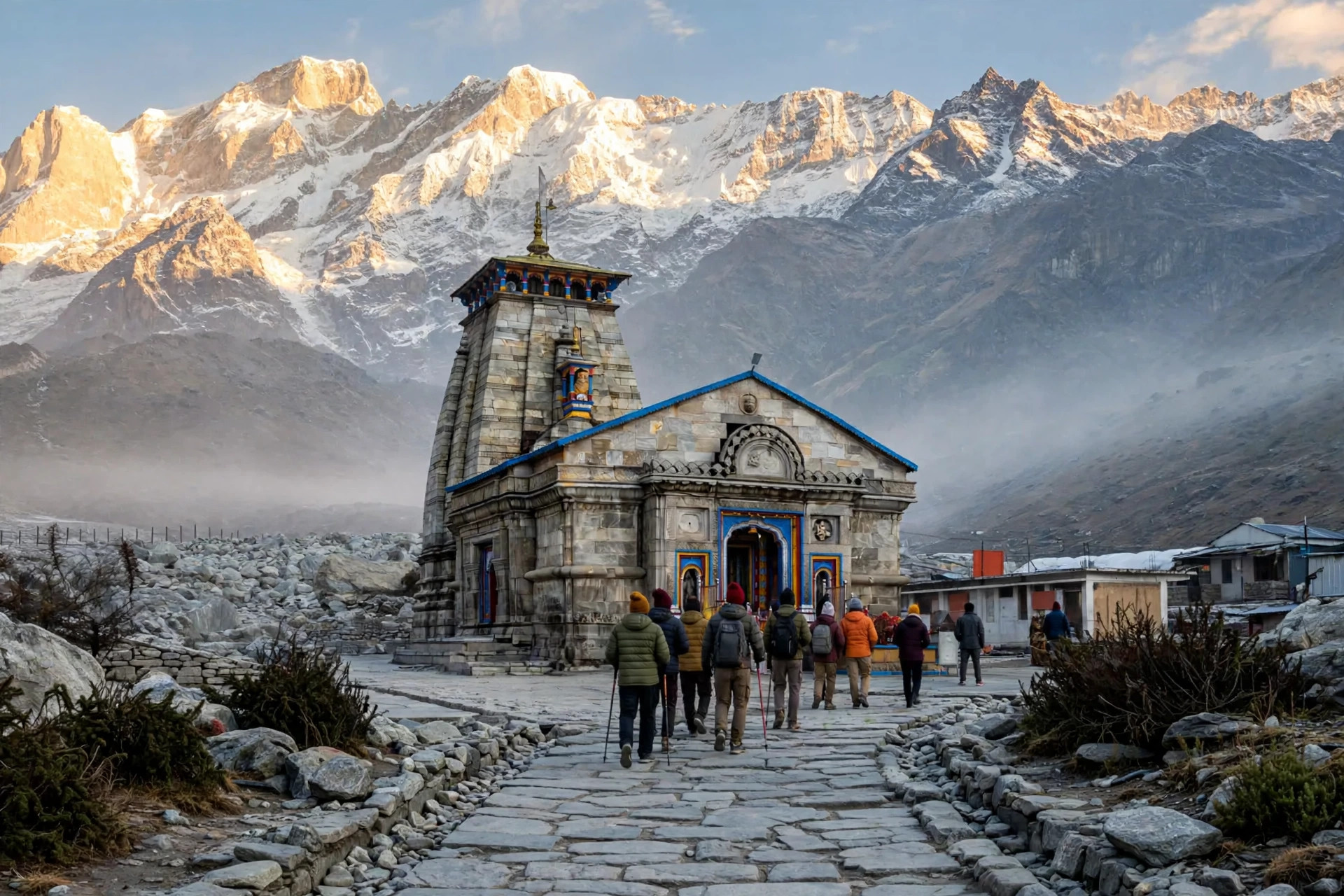
Kedarnath Yatra for International Visitors: Visa, Registration, Costs in USD, and the Honest Timing Call
Kedarnath for foreign visitors: e-visa, free Char Dham registration, trek vs helicopter costs in ₹ and USD, the 2026 temple entry rule, and why May 2027 is the smart plan.
 Yatra Guides
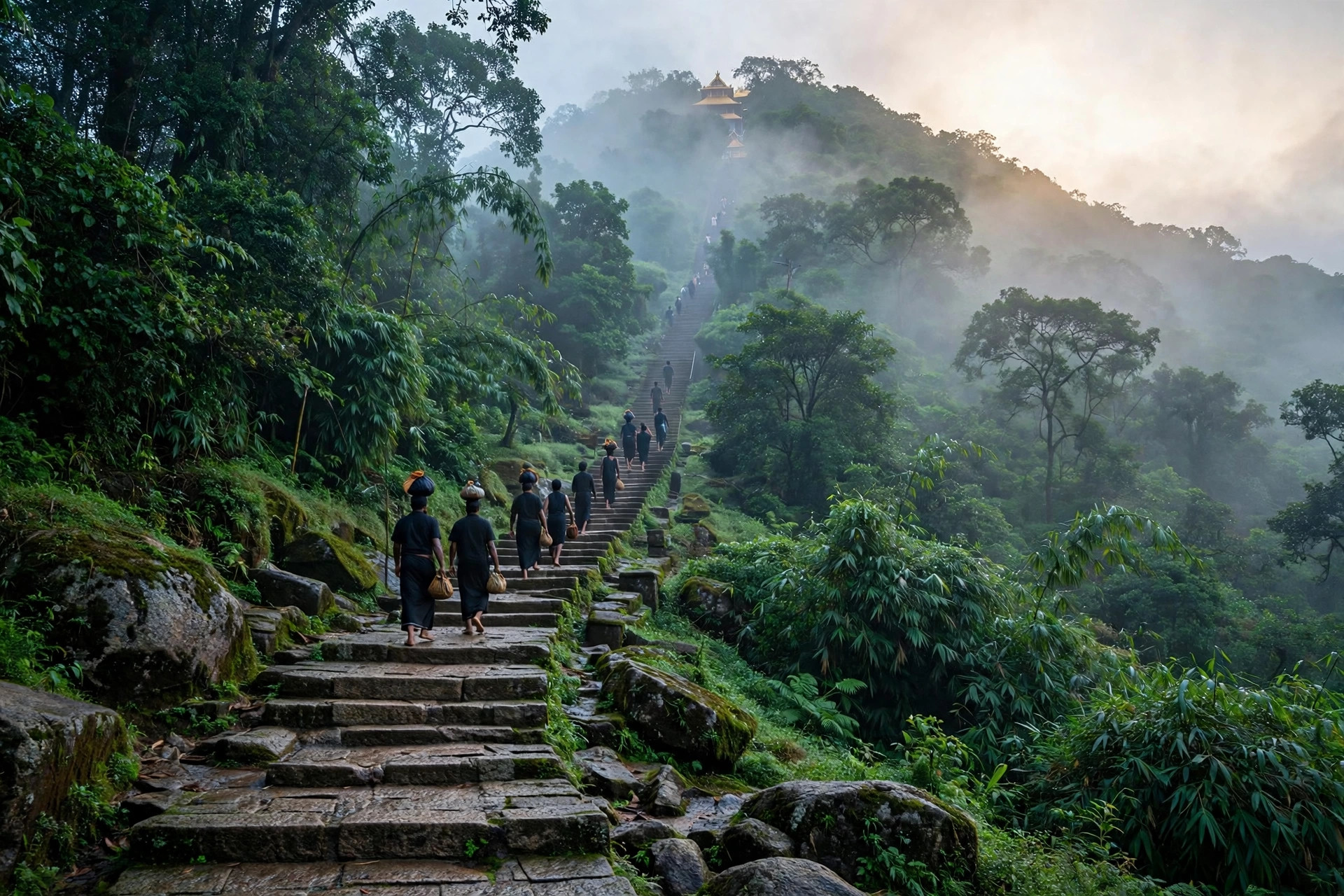
Sabarimala Mandala Season 2026-27: Dates, Virtual-Q Booking, aur First-Timer ka Poora Guide
Sabarimala 16 Nov 2026 ki shaam ko khulta hai Mandala season ke liye. Virtual-Q booking, 41-day vratham, Pamba trek aur first-timer ka imaandaar plan.
 Yatra Guides
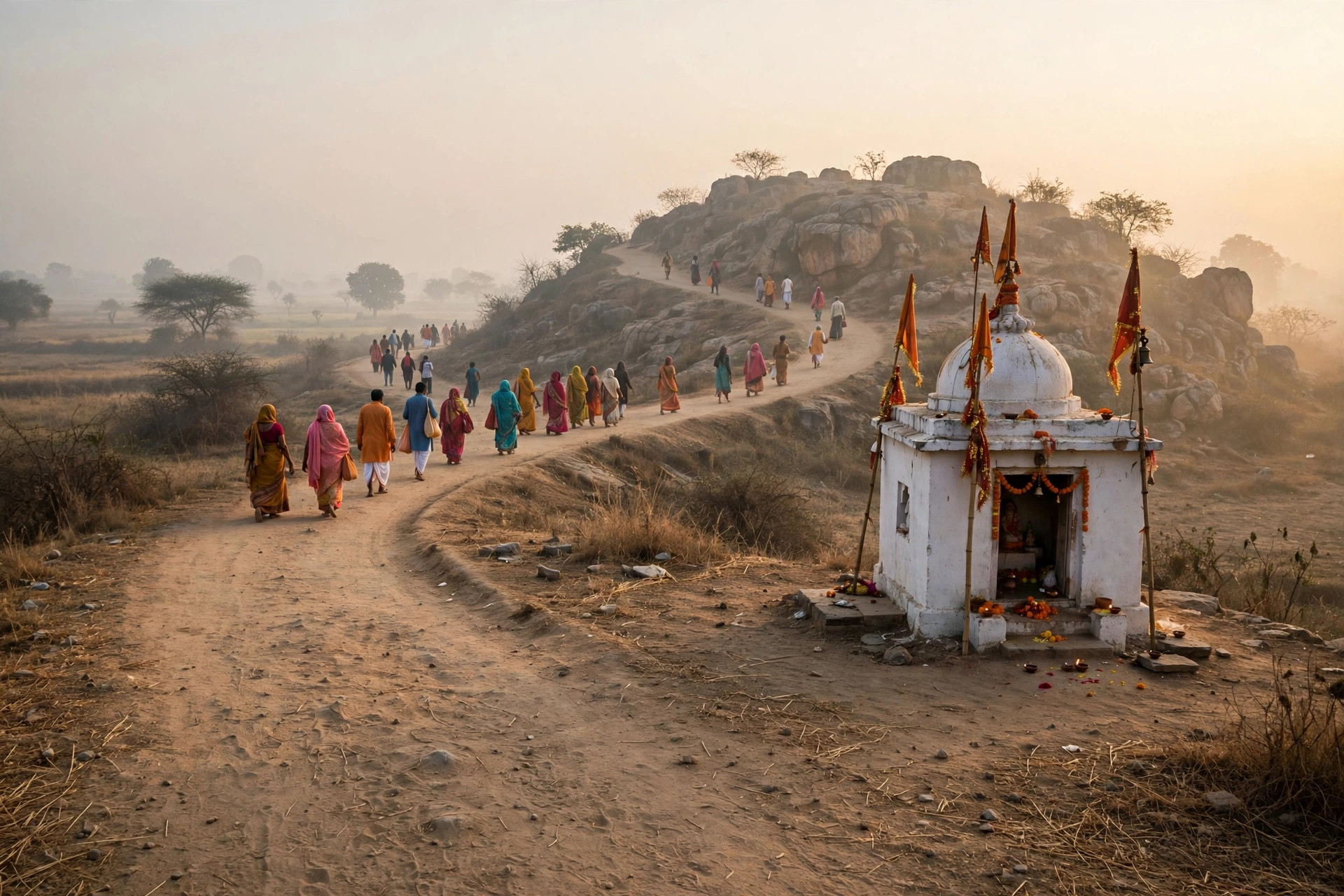
Govardhan Puja 2026: Annakut, 21-km Parikrama aur 9 vs 10 November ka Sach (2-Day Delhi Plan)
Govardhan Puja 2026: Tuesday 10 Nov, morning muhurat 6:40–8:50 AM. Annakut darshan, 21-km parikrama leg by leg, and a 2-day Delhi plan.