
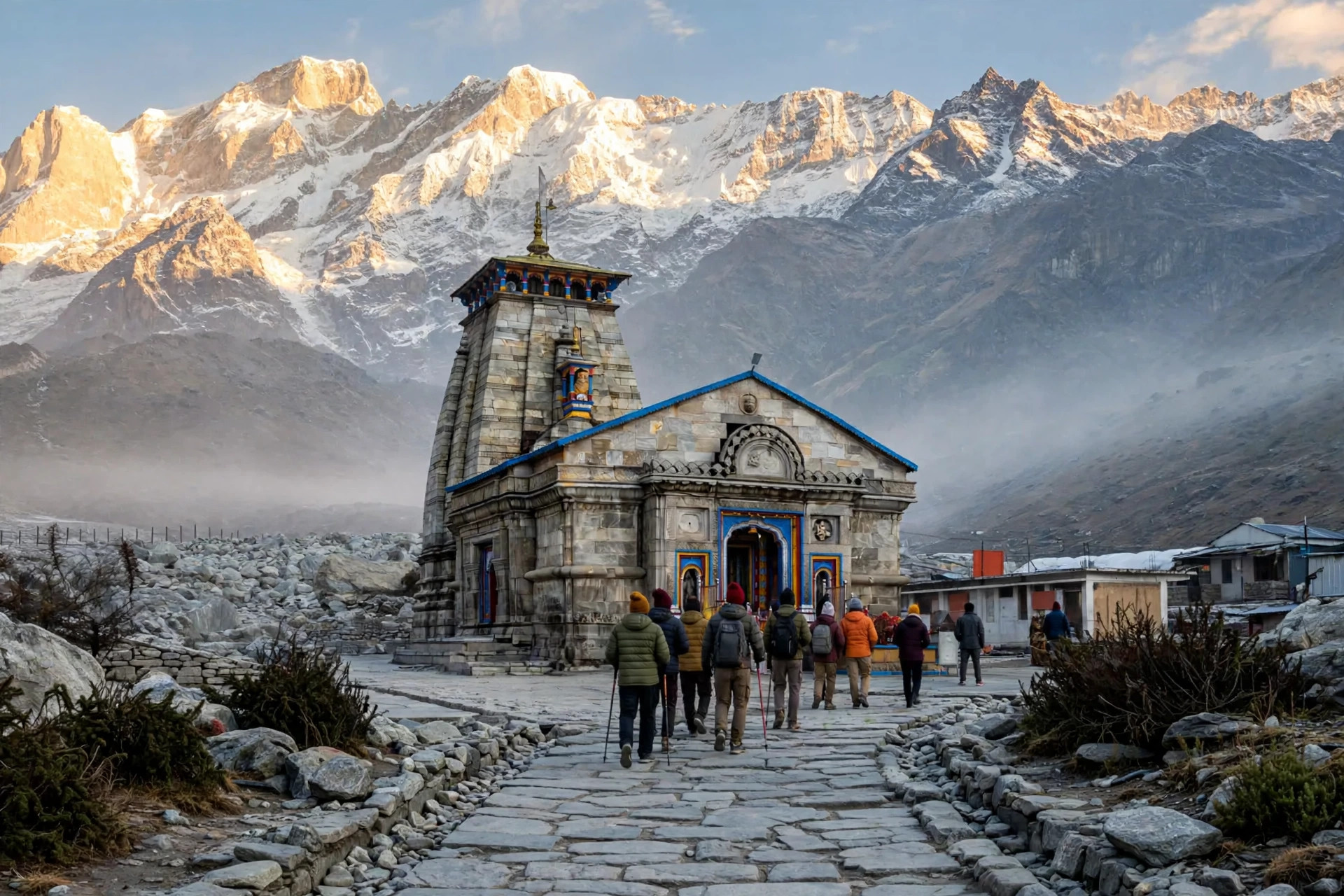
Photo: Wikimedia Commons
Yatra Guides
Kedarnath Yatra for International Visitors: Visa, Registration, Costs in USD, and the Honest Timing Call
Kedarnath for foreign visitors: e-visa, free Char Dham registration, trek vs helicopter costs in ₹ and USD, the 2026 temple entry rule, and why May 2027 is the smart plan.
Quick answer: Kedarnath's doors close for winter on 11 November 2026, so a trip from abroad this season is no longer realistic — plan for the May 2027 reopening instead, or take winter darshan at Ukhimath from 13 November. You will need an Indian e-visa, a free Char Dham registration with biometric verification at Sonprayag, and a 5-day Delhi plan that costs roughly $150–$300 per person on the ground.
Complete yatra blueprint
5-Day Kedarnath Yatra for International Visitors — Complete Blueprint
Built for a first-time foreign visitor: Delhi to the temple and back, with the exact halts, real hotels with ratings, real food stops, and the costs in rupees and dollars. Plan this for May 2027 — the 2026 season closes on 11 November.
Delhi → Haridwar — Arrive, Breathe, Do the Paperwork
🛕 Temples & darshan
Har Ki Pauri — Ganga Aarti · Haridwar
The evening aarti at Har Ki Pauri is the right way to start: lamps on the river, crowds on the steps, and your first sense of how public Hindu worship actually works.
🏨 Where to stay
Tayal Dharamshala
₹600–2,000 / night (about $6–21)
Bhupatwala, 1.5 km from Har Ki Pauri; veg meals ~₹100/thali; classic pilgrim stay.
Hotel Le Roi, Har Ki Pauri
~₹2,400 / night (about $25; 8.2/10 on KAYAK, 387 reviews)
Near the railway station and the ghat area; a solid mid-range base for the yatra start.
🍽 Where to eat
Hoshiyarpuri
₹400–500 for two (about $4–5)
Must try: Dal makhani with garlic naan
Haridwar's beloved veg institution.
Chotiwala Restaurant
₹400–500 for two (about $4–5)
Must try: Veg thali
The iconic Haridwar name since the 1930s — touristy but consistent.
- Buy a local SIM at the airport or in Haridwar with your passport, a photo and your hotel address — you will need it for OTPs and for the registration app.
- Buy a raincoat and a walking stick here. Both cost roughly double uphill.
Haridwar → Guptkashi — The Long Mountain Drive
🛕 Temples & darshan
Devprayag Sangam · Devprayag (on the way)
Where the Alaknanda meets the Bhagirathi and the Ganga is born. A 15-minute photo and holy-dip halt.
Rudraprayag Sangam · Rudraprayag (on the way)
Alaknanda meets the Mandakini here. The town is also your last reliable ATM stop before the high valley.
🏨 Where to stay
GMVN Tourist Rest House, Guptkashi
₹1,500–2,500 / night (about $16–26)
Government guesthouse; the most reliable budget option — book via gmvnonline.com.
The Hills Inn Resort
₹3,800–5,000 / night (about $40–53)
Hilltop views; highly rated breakfast; clean hygienic rooms.
Himalayan Comforts
₹1,500–2,000 / night (about $16–21)
Narainkoti, 2 km past Guptkashi market, about 100 m from the helipads; homely vegetarian meals; friendly staff.
🍽 Where to eat
Himalayan Comforts in-house kitchen
₹300–400 for two (about $3–4)
Must try: Aloo ke gutke / homely dal-roti
Himalayan View Restaurant
₹300–500 for two (about $3–5)
Must try: Veg thali
- Leave Haridwar by 6 AM — mountain roads slow down after noon and shared cabs fill early.
- Sleep at Guptkashi (1,319 m) tonight and nowhere higher. Never attempt the trek on arrival day.
- If you plan to fly, confirm your helipad reporting time tonight — most sorties leave from Guptkashi, Phata or Sersi.
Guptkashi → Gaurikund → Trek to Kedarnath
🛕 Temples & darshan
Gaurikund Temple & Hot Spring · Gaurikund (trek base)
Gauri Mandir and the hot kund where pilgrims bathe before starting the 16 km climb.
Kedarnath Temple — Evening Aarti · Kedarnath (3,583 m)
One of the 12 Jyotirlingas. The evening aarti, with the temple lit against the peaks, is the moment the whole trip is for.
🏨 Where to stay
GMVN Nandi Complex / Kedar Dome Cottages
₹1,000–2,500 / night (about $11–26)
Government huts near the police chowki — the safest official option. Book via gmvnonline.com the day slots open.
Bikaner House
₹1,300–2,000 / night (about $14–21)
100 m from the temple; veg meals, hot water, doctor on call.
🍽 Where to eat
Jai Baba Kedarnath Bhojanalaya
Free
Must try: Free bhandara khichdi prasad
Do not skip the temple bhandara — hot khichdi at 3,583 m after a 16 km climb is a different food group.
Devlok Dhabha (near Gaurikund)
₹200–300 for two (about $2–3)
Must try: Maggi with masala chai (trek staple)
- Carry 2L water, dry fruits, raincoat, torch — stalls exist en route but prices roughly double with altitude.
- Kedarnath town is strictly vegetarian; even eggs are unavailable near the temple. No alcohol anywhere on the route.
- Network is patchy above Gaurikund — tell family before the trek, and download offline maps tonight.
Kedarnath Morning Darshan → Trek Down to Sonprayag
🛕 Temples & darshan
Kedarnath — Morning Darshan · Kedarnath
Join the 4 AM queue for the least crowded darshan of the day; first light on the temple is worth the alarm.
🏨 Where to stay
Hotel Rama Palace, Sitapur
₹2,500–3,500 / night (about $26–37; 8.4/10 on Booking, 35 reviews)
Terrace with mountain views; minutes from the Sonprayag trek base.
Triyugi Heights Cottage, Sitapur
Confirm by phone (18 reviews)
Near the Triyuginarayan temple road; guests rate the host and the cleanliness above everything else.
🍽 Where to eat
Shiv Shakti Bhojanalay, Sonprayag
₹250–400 for two (about $3–4)
Must try: Rajma-chawal / khichdi
Hot, filling post-trek food — exactly what tired legs need.
- Knees suffer more on descent than ascent — walk slowly, use the stick.
- Reach Gaurikund before dark; shared jeeps to Sonprayag thin out after 6 PM.
Sonprayag → Haridwar → Delhi
🛕 Temples & darshan
Devprayag — Return Halt · Devprayag
If you skipped it uphill, stop for the sangam on the way down — the afternoon light is better.
🍽 Where to eat
Chandigarh Dhaba, Rudraprayag
₹200–300 for two (about $2–3)
Must try: Rajma-chawal
Honest dhaba food on the return highway halt.
- Book an evening train from Haridwar (after 7 PM) — mountain delays are normal, and a tight connection is how trips unravel.
- Total honest ground budget for 5 days: about $150–$300 per person, excluding your international flight to Delhi.
Should you still try Kedarnath in 2026 — or plan for 2027?
Short answer, because this is the whole decision: plan for 2027. Kedarnath's doors close for winter on Wednesday 11 November 2026 at 8:30 AM, six days from today, and the deity's palanquin reaches its winter seat at Omkareshwar Temple in Ukhimath on 13 November. A reader sitting in London or New York cannot realistically make that window: the e-visa alone needs a few days, then there is an international flight, a 220 km journey to Haridwar, a full day's mountain drive, a free but mandatory registration with biometric verification, and one acclimatisation night before a 16 km climb at 3,583 m. Stack all of that into six days and you are planning a failure.
There is also the weather. Fresh snowfall at Kedarnath in late October pushed temperatures down sharply enough that the Rudraprayag district administration issued a cold-weather advisory for pilgrims. November at the temple means nights below freezing, dhabas winding down, and afternoon weather that turns in an hour. The last week of a season is the quietest version of Kedarnath and the hardest version at the same time.
One exception, and it matters. If you are already in India, already hold a valid visa, and already have your Char Dham registration, the last trek days (5–10 November) are genuinely doable and strikingly quiet. Go only with real woollens, a buffer day for a blocked road, and a start time of first light. If any of those three conditions is missing, do not improvise a 2026 trip. The honest alternatives are below: a proper May 2027 plan, or winter darshan at Ukhimath, which needs no trek at all.
Can a foreign visitor enter Kedarnath temple?
This is the question most international guides dodge, so here it is straight. On 10 March 2026, the Badrinath-Kedarnath Temple Committee (BKTC, the body that manages Kedarnath, Badrinath and 45 other temples in Garhwal) passed a resolution restricting entry to followers of Sanatan Dharma. Under the committee's own explanation, reported by the Economic Times and Times of India on 19 March 2026, a non-Hindu visitor is allowed darshan only after submitting an affidavit affirming faith in Sanatan Dharma. Sikhs, Jains and Buddhists are counted within the Sanatana fold under the committee's reading of the Constitution. The restriction covers the temple complexes and sanctums, not the towns: the trek, the valley, the shops and the mountain views are open to everyone regardless of faith.
What does this mean in practice for a foreign reader? If you are Hindu, Sikh, Jain or Buddhist, nothing changes except carrying your passport and registration. If you are not, you need to know about the affidavit route before you fly, not at the temple gate — and you should check the position again before the 2027 season, because the rule sparked a national debate and its enforcement may shift. This guide reports the rule as it stands; it does not take a side on it. What we will not do is what most guides do, which is pretend the question does not exist.
What visa do you need, and what does it cost?
Citizens of the UK, Ireland, every EU country, the US, Canada, Australia and New Zealand all need a visa before travelling to India. There is no visa on arrival for these passports. The standard route is the e-Tourist visa, applied for entirely online on the official portal, indianvisaonline.gov.in. Ignore lookalike sites: they charge their own fees on top of the government fee and buy you nothing.
Apply between 4 and 120 days before you land. Your passport needs six months' validity from arrival. The visa arrives as an Electronic Travel Authorisation by email, and it is stamped into your passport at the airport. Two timing traps catch people every year: the 30-day visa runs from your first entry, but the 1-year and 5-year visas run from the date the ETA is granted — apply 120 days early and you burn four months of a 1-year visa. And the 1-year and 5-year visas cap your total stay at 180 days per calendar year.
Fees, from the official e-Tourist fee table dated 8 September 2026, in US dollars, with a 3% bank charge added at payment (4% on PayPal). The fee is non-refundable whether the visa is granted or refused, and the figure shown on the portal at payment is the one that applies.
| Visa | US passport | UK passport | EU / Canada / Australia / NZ |
|---|---|---|---|
| 30-day, arrival Apr–Jun | $10 | $10 | $10 |
| 30-day, arrival Jul–Mar | $25 | $25 | $25 |
| 1-year, multiple entry | $40 | $40 | $40 |
| 5-year, multiple entry | $160 | $484 | $200 |
The UK 5-year figure is the one to notice: at $484 it takes four or more years of repeat visits before it beats buying a 1-year visa each time. For a single Kedarnath trip, the 30-day visa is the right buy. Carry your passport and a printout of the visa at all times on the yatra — hotels, registration counters and checkposts all ask for it.
Char Dham registration: the step that turns people back
Registration is free and mandatory for every pilgrim, Indian or foreign, trekker or helicopter passenger. No registration, no entry: you will be stopped at Sonprayag. The only official channel is registrationandtouristcare.uk.gov.in, plus the Tourist Care Uttarakhand app, plus WhatsApp (send "Yatra" to +91-8394833833). The toll-free helpline is 0135-1364. Anyone charging you for registration is running a scam.
For a foreign national the process is: create a pilgrim profile with name, age, gender and mobile number; upload a passport-size photo and your passport as ID; pick your yatra dates. You get a QR e-pass, valid for that season and those dates. One registration covers all four Dhams. Then comes the part people underestimate: biometric verification and a health screening at Sonprayag. Your QR is scanned at a kiosk, fingerprints and photo are matched, and the screening counter checks blood pressure and blood oxygen. Reports from the 2026 season say pilgrims with SpO2 below about 85% are stopped from trekking, registration or not. That is not bureaucracy for its own sake — it is the system built after the 2013 floods, and it is also the reason you must not attempt the trek on arrival day.
Register before you leave home, not at the counter in Sonprayag. The counters exist, but the queues there are the longest, and a foreign mobile number sometimes struggles with the OTP step. Do it on Wi-Fi, screenshot the QR, and carry a printout as backup.
How do you actually get there? Delhi to Kedarnath, leg by leg
Delhi is the gateway for almost every foreign visitor: fly into Indira Gandhi International Airport, then work uphill in stages. Do not try to do Delhi to the trek base in one day. The road journey alone is 10–12 hours of mountain driving, and the altitude gain punishes anyone who rushes it.
| Leg | How | Time | Approx. cost |
|---|---|---|---|
| Delhi → Haridwar | Overnight train / bus / private cab | 5–6 hrs | ₹350–800 train/bus (about $4–8) |
| Haridwar → Guptkashi | Shared cab / private cab | 9–10 hrs | ₹1,200 shared (about $13); ₹6,000–7,300 private cab |
| Guptkashi → Sonprayag | Cab | 1–1.5 hrs | Part of the cab fare |
| Sonprayag → Gaurikund | Shared jeep (only local vehicles allowed) | 15–20 min | ₹30–50 |
| Gaurikund → Kedarnath | 16 km trek / pony / palki / helicopter | 6–8 hrs on foot | Free on foot; see below |
The 5-day blueprint at the top of this page turns this table into a day-by-day plan with real hotels and food stops. Two details from the ground: private vehicles are not allowed past Sonprayag, so everyone switches to shared jeeps for the last 5 km to Gaurikund; and the trek is 16 km from Gaurikund, not 21 — the 21 km figure counts from Sonprayag and confuses a lot of first-timers.
Trek, pony, palki or helicopter — which one should you pick?
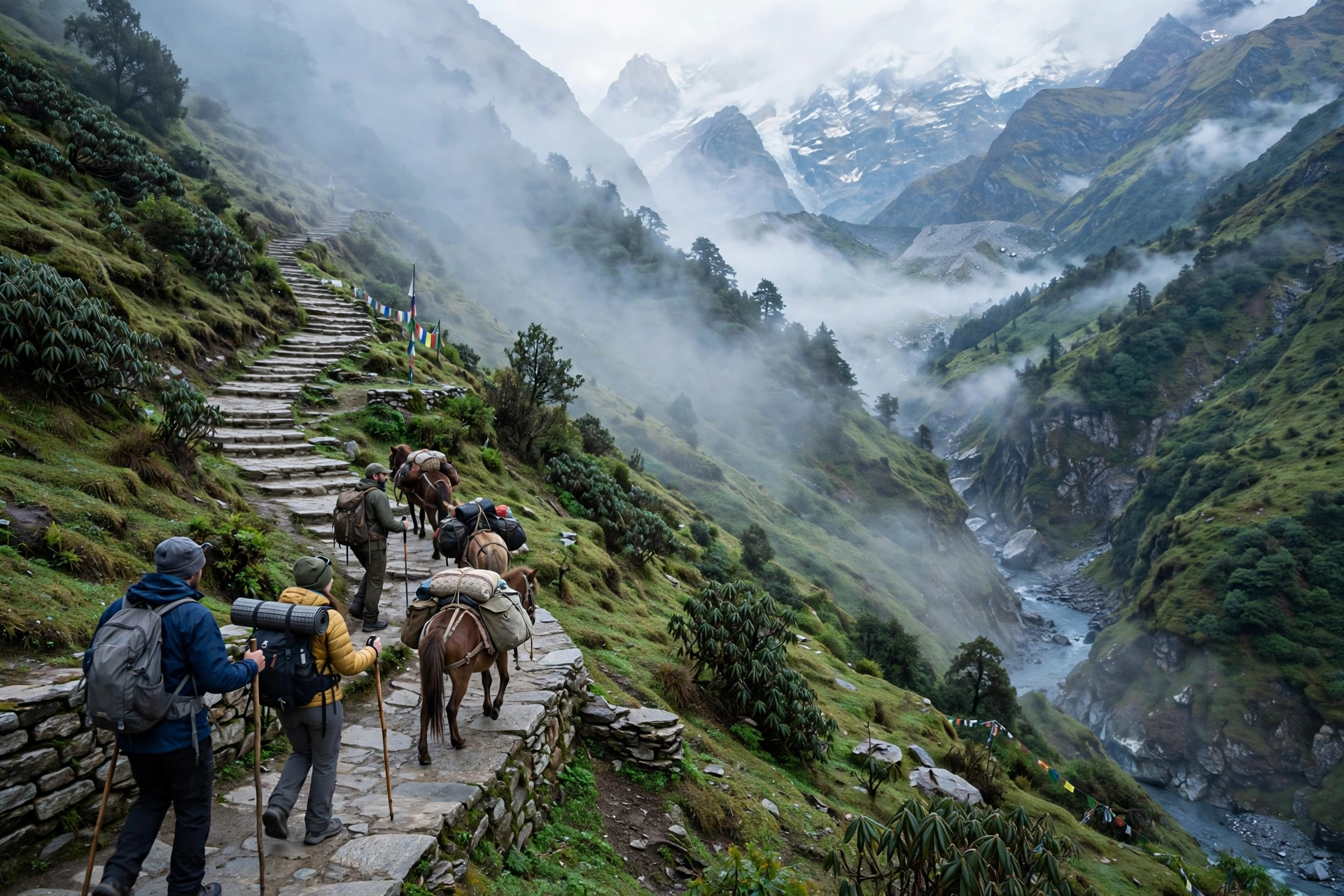
Walk it if you can. The 16 km trail from Gaurikund passes Jungle Chatti, Bheembali and Linchauli, and the last 4 km are the steepest. Fit beginners do it in 6–8 hours up and 5–6 down. Start by 7 AM, eat light at Linchauli, and carry rain gear whatever the forecast says — weather above 3,000 m changes inside an hour.
| Option | Time up | 2026 cost (round trip where applicable) | Who it suits |
|---|---|---|---|
| Trek on foot | 6–8 hrs | Free | Fit travellers; the real experience |
| Pony | 4–5 hrs | ₹2,500–4,000 one way | Those who cannot walk the full climb |
| Palki / palanquin | 5–6 hrs | ₹6,000–9,000 one way | Elderly pilgrims |
| Helicopter shuttle | ~10 min | Sirsi ₹6,390 (about $67); Phata ₹10,164 (about $107); Guptkashi ₹12,762 (about $135) | Seniors, the time-short, anyone with a medical reason |
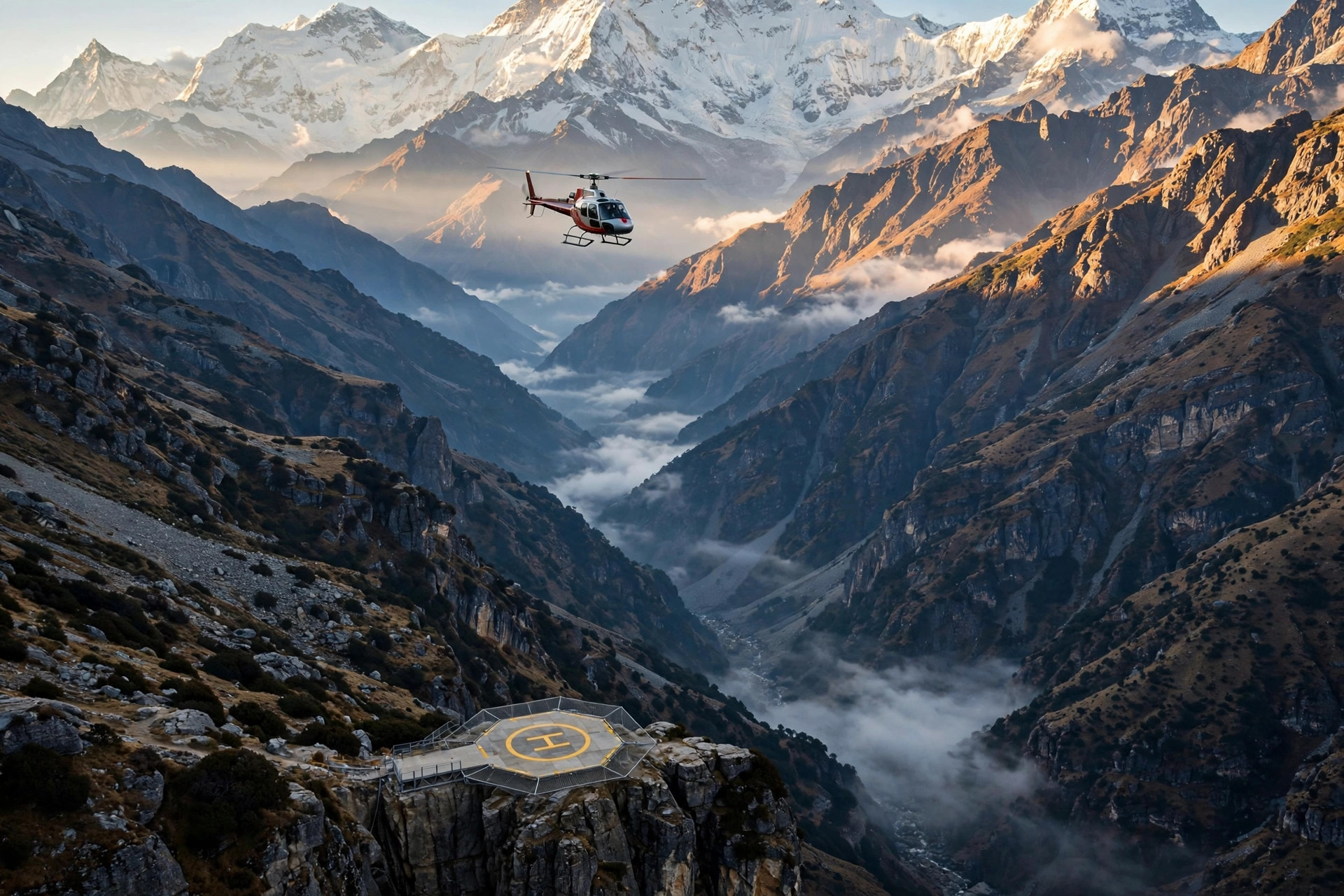
The helicopter needs its own paragraph, because it is where foreign visitors lose the most money. Shuttle seats are sold only on IRCTC's HeliYatra portal (heliyatra.irctc.co.in), after Char Dham registration, and only as round trips. The fares above are the 2026 final-phase figures including GST, quoted by the Uttarakhand Civil Aviation Development Authority's CEO to ETV Bharat on 8 October 2026. The 2026 flying window ran 16 October to 9 November and is now effectively over; fares are re-notified every season, so use these numbers to budget for 2027, not as a price you can book today. Daily sorties were capped at 184 in 2026, and seats sell out within hours of a booking window opening. Any agent, website or hotel desk offering "guaranteed" helicopter tickets at a markup is selling you something that does not exist — book only on IRCTC, the moment the window opens, or do not build your plan around a helicopter at all.
What does the whole trip cost in dollars?
Ground costs only — your international flight to Delhi is extra. Conversions use roughly ₹95 to the dollar, the rate on 5 November 2026, and are rounded; the rupee figure is the one that matters on the ground.
| Expense (5 days, per person) | Budget | Comfort | |---|---|---|---| | Transport (bus/shared cab) | ₹4,000–5,500 (about $42–58) | ₹7,000–10,000 (about $74–105) | | Stay (4 nights) | ₹3,000–4,500 (about $32–47) | ₹6,000–10,000 (about $63–105) | | Food | ₹1,800–2,500 (about $19–26) | ₹3,000–4,500 (about $32–47) | | Helicopter instead of trek (optional) | ₹6,390–12,762 (about $67–135) | Same | | Darshan, local transport, misc | ₹2,000–3,000 (about $21–32) | ₹4,000–6,000 (about $42–63) | | Total without helicopter | about $115–165 | about $210–320 |
Prices spike 30–50% in the May–June peak. September–October is calmer and cheaper, with clearer mountain views — and it is the window we would pick for a first foreign trip. Add a 10% buffer for a blocked road or an extra night: mountain plans that assume everything works are the ones that cost the most.
Altitude, fitness and the health check nobody warns you about
Kedarnath sits at 3,583 m. That is higher than most first-time visitors have ever slept, and altitude sickness is not a fitness test — fit people get it too. The honest preparation is boring and it works: sleep one night at Guptkashi (1,319 m) before the climb, walk slowly, drink more water than you think you need, and do not take Diamox without a doctor's advice. The Sonprayag screening counter is real, and it does stop people. If you have asthma, a heart condition, or you are over 50, get a medical fitness certificate before you fly — it is not always demanded, but it ends arguments at checkpoints.
Pack for a mountain, not a temple visit: broken-in walking shoes (not new boots), warm layers even in June, a raincoat, a torch, a power bank, dry fruits and glucose, and basic medicines. A city jacket over a sweater is not a November layer, and it is barely a May layer at 3,583 m at night. Nights at Kedarnath go near freezing even in season. And download offline maps before Gaurikund — the network thins out fast above it, and the one time you want a map is the one time you will not have signal.
Temple etiquette, dress and photography rules
Kedarnath has no formal dress code of the South Indian kind, but modest dress is expected: shoulders and knees covered, no revealing clothing. Remove shoes before entering temple areas. Phones and photography are banned inside the temple premises under the BKTC rules — there are counters to deposit phones, and the ban covers the sanctum and the complex, not just the inner shrine. Take your photos of the temple exterior and the valley, and leave the camera in your pocket inside.
Darshan timings in season: the temple opens around 4 AM, general darshan runs roughly 6 AM to 3 PM, the temple closes for a break from 3 PM to 5 PM, and evening darshan with the Shringar Aarti runs to about 8:30–9 PM. In May and June the queues start forming as early as 2 AM and a standard weekday wait runs 3–5 hours; the 4 AM queue is the shortest of the day. Entry to the temple itself is free — you pay only for specific pujas arranged through the temple committee. Anyone selling "VIP darshan" at the gate is not selling a temple product.
Safety, scams and solo women travellers
The Kedarnath route is busy, family-heavy and, by Indian mountain standards, well policed. The risks worth planning for are specific. First, the helicopter scam: only IRCTC sells shuttle seats, and every other seller is either marking up or inventing. Second, taxi fares: agree the price the night before, in writing if you can, because hill taxis charge per day and per route, not per kilometre, and a fare agreed at a taxi stand at 6 AM is never the fare you wanted. Third, "guides" at Haridwar station and Sonprayag who attach themselves to foreign visitors and then charge for the attachment — a polite, firm no at the start saves an awkward negotiation later. Fourth, pickpockets in the Har Ki Pauri crowd and on packed shared jeeps: money belt, not back pocket.
For solo women: the route is done solo by Indian and foreign women every season. The rules that matter are daylight travel, registered stays (GMVN rest houses and the hotels in the blueprint are all fine), no isolated trail stretches after dark, and modest dress in temple towns. Share your live location with someone back home, keep your passport on your body, and buy travel insurance that explicitly covers trekking to 3,600 m — many standard policies stop at 3,000 m, and the difference only matters when you need it.
Money: carry cash. Cards work in Haridwar hotels and bigger restaurants, but ATMs thin out after Rudraprayag and village shops do not take cards. Small stalls, boatmen, pony handlers and jeep drivers are cash-only. A local SIM needs your passport, a photo and your hotel address, and takes a few hours to activate — get it at the airport, not on the mountain.
Can't wait till May? Winter darshan at Ukhimath
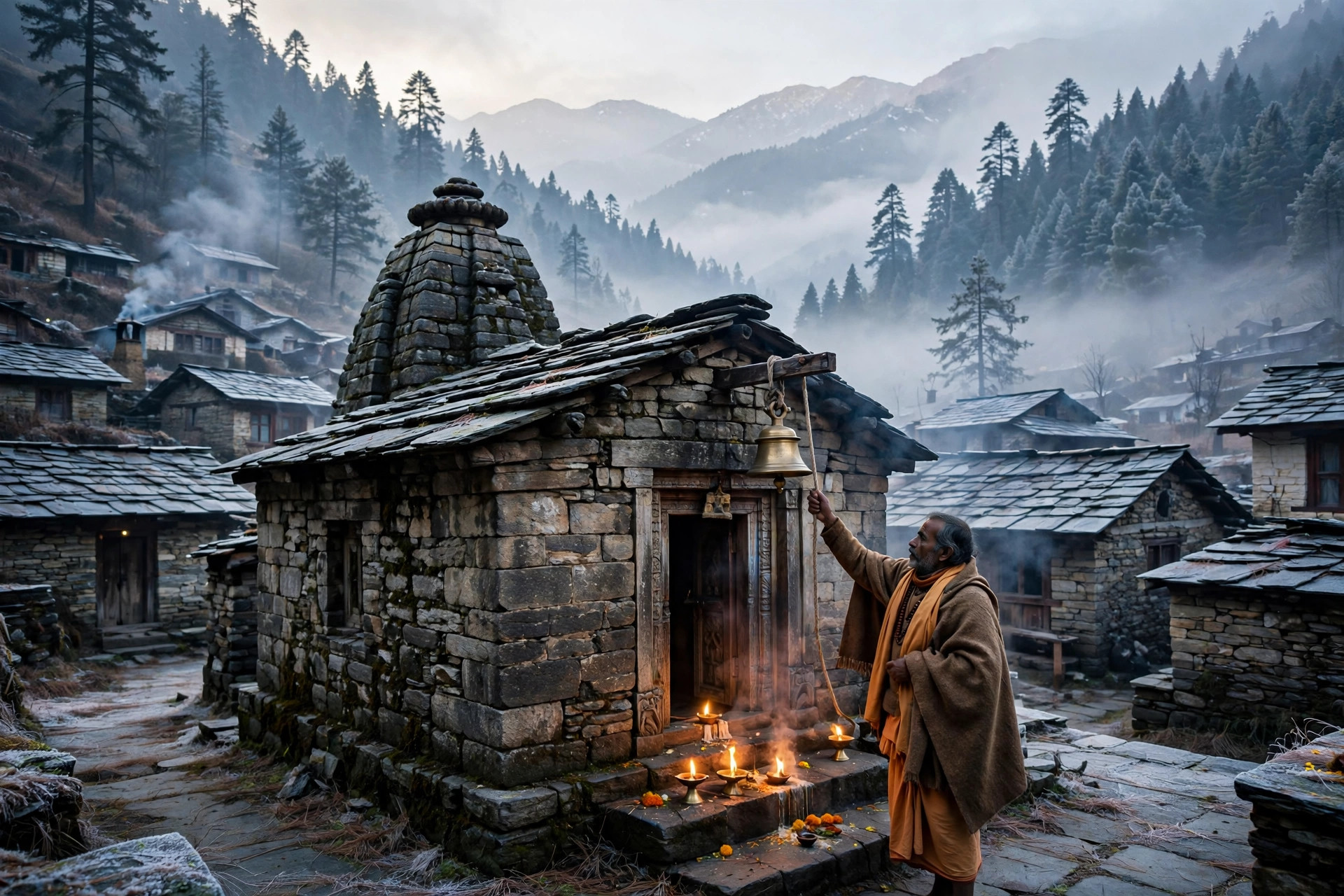
Here is the part most Kedarnath guides skip, and it is the best answer to the timing problem. The deity does not go on leave for winter — he moves. From 13 November, Baba Kedar is worshipped at Omkareshwar Temple in Ukhimath, about 40 km from Rudraprayag on the Kedarnath road, and worship continues there daily all winter. No 16 km climb, no helicopter lottery, no registration cap, no 4 AM queue. The temple is ancient, the priests are the same Kedarnath priesthood's winter establishment, and the darshan is unhurried in a way Kedarnath in May never is.
Getting there is an ordinary road trip: Delhi to Haridwar, then Haridwar to Ukhimath via Rudraprayag, roughly a full day's drive. Stay on the temple road itself: Hotel Om Palace sits on Omkareshwar Mandir Road, a walk from the morning aarti. Or try Neelkanth Homestay on Mandir Marg (4.9 from 68 Google reviews), or Bharat Sevashram Sangha, 1 km from the temple, with rooms from ₹800 (about $8). Eat at Chauhan Restaurant on the Kedarnath road (ask for aloo ke gutke with mandua ki roti — spiced crisped potatoes with finger-millet bread, the Garhwali plate to order by name) or at Nautiyal Restaurant near the petrol pump at Kund, open from 5 AM. Reach by 9 AM for a quiet darshan, and if you are in Ukhimath on 13 November itself, you may catch the doli's arrival — ask at the temple a day ahead, because the procession's hours depend on the road and the rituals and nobody publishes them far in advance.
If you only have one winter day, spend it here. If you have four, the full winter Char Dham circuit (Kharsali, Mukhba, Ukhimath, Joshimath) is in our Char Dham kapat closing dates guide.
When is the best month for a foreign visitor?
May to June is the classic season and the worst-kept secret: the temple reopens (22 April in 2026), the crowds are at their peak, and helicopter seats vanish in hours. July and August bring the monsoon, landslides and road closures — do not plan a first trip then. September to October is the sweet spot: clear skies, thinner crowds, lower prices, and the sharpest mountain views of the year. The 2027 dates will be announced around Mahashivratri in February 2027; until then, hold off on non-refundable bookings for the exact opening week, and keep a two-day buffer around whatever date is announced.
One last thing, and it is the reason this guide exists in this form. Most Kedarnath content for foreigners is either a copied itinerary or a sales page for a package. The facts that actually change a trip are the ones that rarely make it into those pages: the closing date six days away, the entry rule, the biometric check that can stop you, the helicopter portal that is the only real one. Plan around them, and Kedarnath is not a difficult trip. It is a long walk, a high temple, and a valley that rewards everyone who arrives prepared.
For the full Indian-season route, costs and registration walkthrough, see our Kedarnath Yatra 2026 guide. For the closing dates of all four Dhams and the winter circuit, see our Char Dham kapat closing dates 2026 guide.
Facts verified 5 November 2026. Kapat closing: Kedarnath closes Wednesday 11 November 2026 at 8:30 AM (Bhai Dooj); doli reaches Omkareshwar Temple, Ukhimath, on 13 November — Badrinath-Kedarnath Temple Committee announcement of 20 October 2026, as reported by Times Now (2 November 2026), News18 (3 November 2026), Free Press Journal (2 November 2026) and Moneycontrol (29 October 2026, including the fresh-snowfall cold advisory). Temple entry rule: BKTC resolution of 10 March 2026, affidavit route for non-Hindus, as reported by the Economic Times / Times of India (19 March 2026) and Outlook Traveller (March 2026). E-visa: official e-Tourist fee table dated 8 September 2026 via indianvisaonline.gov.in; 30-day $25 (July–March) / $10 (April–June), 1-year $40, 5-year $200 ($160 US, $484 UK), plus 3% bank charge. Registration: registrationandtouristcare.uk.gov.in, Tourist Care Uttarakhand app, WhatsApp "Yatra" to +91-8394833833, helpline 0135-1364; biometric verification and health screening at Sonprayag. Helicopter: IRCTC HeliYatra (heliyatra.irctc.co.in) only; 2026 final-phase round-trip fares including GST (Sirsi ₹6,390, Phata ₹10,164, Guptkashi ₹12,762), per UCADA CEO via ETV Bharat (8 October 2026); 2026 flying window 16 October–9 November; fares re-notified each season. Temple timings: opens ~4 AM, closed 3–5 PM, evening aarti ~7:30 PM, closes ~9 PM. Hotel and restaurant names, ratings and review counts: Google / TripAdvisor / Booking / KAYAK listings as returned 5 November 2026; small-town prices are rarely published online, so unverified prices are marked "confirm by phone" rather than estimated. Currency conversions at roughly ₹95 to the dollar (5 November 2026) and rounded. Distances are approximate road distances. Winter temple timings are general guidance, not official schedules — confirm at the temple a day ahead.
Frequently asked questions
Do I need a visa to visit Kedarnath?
Yes. Citizens of the US, UK, EU, Canada, Australia and New Zealand all need an Indian visa before travel. The e-Tourist visa is applied for online at indianvisaonline.gov.in, 4 to 120 days before arrival. A 30-day visa costs $25 for July–March arrivals ($10 for April–June), a 1-year visa $40, and a 5-year visa $200 for most nationalities ($160 for US passports, $484 for UK passports), plus a 3% bank charge.
Can a non-Hindu enter Kedarnath temple?
Under a rule the Badrinath-Kedarnath Temple Committee passed on 10 March 2026, entry to Kedarnath and 46 other temples it manages is restricted to followers of Sanatan Dharma, and a non-Hindu visitor is allowed darshan only after submitting an affidavit affirming faith in Sanatan Dharma. Sikhs, Jains and Buddhists are counted within the Sanatana fold under the committee's reading. The town, the trek and the valley are open to everyone regardless. Check the current position before the 2027 season, because this rule is contested and may change.
Is Char Dham registration required for foreign nationals?
Yes, and it is free. Every pilgrim, Indian or foreign, must register at registrationandtouristcare.uk.gov.in (or the Tourist Care Uttarakhand app, or WhatsApp +91-8394833833) with a passport, a photo and a mobile number. You get a QR e-pass, and biometric verification plus a health screening happen at Sonprayag. Without registration you will be turned back, and you cannot book a helicopter seat without it.
When does Kedarnath close and reopen?
Kedarnath closes on Wednesday 11 November 2026 at 8:30 AM (Bhai Dooj), and the deity's palanquin reaches the winter seat at Omkareshwar Temple, Ukhimath, on 13 November, where worship continues all winter. The temple normally reopens in late April or early May — the 2026 season opened on 22 April — with the 2027 dates announced around Mahashivratri in February 2027.
How much does the Kedarnath helicopter cost?
In the 2026 final phase, round-trip shuttle fares including GST were Sirsi ₹6,390 (about $67), Phata ₹10,164 (about $107) and Guptkashi ₹12,762 (about $135), booked only through IRCTC's HeliYatra portal (heliyatra.irctc.co.in). The 2026 flying window ended on 9 November, and fares are re-notified every season, so treat these as your planning reference for 2027, not as a bookable price.
Is Kedarnath safe for a solo woman traveller?
Yes, with the usual mountain rules. Travel in daylight, stay at registered hotels or GMVN rest houses, keep your trek to daytime hours, and avoid isolated stretches of trail after dark. The route is busy in season and full of families, and the main risks are altitude, weather and tout scams — not crime. Carry a charged phone, share your live location with someone, and keep your passport in a money belt, not in a daypack.
Keep exploring
 Yatra Guides
Sabarimala Mandala Season 2026-27: Dates, Virtual-Q Booking, aur First-Timer ka Poora Guide
Sabarimala 16 Nov 2026 ki shaam ko khulta hai Mandala season ke liye. Virtual-Q booking, 41-day vratham, Pamba trek aur first-timer ka imaandaar plan.
 Yatra Guides
Govardhan Puja 2026: Annakut, 21-km Parikrama aur 9 vs 10 November ka Sach (2-Day Delhi Plan)
Govardhan Puja 2026: Tuesday 10 Nov, morning muhurat 6:40–8:50 AM. Annakut darshan, 21-km parikrama leg by leg, and a 2-day Delhi plan.
 Yatra Guides
Ahoi Ashtami 2026 — Kab Hai, Vrat Kab Tootega (Taare, Chaand Nahi), Puja Vidhi & Radha Kund Snan
Ahoi Ashtami 2026 is on Sunday, 1 November. Delhi puja muhurat 5:36–6:54 PM, fast breaks on star-sighting around 6 PM — not moonrise at 11:40 PM. Vidhi, katha, Radha Kund snan.