
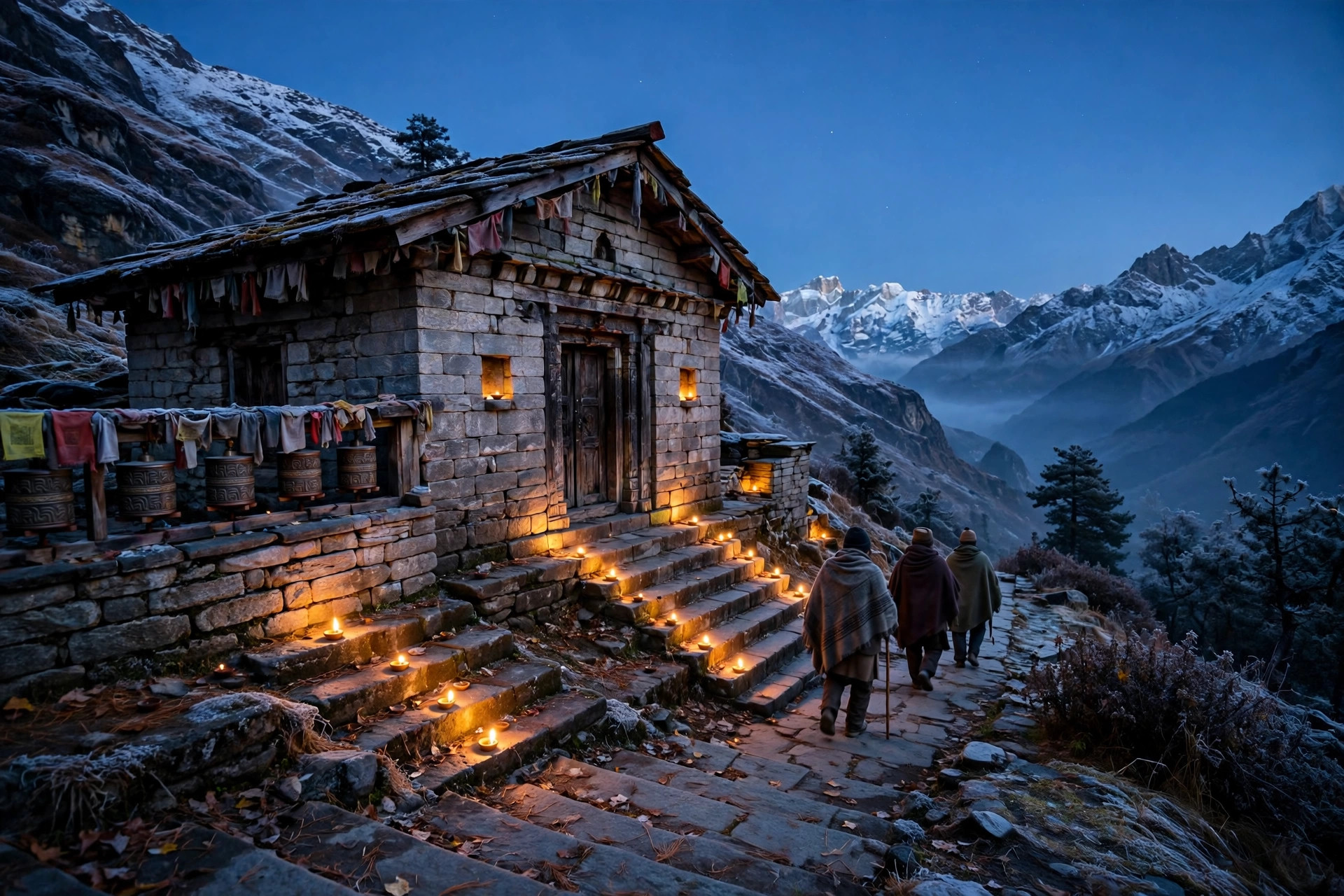
Photo: Wikimedia Commons
Yatra Guides
Char Dham Kapat Closing Dates 2026: Exact Times + the Winter Darshan Guide Nobody Writes
Char Dham kapat closes 10–16 Nov 2026: verified dates, times, the 13 Nov confusion explained, and the complete winter-seat darshan guide.
Quick answer: Char Dham kapat closing dates for 2026 were announced on Vijayadashami (20 October 2026): Gangotri closes Tuesday 10 November at 12:05 PM, Yamunotri and Kedarnath close Wednesday 11 November at 10:28 AM and 8:30 AM, and Badrinath closes Monday 16 November at 9:37 PM. After the doors shut, the deities move to their winter seats — Mukhba, Kharsali, Ukhimath and Pandukeshwar/Joshimath — where darshan continues all winter on ordinary roads.
Complete yatra blueprint
The 4-Day Winter Char Dham Blueprint — Kharsali, Mukhba, Ukhimath, Joshimath
This is the Char Dham most people never do, and it is the easiest one. No 16 km climb, no helicopter lottery, no 4 AM queue. The four deities spend winter in four valley towns, all on motorable roads, all with normal hotels. Start in Dehradun, cover one winter seat a day, and finish at Joshimath. Four days, four darshans, and you will have done what the summer crowds only queued for.
Dehradun to Kharsali — Yamuna's winter seat
🛕 Temples & darshan
Shani Dev Temple, Kharsali — Yamuna's winter home · Kharsali village, near Janki Chatti, ~45 km from Barkot
When Yamunotri's doors shut on 11 November, Yamuna's winter worship moves here, to the ancient Shani Dev temple in this small village above the Yamuna valley. The temple is old, quiet and entirely uncommercial — no queue system, no VIP line, just a village temple where the goddess of the river spends her winter. The Yamunotri Temple Committee itself confirms Kharsali as the winter residence.
🏨 Where to stay
Shiv Shakti Eco Resort
Moderate — confirm by phone
Sits in Kharsali village surrounded by Himalayan ridges, 18 rooms, and an attached restaurant that serves local dishes. The location is the selling point: you walk to the Shani Dev temple instead of driving to it.
GMVN Barkot Annexe
Budget — book through GMVN
The government tourist rest house on NH-123 in Barkot. Plain rooms, big bathrooms, friendly staff, and shared taxis to Janki Chatti from outside the gate. Pick this if Kharsali is full or you want to save the money for Day 4.
Hotel Atithi Niwas
Confirm by phone
On NH-94 on the Barkot road, a short drive from Kharsali. A straightforward lodge for a night — clean bed, hot water, early breakfast, no frills.
🍽 Where to eat
Adhikari Bhojnalay
₹300–500 for two
Must try: Rajma chawal and aloo paratha
Near the police station in Barkot — the town's everyday eatery, not a tourist restaurant. Eat here on the way up: simple, hot, vegetarian food of exactly the kind a mountain day needs.
Rautela Restaurant
₹500 for two
Must try: The thali — whatever is fresh that day
On the highway at Naugaon, open round the clock. With 449 ratings it is the most-reviewed eatery on this route, and that count is the review. Stop here if you are driving late.
- Leave Dehradun by 7 AM. The Barkot road is good but slow, and you want to reach Kharsali in daylight — the last stretch is a village road, not a highway.
- Carry cash. ATMs thin out fast after Barkot, and village shops do not take cards.
Kharsali to Harsil and Mukhba — Ganga's winter seat
🛕 Temples & darshan
Mukhba village temple — Ganga's winter home · Mukhba village, near Harsil on the Gangotri road
When Gangotri's kapat shuts on 10 November, Ganga's idol comes down to Mukhba, the village where the goddess is worshipped all winter. Mukhba is a working mountain village, not a temple town — slate-roofed houses, terraced fields, and a small temple where the winter puja happens without any crowd at all. If you want one moment from this whole circuit to remember, it is the morning aarti here.
Harsil — apple orchards and the Wilson cottage walk · Harsil valley, on the Gangotri road
Harsil is the prettiest halt on the whole winter circuit: deodar forests, the Bhagirathi below, and old stone-and-wood houses from the days of Frederick Wilson, the 19th-century 'Raja of Harsil'. An easy evening walk through the orchards and the village is the right way to close this day.
🏨 Where to stay
Nelangana Resort
Moderate — confirm by phone
On the Uttarkashi–Gangotri road near Harsil, with food from fresh local produce and views that explain its rating. The strongest-reviewed stay on this leg — book it first, then build the day around it.
Awana Eco Stay
Confirm by phone
A smaller eco stay on the same road, close to Harsil. Good fallback if Nelangana is full — same valley, same air, simpler rooms.
Hotel Everest & Restaurant
Confirm by phone
A Harsil hotel with its own restaurant — useful if you want dinner without stepping out into a November night.
🍽 Where to eat
Hotel Everest & Restaurant
₹300–600 for two
Must try: Seasonal vegetables with mandua ki roti
In Harsil itself. Eat local here: mandua (finger millet) roti, seasonal greens, and dal — the food the valley actually grows, not the paneer butter masala of the highway.
Nelangana Resort restaurant
₹600–1,000 for two
Must try: Whatever the kitchen is cooking from fresh produce that day
The resort cooks from fresh produce, and in a valley like Harsil that is a real difference, not a menu line. Eat dinner here on Day 2 even if you sleep elsewhere.
- Fill fuel at Uttarkashi. After that, pumps are few and far between on the Gangotri road.
- Mukhba is a village, not a viewpoint — dress modestly, ask before photographing people, and keep your voice down inside the temple.
Harsil to Ukhimath — the long driving day, Kedarnath's winter seat
🛕 Temples & darshan
Omkareshwar Temple, Ukhimath — Kedarnath's winter home · Ukhimath town, on the Kedarnath road
This is the most important winter darshan of the four. When Kedarnath's kapat shuts at 8:30 AM on 11 November, Baba Kedar's worship moves to this temple in Ukhimath, where it continues all winter. The temple is ancient, the priests are the same Kedarnath priesthood's winter establishment, and the darshan is unhurried in a way Kedarnath in May never is. If you only do one winter seat, do this one.
🏨 Where to stay
Hotel Om Palace
Confirm by phone
On the temple road itself — the closest sleep to the morning aarti. Plain rooms, and you walk to darshan instead of driving.
Hotel Gayatri Palace
Confirm by phone
On the Kedarnath road in Ukhimath town. A straightforward lodge for a night after a ten-hour drive — which is all Day 3 needs.
Hotel Satkar in Devbhoomi
Confirm by phone
On the highway through Ukhimath. Pick this if the temple-road lodges are full; the town is small and everything is a short walk.
🍽 Where to eat
Nautiyal Restaurant and Fast Food Center
₹300–600 for two
Must try: Garhwali thali
Near the petrol pump at Kund, Ukhimath — open from 5 AM, which matters on a day you leave at 6. A family restaurant and fast-food stop in one; eat a proper breakfast before the long drive, not a packet of biscuits.
Chauhan Restaurant
₹300–600 for two
Must try: Aloo ke gutke with mandua ki roti
On the Kedarnath road in Ukhimath, open 6 AM to midnight. Aloo ke gutke — spiced, crisped potatoes — and mandua roti are the Garhwali plates to ask for by name.
- This is the day the circuit is decided. A driver who knows the Tehri–Srinagar road is worth more than a cheaper driver who does not. Ask your Day 1 driver, or your hotel, for a recommendation — do not pick a stranger at a taxi stand for a 320 km mountain day.
- Keep food and water in the car. The Tehri–Srinagar stretch has long gaps between decent eateries, and November dhabas close early.
Ukhimath to Joshimath and Pandukeshwar — Badri Vishal's winter seat
🛕 Temples & darshan
Narsimha Temple, Joshimath — where Badri Vishal winters · Joshimath town (Jyotirmath)
On 17 November, the day after Badrinath's doors close, the dev dolis — the Gaddi of Adi Guru Shankaracharya, Uddhav, Kuber and Garuda — come down to Joshimath, and winter worship of Badri Vishal takes place at the Narsimha Temple here for the next six months. The temple is one of the oldest in the region, and its winter darshan is the quietest form of the Badrinath pilgrimage there is.
Yogadhyan Badri Temple, Pandukeshwar · Pandukeshwar village, on the Badrinath road below Joshimath
Pandukeshwar is the other half of Badrinath's winter seat — the Yogadhyan Badri temple here, where Vishnu is worshipped in his meditating form, is where the winter story begins. The village sits on the old pilgrim road, and the temple predates most of what you will see on this circuit. Do both temples: Joshimath for the main winter darshan, Pandukeshwar for the older, quieter half of it.
🏨 Where to stay
Maheen Residency
₹3,204 for a 2-bed room (YatraDham listing, October 2026)
In Pandukeshwar itself, with meals, parking and hot water — the practical base for the Yogadhyan Badri darshan. Three-bed rooms are listed at ₹4,805 and four-bed at ₹6,407, which makes it the honest family option on this leg.
Hotel Badrish
Confirm by phone
At Ganga Palace, Govindghat, on the Pandukeshwar side — a lodge on the pilgrim road, close to both winter temples.
The Tattva — A Boutique Resort
From ₹5,371 / night (MakeMyTrip listing, October 2026)
The comfort option in Joshimath — a boutique resort at the Auli crossing. If four days of mountain lodges have earned you one good night, this is where you spend it.
🍽 Where to eat
Bawarchi The Family Restaurant
₹500–800 for two
Must try: The family thali and fresh local curries
On NH-7 at Pandukeshwar, open 7 AM to 11 PM. With 461 ratings it is the most-reviewed restaurant on the Joshimath side, and the reviews keep saying the same thing: best food on the Char Dham journey. Believe them — then order the thali.
Udan Pahadi
₹300–600 for two
Must try: Dhaba dal, seasonal sabzi and hot rotis
A dhaba on Badrinath Marg in Joshimath, open 9 AM to 11 PM. The right last dinner of the circuit: simple, hot, and eaten among pilgrims rather than tourists.
- Do not rush the return. Joshimath to Rishikesh is a full day's drive on its own — stay the night in Joshimath or Pandukeshwar and leave at first light.
- Joshimath is a real town with real shops — this is where you buy the woollens, medicines or gifts you forgot on Day 1, not a village with one shutter.
Char Dham kapat closes in Diwali week — here are the exact dates
Short answer first, because that is the whole search: the four Dhams close between 10 and 16 November 2026, and the dates were announced on Vijayadashami, 20 October 2026, by the Badrinath-Kedarnath Temple Committee. Here is the full schedule:
| Dham | Closes | Time | Occasion | Winter seat |
|---|---|---|---|---|
| Gangotri | Tuesday, 10 November 2026 | 12:05 PM | Annakut / Govardhan Puja | Mukhba village |
| Yamunotri | Wednesday, 11 November 2026 | 10:28 AM | Bhai Dooj | Kharsali (Shani Dev temple) |
| Kedarnath | Wednesday, 11 November 2026 | 8:30 AM | Bhai Dooj | Omkareshwar Temple, Ukhimath |
| Badrinath | Monday, 16 November 2026 | 9:37 PM | — | Pandukeshwar + Narsimha Temple, Joshimath |
The timing is not a coincidence. Diwali itself falls on Sunday, 8 November 2026, and in 2026 the festival stretches — Amavasya runs into Monday, so Govardhan Puja and Annakut land on Tuesday 10 November and Bhai Dooj on Wednesday 11 November. The kapat closing week is Diwali week. If you are planning a last darshan, you are planning it around the biggest festival week of the year, with everything that means for trains, hotels and road traffic. Book early, and read the next section before you trust any other website's dates.
Why does half the internet still say Badrinath closes on 13 November?
Because for most of 2026, 13 November was the date on the internet. It was the tentative date, carried by page after page — including some very large ones — before the temple committee announced anything. The Times of India page on Char Dham dates still shows 13 November for Badrinath, because it has not been updated since the announcement.
The official position changed on 20 October. On Vijayadashami, the temple committees announced the final schedule: Gangotri 10 November, Yamunotri and Kedarnath 11 November, Badrinath 16 November at 9:37 PM. News reports from 20–21 October — ETV Bharat and Shrine Yatra among them — carry the same four dates and the same four times, and one closing-dates page updated after the announcement explicitly notes that 13 November was the earlier tentative date.
The rule for this season is simple: if a page shows 13 November for Badrinath, it predates the announcement. Do not plan around it. And before you set out in November, check the Badrinath-Kedarnath Temple Committee's own word — weather in the high Himalaya can still move a ceremony, and a closing date is a plan, not a promise.
What actually happens on closing day — and the doli you should know about
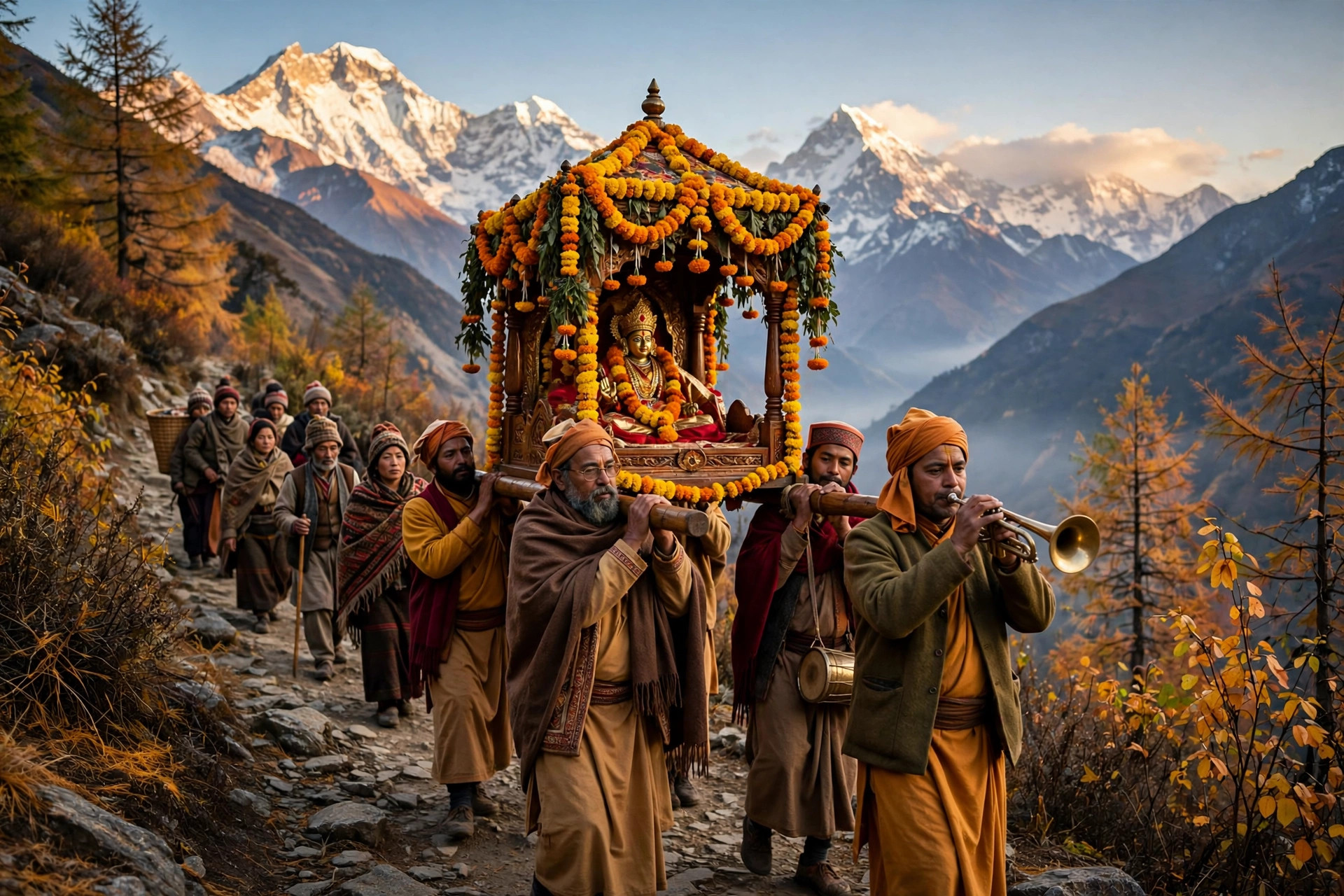
A kapat closing is not a shutter coming down. It is a ceremony. The last puja is done, the Akhand Jyoti — the eternal lamp — is lit inside, and the doors are sealed for winter. Then the deity leaves, in a palanquin, down the mountain, to the winter seat. That journey is called the doli, and for pilgrims who know the tradition, it is one of the most moving darshans of the year.
For Badrinath, the sequence is now public: on 16 November, Goddess Lakshmi is seated beside Lord Vishnu in the sanctum, and at 9:37 PM the doors close. On 17 November, the sacred Gaddi Doli of Adi Guru Shankaracharya sets out, accompanied by Uddhav (the Lord's representative and childhood friend), Kuber (the treasurer) and Garuda (the vehicle). The procession comes down through Sagar and Pandukeshwar and reaches the Narsimha Temple at Jyotirmath (Joshimath), where winter worship continues for six months.
For Kedarnath, the same pattern holds on a smaller, steeper road: after the 8:30 AM closing on 11 November, Baba Kedar's doli comes down to Omkareshwar Temple in Ukhimath. For Yamunotri, the Yamunotri Temple Committee's secretary has confirmed that winter worship of Yamuna takes place at her winter residence in Kharsali village. For Gangotri, Ganga winters at Mukhba.
Nobody publishes the doli's hour-by-hour road schedule far in advance, because it depends on the rituals and the road. If you want to see a doli arrive, go to the winter seat a day early and ask at the temple. That is the honest way to catch it, and it is how the locals do it too.
Should you go in the final weeks? An honest answer
Yes — with your eyes open. The last weeks of the season are the best version of the summer shrines and the hardest version at the same time.
What you gain: the crowds are a fraction of May–June. The 2026 season has been a record one — over 60 lakh pilgrims (60,31,017) had registered their darshan by the evening of 22 October, with Badrinath the most visited at over 20 lakh and Kedarnath close behind at over 17 lakh. In November, those queues are gone. The air is sharp, the skies are clear, and the temples are quiet in a way they never are in summer.
What you pay: nights below freezing at Kedarnath and Badrinath. Afternoon weather that turns fast — a clear morning is no promise about 3 PM. Roads that can block for a day after a slide or a snowfall. Hotels and dhabas at the high shrines winding down, some already shut.
Who this suits: fit travellers who have done mountain roads before, and anyone who has already done the summer yatra and wants the quieter version. Who it does not suit: elderly parents on their first Kedarnath attempt. The 16–18 km climb in November cold is not a first-timer's walk. For parents, the right answer this season is Badrinath by road — or, better, the winter circuit below, where every darshan is a car door away from the temple.
Three rules for a November trip, and they are not optional. Start every walk at first light; the afternoon belongs to the weather, not to you. Carry real woollens — a city jacket over a sweater is not a November layer. And keep one buffer day in the plan, because a blocked road in November does not clear on your schedule.
The yatra does not stop — it moves downhill
This is the part of the story that most closing-dates articles never get to, and it is the most useful thing in this guide.
The four Dhams do not close for winter in the sense that darshan stops. The idols move to lower villages where the snow does not reach, and worship continues there, daily, all winter, in ordinary temples you can drive to. Winter Char Dham is a real pilgrimage, and in several ways it is a better one than the summer version: no treks, no helicopter queues, no registration caps, no crowds. For senior citizens, it is simply the easiest Char Dham there is.
Mukhba — Ganga's winter seat. A village near Harsil on the Gangotri road, where Ganga is worshipped after Gangotri shuts on 10 November. Small temple, working village, morning aarti without a queue.
Kharsali — Yamuna's winter seat. The Shani Dev temple in Kharsali village, near Janki Chatti, where Yamuna winters after Yamunotri shuts on 11 November. The Yamunotri Temple Committee confirms Kharsali as the winter residence.
Ukhimath — Kedarnath's winter seat. Omkareshwar Temple, where Baba Kedar is worshipped all winter by the same priestly tradition. The single most important winter darshan of the four.
Pandukeshwar and Joshimath — Badrinath's winter seat. The Yogadhyan Badri temple at Pandukeshwar and the Narsimha Temple at Joshimath, where Badri Vishal's winter worship runs for six months after the 16 November closing.
All four are in the blueprint below, in one four-day circuit from Dehradun. If you have only two days, do Ukhimath and Joshimath — the two winter seats that carry the most weight.
Reaching the winter seats: routes, drive times, and the one long day
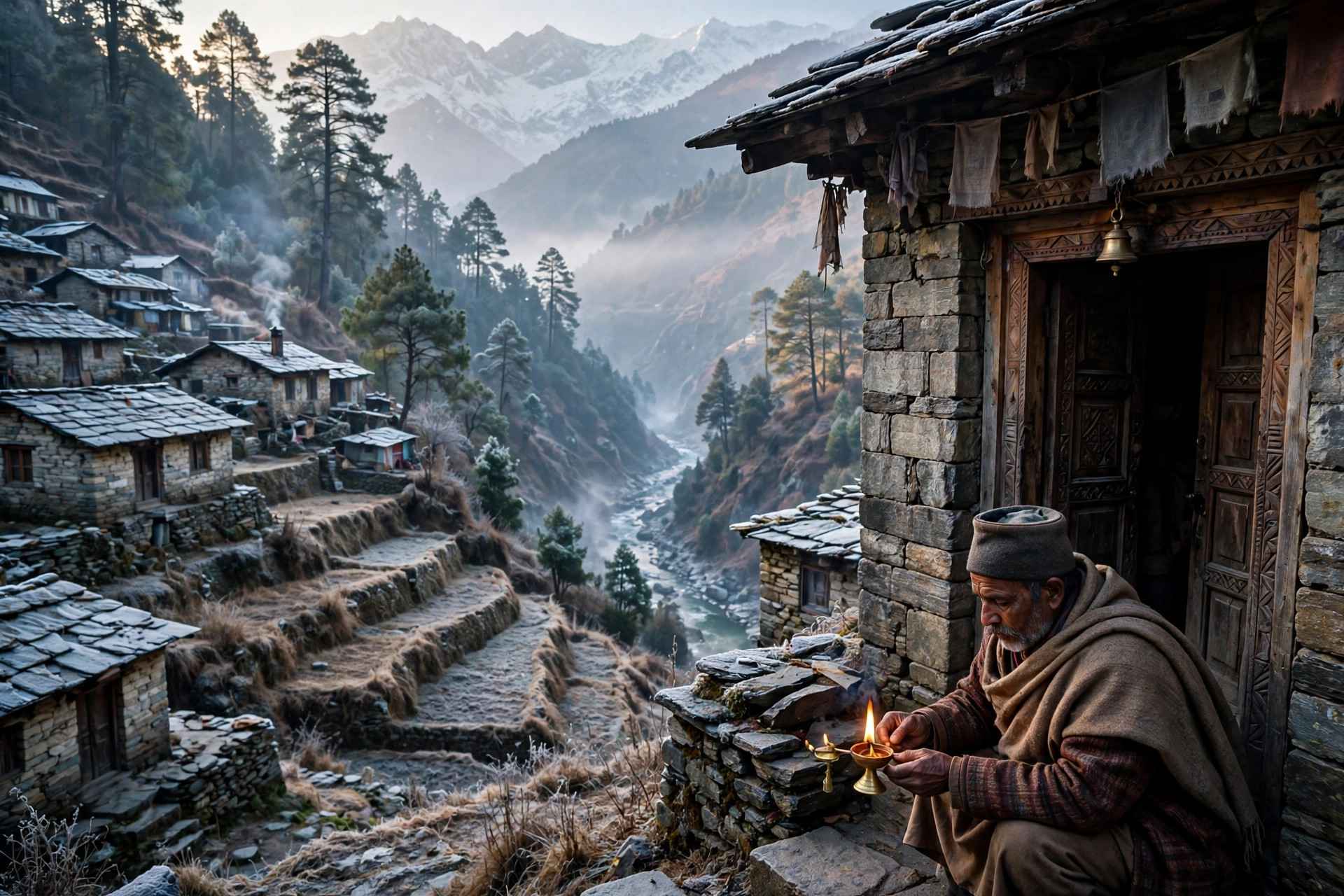
The circuit runs Dehradun → Barkot → Kharsali → Harsil → Mukhba → (long day) → Ukhimath → Joshimath → Pandukeshwar. Every leg is a motorable road; no leg needs a trek, a pony or a helicopter. That sentence is the whole reason this circuit works for elderly parents.
- Dehradun to Kharsali: ~180 km via Barkot, 6–6.5 hours. The Barkot road is good but slow; leave by 7 AM and reach Kharsali in daylight.
- Kharsali to Mukhba: ~150 km via Uttarkashi and Harsil, 5–5.5 hours. Fuel up at Uttarkashi — pumps thin out after it.
- Harsil to Ukhimath: ~320 km via Uttarkashi, Tehri, Srinagar and Rudraprayag, 9–10 hours. This is the long day, and the only hard one. Leave at 6 AM, or split it with a night at Rudraprayag and do Ukhimath fresh next morning. A split day costs you nothing; a tired driver on a mountain road at night can cost you everything.
- Ukhimath to Joshimath: ~140 km via Chopta and Gopeshwar, 5–6 hours. The prettiest driving day of the four.
- Getting home: Joshimath to Rishikesh is ~280 km, 8–9 hours — a full day on its own. Stay the extra night in Joshimath or Pandukeshwar and leave at first light.
November driving rules, short version: start early, finish before dark, carry cash (ATMs thin out after Barkot), keep food and water in the car, and never let a taxi decision be made by the cheapest quote — a driver who knows the Tehri–Srinagar road is worth more than a cheaper one who does not.
What does the last phase cost? Heli, registration, and what stays open
Registration is free and still mandatory for the summer shrines. Register at registrationandtouristcare.uk.gov.in, on the Tourist Care Uttarakhand app, or on WhatsApp by sending "Yatra" to +91-8394833833. The toll-free helpline is 0135-1364. One registration covers all four Dhams. The winter seats need no yatra registration at all — they are village temples, and you walk in.
Helicopter, last phase: IRCTC opened bookings on 9 October for the final Kedarnath heli phase, covering flights from 16 October to 9 November. Round-trip fares including GST, as reported on 8 October 2026: Guptkashi ₹12,762, Phata ₹10,164, Sirsi ₹6,390. That window is now nearly over — if you are reading this in late October, check IRCTC for remaining seats before you build a plan on a helicopter. After 9 November, there is no heli option; the winter circuit below is the yatra.
What stays open: GMVN rest houses and the winter-town hotels run through winter — the circuit's stays are normal hotels, not seasonal camps. What closes is the high infrastructure: the Kedarnath trek support, the high shrine dhabas, the summer-only transport. Budget for the winter circuit like any other Uttarakhand road trip: a day-hire cab is the main cost, rooms in these towns are modestly priced, and food is dhaba-priced. The honest total for two people doing the four-day circuit from Dehradun, excluding the Delhi journey, sits in the ₹25,000–45,000 range depending on your cab and your hotels — and the range is wide because the cab is the variable, not the rooms.
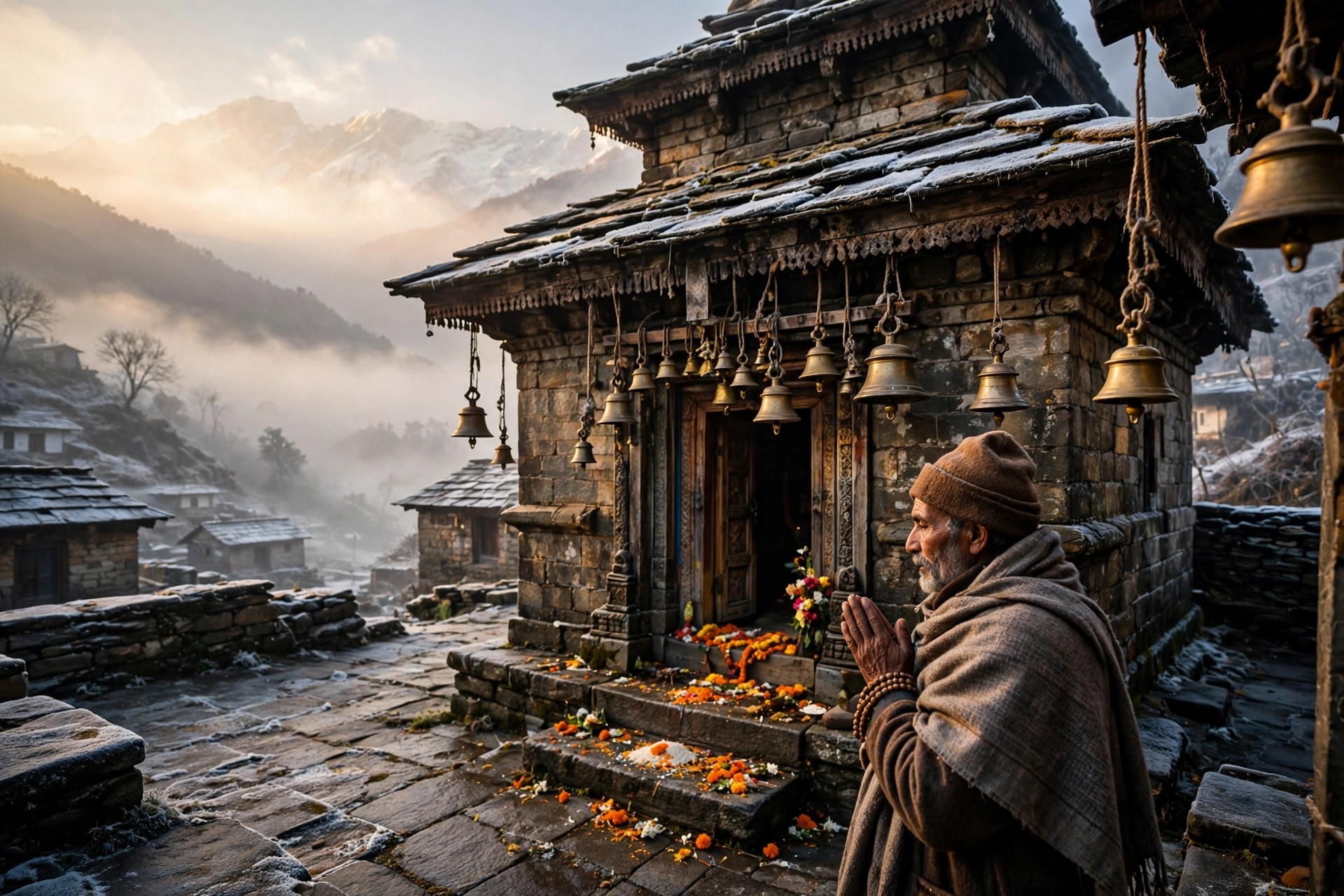
The 4-day winter Char Dham blueprint is in the frontmatter above
The full day-by-day plan — Kharsali, Mukhba, Ukhimath, Joshimath, with real stays, real restaurants and real ratings — is built into this page's blueprint section at the top. Use it as your packing list: one winter seat a day, Dehradun to Joshimath, four darshans, no climb.
One date to put next to this one: the closing week runs straight into the Diwali season's other great spectacle — Ayodhya Deepotsav on 7 November, when the Saryu ghats light up. Our Ayodhya Deepotsav guide has the pass zones, free viewing spots and honest costs. And if you are still weighing the summer version for next year, our Kedarnath Yatra guide has the full route, costs and registration walkthrough.
Facts verified 27 October 2026. Closing dates and times: announced by the Badrinath-Kedarnath Temple Committee on Vijayadashami, 20 October 2026, as reported by ETV Bharat (20 October 2026), Shrine Yatra (21 October 2026) and TripToYatra (updated October 2026); the 13 November Badrinath date still shown on some pages is the pre-announcement tentative date. Badrinath doli: departs 17 November via Sagar and Pandukeshwar to Narsimha Temple, Jyotirmath, per ETV Bharat, 20 October 2026. Yamunotri winter seat: confirmed by Yamunotri Temple Committee secretary Sunil Uniyal, per ETV Bharat, 20 October 2026. Festival calendar: Diwali 8 November, Govardhan Puja/Annakut 10 November, Bhai Dooj 11 November 2026 (Economic Times November 2026 calendar; the Amavasya runs into 9 November, pushing Annakut and Bhai Dooj a day later than usual). Season numbers: 60,31,017 pilgrims by 22 October 2026 evening, Badrinath 2,069,866 and Kedarnath 1,775,059, as reported 22 October 2026. Heli fares: IRCTC final-phase round trips including GST — Guptkashi ₹12,762, Phata ₹10,164, Sirsi ₹6,390 — per ETV Bharat, 8 October 2026; bookings opened 9 October for flights 16 October–9 November. Registration: registrationandtouristcare.uk.gov.in, Tourist Care Uttarakhand app, WhatsApp "Yatra" to +91-8394833833, helpline 0135-1364. Hotel and restaurant names, ratings and review counts: Google/JustDial/TripAdvisor/MakeMyTrip listings as returned 27 October 2026; small-town winter prices are rarely published online, so unverified prices are marked "confirm by phone" rather than estimated. Distances are approximate road distances. Winter temple timings are general guidance, not official schedules — confirm at the temple a day ahead.
Frequently asked questions
What are the Char Dham kapat closing dates 2026?
Gangotri closes Tuesday 10 November 2026 at 12:05 PM (Annakut/Govardhan Puja). Yamunotri closes Wednesday 11 November at 10:28 AM (Bhai Dooj). Kedarnath closes Wednesday 11 November at 8:30 AM (Bhai Dooj). Badrinath closes Monday 16 November at 9:37 PM. The dates were announced by the Badrinath-Kedarnath Temple Committee on Vijayadashami, 20 October 2026.
Why do some websites still say Badrinath closes on 13 November 2026?
13 November was the tentative date carried by many sites for most of 2026, before the official announcement. The date announced on Vijayadashami (20 October 2026) is 16 November at 9:37 PM, and news reports from 20–21 October confirm it. If a page still shows 13 November, it has not been updated since the announcement — do not plan around it.
Can I still have darshan after the kapat closes?
Yes — and this is the part most guides skip. The deities do not go on leave; they move. Ganga goes to Mukhba village, Yamuna to Kharsali, Kedarnath to Omkareshwar Temple in Ukhimath, and Badri Vishal to Pandukeshwar and the Narsimha Temple in Joshimath. Darshan continues there all winter, on normal roads, without the summer crowds or the treks.
What are the winter seats of the four Dhams, and how do I reach them?
Kharsali (Yamuna) sits near Janki Chatti, about 45 km from Barkot. Mukhba (Ganga) sits near Harsil, about 73 km from Uttarkashi. Ukhimath (Kedarnath) is on the Kedarnath road, about 40 km from Rudraprayag. Joshimath/Pandukeshwar (Badrinath) is on the Badrinath road itself. All four are driveable in a normal car. The 4-day blueprint below covers all of them in one circuit from Dehradun.
Is it safe to visit in the final weeks, and what should I pack?
The final weeks are the quietest and clearest of the season, but November in the high Himalaya is not casual. Nights go below freezing at Kedarnath and Badrinath, afternoon weather can turn in an hour, and a blocked road can cost you a day. Pack real woollens, not city jackets; start every walk at first light; keep one buffer day; and if you are travelling with elderly parents, pick Badrinath or the winter seats over the Kedarnath climb.
Is registration still required for the last phase, and for winter darshan?
Yes for the summer shrines: Char Dham registration is mandatory and free, through registrationandtouristcare.uk.gov.in, the Tourist Care Uttarakhand app, or WhatsApp (send 'Yatra' to +91-8394833833); helpline 0135-1364. The winter seats are ordinary village temples — no yatra registration, no caps, no summer-style queues. Carry a photo ID as usual.
Keep exploring
 Yatra Guides
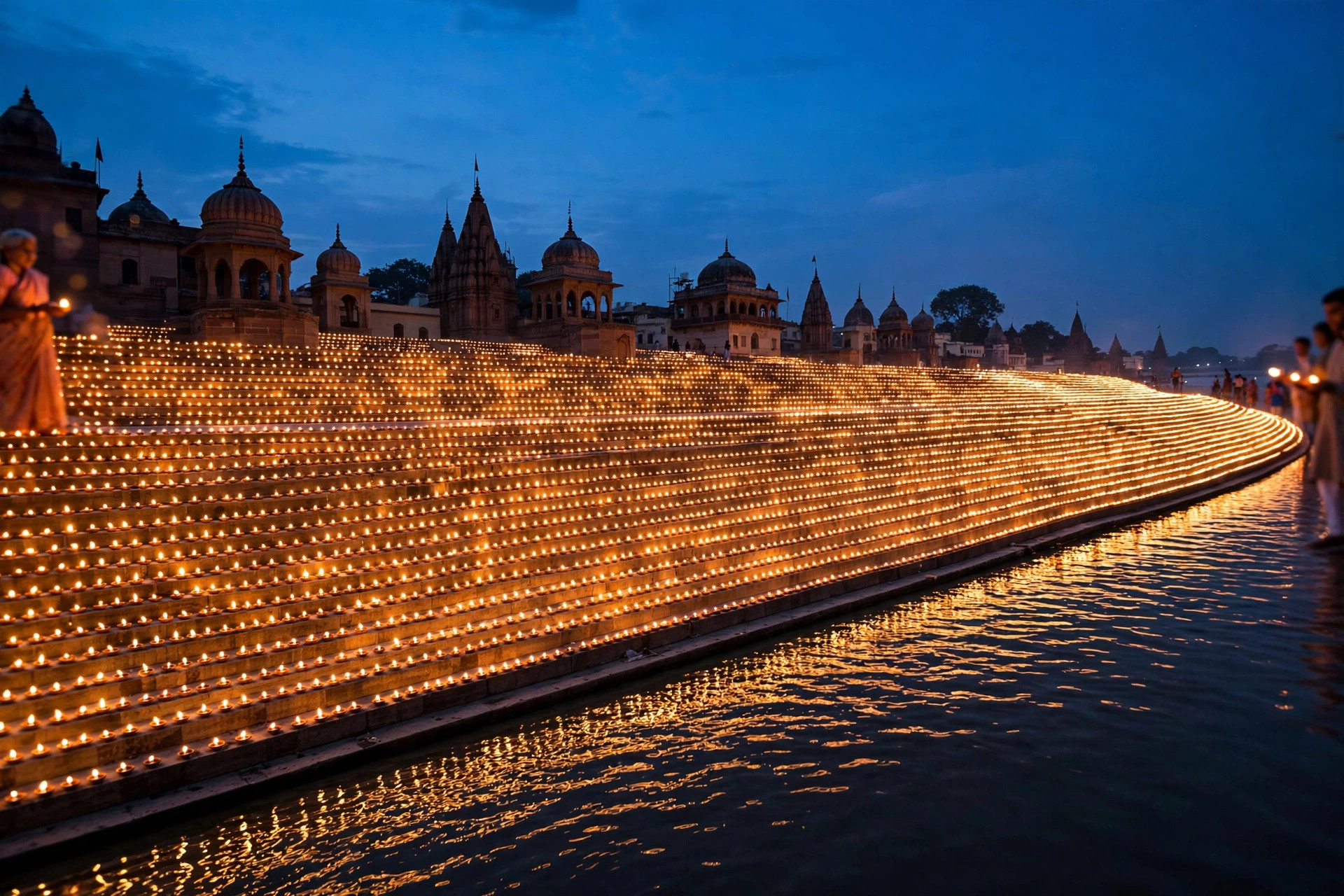
Ayodhya Deepotsav 2026 — Dates, Where to Watch, Pass Zones & Honest Costs
Deepotsav 2026: 33 lakh diyas light Ayodhya's Saryu ghats on 7 November. Verified schedule, free e-pass zones, best free viewing spots and honest costs.
 Yatra Guides
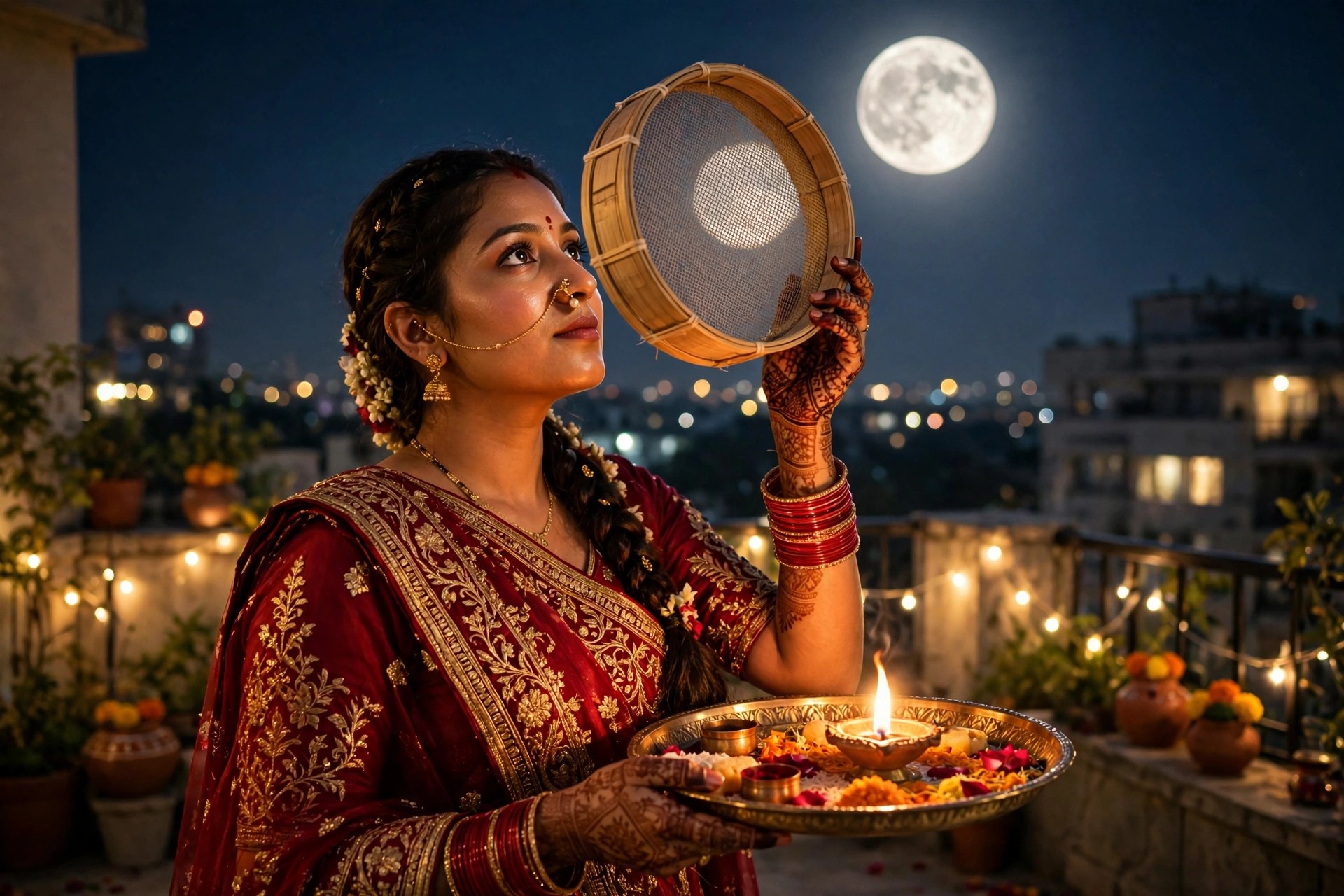
Karwa Chauth 2026 — 28 or 29 October? Date, Puja Muhurat, City-Wise Moonrise Time & the Full Vrat Guide
Karwa Chauth 2026 is on Thursday, 29 October in India (28 October is the USA date). Exact tithi, puja muhurat, sargi timing, moonrise times for 18 cities, the vrat vidhi step by step, and a Jaipur moonrise blueprint.
 Yatra Guides
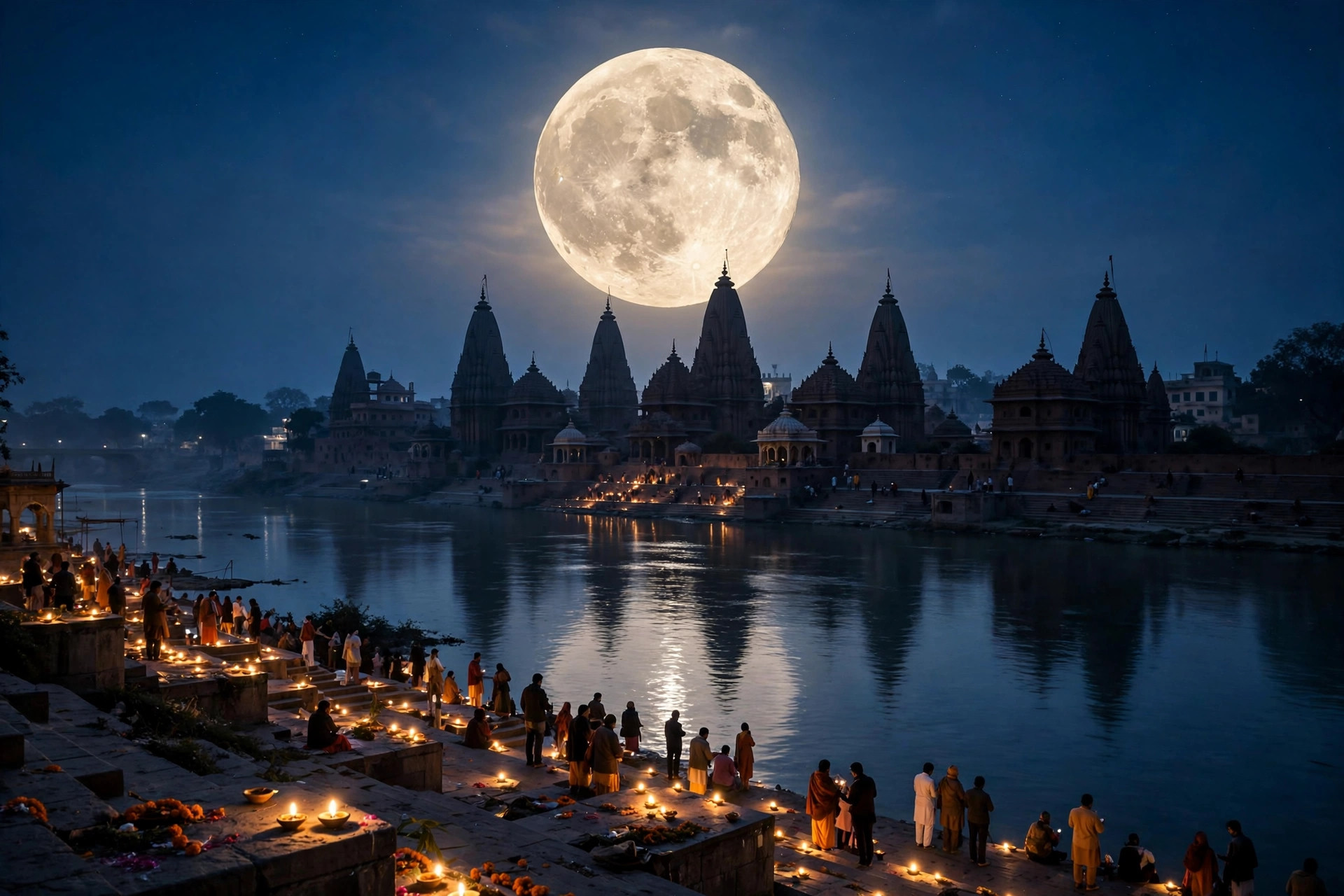
Sharad Purnima 2026 — Purnima Kab Hai, Moonrise Time, Kheer Ritual & Where to Celebrate
Sharad Purnima 2026 is on Sunday, 25 October. Exact tithi and moonrise timings, the kheer-under-moonlight ritual done right, Raas Purnima in Vrindavan, and a full Purnima calendar.