
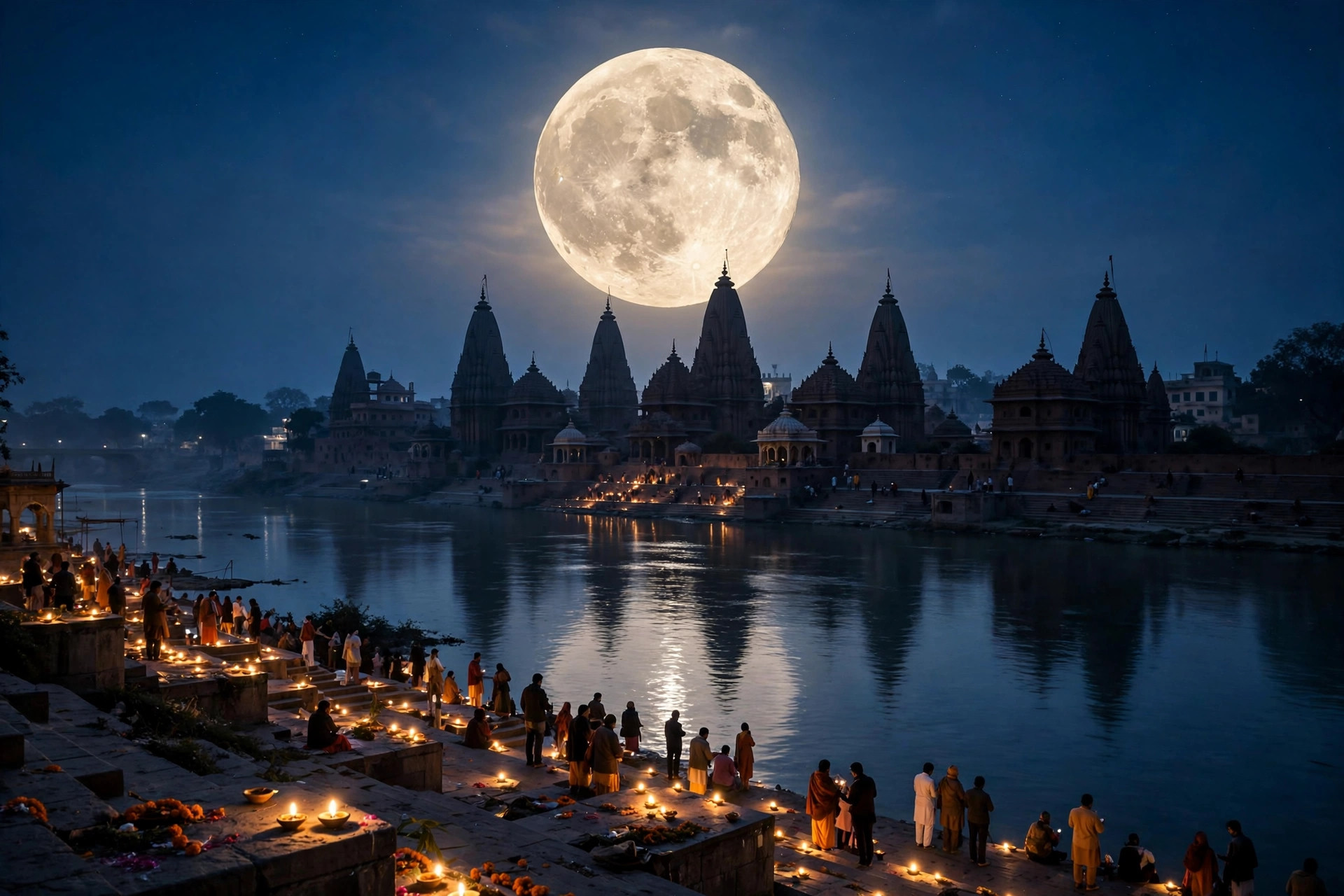
Photo: Wikimedia Commons
Yatra Guides
Sharad Purnima 2026 — Purnima Kab Hai, Moonrise Time, Kheer Ritual & Where to Celebrate
Sharad Purnima 2026 is on Sunday, 25 October. Exact tithi and moonrise timings, the kheer-under-moonlight ritual done right, Raas Purnima in Vrindavan, and a full Purnima calendar.
Quick answer: Sharad Purnima 2026 is on Sunday, 25 October 2026. The Purnima tithi runs from 11:55 AM on 25 October to 9:41 AM on 26 October IST, and the moon rises in Delhi at about 5:00 PM on 25 October — that evening is when you put the kheer out, and that night is when Vrindavan celebrates Raas Purnima.
Complete yatra blueprint
2-Day Sharad Purnima in Vrindavan–Mathura — Complete Blueprint
Day 1 (Sunday 25 Oct) is the main event: reach Vrindavan by afternoon, Banke Bihari and Prem Mandir by evening, Raas Leela after dark, and your own kheer under the moon past midnight. Day 2 (Monday 26 Oct) is the slow morning the festival deserves: dawn at Keshi Ghat, kheer prasad for breakfast, Krishna Janmabhoomi in Mathura, and home by evening. Everything is sequenced around one fixed point — moonrise at about 5:00 PM on 25 October.
Arrive Vrindavan — Banke Bihari, Prem Mandir, Raas Leela night & kheer under the moon
🛕 Temples & darshan
Shri Banke Bihari Temple — evening darshan · Old Vrindavan, reached on foot/e-rickshaw through the galiyan
The heart of Vrindavan. On Sharad Purnima evening the temple is packed shoulder-to-shoulder, and the jhanki (curtain) darshan — a few seconds of Bihari ji at a time — is exactly how it should be experienced. Winter timings begin around this week of the year.
Prem Mandir — the moonrise hour · Chhatikara Road, Vrindavan
The white-marble temple lights up after sunset, and on Sharad Purnima the combination of the lit temple, the musical fountain and a full moon overhead is the single best photograph of the trip. Krishna–Radha leela tableaus ring the complex.
Raas Leela & the kheer night — Sharad Purnima's main event · Temples and ashrams across Vrindavan; your own terrace for the kheer
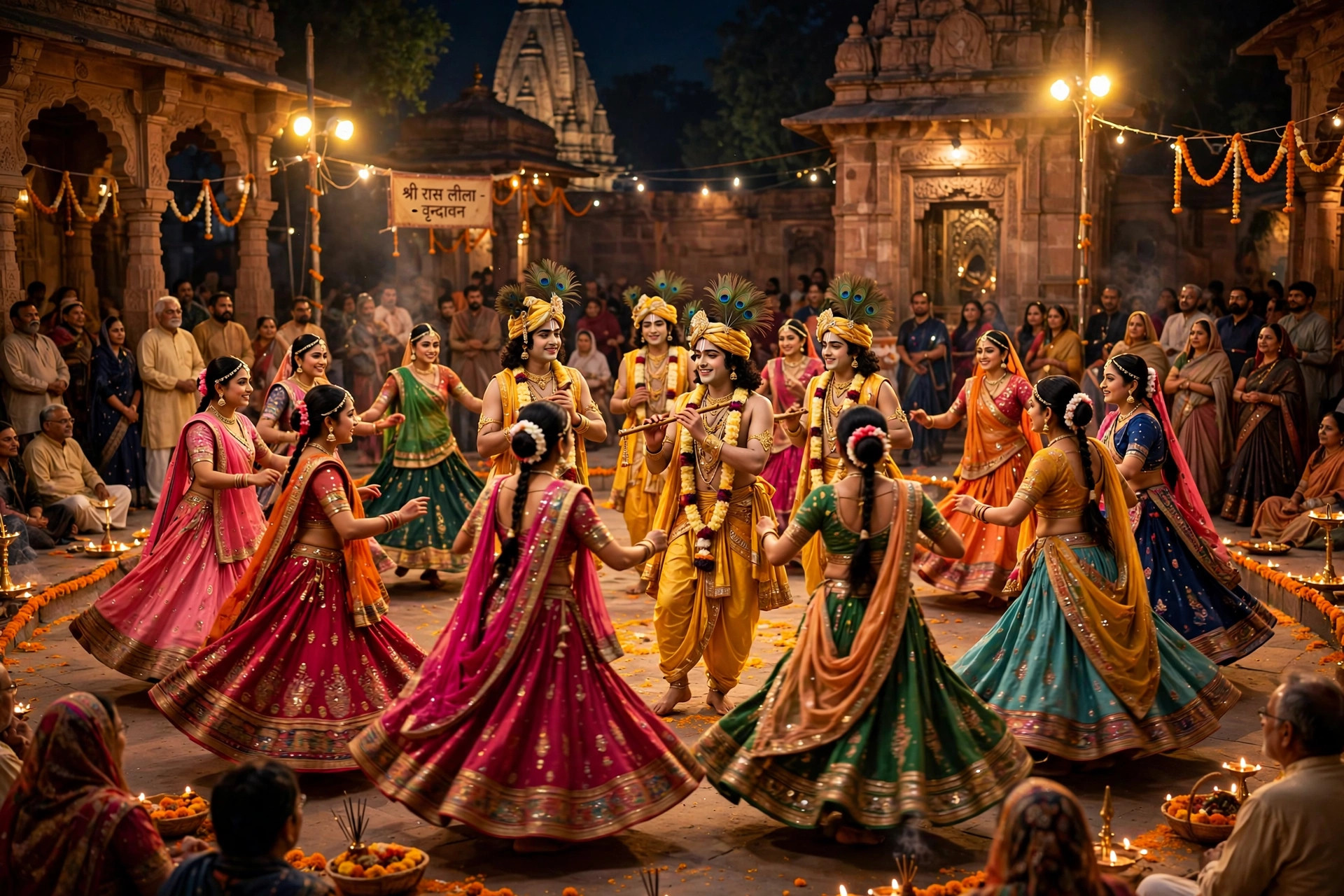
In Braj this night is Raas Purnima: the night Krishna is believed to have performed the Maha Raas with the gopis under this same moon. Raas Leela troupes perform in temples and ashram courtyards through the evening. Back at your stay, set the kheer out under the moon after moonrise (about 5:00 PM, better after 7 PM when the moon is high) and stay up for it — devotees observe the Kojagari jagran, with Lakshmi Puja in the Nishita Kaal window, 11:39 PM–12:31 AM.
🏨 Where to stay
MVT Guesthouse & Restaurant
₹2,000–4,000 / night
Garden guesthouse on Bhaktivedanta Swami Marg with a well-regarded sattvic restaurant. The pilgrim favourite in this budget — but festival weekends sell out weeks ahead, so book direct and early.
Nidhivan Sarovar Portico
₹5,500–9,500 / night
A proper full-service hotel (pool, spa, vegetarian restaurant) about 2 km from Prem Mandir. Choose it if the group includes elders who need a real bed and a quiet room after the jagran night.
Radisson Hotel Vrindavan
₹6,000–12,000 / night
Vrindavan's first 5-star, pure-vegetarian, no alcohol — built for exactly this crowd. Festival-weekend rates climb to the top of the range; the rooftop is a genuinely good spot for the moonrise if you are staying in.
🍽 Where to eat
Brijwasi
₹400–600 for two
Must try: Mathura peda and kulhad lassi
Bhaktivedanta Swami Marg, Vrindavan. Buy the peda here, not from the touts at the temple gates — and pick up an extra box for the kheer-night jagran and one for home.
11 Flowers Rooftop Cafe
₹600–800 for two
Must try: Baked lasagna and dal makhani (all sattvic, no onion-garlic)
Sheetal Chhaya Road. The young crowd's Vrindavan dinner pick — a rooftop seat on a full-moon weekend goes fast, so go early or reserve.
- Leave Delhi by 11 AM latest. Yamuna Expressway is smooth, but the last 12 km from Mathura to Vrindavan on a festival Sunday is not — budget a full extra hour for it.
- Cars do not enter old Vrindavan's lanes. Your cab drops you at the edge; everything after that is e-rickshaw (₹100–200 per hop) and walking. Pack light enough to carry.
- Cook or order the kheer BEFORE the evening darshan round. At 10 PM on Sharad Purnima night, no kitchen in Vrindavan is taking special requests.
Keshi Ghat at dawn, kheer prasad, Krishna Janmabhoomi — and home
🛕 Temples & darshan
Keshi Ghat — Yamuna aarti at dawn · Yamuna bank, old Vrindavan
Vrindavan's principal ghat, where Krishna is believed to have rested after slaying the Keshi demon. The morning Yamuna aarti here, in first light after the full-moon night, is quiet in a way nothing on Day 1 was. Boats offer short rides on the river.
ISKCON Krishna Balaram Mandir — Mangala Aarti (optional, for the ones who stayed up) · Raman Reti, Vrindavan
If you kept the Kojagari jagran, end it the way Vrindavan does: the 4:30 AM Mangala Aarti at Krishna Balaram Mandir, a short walk from most Raman Reti stays. Then sleep. You have earned it.
Shri Krishna Janmabhoomi, Mathura — the departure darshan · Mathura, on the way to Mathura Junction
The temple complex at Krishna's birthplace, 12 km from Vrindavan and minutes from the station — the natural last stop before your train. The prison-cell shrine (Garbha Griha) is the emotional core of the complex.
🏨 Where to stay
Same Vrindavan stay, second night (or check out after breakfast)
Check out after the kheer breakfast and leave bags at reception for the Mathura round trip, or keep the room if your train is late-evening. Shifting hotels for a single night wastes the best morning of the trip.
🍽 Where to eat
Your kheer, as prasad — breakfast
₹0 (you made it last night)
Must try: The moonlight kheer itself, eaten before the tithi ends at 9:41 AM
The ritual completes at breakfast: the kheer that sat under the Sharad Purnima moon is eaten as prasad on the morning of 26 October. Eat it in the morning — that is the tradition, and it also happens to be when it tastes best.
Royal Bharti Foods
₹300–500 for two
Must try: Chole bhature and gulab jamun
Banke Bihari Colony, Vrindavan — pure-veg, no onion-garlic cooking. A heavy, happy brunch before the Mathura run; the golgappe are the local weakness.
- The tithi ends at 9:41 AM on 26 October — finish the kheer prasad before that if you are keeping the ritual strictly.
- Monday 26 October is a working day in Delhi. Evening trains from Mathura Junction fill with the weekend crowd going home; book the return before you book anything else.
- If you have a third day, spend it in Gokul and Goverdhan, not on a second round of the same three temples. Braj rewards the second ring of places.
Sharad Purnima kab hai? Sunday, 25 October 2026
Short answer, because that is what you came for: Sharad Purnima 2026 falls on Sunday, 25 October 2026. The Purnima tithi begins at 11:55 AM on 25 October and ends at 9:41 AM on 26 October (IST). The moon rises in Delhi at about 5:00 PM on 25 October — and since this festival belongs to the night, not the date, everything that matters happens between that moonrise and the next morning.
It is the Ashwin month's full moon, and it goes by more names than any other Purnima in the calendar: Kojagari (or Kojagiri) Purnima, Raas Purnima, Kaumudi Purnima. Same night, three different festivals depending on where you stand — Lakshmi's night in most of India, Krishna's Raas night in Braj, and a harvest moon everywhere.
One honest warning before anything else: Sharad Purnima and Diwali fall close together this year, and 25 October is a Sunday. Vrindavan, Mathura and Varanasi will all be at festival-weekend capacity. Whatever you are booking — train, room, cab — book it before you finish reading this page, not after.
What are the exact timings for Sharad Purnima 2026?
| Event | Timing (IST) |
|---|---|
| Purnima tithi begins | 25 October 2026, 11:55 AM |
| Moonrise (Delhi) | 25 October 2026, ~5:00 PM |
| Kheer placed under moonlight | 25 October, after moonrise (best after 7 PM, moon high) |
| Kojagara Lakshmi Puja — Nishita Kaal | 25 October, 11:39 PM – 26 October, 12:31 AM |
| Purnima tithi ends | 26 October 2026, 9:41 AM |
| Kheer eaten as prasad | Morning of 26 October, before 9:41 AM |
Two things people get wrong every year. First, the kheer goes out after moonrise, not at sunset — and it tastes of nothing but patience if you bring it in at midnight; the tradition is the full night. Second, the fast and the puja belong to the night of 25 October, even though the tithi technically ends on the morning of the 26th. The moonrise decides the festival, and the moonrise is on the 25th.
Timings above follow the Drik Panchang convention for Delhi; your city's moonrise may differ by 10–20 minutes. The ritual does not change.
Why is this moon different from every other full moon?
Ask anyone who has stood on a rooftop on this night: the Sharad Purnima moon looks bigger, whiter and closer than it has any right to. Part of that is astronomy and season — Sharad ritu is when the monsoon has just washed the sky clean, humidity drops, and the air over North India is at its most transparent of the year. The first genuinely clear night sky after four months of cloud happens to carry a full moon.
The tradition goes further. The Sharad Purnima moon is believed to be the only moon of the year that shines with all sixteen kalas — complete, nothing withheld. In the Krishna tradition, those sixteen kalas are why this is the night of the Maha Raas: in Vrindavan, it is believed Krishna multiplied himself and danced with every gopi under this moon, and time itself is said to have stretched — one night of Brahma, in some tellings. You do not have to take the mythology literally to feel, standing in Braj on this night, that the place believes it entirely — and acts accordingly.
It is also a harvest moon in the plainest sense: the kharif crop is coming in, the kheer is made from the new season's rice and milk, and the year turns from rain to winter. Three festivals in one night because three different Indias needed the same moon.
How do you do the kheer ritual correctly?
The ritual is simple. Doing it correctly is mostly about not cutting the corners that make it what it is:
- Cook the kheer in the evening of 25 October — rice, milk, sugar, cardamom; a slow reduction, not a pressure-cooker shortcut. It should be thick enough to hold a skin.
- Pour it into a wide, open vessel. Tradition prefers silver; a steel or glass bowl serves the purpose honestly. The point is surface area under the sky.
- Place it under the open moonlight after moonrise — terrace, balcony, courtyard. After 7 PM is better than 5 PM: the moon should be up and the light falling directly into the bowl.
- Cover it with a thin muslin cloth or a mesh — never a sealed lid. Dew and insects are real; a fine net keeps both the ritual and the hygiene intact. This is the step city balconies skip, and the step that matters most practically.
- Leave it out the whole night. If you are keeping the Kojagari jagran, the kheer keeps you company; Lakshmi Puja is performed in the Nishita Kaal window, 11:39 PM–12:31 AM.
- Eat it as prasad on the morning of 26 October, before the tithi ends at 9:41 AM. Share it — prasad that stays in one fridge has missed its own point.
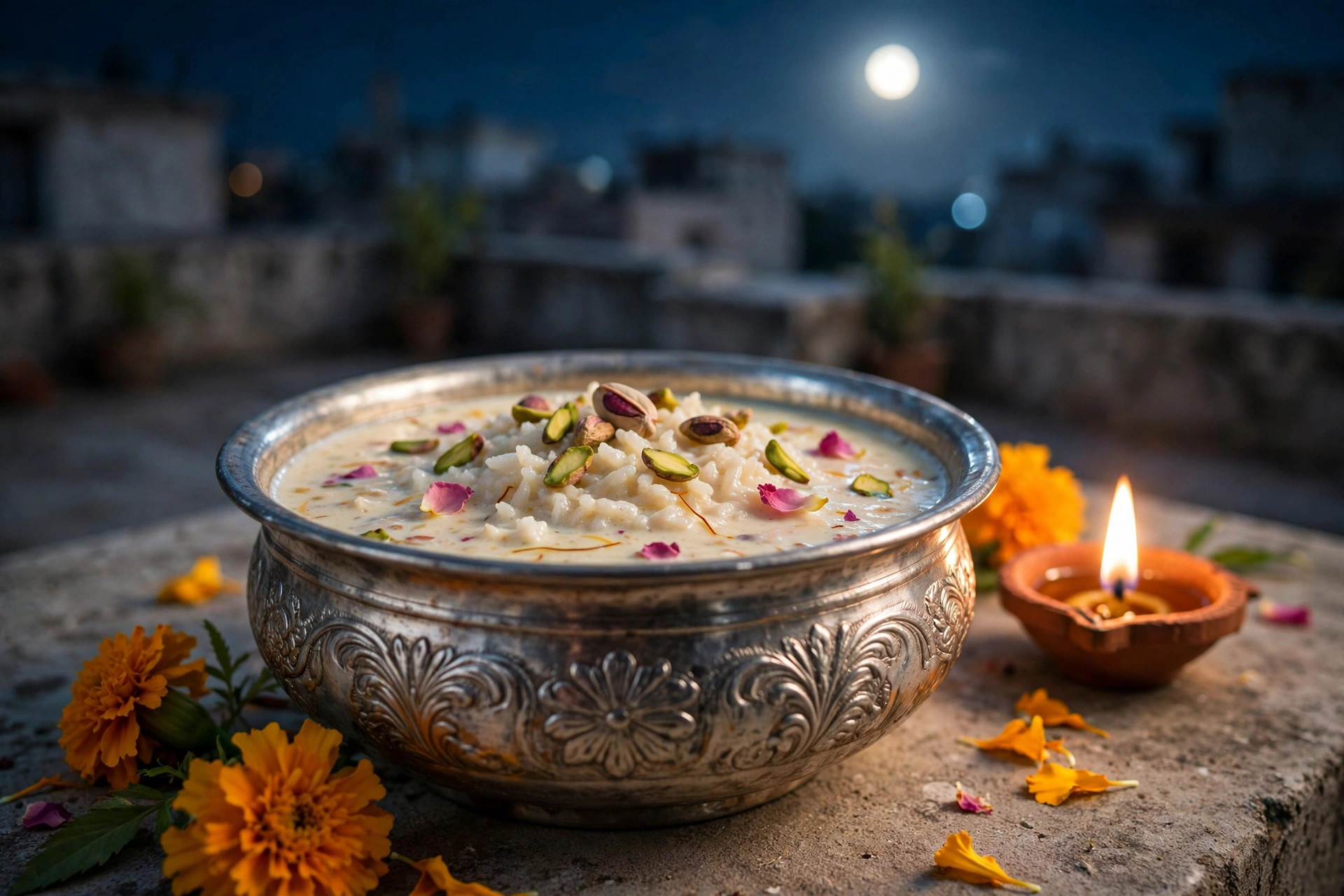
A word on claims you will read elsewhere: the moonlight is said in tradition to make the kheer amrit-like and healing. We will not sell you that as fact, because it is a belief, not a finding. What is verifiable is this: a family that cooks together, stays up together and eats together at dawn has done something genuinely good for itself — no moonlight required to explain it, and the moonlight makes it memorable anyway.
Where should you go to experience Sharad Purnima?
At home, it is a rooftop ritual. But two places in India turn this night into something you cannot reproduce at home:
Vrindavan — for Raas Purnima. This is the strongest recommendation in this guide. Braj claims this night outright: Raas Leela performances in temple courtyards, Banke Bihari's evening darshan at maximum intensity, Prem Mandir lit against a full moon, and a whole town staying awake. The 2-day blueprint at the top of this page is built for exactly this weekend — arrive by afternoon on the 25th, leave after Mathura on the 26th. Two days is enough; one day is a mistake, because the festival starts at 5 PM and your train home cannot wait for the 12:31 AM puja to end.
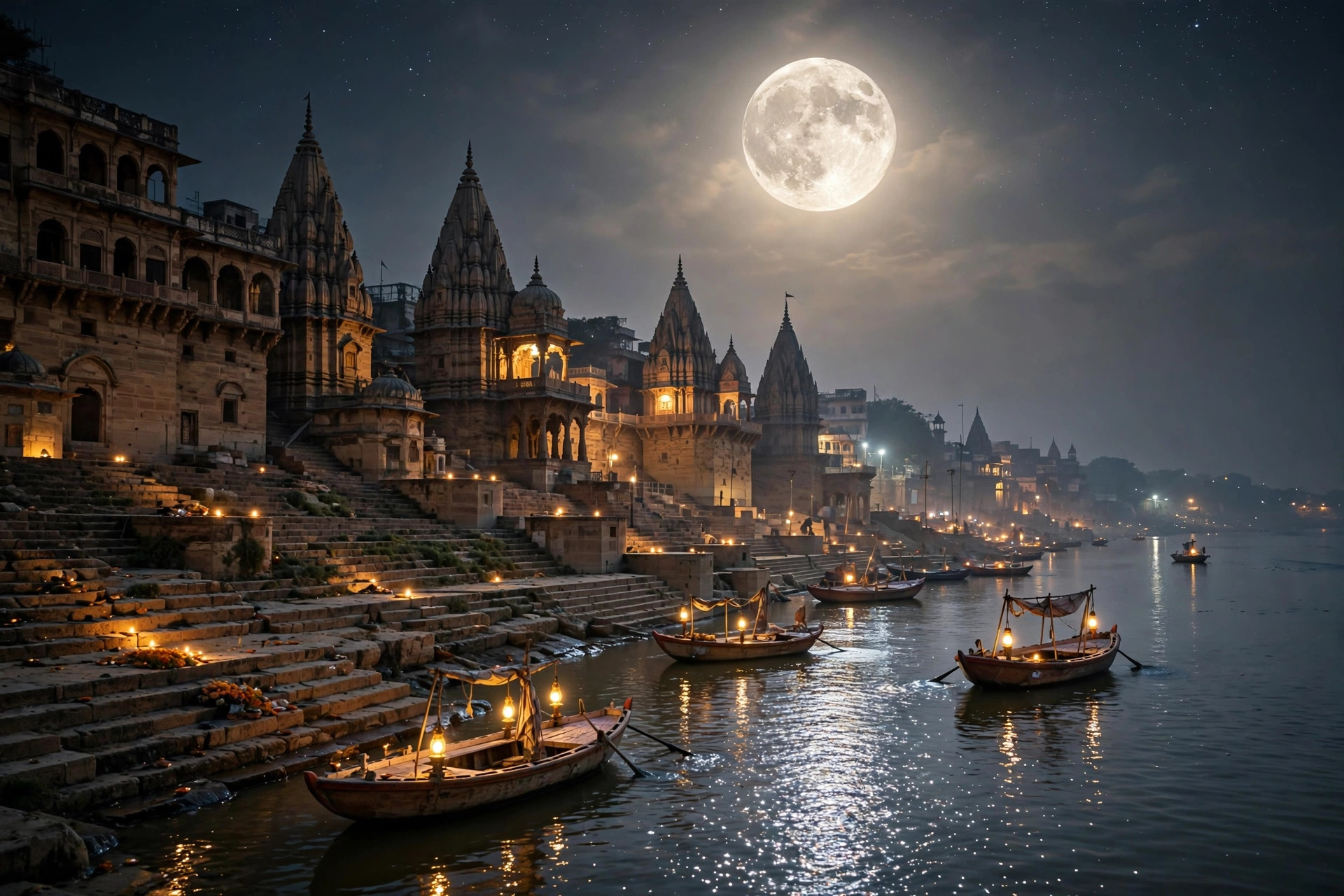
Varanasi — for the moon over the Ganga. No Raas here, but the ghats under a full moon need no programme. Walk the ghats after 8 PM when the day crowds leave, take a boat at moonrise if you can get one, and let the city do the rest. Varanasi's own big moonlit night is a month later — Kartik Purnima, 24 November 2026, when Dev Deepawali lights the ghats with lakhs of diyas (our complete Dev Deepawali Varanasi guide covers that night in full). If you can only make one Varanasi trip this autumn, make it that one; Sharad Purnima belongs to Vrindavan.
And the honest third option: stay home and do it properly. A terrace, a bowl of kheer, and a family that actually stays up till midnight is a complete Sharad Purnima. Travel adds the spectacle; it does not add the ritual.
What will the Vrindavan trip actually cost? (October 2026)
Per person, 2 days ex-Delhi, two people sharing a room — typical rates, with the festival-weekend premium already assumed:
| Item | Budget | Comfort |
|---|---|---|
| Delhi–Vrindavan travel (train + auto / cab share) | ₹500–1,000 | ₹1,500–2,000 |
| Stay, 1 night (MVT Guesthouse / Nidhivan Sarovar Portico class) | ₹1,000–2,000 | ₹2,750–4,750 |
| Food, 2 days (Brijwasi, chaat, cafe dinner) | ₹800–1,200 | ₹1,200–1,800 |
| E-rickshaws & local hops | ₹300–500 | ₹400–600 |
| Peda & prasad to carry home | ₹300–500 | ₹500–800 |
| Total per person | ₹2,900–5,200 | ₹6,350–9,950 |
The one cost nobody warns you about is time: on the festival Sunday, every queue in Vrindavan doubles. The blueprint's order — Bihari ji first, Prem Mandir second, ghat at dawn — is designed around that fact.
When is the next Purnima? The full Purnima calendar
Bookmark this section. "Purnima kab hai" is a question India asks every single month — here is every answer left in 2026, and all of 2027, with the tithi timings (IST, Delhi):
Remaining Purnimas of 2026
| Purnima | Date | Tithi begins | Tithi ends |
|---|---|---|---|
| Sharad Purnima (Ashwin) | Sun, 25 Oct 2026 | 25 Oct, 11:55 AM | 26 Oct, 9:41 AM |
| Kartik Purnima (Dev Deepawali) | Tue, 24 Nov 2026 | 23 Nov, 11:42 PM | 24 Nov, 8:23 PM |
| Margashirsha Purnima | Wed, 23 Dec 2026 | 23 Dec, 10:47 AM | 24 Dec, 6:57 AM |
All Purnimas of 2027
| Purnima | Date | Tithi begins | Tithi ends |
|---|---|---|---|
| Pausha Purnima | Fri, 22 Jan 2027 | 21 Jan, 9:29 PM | 22 Jan, 5:46 PM |
| Magha Purnima | Sat, 20 Feb 2027 | 20 Feb, 7:59 AM | 21 Feb, 4:52 AM |
| Phalguna Purnima (Holi) | Mon, 22 Mar 2027 | 21 Mar, 6:21 PM | 22 Mar, 4:13 PM |
| Chaitra Purnima | Tue, 20 Apr 2027 | 20 Apr, 4:51 AM | 21 Apr, 3:56 AM |
| Vaishakha Purnima (Buddha Purnima) | Thu, 20 May 2027 | 19 May, 4:02 PM | 20 May, 4:28 PM |
| Jyeshtha Purnima | Fri, 18 Jun 2027 | 18 Jun, 4:34 AM | 19 Jun, 6:13 AM |
| Ashadha Purnima (Guru Purnima) | Sun, 18 Jul 2027 | 17 Jul, 6:48 PM | 18 Jul, 9:14 PM |
| Shravana Purnima (Raksha Bandhan) | Tue, 17 Aug 2027 | 16 Aug, 10:28 AM | 17 Aug, 12:58 PM |
| Bhadrapada Purnima | Wed, 15 Sep 2027 | 15 Sep, 2:48 AM | 16 Sep, 4:32 AM |
| Sharad Purnima (Ashwin) | Fri, 15 Oct 2027 | 14 Oct, 6:49 PM | 15 Oct, 7:16 PM |
| Kartik Purnima | Sun, 14 Nov 2027 | 13 Nov, 9:55 AM | 14 Nov, 8:55 AM |
| Margashirsha Purnima | Mon, 13 Dec 2027 | 12 Dec, 11:54 PM | 13 Dec, 9:38 PM |
The Purnimas worth planning travel around: Kartik Purnima (Varanasi, Dev Deepawali), Phalguna Purnima (Holi in Braj — Barsana's Lathmar Holi is in the days around it), Guru Purnima (ashrams across India, and Vyasa Puja), and Sharad Purnima itself (Vrindavan, this page). The rest are nights for home — which, as the kheer teaches, is not a lesser way to keep them.
Facts verified October 2026. Sharad Purnima date, tithi and puja timings: Economic Times and AstroTalk Sharad Purnima 2026 reports, cross-checked against Drik Panchang conventions; Purnima calendar 2026–27: Gupt Vrindavan Dham Purnima list, cross-checked with SmartPuja's 2026 Purnima table. Temple timings in Braj shift between summer and winter schedules around this period — confirm on the temple board on the day. Vrindavan stays and restaurants: verified via places data, October 2026 (review counts shown where listed). Prices are typical October 2026 rates; festival weekends in Vrindavan run higher and sell out early.
Frequently asked questions
Sharad Purnima 2026 kab hai?
Sunday, 25 October 2026. The Purnima tithi begins at 11:55 AM on 25 October and ends at 9:41 AM on 26 October (IST). The festival is observed on the night of 25 October, when the full moon rises during the tithi — moonrise in Delhi is at about 5:00 PM.
What is the moonrise time on Sharad Purnima 2026?
About 5:00 PM in Delhi on Sunday, 25 October 2026 (a few minutes either way depending on your city — Vrindavan and Varanasi are within roughly 10 minutes of Delhi's time). Put the kheer out after moonrise, once the moon is clearly up, not at sunset.
Why is kheer kept under the moonlight on Sharad Purnima?
Tradition holds that the Sharad Purnima moon — the only full moon of the year believed to shine with all 16 kalas — showers amrit-like rays, and kheer left under it overnight absorbs them. Families treat the kheer as prasad and eat it the next morning. This is a belief and a ritual, not a medical claim — but as rituals go, it is a beautiful one: one bowl, one rooftop, one very bright night.
When is Kojagari Lakshmi Puja performed in 2026?
On the night of 25–26 October 2026. The Nishita Kaal (midnight) window for Kojagara Lakshmi Puja is 11:39 PM on 25 October to 12:31 AM on 26 October. Devotees stay awake through the night — 'Kojagari' comes from Lakshmi's question 'Ko jagarti?' (who is awake?).
When is the next Purnima after Sharad Purnima 2026?
Kartik Purnima, on Tuesday, 24 November 2026 — the night of Dev Deepawali in Varanasi, when the ghats are lit with lakhs of diyas. After that comes Margashirsha Purnima on Wednesday, 23 December 2026. The full month-wise calendar for the rest of 2026 and all of 2027 is in this guide.
Keep exploring
 Yatra Guides
Ayodhya Deepotsav 2026 — Dates, Where to Watch, Pass Zones & Honest Costs
Deepotsav 2026: 33 lakh diyas light Ayodhya's Saryu ghats on 7 November. Verified schedule, free e-pass zones, best free viewing spots and honest costs.
 Yatra Guides
Karwa Chauth 2026 — 28 or 29 October? Date, Puja Muhurat, City-Wise Moonrise Time & the Full Vrat Guide
Karwa Chauth 2026 is on Thursday, 29 October in India (28 October is the USA date). Exact tithi, puja muhurat, sargi timing, moonrise times for 18 cities, the vrat vidhi step by step, and a Jaipur moonrise blueprint.
 Yatra Guides
Shri Mata Vaishno Devi Yatra 2026 — Registration, Helicopter Fare, Both Routes, Real Hotels & the Complete 3-Day Blueprint
Shardiya Navratras 2026 drew 4+ lakh pilgrims to Vaishno Devi. Free RFID registration, helicopter fares, old vs Tarakote route, real Katra hotels and restaurants, and a full 3-day blueprint.