
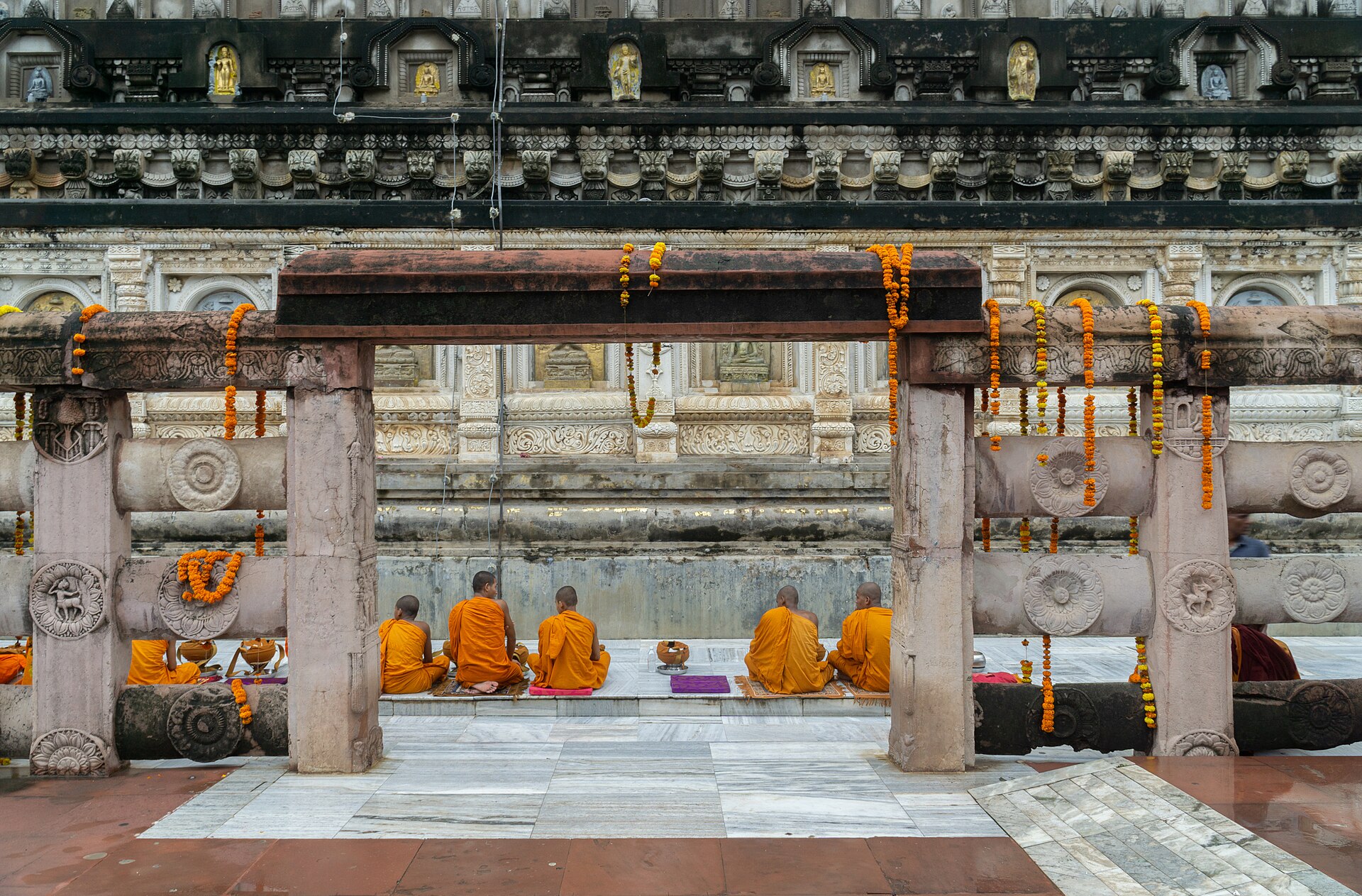
Photo: Wikimedia Commons
Yatra Guides
Bodh Gaya for International Visitors: The Tipitaka Ceremony, the Phone Ban, and the Buddha's Town Without the Guesswork
Bodh Gaya for first-time foreign visitors: the December 2026 Tipitaka ceremony, the temple phone ban, real costs, stays and scams — checked 14 Nov 2026.
Quick answer: Come 2–12 December 2026 for the 21st International Tipitaka Chanting Ceremony, when 25,000 monks, nuns and devotees from 27 countries gather under the Bodhi Tree, and give the town three days. Budget about $75–85 per person on the ground at backpacker level or $255–275 in comfort, leave your phone at the hotel because it is banned inside the Mahabodhi Temple, and do not build the trip around the Dalai Lama: he is likely to skip Bodh Gaya this winter.
Complete yatra blueprint
3-Day Bodh Gaya for International Visitors — Complete Blueprint
Built for a first-time visitor from the US, UK or EU who wants the December 2026 chanting season without the guesswork. Prices checked 14 November 2026; conversions at ₹94 to the dollar and ₹104 to the euro.
Arrive → Mahabodhi Temple at Dawn → Monastery Circuit → Evening Chanting
🛕 Temples & darshan
Mahabodhi Temple at Dawn · Mahabodhi Mahavihar complex, Bodh Gaya
The UNESCO World Heritage temple marking the spot where the Buddha attained enlightenment, 2,500 years ago. The 55-metre pyramidal tower, the gilded Buddha inside, and the morning chanting at 5:30 AM. Entry is free, and the temple opens at 5:00 AM.
The Bodhi Tree · Behind the Mahabodhi Temple, inside the complex
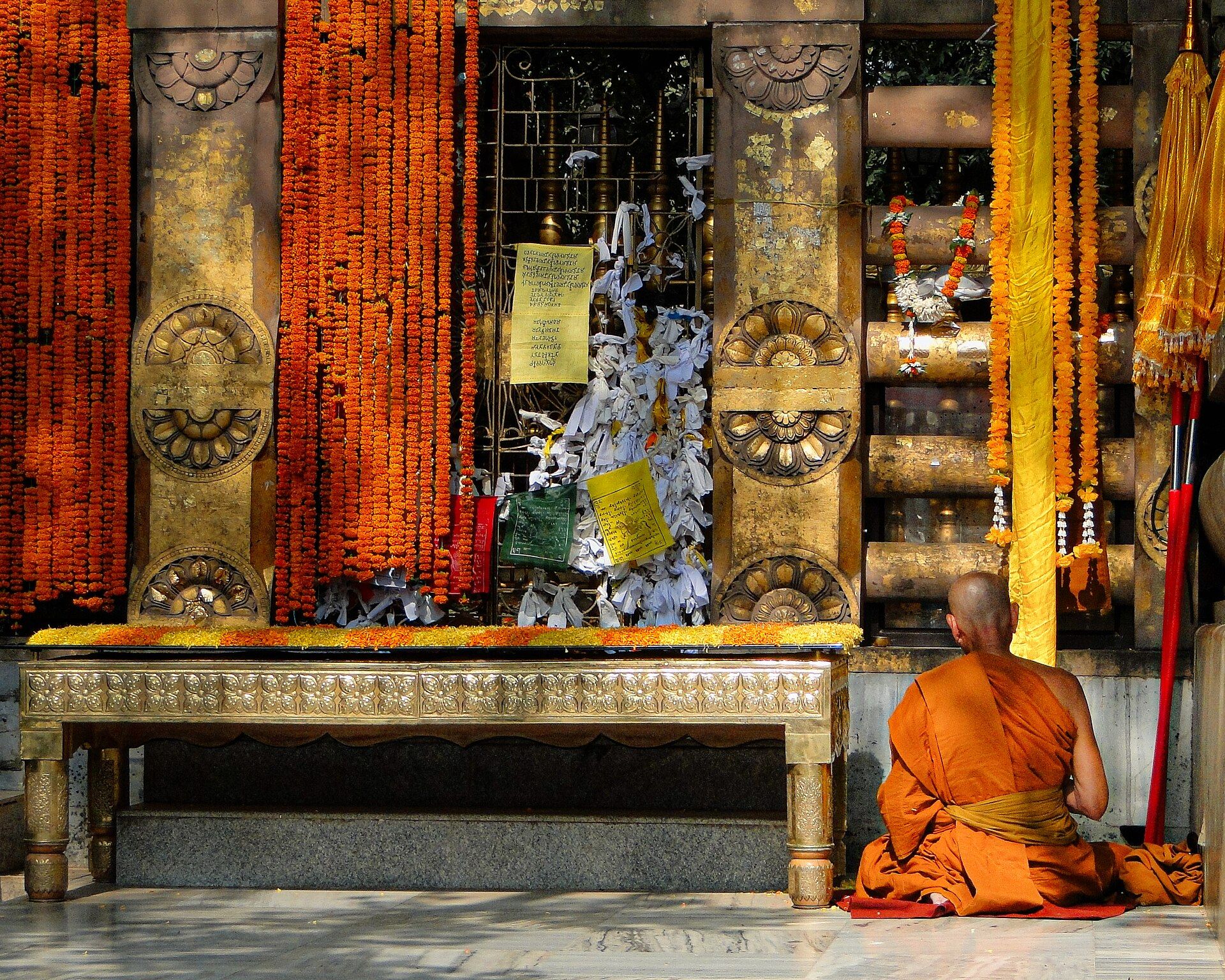
The tree under which the Buddha sat, a descendant of the original, ringed by a stone railing and prayer flags. Monks from a dozen countries chant here through the day in December. Sit for a while. Nobody hurries you, and that is the point.
Great Buddha Statue · About a 10-minute walk from the temple, near the Japanese temple
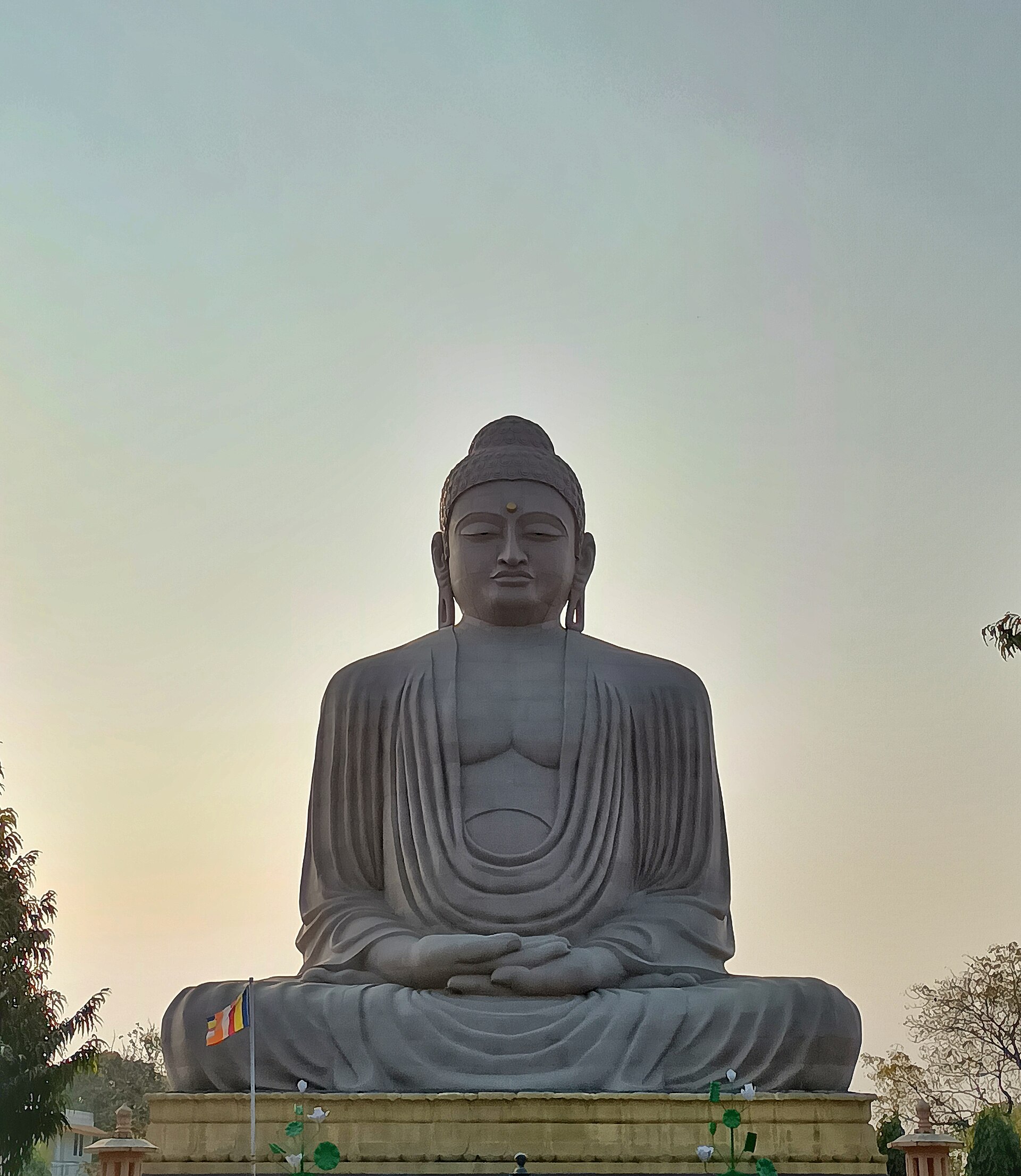
The 80-foot (24.5-metre) seated Buddha in sandstone and red granite, built by the Japanese Daijokyo monastery. It is the landmark every auto driver in town knows, and the statue faces the sunset, which is when to go.
Monastery Circuit — Thai, Japanese, Tibetan, Bhutanese, Burmese · Within about 2 km of the Mahabodhi Temple
A dozen national monasteries in one small town, each built in its own country's style: the Thai Wat Thai Buddhachetawan with its sloping roofs, the Japanese Nipponji, the Tibetan Tergar, the Bhutanese and Burmese temples. Walk it in the late afternoon, when the temples are open and the monks are out.
🏨 Where to stay
Beauty Guest House
From about ₹650/night (about $7)
600 m from the temple. The cheapest bed this close to the complex. Rooms are basic, so book direct and ask for a room away from the road.
Niranjana Hotel
₹3,700–4,000/night (about $39–43)
About 400 m from the temple, a 10-minute walk, with a rooftop restaurant. TripAdvisor 4.2/5. It sits in a restricted zone, so contact the hotel before arrival for the entry pass.
Maya Heritage
Mid-range; December rates surge — confirm at booking
30 m from the Mahabodhi Temple, with a restaurant on site. TripAdvisor 4.6/5 (159 reviews); Booking.com 8.7/10 (178). The closest proper hotel to the gate, and its rooms go first in ceremony weeks.
Marasa Sarovar Premiere, Bodhgaya
From about ₹8,300/night in season (about $88); off-season from about $29
3.2 km from the temple, with a pool and garden on the Falgu riverbank. TripAdvisor 4.9/5 (1,154 reviews). Reviews warn the approach road is rough and the food is pricey; the auto to the temple is about ₹100.
🍽 Where to eat
Tibet Om Cafe
₹200–400 per person (about $2–4)
Must try: Thukpa and steamed momos
Running since 1986, open October to March only. TripAdvisor 4.4/5 (118 reviews), #2 of 70 restaurants in town. It moved premises recently, so confirm the location on the day.
Nirvana The Veg Cafe
₹300–600 per person (about $3–6)
Must try: South Indian dosa and momos
#1 of 70 on TripAdvisor (242 reviews), opposite the Thai Temple, with vegan and gluten-free options. Skip the pizza, which regulars say is the one weak dish, and count your change: a few reviews mention short change.
- Leave the phone at the hotel. It is banned inside the Mahabodhi complex, and the free cloakroom queue at Gate 1 is the slowest part of the morning.
- Book the hotel before the flight. December rooms within walking distance of the temple go first, and ceremony-week prices run 20–30% above the rest of winter.
- Fix every auto and taxi fare before you sit down. The pre-booked sedan from Gaya Airport is ₹750–1,000; an unmetered auto at Gaya Junction will open at ₹500–700 for the same road.
Ceremony Morning → Sujata Village → Dungeshwari Caves → Butter Lamps
🛕 Temples & darshan
Tipitaka Chanting under the Bodhi Tree · Mahabodhi Mahavihar complex
If your dates fall 2–12 December, this is the morning. Thousands of monks chanting the Abhidhamma Pitaka in Pali under the Bodhi Tree, with Dhamma discourses and Vipassana sessions through the ten days. The ceremony opens on 2 December at 8:00 AM with an international Buddhist procession. Outside those dates, the same spot at dawn is the quietest hour in Bodh Gaya.
Sujata Stupa, Bakraur · About 2 km east of the Mahabodhi Temple, across the Niranjana river
The ASI-protected stupa at Bakraur village, marking the home of Sujata, the village woman who offered the starving Siddhartha a bowl of kheer, rice cooked in milk, before his enlightenment. It is a small, quiet site, and most visitors walk straight past it. Do not.
Dungeshwari (Mahakala) Caves · About 12 km north-east of Bodh Gaya
Three small rock-cut caves on Dungeshwari Hill, where Siddhartha spent six years in severe austerities before walking to Bodh Gaya. One cave holds a golden emaciated Buddha, the fasting Buddha, and another a large seated Buddha about six feet tall. The climb takes about an hour, and the view from the top runs all the way back to the Falgu river.
🏨 Where to stay
Beauty Guest House
From about ₹650/night (about $7)
Bodh Gaya is compact. One base for all three nights beats repacking, and the temple-side guesthouses are where the December atmosphere is.
Niranjana Hotel
₹3,700–4,000/night (about $39–43)
TripAdvisor 4.2/5. Stay put. The rooftop is the best place in town to watch the town light up after the evening chanting.
Maya Heritage
Mid-range; December rates surge — confirm at booking
TripAdvisor 4.6/5 (159 reviews). Thirty metres from the gate means you can be inside the complex for the 5:30 AM chanting without an alarm war.
Marasa Sarovar Premiere, Bodhgaya
From about ₹8,300/night in season (about $88)
TripAdvisor 4.9/5 (1,154 reviews). Come back to the pool and the garden after a dusty morning at the caves. That is what you are paying for.
🍽 Where to eat
Fujiya Green Restaurant
₹200–500 per person (about $2–5)
Must try: Spinach momos and hot and sour soup
Japanese, Chinese and Indian under one roof near Kalachakra Maidan, open 7 AM–10 PM. 3.6/5 on TripAdvisor (48 reviews). The separate vegetarian seating suits strict vegetarians.
Happy Coffee Shop
₹200–400 per person (about $2–4)
Must try: Espresso and tiramisu
In front of the Vietnamese Temple, open 8 AM–8:30 PM. Busy November to February, and the one reliable coffee in town.
- The chanting starts at 8 AM on 2 December with the procession. Get there by 7:30 AM or watch from the back of the crowd.
- Dungeshwari is a climb, not a stroll. Go in the morning, carry water, and wear shoes with grip. Agree the ₹300–400 auto round trip before you leave.
- There is no Dalai Lama teaching this winter to buy a ticket for. Anyone selling one is selling you nothing.
Rajgir and Nalanda Day Trip → Slow Morning → Depart
🛕 Temples & darshan
Rajgir — Gridhakuta and the Peace Pagoda · Rajgir, 57 km from Bodh Gaya
The ancient capital where the Buddha spent many rainy seasons. Gridhakuta, Vulture's Peak, is where he preached some of his best-known discourses, and the white Vishwa Shanti Stupa stands on Ratnagiri Hill above the town. The hot springs at the foot of the hills are where pilgrims bathe before climbing.
Nalanda Ruins and Museum · Nalanda, 67 km from Bodh Gaya
The ruins of the ancient university that taught 10,000 students a thousand years before Oxford existed, with its red-brick temples, stupas and courtyards spread over a quiet site. The museum holds the finds: bronzes, stone Buddhas and seals from the excavation.
Vishnupad Temple, Gaya · Gaya town, on the Falgu riverbank, on the way back
The Vishnu temple in Gaya town, where Hindu pilgrims perform pind daan for their ancestors. It is a different world from Bodh Gaya: louder, older, and entirely Hindu. Worth thirty minutes on the way back if you have the time.
🍽 Where to eat
GoVeg Project Vegan Restaurant
₹100–600 per person (about $1–6)
Must try: European-Indian vegan thali
Near Kalachakra Ground. The cheapest proper sit-down meal on this list, and the one place in town that does vegan properly rather than by accident.
Mahamaya Restaurant
₹150–300 per person (about $2–3)
Must try: North Indian thali
Budget North and South Indian thali near the temple. No frills and fast, and the place local workers eat, which is usually the best recommendation a restaurant can get.
- Leave Bodh Gaya by 7 AM for Rajgir and Nalanda. The roads are slow, and the Nalanda museum closes before the ruins do. Do the museum first.
- Check out by 10 AM and leave bags at reception. Gaya Airport is 20–30 minutes away; leave three hours before a domestic flight in December fog.
- If your dates stretch past 13 December, the Kagyu Monlam runs 13–22 December, and the International Buddhist Peace and Heritage Walk runs 13–15 December from Jethian Valley to Rajgir. Both are worth an extra day.
Bodh Gaya is the one town in India where the most important thing that happens has nothing to do with a ticket, a queue or a view. It is the place where the Buddha sat under a tree and woke up, and 2,500 years later the town still runs on that fact. Monks from Thailand, Tibet, Japan, Myanmar and Sri Lanka live here in their own monasteries, chant in a dozen languages, and walk the same lanes as the backpackers who came for a day and stayed a month.
This guide is written for a first-time visitor from the US, UK or EU, and it starts with the two things that will shape your trip more than anything else. First, December 2026 is the biggest month Bodh Gaya has ever had: from 2 to 12 December, India hosts the 21st International Tipitaka Chanting Ceremony for the first time, with around 25,000 monks, nuns and devotees from 27 countries gathering under the Bodhi Tree. If you have ever wanted to see Bodh Gaya at full strength, this is the week. Second, the Dalai Lama is almost certainly not coming this winter, for the third year running, and if you build your dates around his teachings, you will be standing in a town waiting for a man who is not on his way.
Everything else in this guide is practical: what the temple actually bans, how to get here without being overcharged, where to sleep, what to eat, what it costs in rupees, dollars and euros, and which of the offers you will hear at the gates are worth nothing. Prices were checked on 14 November 2026. Conversions use ₹94 to the dollar and ₹104 to the euro, the mid-market rates that morning.
What is the Tipitaka ceremony, and can I actually attend?
The International Tipitaka Chanting Ceremony is the largest Buddhist chanting gathering in the world, and this year it is in Bodh Gaya for the first time. The 21st edition runs 2–12 December 2026 at the Mahabodhi Mahavihar complex. Around 25,000 monks, nuns and lay devotees from over 27 countries are expected, including the nine Theravada nations of Myanmar, Thailand, Nepal, India, Vietnam, Sri Lanka, Laos, Cambodia and Bangladesh, plus devotees from the USA, Germany, Japan, Korea, Bhutan, Indonesia and Malaysia. The ceremony opens on 2 December at 8:00 AM with an international Buddhist procession, cultural tableaux from the participating nations, and then the chanting of the Abhidhamma Pitaka beneath the Bodhi Tree. Through the ten days there are Dhamma discourses and Vipassana meditation sessions, and after the ceremony, from 13–15 December, an International Buddhist Peace and Heritage Walk runs from Jethian Valley to Amrahavan in Rajgir. The organisers are the Light of Buddhadharma Foundation International-India and the International Tipitaka Chanting Council-India, with support from the Union and Bihar governments, and Bihar Chief Minister Samrat Choudhary is to inaugurate it.
Yes, you can attend. The chanting is a public congregation, not a ticketed event, and nobody will sell you a seat. That is also why you need to be early: on opening day, get to the complex by 7:30 AM, find a place at the back if you are only observing, and stay out of the way of the monks. Keep your camera in your bag while the chanting is on. The monks are not a photo opportunity, and the security staff will tell you so.
December does not end with the Tipitaka ceremony. The 24th Kagyu Monlam, the great Tibetan prayer gathering, runs 13–22 December, and the Third Guru Padmasambhava Monlam follows from 28 December to 5 January. A fifth Vietnamese Tipitaka chanting is already under way, 14–28 November. If your dates are flexible, the second half of December is the richer week, because you get the Monlam crowds without the opening-day crush of the Tipitaka ceremony.
One practical consequence of all of this: Bodh Gaya in December is not a quiet town. Book the hotel before the flight, not after. Walkable rooms near the temple run 20–30% above the rest of winter in ceremony weeks, and the good ones are gone by mid-November.
Is the Dalai Lama teaching this winter?
Almost certainly not, and this is the single most expensive assumption a winter visitor can make, so let us be precise about it. The Times of India reported on 30 October 2026 that the Dalai Lama is likely to skip his Bodh Gaya visit in 2026–27, his third consecutive absence. His published schedule has no January engagement in Bodh Gaya at all, and his next listed event is a long-life offering ceremony in Dharamshala on 24 February 2027. His annual Bodh Gaya itinerary traditionally falls between 25 December and 15 January, and his teachings used to be the event that filled every hotel in town. This year there is nothing on the calendar.
There is one narrow exception, and it is worth stating honestly rather than burying it. If the Bihar government formally invites him for the annual Bodh Mahotsava, a visit is still possible, but the Bodh Mahotsava dates have not been announced yet, and no invitation has been reported. Do not book a December trip on that hope, and do not pay anyone who offers you a teaching ticket, a registration or a reserved seat. There is no teaching to register for.
What this means in practice is good news for most visitors. The town's December is built this year around the Tipitaka ceremony and the Monlam, not around one man's schedule, and both of those are confirmed, dated and open to the public. You lose nothing by coming, as long as you came for Bodh Gaya and not for a teaching that is not happening.
Do I need a visa?
Yes. Citizens of the US, UK, EU, Canada, Australia and New Zealand all need an Indian visa before travel. There is no visa on arrival for these passports. Apply for the e-Tourist visa online at indianvisaonline.gov.in, 4 to 120 days before arrival. A 30-day visa costs $25 for July–March arrivals ($10 for April–June), a 1-year visa $40, and a 5-year visa $200 for most nationalities, plus a 3% bank charge. Your passport needs six months' validity from arrival. The fee is non-refundable, so get the dates right the first time.
At the airport, get a local SIM with your passport, a photo and your hotel address. You will need it for maps, OTPs and calling your hotel. Change a little cash at the airport too. Cards work in hotels and bigger restaurants, but auto drivers, chai stalls, temple-area vendors and the small cafes are cash-only, and Bodh Gaya has few ATMs that reliably take foreign cards. Carry ₹2,000–3,000 in small notes for the first day.
How do I actually get there from the US, UK or EU?
There is no year-round direct long-haul flight to Gaya, so the honest route is two hops. Fly to Delhi or Kolkata, then take a domestic flight to Gaya (GAY) or Patna (PAT), or a train to Gaya Junction. In the October–March pilgrimage season, Gaya also handles seasonal international charters from Bangkok, Yangon, Paro and Colombo, so if you are coming from South-East Asia, check for a direct seasonal flight before booking via Delhi.
Gaya International Airport is about 9–12 km from Bodh Gaya, 20–30 minutes by road. Sources disagree on the exact figure, and the honest answer is that it depends where in Bodh Gaya you are going. A pre-booked AC sedan costs ₹750–1,000, an auto ₹300–400. Pre-book the car. There is no reliable Uber or Ola in Gaya, and the drivers at the arrival gate know it. The ones who hold bookings and then demand ₹300–500 extra in cash are a known problem here, which is why a fixed-price pre-booking with a name placard is worth the small premium.
Gaya Junction is 13–16 km away, 30–45 minutes. A pre-booked sedan is about ₹850. A prepaid taxi at the station runs ₹300–500, and a shared auto ₹100–250. The trap is the unmetered auto at the station exit, which will open at ₹500–700 for a cramped three-wheeler ride, especially while the Platform 1 redevelopment work funnels travellers toward the auto stand. Fix the price before you sit down, and if the number sounds like a Delhi taxi fare, it is.
Patna is the backup airport, about 110 km away, 2.5 hours by road on NH-22, with taxis from about ₹2,400. Varanasi is the classic combination: 255 km, 5.5–7 hours by road or 4–6 hours by train via Gaya Junction, and a private taxi runs ₹6,000–9,000. Varanasi, Sarnath and Bodh Gaya are the Buddhist circuit in that order, and the road between them is the one journey in this guide where a pre-booked car is not a luxury but the only sensible option.
What are the Mahabodhi Temple rules nobody warns you about?
The first thing to know is that the Mahabodhi Temple is free, open and welcoming, and the second is that it is also one of the strictest temple complexes in India about what you carry in. Both facts are true at the same time, and first-timers usually learn the second one standing in the security queue.
The temple is open daily from 5:00 AM to 9:00 PM, and entry is free for everyone, Indian and foreign alike. Morning chanting is at 5:30 AM and evening chanting runs 5:30–6:30 PM. The complex is a UNESCO World Heritage Site, and the Bodh Gaya Temple Management Committee rates it 4.5 out of 5 from 1,962 reviews on its own site, which is about right: it is the most peaceful large temple in India, and the crowds are pilgrims, not tourists.
The rule that catches people is the phone ban. Mobile phones, smartwatches with cameras, power banks and tablets are strictly prohibited inside the complex. Switched off does not count. Airplane mode does not count. The rule has been enforced without exceptions since the 2013 security overhaul, and the Bihar Special Armed Police run the check at the gate. Deposit everything at the free BTMC cloakroom at Gate 1, on the left before the security ramp. It is free, it is staffed, and it is safe, but the queue is slow in ceremony weeks, so leave the phone at the hotel and skip the queue entirely.
A standalone camera is the one exception. A still camera costs ₹100 at the BTMC counter outside Gate 1, ₹300 for a video camera, and photography is allowed in the courtyard and around the Bodhi Tree, not inside the sanctum. Shoes, food, drinks and smoking stay outside, as they do at most Indian temples. The practical advice is simple: bring a camera if you want photographs, leave the phone behind, and arrive at 5 AM when the gates open. The first hour is the best hour, and the cloakroom queue at 5 AM is five minutes instead of forty.
During ceremony weeks, check the notice board at the gate. The complex's routines change when 25,000 people are chanting under one tree, and the hours and the camera rule can both shift for the day.
What does a day in Bodh Gaya actually look like?
It starts before dawn and it is slower than you expect, which is the whole point. The alarm goes at 4:30 AM, you walk to the temple in the dark with the monks, and by 5:30 AM you are sitting under the Bodhi Tree while the chanting starts. The first two hours are the best of the day: the light on the tower, the monks in their robes, the smell of incense and marigold, and nobody selling you anything.
After breakfast, walk the monastery circuit. A dozen national monasteries sit within about two kilometres of the temple, each built in its own country's style, and the walk between them is the most interesting hour in Bodh Gaya. The Thai temple, Wat Thai Buddhachetawan, is closest to the complex, with its sloping roofs and gold trim. The Japanese Nipponji, the Tibetan Tergar, the Bhutanese and Burmese temples each have their own hours and their own customs, and several offer tea to visitors. Shoes off at every door, shoulders covered, and accept the tea if it is offered. It is rude to refuse.
The afternoon belongs to the Great Buddha Statue, the 80-foot seated figure in sandstone and red granite built by the Japanese Daijokyo monastery, about ten minutes' walk from the temple. Go at sunset, when the day-trippers have gone and the garden is quiet. Then back to the temple for the evening chanting at 5:30 PM, and dinner at one of the cafes on the main road, where the long-stay foreigners eat.
Day two is the same rhythm with the ceremony at its centre, and then Sujata Village and the Dungeshwari Caves in the afternoon. Sujata Stupa at Bakraur, two kilometres east across the Niranjana river, marks the home of the woman who fed the starving Siddhartha a bowl of kheer before his enlightenment. Dungeshwari, twelve kilometres north-east, is where he spent six years in austerities in three small rock-cut caves, one holding a golden emaciated Buddha. The climb takes about an hour. Go in the morning, carry water, and wear shoes with grip. There is nothing to buy on the hill.
Where should I stay?
Within walking distance of the temple, if you can. Bodh Gaya is small, the temple is the centre of everything, and the difference between a room thirty metres from the gate and a room three kilometres away is the difference between being at the 5:30 AM chanting and reading about it. The full list, with real ratings and real prices, is in the blueprint at the top of this guide. The short version: Beauty Guest House is the cheapest bed near the temple, from about ₹650 a night. Niranjana Hotel is the solid mid-range choice, 4.2 out of 5 on TripAdvisor, about 400 metres from the temple at ₹3,700–4,000 a night, but it sits in a restricted zone, so contact the hotel before arrival for the entry pass. Maya Heritage is thirty metres from the gate, 4.6 out of 5, and its rooms go first in ceremony weeks. Marasa Sarovar Premiere is the comfort splurge, 4.9 out of 5 on TripAdvisor from 1,154 reviews, 3.2 kilometres away with a pool and a garden, from about ₹8,300 a night in season.
Two warnings from the reviews, because they are the kind of thing no hotel website tells you. The approach road to the Marasa is rough, and the food there is pricey, so eat in town. And the Niranjana's restricted-zone entry pass is real: guests have reported being stopped without one, so sort it out with the hotel before you arrive, not at the checkpoint.
Monastery guesthouses exist too, run by the Thai, Tibetan and Japanese monasteries, and several take advance bookings. They are quiet, cheap and rule-bound, which suits some travellers exactly and others not at all. Ask directly; they do not list on the booking sites.
Where do I eat?
Bodh Gaya is one of the easiest towns in India for a foreign stomach, because the whole town eats vegetarian by default and the cafes have been feeding monks and backpackers for decades. The two names every long-stay foreigner gives you are Tibet Om Cafe and Nirvana The Veg Cafe, and they are both in the blueprint with real ratings.
Tibet Om Cafe has been running since 1986, is open October to March only, and sits at 4.4 out of 5 on TripAdvisor from 118 reviews, the second-best restaurant in town. Thukpa and steamed momos are what you go for. It moved premises recently, so confirm the location on the day rather than trusting an old map pin.
Nirvana The Veg Cafe is number one of seventy restaurants in town, 4.6 out of 5 from 242 reviews, opposite the Thai Temple, with vegan and gluten-free options. The dosa and the momos are the dishes to order. Skip the pizza, which regulars say is the one weak dish, and count your change: a few reviews mention short change, and it is the kind of small thing that sours an otherwise good meal.
Beyond those two, Fujiya Green does Japanese, Chinese and Indian under one roof near Kalachakra Maidan, with spinach momos and hot and sour soup, at 3.6 out of 5. Happy Coffee Shop, in front of the Vietnamese Temple, is the one reliable coffee in town, open 8 AM to 8:30 PM and busy all winter. And GoVeg Project, near Kalachakra Ground, does a proper vegan thali for ₹100–600 a person, the cheapest sit-down meal on this list. The town is vegetarian-friendly to the point where finding meat takes effort, which is a feature, not a bug, for most of the people who come here.
What does it actually cost?
The table below is a planning budget for three days in Bodh Gaya, per person, excluding international flights, and it assumes two people travelling together, because the car and the auto are charged per vehicle, not per person. Prices were checked on 14 November 2026, and December ceremony-week hotel prices run 20–30% above the rest of winter.
| Expense | Budget (per person) | Comfort (per person) |
|---|---|---|
| Stay, 2 nights | ₹1,300 (Beauty Guest House, ₹650/night) | ₹16,600 (Marasa Sarovar, ~₹8,300/night) |
| Food, 3 days | ₹2,400 (₹800/day) | ₹4,500 (₹1,500/day) |
| Airport transfer, GAY–Bodh Gaya | ₹400 (half of ₹800 sedan) | ₹500 (half of ₹1,000 sedan) |
| Dungeshwari auto, round trip | ₹200 (half of ₹400) | ₹200 (half of ₹400) |
| Rajgir–Nalanda day car | ₹1,700 (half of ₹3,400) | ₹1,700 (half of ₹3,400) |
| Camera fee, Mahabodhi Temple | ₹100 still camera | ₹100 still camera |
| Local autos + misc | ₹600 | ₹1,000 |
| Total, 3 days | about ₹6,700–7,500 ($71–80 / €64–72) | about ₹24,000–26,000 ($255–277 / €231–250) |
Two things move the total more than anything else. The first is the hotel: the gap between a ₹650 room and an ₹8,300 room is the whole difference between the two columns. The second is whether you share the car. A solo traveller pays the full ₹3,400 for the Rajgir–Nalanda car and the full ₹750–1,000 for the airport sedan, which adds roughly ₹2,000 to the budget column. If you are travelling alone, ask your hotel to pair you with another guest for the Rajgir day. Hotels do this routinely in December, and it halves the car.
Is Bodh Gaya safe for a solo woman traveller?
Yes, with the same rules that apply anywhere in India, and Bodh Gaya is easier than most temple towns because the lanes around the temple stay busy with monks, nuns and pilgrims from dawn to well after dark. Stay within walking distance of the Mahabodhi Temple or on the main road, where the lanes stay lit and busy after dark. Walk the monastery circuit in the late afternoon when it is full of people. Dress modestly around the temple: covered shoulders and full-length trousers or a long skirt, which the temple's own customs expect anyway. Take a registered hotel or a monastery guesthouse rather than a cheap room down an unlit lane. Share your live location with someone back home.
Violent crime against foreign tourists is rare. The real risks in Bodh Gaya are touts, inflated taxi prices and the occasional aggressive "guide" at the temple gate, which is the next section. Avoid poorly lit lanes alone late at night, agree every fare before boarding, and keep your phone and cash in a front pocket in the temple crowds. The nuns and women monks who live here year-round are also the best source of practical advice in town: if you want to know which lane is safe after dark, ask one of them.
Scams and pressures to avoid
The Gaya Junction taxi trap. The most common overcharge in Bodh Gaya happens before you reach the town. Unmetered autos at the station exit open at ₹500–700 for a 13–16 km ride that a prepaid taxi does for ₹300–500 and a shared auto for ₹100–250. Pre-book a sedan for about ₹850, or walk to the prepaid counter. The drivers who approach you inside the station are not the prepaid counter.
"I have a ticket for the Dalai Lama's teaching." There is no teaching this winter, no registration and no ticket. The Times of India reported on 30 October 2026 that he is likely to skip Bodh Gaya for the third consecutive year, and his published schedule has no Bodh Gaya engagement. Anyone selling you a teaching ticket, a reserved seat or a special pass is selling you nothing. The walk-away line is one sentence: "There is no teaching this year, I know." Then walk.
The temple-gate guide. Self-appointed guides attach themselves at Gate 1 and offer a tour that is mostly a walk to shops that pay them commission. If you want a guide, ask your hotel to recommend one and fix the fee in advance. A genuine guide in Bodh Gaya costs a few hundred rupees and starts at the Bodhi Tree, not at a shop.
Ceremony-week price surges. December rooms within walking distance of the temple run 20–30% above the rest of winter, and some hotels will quote you a "ceremony rate" that is simply the normal rate with a festival markup. Book a cancellable room early, get the price in writing, and do not pay in full in advance for a room you have not seen. The same applies to cars: a sedan that costs ₹750 from the airport in November does not become ₹2,000 in December because there is chanting.
The "special puja" offer. Men near the temple gate offer to arrange a special puja or a blessing inside the complex for a fee. The temple's rituals are open and free, and no payment changes your access. A donation to the temple is your choice, made at the temple, not through a middleman at the gate.
What nobody tells you
The best Bodh Gaya morning is not the ceremony. It is the ordinary dawn a week before it, when the temple opens at 5 AM, the monks are chanting, and the complex belongs to the people who live here rather than the crowds who flew in for the event. The ceremony is worth seeing, but the town at 5:30 AM on a normal December morning is the reason people stay a month.
Bodh Gaya is the quietest loud town in India. The lanes are full of monks from a dozen countries, the cafes play no music, and the loudest thing in the complex is the chanting. Visitors who arrive expecting Varanasi's chaos are confused for about an hour, and then they understand why the backpackers never leave. Bring a book. You will read it.
The town runs on the monastery calendar, not the tourist calendar. Shops open late, cafes close early, and the whole town slows down during chanting hours. The Tibet Om Cafe is open October to March only, and several smaller places shut entirely in the summer. Plan your meals around the town's rhythm, not yours, and eat lunch before 2 PM if you want a choice.
December fog is real. Mornings in Gaya in December are foggy, and domestic flights out of Gaya Airport run late. If you are flying out, leave three hours before departure and do not book a tight connection in Delhi. The fog lifts by mid-morning, but your flight may not wait for it.
Your three days at a glance
Day one: land at Gaya, drive to Bodh Gaya, leave the phone at the hotel, walk into the Mahabodhi Temple at 5 AM for the morning chanting, sit under the Bodhi Tree, walk the monastery circuit in the afternoon, watch the sun go down at the Great Buddha Statue, and eat thukpa at Tibet Om Cafe. Day two: the Tipitaka chanting under the Bodhi Tree if your dates fall 2–12 December, then Sujata Village and the Dungeshwari Caves in the afternoon, and back to the temple for the butter lamps at dusk. Day three: Rajgir and Nalanda by hired car, leaving at 7 AM, museum first at Nalanda, and back in Bodh Gaya for a last coffee before the taxi to Gaya. The full day-by-day plan, with real hotels, real restaurants and real prices, is in the blueprint at the top of this guide.
If your dates stretch past 13 December, add a day for the Kagyu Monlam (13–22 December) and the International Buddhist Peace and Heritage Walk (13–15 December, Jethian Valley to Rajgir). If they do not, the three days above are the complete trip, and the honest answer to the question this guide started with. Come for the ceremony, stay for the quiet mornings, and do not plan anything around a teaching that is not happening.
For the same honest first-timer's playbook elsewhere, see our Varanasi guide for international visitors, the first stop on the Buddhist circuit before Bodh Gaya, our Kedarnath guide for international visitors and our Pushkar Fair guide for international visitors.
Prices, timings and rules checked 14 November 2026 against the ANI/Business Standard press release on the Tipitaka ceremony (4–5 Nov 2026), Tribune India (4 Nov 2026), Patna Press (7 Nov 2026), the Times of India (30 Oct 2026, Dalai Lama), the Bodh Gaya Temple Management Committee winter calendar, bharat-tourism.com (Oct 2026: temple rules, December weather, airport transfers), bodhgayatemple.com, and Google, TripAdvisor, Trip.com and Booking.com ratings. Exchange rates are the mid-market rates of 14 November 2026 ($1 = ₹94.28, €1 = ₹104). Temple rituals, ceremony schedules and taxi prices change. Confirm on the day.
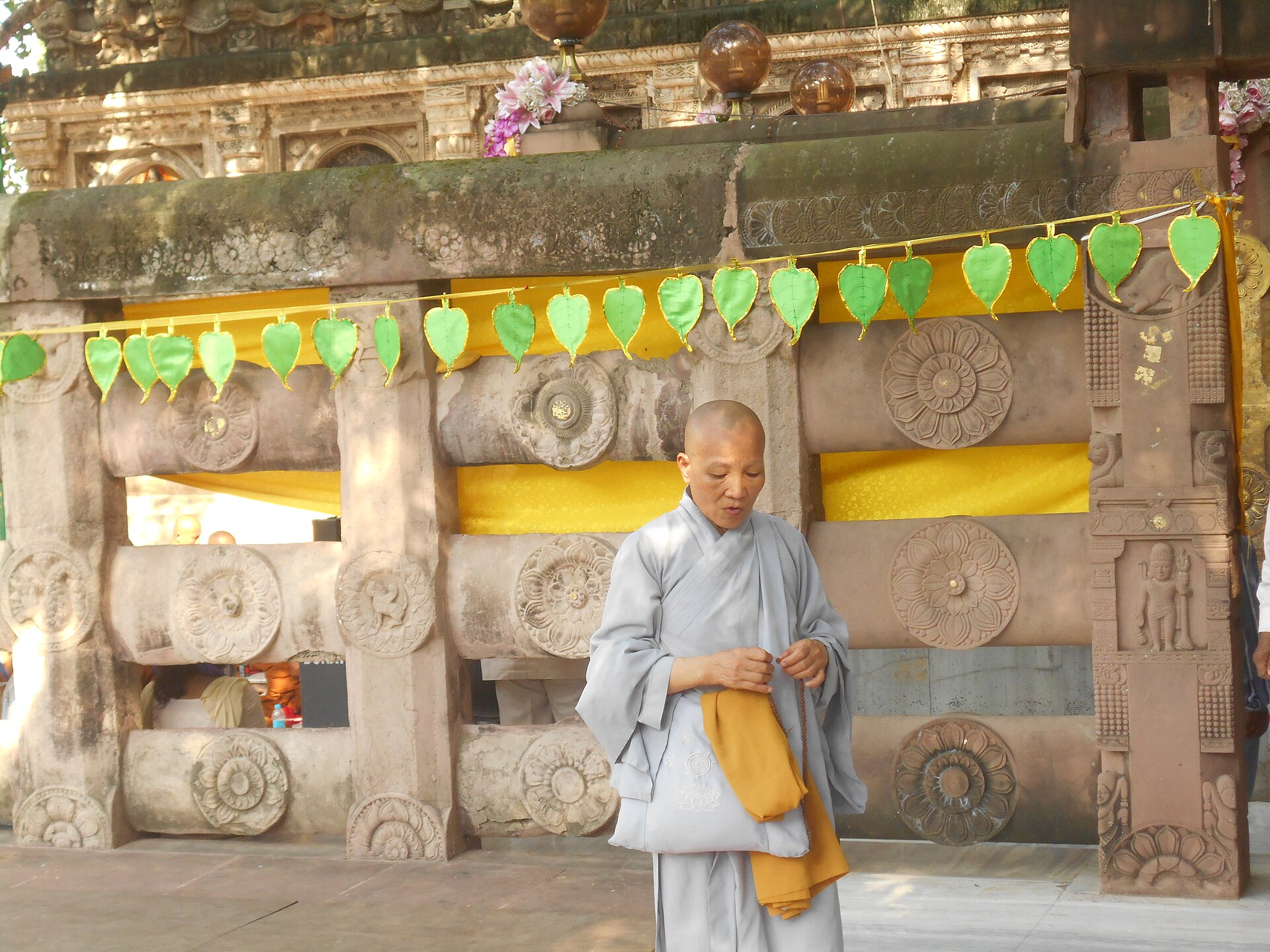
Photos: Monks meditating at the Mahabodhi Temple by Sumitsurai (Wikimedia Commons, CC BY-SA 4.0); Bodhi Tree shrine by Razr (CC BY-SA 4.0); Great Buddha Statue at sunset by AyushRSharma (CC BY-SA 4.0); nun at the temple railing by PP Yoonus (CC BY-SA 4.0).
Frequently asked questions
Do I need a visa to visit Bodh Gaya?
Yes. Citizens of the US, UK, EU, Canada, Australia and New Zealand all need an Indian visa before travel. There is no visa on arrival for these passports. Apply for the e-Tourist visa online at indianvisaonline.gov.in, 4 to 120 days before arrival. A 30-day visa costs $25 for July–March arrivals ($10 for April–June), a 1-year visa $40, and a 5-year visa $200 for most nationalities, plus a 3% bank charge. Your passport needs six months' validity from arrival, and the fee is non-refundable, so get the dates right the first time.
Can I attend the Tipitaka Chanting Ceremony in Bodh Gaya?
Yes. The 21st International Tipitaka Chanting Ceremony runs 2–12 December 2026 at the Mahabodhi Mahavihar complex, and the chanting under the Bodhi Tree is a public congregation, not a ticketed event. Around 25,000 monks, nuns and lay devotees from 27 countries are expected. It opens on 2 December at 8:00 AM with an international Buddhist procession, followed by chanting of the Abhidhamma Pitaka. Arrive by 7:30 AM on opening day, sit at the back if you are only observing, and keep your camera in your bag while the chanting is on. Check the notice board at the temple on the day, because ceremony weeks change the complex's routines.
Is the Dalai Lama teaching in Bodh Gaya this winter?
Almost certainly not. The Times of India reported on 30 October 2026 that he is likely to skip his Bodh Gaya visit in 2026–27, his third consecutive absence, and his published schedule has no January engagement in Bodh Gaya at all. His next listed event is a long-life offering in Dharamshala on 24 February 2027. His usual Bodh Gaya window is 25 December to 15 January, so a December trip built around his teachings would be built on nothing. The one exception: if the Bihar government formally invites him for the annual Bodh Mahotsava, a visit is still possible, but the Bodh Mahotsava dates have not been announced yet. Do not pay anyone for a teaching ticket.
Can I take my phone into the Mahabodhi Temple?
No. Mobile phones, smartwatches with cameras, power banks and tablets are strictly prohibited inside the Mahabodhi Temple complex, and the rule is enforced by the Bodh Gaya Temple Management Committee and Bihar Special Armed Police at the security check. Deposit everything at the free BTMC cloakroom at Gate 1, on the left before the security ramp. Entry to the temple is free. A standalone still camera costs ₹100 at the BTMC counter outside Gate 1 (₹300 for a video camera), and photography is allowed in the courtyard and around the Bodhi Tree, not inside the sanctum.
When is the best month to visit Bodh Gaya, and how many days do I need?
December, and three days. October to March is the good window, but December is the month the town is built for: days run 9–24°C, the air is dry, and the chanting season is at full strength, with the Tipitaka ceremony 2–12 December and the Kagyu Monlam 13–22 December. Three days covers the temple at dawn, the monastery circuit, the caves and Sujata Village, and a Rajgir–Nalanda day trip. Two days works if you skip Rajgir and Nalanda, but that day trip is the part people remember most.
Is Bodh Gaya safe for a solo woman traveller?
Yes, with the same rules that apply anywhere in India, and Bodh Gaya is easier than most temple towns because the lanes around the temple stay busy with monks, nuns and pilgrims from dawn to well after dark. Stay within walking distance of the Mahabodhi Temple or on the main road, where the lanes stay lit and busy. Dress modestly around the temple: covered shoulders and full-length trousers or a long skirt. Monastery guesthouses are an option for women travelling alone, and several take advance bookings. Avoid unlit lanes late at night, agree every auto fare before boarding, and share your live location with someone back home.
Keep exploring
 Yatra Guides
Puri for International Visitors: The Jagannath Temple You Cannot Enter — and the Sacred Coast That Is Still Worth the Trip
Puri for first-time foreign visitors: the Jagannath Temple entry rule, what to see instead, real costs, safety and scams — checked 12 Nov 2026.
 Yatra Guides
Pushkar Fair 2026 for International Visitors: Dates, Costs in USD, and the Honest First-Timer's Playbook
Pushkar Fair 17–24 Nov 2026 for first-time foreign visitors: the sacred lake, Brahma Temple and camel fair — dates, costs in ₹, $ and €, real stays, safety and the scams to walk away from.
 Yatra Guides
Varanasi for International Visitors: Visa, Costs, Safety, Scams, and the Ghats Without the Guesswork
First time in Varanasi from abroad? E-visa fees, the ₹300 Sugam Darshan ticket, real boat prices, safety, scams and a 3-day plan — checked 7 Nov 2026.