
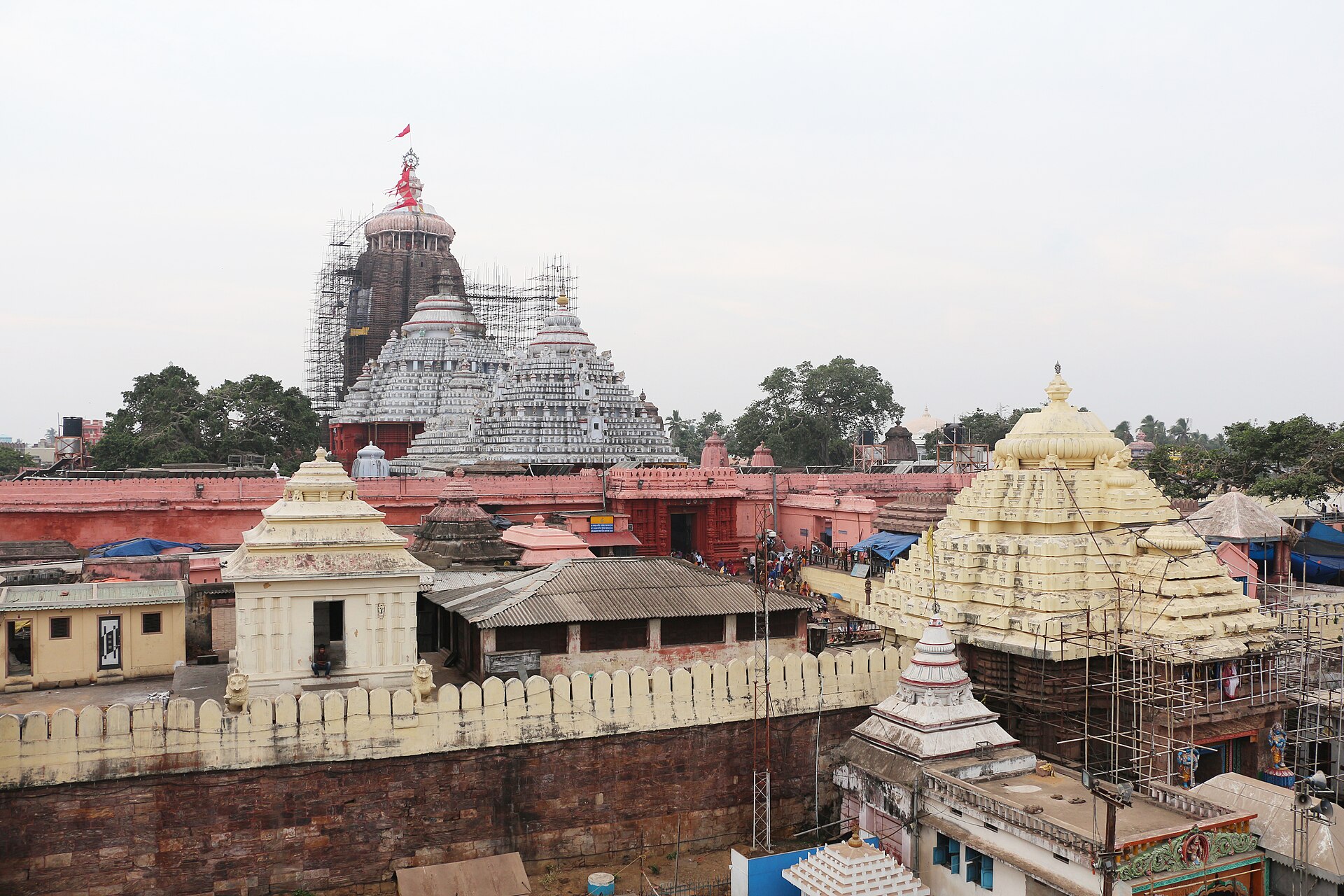
Photo: Wikimedia Commons
Yatra Guides
Puri for International Visitors: The Jagannath Temple You Cannot Enter — and the Sacred Coast That Is Still Worth the Trip
Puri for first-time foreign visitors: the Jagannath Temple entry rule, what to see instead, real costs, safety and scams — checked 12 Nov 2026.
Quick answer: Puri is worth three days even though non-Hindus cannot enter the Jagannath Temple. The temple exterior, the Patitapabana darshan, the mahaprasad at Ananda Bazaar, Konark and Chilika make a complete trip. Come between October and February, budget about $130–160 per person for three days on the ground at backpacker level or $340–430 in comfort, and do not pay anyone who promises to get you inside the temple. It cannot be done.
Complete yatra blueprint
3-Day Puri for International Visitors — Complete Blueprint
Built for a first-time visitor from the US, UK or EU who cannot enter the Jagannath Temple and wants to know, honestly, whether Puri is still worth the trip. It is, if you do it this way. Prices checked 12 November 2026; conversions at ₹94 to the dollar and ₹104 to the euro.
Arrive → Temple Exterior → Mahaprasad → Golden Beach Sunset
🛕 Temples & darshan
Patitapabana Darshan — Aruna Stambha, Bada Danda · Outside the Singhadwara (Lion Gate)
Stand by the Sun Pillar on the Grand Road and look up at the Patitapabana image mounted by the Lion Gate. This is the closest any non-Hindu gets to the deities, and it is a real darshan, not a consolation prize. Pilgrims have stood at this exact spot for centuries.
Raghunandan Library Rooftop · South of the temple, across Bada Danda
The rooftop view over the whole temple complex: the shikhara, the Neelachakra flag, the white domes of the inner shrines. This is the photograph every foreign visitor actually takes home, because it is the one view the temple does not hide.
Bada Danda — Evening Walk · The Grand Road, from Singhadwara toward Gundicha
The 3 km ceremonial road the chariots roll down during Rath Yatra. In November it is a working street: sweet shops, khaja stalls, pilgrims in groups, the temple wall on one side. Walk it at dusk, when the shops light up.
🏨 Where to stay
Hotel Lee Garden
₹2,600–3,500/night (about $28–37)
VIP Road, a 7-minute walk to the beach and 2 km from the temple. Google 4.6/5 (178 reviews); Trip.com 8.4/10. Chung Wah restaurant is downstairs.
Golden Tree
From ₹5,557/night (about $59)
300 m from Swargadwar Beach; 8.5/10 on Trip.com (102 reviews). The solid middle choice: clean, well run, and close to both the beach and the temple.
MAYFAIR Heritage, Puri
₹9,000–20,000/night (about $95–215)
Chakra Tirtha Road, private beach access, pool and spa. Google 4.2/5 (1,443 reviews). The splurge that makes sense in November, when the beach is half the reason you came.
🍽 Where to eat
Ananda Bazaar — Mahaprasad
Individual meal pots ₹150–350; thalis often ₹100–150
Must try: Abhada — rice, dalma and besar served on a banana leaf
Inside the temple complex and open to all. Hot cooked food arrives 1:00–3:30 PM. Buy at the counter and eat sitting on the floor with everyone else, never from a tout at the gate.
Wildgrass Restaurant
₹400–800 for two (about $4–9)
Must try: Odia thali, crab curry, pomfret fry
VIP Road, next to Hotel Lee Garden; 3.9/5 on TripAdvisor (444 reviews). Garden huts and a dhaba-style open kitchen. Service is slow at peak hours. Allow time.
- Puri's own airport was approved in May 2026 (1,164 acres, ₹5,631 crore) but is not built. Bhubaneswar is the only real gateway. Do not book a flight to a Puri airport that does not exist yet.
- Leave the phone at the hotel or use the free deposit stand at the Lion Gate. Phones, cameras and leather items are not allowed inside the temple, and the rule is enforced.
- Stay on the beach side (Chakratirtha Road) or near the temple on Grand Road. Both are walkable and busy after dark. A cheap room down an unlit lane is the one thing to avoid.
Konark Day — the Sun Temple and the Marine Drive
🛕 Temples & darshan
Konark Sun Temple · Konark, 35 km from Puri
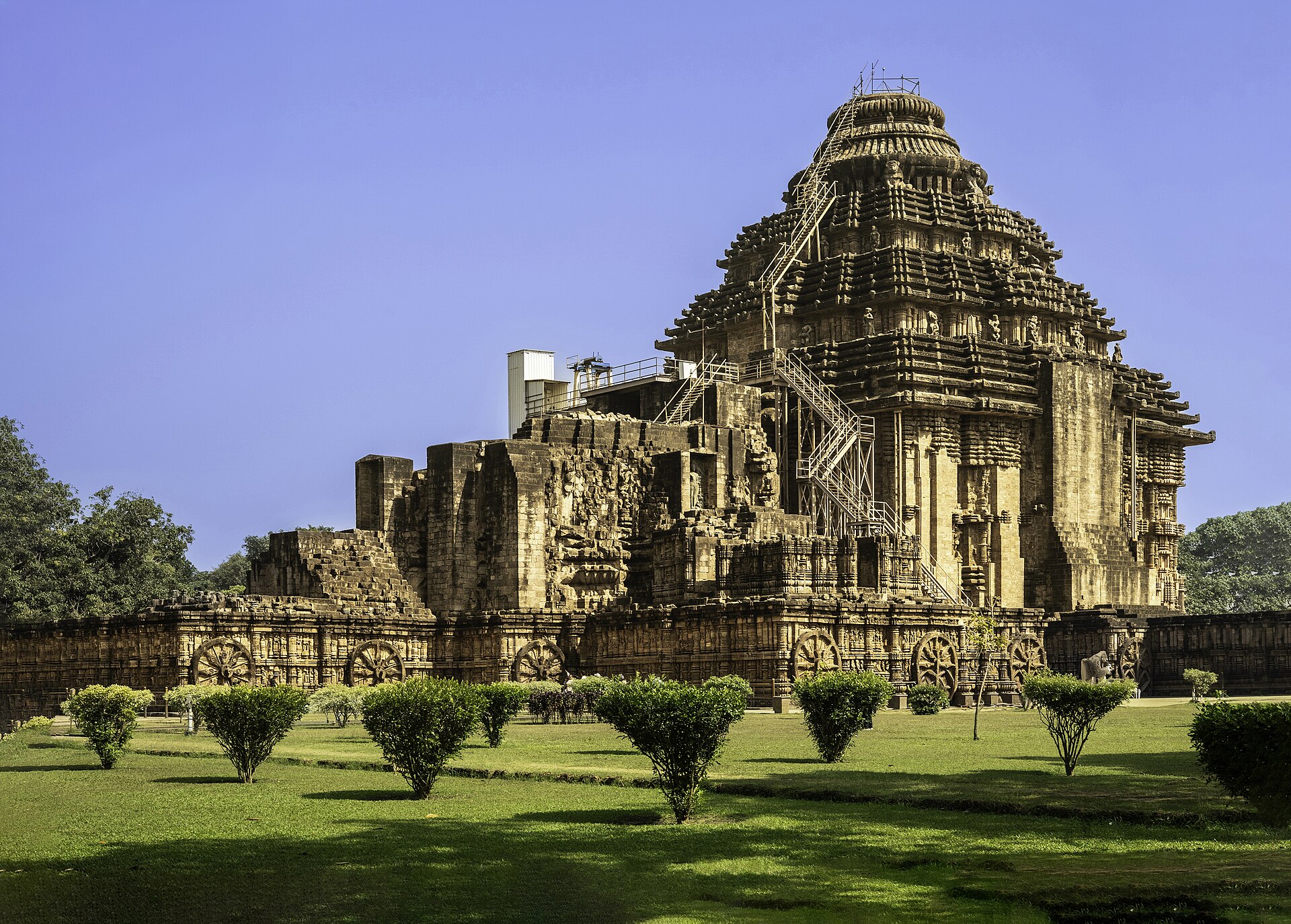
A 13th-century UNESCO World Heritage monument built as the chariot of the sun god, with 24 carved wheels and seven horses. It is a protected monument, not a functioning temple, so everyone enters with the same ASI ticket. Give it half a day, not a rushed hour.
Raghurajpur Artisan Village · 12 km from Puri, on the way back from Konark
A heritage village of Pattachitra painters, where the painting happens in the front room of the house you are standing in. Thirty minutes here beats an hour in a Puri souvenir shop.
Konark Light & Sound Show · Konark Sun Temple complex
The temple lit up after dark, with the story of its building told in Odia, Hindi and English. Worth it if you are still in Konark at dusk. Otherwise skip it and be back in Puri for dinner.
🏨 Where to stay
Hotel Lee Garden
₹2,600–3,500/night (about $28–37)
Puri is compact. One base for all three nights beats repacking, and Lee Garden is the best-value bed in town.
Golden Tree
From ₹5,557/night (about $59)
8.5/10 on Trip.com (102 reviews). Book the sea-facing rooms early for November; they go first.
MAYFAIR Heritage, Puri
₹9,000–20,000/night (about $95–215)
Google 4.2/5 (1,443 reviews). Come back to the pool and the private beach after a dusty day at Konark. That is what you are paying for.
🍽 Where to eat
Honey Bee Bakery And Pizzeria
₹400–600 for two (about $4–6)
Must try: Veg pizza, brownies, cold coffee
4.3/5 (1,689 reviews). The long-stay foreigner's breakfast spot: the one place in town that does proper coffee and bread before a 7 AM start.
Chung Wah Restaurant
Mid-range (₹₹–₹₹₹ on TripAdvisor)
Must try: Chilli fish, garlic prawns, Hakka noodles
Inside Hotel Lee Garden, VIP Road; one of Odisha's oldest Chinese restaurants, running since 1976. 4.1/5 on TripAdvisor. Expect a 20–30 minute wait at dinner.
- Go to Konark in the morning. The stone throws back heat from noon onwards, and the midday light flattens the carving. The temple photographs best before 10 AM.
- The Marine Drive between Puri and Konark is the prettiest road in Odisha. Sit on the sea side of the car on the way out, and ask the driver to stop once at Chandrabhaga beach.
- Konark Festival runs 1–5 December 2026. If your dates stretch that far, the evening dance performances against the lit temple are the best seats in Odisha. Tickets are usually around ₹100, but confirm on Odisha Tourism before you go.
Chilika at Dawn — Dolphins, Birds, and the Bazaar
🛕 Temples & darshan
Satapada Dolphin Boat · Satapada jetty, Chilika Lake
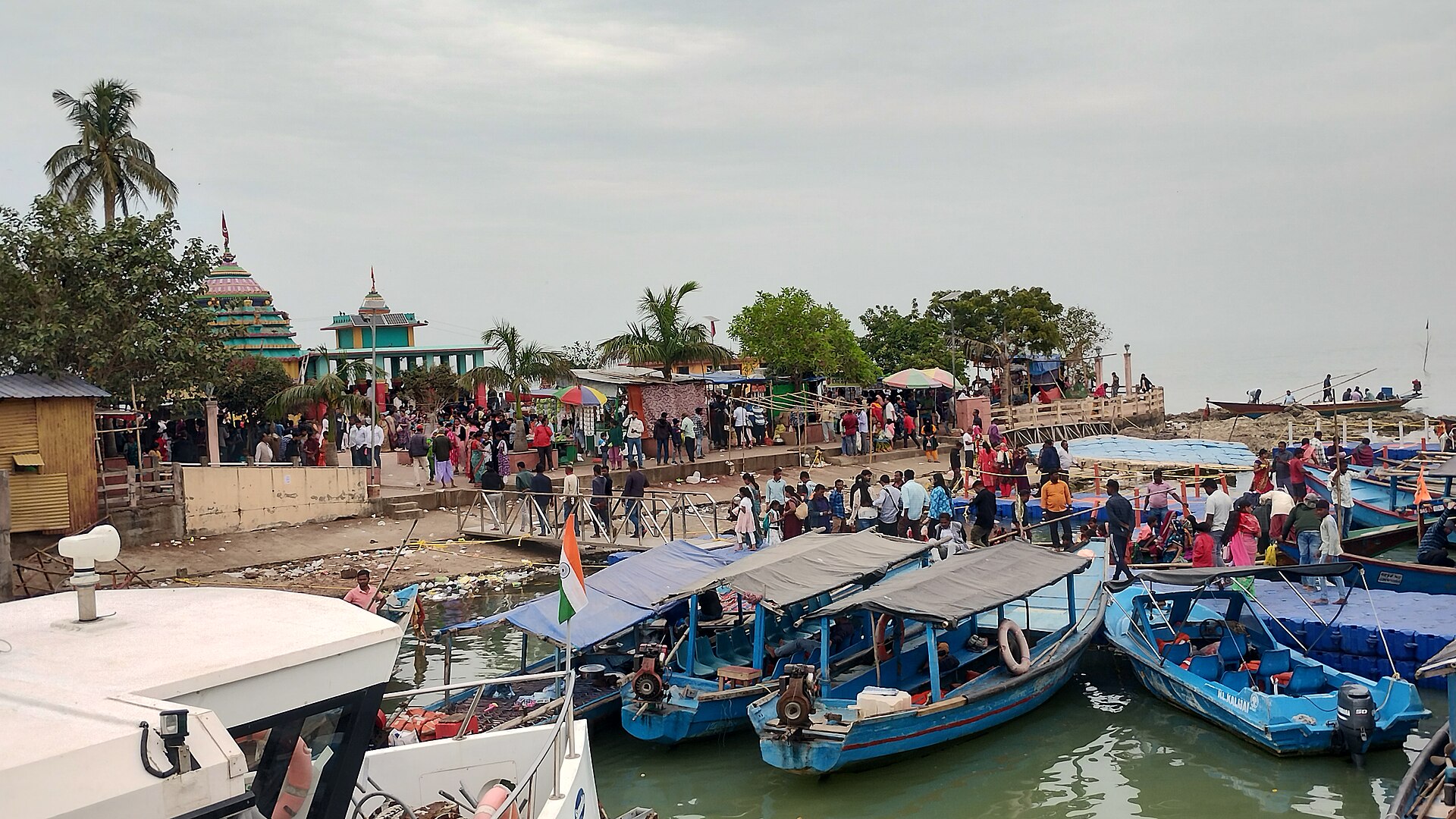
Asia's largest brackish-water lagoon, and home to the world's largest lagoon population of Irrawaddy dolphins, 159 counted in the January 2026 census. The boat goes out to the dolphin area, then on to the sea mouth where the lagoon meets the Bay of Bengal and the sandbar beach at Rajhans.
Gundicha Temple · About 3 km down Bada Danda from the main temple
The garden house of the deities during Rath Yatra, when Jagannath, Balabhadra and Subhadra stay here for nine days. The rest of the year it is the calmest temple visit in Puri: open, quiet, and open to all.
Sudarshan Crafts Museum · Near the temple, Grand Road side
Stone carving, Pattachitra and the craft traditions behind the temples you have spent three days looking at. Small, quiet, and the best 45 minutes in Puri if you care how any of it was built.
🍽 Where to eat
Agarwal's Pure Veg Restaurant
₹200–500 for two (about $2–5)
Must try: Masala dosa, thali, chole bhature
Grand Road, near the temple; 3.7/5 (2,305 reviews). No onion-garlic options. The safest pure-veg breakfast before a long day on the lake.
Dalma Restaurant
Veg thali ₹253; chicken thali ₹336
Must try: Dalma, besara, pakhala bhata
Named after the dish itself: the Odia lentil-and-vegetable pot every Puri kitchen cooks. The most local meal on this list, and the cheapest good lunch in town.
- Dolphins are wild and the sighting is never guaranteed, but the January 2026 census counted 159 in the lake, and the early boats see them most days. If your boatman promises a sighting, he is selling you something.
- The birding alternative is Mangalajodi, on the northern side of the lake, explored in silent hand-rowed boats. It peaks December to February, when the January 2026 census counted 11.32 lakh birds of 196 species. Do not try to do both Satapada and Mangalajodi in one morning.
- Check out by 8:30–10 AM depending on your hotel, and leave bags at reception. The Bhubaneswar taxi back takes the same 1.5 hours. Leave Puri by 3 PM for an evening flight.
Most guides about Puri start with the temple and work outwards. This one starts with the fact that changes the whole trip, because every foreign visitor discovers it sooner or later, and it is better to hear it before you book than at the gate: if you are not Hindu, you cannot enter the Jagannath Temple. Not for a fee, not with a guide, not with a special ticket. The Shree Jagannath Temple Administration (SJTA) is clear on this, and the rule is enforced at all four gates.
Here is the part most guides leave out. That fact does not ruin the trip. Puri is one of the four Char Dham sites, a working pilgrimage city on the Bay of Bengal, and the temple is only one part of it. The exterior, the food, the beach, Konark and Chilika add up to three full days, and the days are better for knowing the rule in advance, because you stop wasting time and money trying to get around it and start doing the things that are actually open to you.
This guide is written for a first-time visitor from the US, UK or EU. It says plainly what you can and cannot do, what everything costs in rupees, dollars and euros, and which of the offers you will hear at the gates are scams. Prices were checked on 12 November 2026. Conversions use ₹94 to the dollar and ₹104 to the euro, the mid-market rates that morning.
Can non-Hindus enter the Jagannath Temple?
No. The temple admits Hindus, and its reading of that word includes Buddhists, Jains and Sikhs. Visitors of other faiths are not admitted past the gates. The restriction is enforced by signage and by sevayats (temple servitors) at Singhadwara (the Lion Gate), Hathi Dwara, Vyaghra Dwara and Ashwa Dwara, and it applies to foreign nationals and Indian citizens of other faiths alike.
Two things are worth knowing alongside the rule. First, it is a matter of temple tradition administered by the SJTA under the Shri Jagannath Temple Act, 1955, not a ticket policy, which means no payment changes it. Second, it is the exception in India, not the norm: most large temples admit foreign visitors. Puri is one of a small handful that does not, and the honest guides say so on page one instead of burying it in a footnote.
What the rule covers in practice: the temple opens around 5:00–5:30 AM and closes around 10:30–11:00 PM, with darshan in phases through the day. Hindu visitors enter free through Singhadwara; the other three gates serve as exits. There is a dress code, enforced since 1 January 2024: no shorts, half-pants, ripped jeans, skirts or sleeveless clothing. Phones, cameras, smartwatches, leather items and shoes stay outside. There is a free shoe and mobile deposit stand near the Lion Gate. And there is no online darshan booking and no VIP darshan system at all: the SJTA said so publicly in July 2026 and reported fake booking portals to the police. Anyone selling you a "VIP darshan" or an "online slot" for Puri is selling you nothing. The temple's own site is shreejagannatha.in, and it sells no tickets.
If you are Hindu and reading this guide, the practical timing matters more than the entry itself: darshan pauses during every bhog offering, and the midday pause (Madhyanha Dhupa, roughly 12:00–1:00 PM) can leave you waiting outside the inner gate for an hour with no announcement. The cleanest windows are 5:30–7:30 AM on weekdays and the evening Sandhya Dhupa around 7:00 PM. The Sahanamela, the free closer darshan from 7:00–8:00 AM, is the best morning window of all.
What can you actually see instead?
More than most guides admit, and all of it without paying anyone for access.
Patitapabana darshan. Stand by the Aruna Stambha, the Sun Pillar on Bada Danda outside the Singhadwara, and look up at the Patitapabana image mounted by the Lion Gate. Pilgrims have stood at this exact spot for centuries, and it is treated as a real darshan, not a workaround. Go at dawn, 5:30–7:30 AM, when the road is still quiet and the light is good.
The Raghunandan Library rooftop. South of the temple, across the Grand Road, the library rooftop gives you the whole complex at once: the shikhara with the Neelachakra flag, the white domes, the red walls. This is the photograph every foreign visitor takes home, because it is the one view the temple does not hide. Ask at the library door; a small fee may apply.
Mahaprasad at Ananda Bazaar. The temple kitchen cooks for thousands every day, and the food hall inside the complex, Ananda Bazaar, is open to everyone. Hot cooked food (Abhada) arrives between 1:00 and 3:30 PM, after the midday dhupa. A full meal is rice, dalma, besar and vegetables served on a banana leaf in an earthen pot. Individual pots run ₹150–350; thalis are often ₹100–150. There is no published rate chart, which is exactly why you buy at the counter and eat sitting on the floor with everyone else, instead of buying a pot from a man at the gate for three times the price. In October 2026 the temple kitchen itself was in the news over rising ghee prices, so expect the numbers to move a little. Expect middlemen to use the confusion.
Gundicha Temple, about 3 km down Bada Danda. The deities' garden house during Rath Yatra, when they stay here for nine days. The rest of the year it is the calmest temple visit in Puri, open to all, and it takes half an hour.
Rath Yatra itself, if you come back in June or July. The chariot procession on Bada Danda is open to everyone, with no entry restriction at all, the one day of the year when the rule does not apply, because the deities come out to the street. Rath Yatra 2026 fell on 16 July. This guide is a November guide, so treat it as a reason to return, not as something you can do now.
Do you need a visa to visit Puri?
Yes. Citizens of the US, UK, EU, Canada, Australia and New Zealand all need an Indian visa before travel. There is no visa on arrival for these passports. Apply for the e-Tourist visa online at indianvisaonline.gov.in, 4 to 120 days before arrival. A 30-day visa costs $25 for July–March arrivals ($10 for April–June), a 1-year visa $40, and a 5-year visa $200 for most nationalities, plus a 3% bank charge. Your passport needs six months' validity from arrival. The fee is non-refundable, so get the dates right the first time.
At the airport, get a local SIM with your passport, a photo and your hotel address. You will need it for maps, OTPs and calling your hotel. Change a little cash at the airport too. Cards work in hotels and bigger restaurants, but boatmen, chai stalls, auto drivers and temple-area vendors are cash-only, and the old town has few ATMs.
When should you come?
October to February, and November specifically. Days run 29–30°C, nights 20–23°C, and November averages about three rainy days in the whole month. April to June is hot and humid; June to September is monsoon.
November 2026 has two extra reasons to come now. Bali Jatra, one of India's largest open-air fairs, marking Kalinga's ancient sea voyages to Bali and South-East Asia, runs 24 November to 1 December in Cuttack, on the Mahanadi riverbank, about 85 km from Puri. And the Konark Festival, classical dance against the lit Sun Temple, follows on 1–5 December. A trip in the last week of November catches both, and the Konark Festival tickets are usually around ₹100, though you should confirm on Odisha Tourism before you go.
One honest caveat, and it matters this week in particular. October and November are cyclone months on this coast. Cyclone Arnab made landfall on the Andhra coast on 28 October and Cyclone Murasu followed on 3 November, bringing heavy rain to southern Odisha on 3–4 November. As of 12 November, the IMD expects a fresh low-pressure area to form over the Bay of Bengal around 13 November and become a depression by 15 November, but the same forecast says Odisha will stay largely dry until 17 November, with minimal impact until 21 November. So: come, but check the IMD forecast the week you travel and keep your bookings flexible. That is a planning warning, not a reason to stay home.
There is also a demand signal worth knowing. Agoda data reported in the press in October 2026 showed Puri accommodation searches up 318% year on year for the festive period, the biggest jump of any Indian destination in that report. November rooms go first. Book the stay before the flights, not after.
How do you get there and get around?
Fly into Biju Patnaik International Airport (BBI) in Bhubaneswar. There are no significant direct international flights to Bhubaneswar from the West, so fly via Delhi or Kolkata. From the airport, Puri is 60–68 km down NH-316, about 1.5 hours. A pre-booked sedan costs ₹1,100–1,300 (Odisha Taxi's published 2026 rate); shared AC taxis run ₹250–350 per seat. Book the car before you land. The drivers at the airport rank charge more, and the negotiation starts the moment you look lost.
Puri is also a railhead in its own right, with overnight trains from Kolkata (Howrah) and Delhi, and the station is a 10-minute auto ride from the beach side. Inside the town, walk. Puri is compact: the temple, the beach and the bazaar are all within 2–3 km of each other. Take an auto-rickshaw or a hired car only for the day trips, Konark and Chilika, and agree the price before you sit down.
One thing to know before you plan around it: Puri's own greenfield airport was approved in May 2026 (1,164 acres, ₹5,631 crore) but is not built. If a booking site offers you a flight to Puri, it is selling you Bhubaneswar with extra steps.
What does it actually cost?
The table below is a planning budget for three days in Puri, per person, excluding international flights, and it assumes two people travelling together, because the taxi and the boat are charged per vehicle, not per person. Fixed prices are the published tariffs; car figures are rounded planning allowances, not quoted fares.
| Expense | Budget (per person) | Comfort (per person) |
|---|---|---|
| Stay, 2 nights | ₹5,200 (Hotel Lee Garden, ₹2,600/night) | ₹24,000 (MAYFAIR Heritage, ~₹12,000/night) |
| Food, 3 days | ₹2,400 (₹800/day) | ₹4,500 (₹1,500/day) |
| Airport taxi, BBI–Puri | ₹600 (half of ₹1,200) | ₹650 (half of ₹1,300) |
| Konark day car | ₹1,000 (half of ₹2,000) | ₹1,250 (half of ₹2,500) |
| Konark entry | ₹600 foreign | ₹600 foreign (+ ₹630 Light & Sound) |
| Chilika car + boat | ₹1,450 (half of car ₹1,500 + half of boat ₹1,400) | ₹2,000 (half of car ₹2,000 + half of boat ₹2,000) |
| Mahaprasad + bazaar food | ₹500 | ₹800 |
| Local autos + misc | ₹600 | ₹1,000 |
| Total, 3 days | about ₹12,000–14,000 ($128–150 / €115–135) | about ₹34,000–40,000 ($360–425 / €325–385) |
Two things move the total more than anything else. The first is the hotel: Puri's November prices are the year's peak, and the gap between a ₹2,600 room and a ₹12,000 room is the whole difference between the two columns. The second is whether you share the car and the boat. A solo traveller pays the full ₹1,300–2,000 for a Chilika boat and the full ₹1,100–1,300 for the airport taxi, which adds roughly ₹1,500–2,000 to the budget column. If you are travelling alone, ask your hotel to pair you with another guest for the Chilika morning. Hotels do this routinely in November, and it halves the boat.
Is Puri safe for a solo woman traveller?
Yes, with the same rules that apply anywhere in India, and Puri is easier than most temple towns because the beach side and the temple side are both busy, well-lit and full of families. Stay near Chakratirtha Road or Grand Road, where the lanes stay busy after dark. Walk the beach in the morning and evening when it is full of people. Dress modestly around the temple: covered shoulders and full-length trousers or a long skirt, which the dress code requires anyway. Take a registered hotel rather than a cheap room down an unlit lane. Share your live location with someone back home.
Violent crime against foreign tourists is rare. The real risks in Puri are touts, inflated prices and the occasional aggressive "guide" at the temple gates, which is the next section. Avoid poorly lit lanes alone late at night, agree every fare before boarding, and keep your phone and cash in a front pocket in the temple crowds.
Scams and pressures to avoid
"I can get you inside the temple." The most expensive sentence you will hear in Puri. It cannot be done, at any price, and the person offering it knows that. The SJTA confirmed in July 2026 that no paid or VIP darshan system exists, and that there is no online booking for darshan at all. Anyone selling you a ticket, a slot or a "special entry" is selling you nothing. The walk-away line is one sentence: "Darshan is free and there is no VIP system, I know." Then walk.
Mahaprasad middlemen. The pots sold at the temple gates for ₹700–1,200 were bought inside Ananda Bazaar for a fraction of that. Devotees have complained about it in the local press for years, and the SJTA still has not published a rate chart. Buy at the counter inside, eat sitting on the floor, and do not hand money to anyone standing between you and the counter.
The boat price-switch at Satapada. The boats are hired per boat, not per person, and the associations keep a posted rate chart on the wall at the jetty. Read it before you agree to anything, fix the full price, the route and the duration before boarding, and do not pay extra "for the dolphins" mid-trip. The short dolphin trip is ₹1,300–2,000 for the boat; with the sea mouth and Rajhans Island it is ₹2,500–3,500. If the number you are quoted is per person, walk to the next counter.
The temple-gate guide. Self-appointed guides attach themselves at the Singhadwara and offer a tour that is mostly a walk to shops that pay them commission. If you want a guide, ask your hotel to recommend one and fix the fee in advance. A genuine guide in Puri costs a few hundred rupees and starts at the Aruna Stambha, not at a shop.
Beach vendors at Swargadwar. The busy temple-side beach has the usual hawkers: horse rides, coconuts, photographs, "free" bracelets. Agree the price before you touch anything, and know that Golden Beach, the Blue Flag stretch a short walk north, is calmer, cleaner and largely free of them.
What nobody tells you
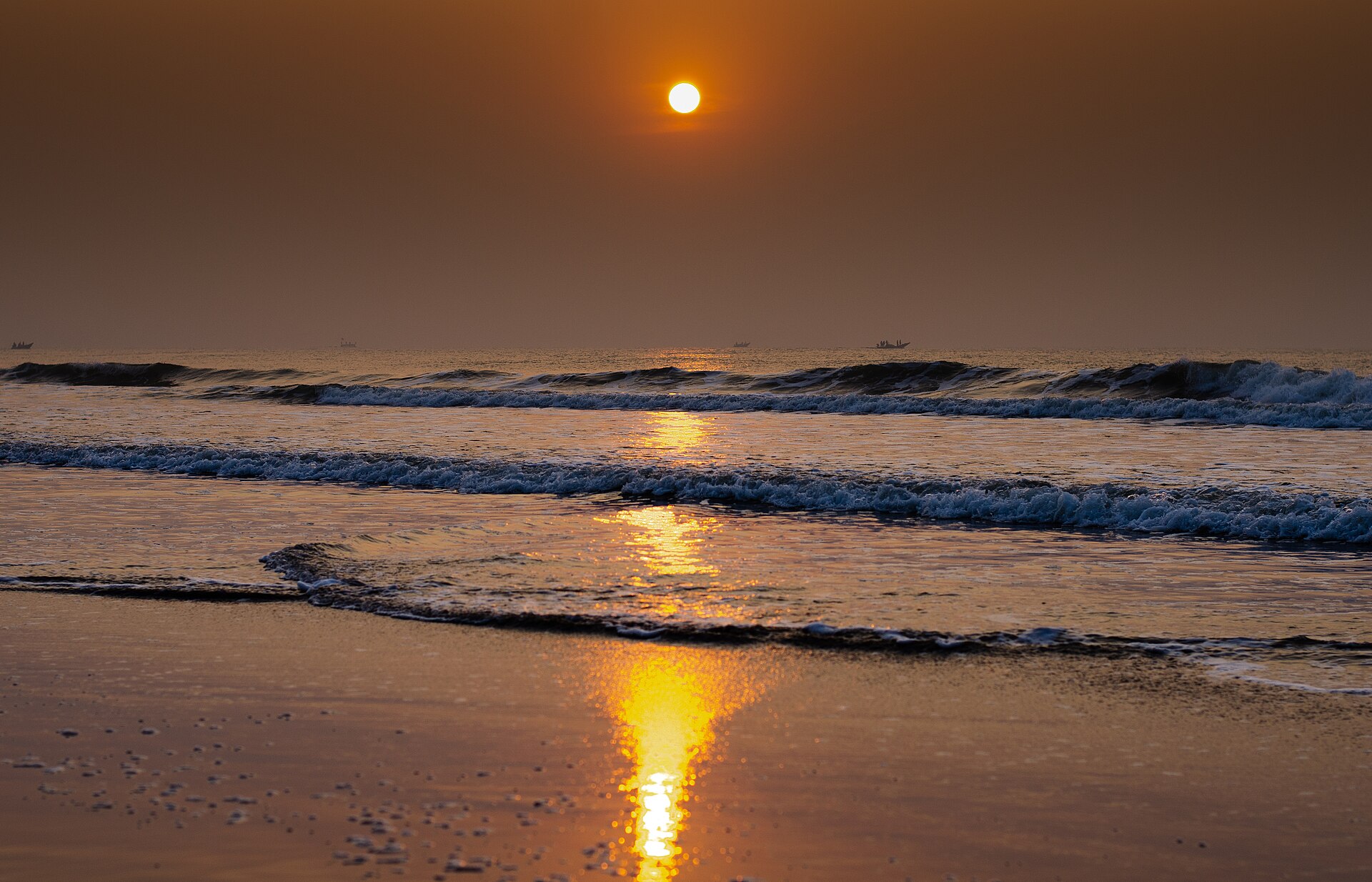
The best Puri morning is not the temple queue. It is sunrise on Golden Beach, where the sun comes up over the Bay of Bengal around 5:45 AM in November, and then the temple exterior while the town is still waking up. The beach at dawn has fishermen pulling in nets, a handful of walkers, and no one selling you anything. The temple at 6 AM has the flag changing on the shikhara and the road almost to itself. Do that, and the day you have planned will feel like yours, not like a queue you joined.
The temple has a rhythm, and it punishes people who do not know it. Darshan stops during every bhog offering, and the midday stop lasts about an hour with no announcement. The visitors who arrive at noon and wait angrily outside a closed inner gate are not unlucky. They arrived at the one hour of the day when the deities are eating. Arrive at 5:30 AM or after 7 PM and the same temple feels like a different place.
Puri is two food worlds, and they do not mix. Around the temple, the food is vegetarian, cooked in the temple kitchen's idiom: dalma, besar, pakhala, khaja. On the beach side, it is seafood: crab, pomfret, prawns, cooked the way the fishing town has always cooked them. Both are good. The mistake is expecting one in the other's territory, asking for a prawn curry on Grand Road, or a temple thali at a beach shack.
November is the month the whole coast is watching the sky. Two cyclones already crossed the Andhra coast this season, Arnab on 28 October and Murasu on 3 November, and the IMD is tracking a fresh low for 13–15 November. None of that should stop you. The same forecast says Odisha stays largely dry until 17 November, but it is why you book a cancellable room and check the forecast the week you travel, not the month before.
Your three days at a glance
Day one: land at Bhubaneswar, drive to Puri, walk the temple exterior, climb the Raghunandan rooftop, eat mahaprasad sitting on the floor at Ananda Bazaar, and watch the sun go down from Golden Beach. Day two: Konark on the Marine Drive in the morning, Raghurajpur on the way back, dinner at Chung Wah. Day three: Chilika at dawn for the dolphins, Gundicha Temple on the way back into town, the bazaar and a last Odia thali before the taxi to Bhubaneswar. The full day-by-day plan, with real hotels, real restaurants and real prices, is in the blueprint at the top of this guide.
If your dates stretch to the last week of November, add a day for Bali Jatra in Cuttack (24 November–1 December) and the Konark Festival (1–5 December). If they do not, the three days above are the complete trip, and the honest answer to the question this guide started with. You cannot enter the temple. You can still have the trip.
For the same honest first-timer's playbook elsewhere, see our Kedarnath guide for international visitors, our Varanasi guide for international visitors and our Pushkar Fair guide for international visitors.
Prices, timings and rules checked 12 November 2026 against the Shree Jagannath Temple Administration (shreejagannatha.in), the ASI fee list for the Sun Temple, Konark, the India Meteorological Department, the Cuttack district administration (Bali Jatra), Odisha Tourism/OTDC, and Google, TripAdvisor and Trip.com ratings. Exchange rates are the mid-market rates of 12 November 2026 ($1 = ₹93.7, €1 = ₹103.8). Temple rituals, festival dates and boat prices change. Confirm on the day.
Photos: Jagannath Temple complex by Bernard Gagnon (Wikimedia Commons, CC BY-SA 3.0); Puri Sea Beach sunrise by Sambit 1982 (CC BY-SA 4.0); Konark Sun Temple by Joydeep (CC BY-SA 4.0); Satapada jetty, Chilika Lake by Hellohappy (CC BY-SA 4.0).
Frequently asked questions
Can non-Hindus enter the Jagannath Temple in Puri?
No. The Shree Jagannath Temple Administration admits Hindus, including Buddhists, Jains and Sikhs under the temple's reading, and does not admit visitors of other faiths past the gates, whatever anyone offers to arrange. The rule is enforced at all four gates. What you can do instead is real and worth doing: Patitapabana darshan from the Aruna Stambha, the Raghunandan Library rooftop view over the whole complex, mahaprasad at Ananda Bazaar, and Gundicha Temple, about 3 km away.
Where can I see the Jagannath Temple from outside?
Three places, all free or nearly so. Stand by the Aruna Stambha (Sun Pillar) on Bada Danda, outside the Singhadwara (Lion Gate), to see the Patitapabana image mounted by the gate. Climb to the Raghunandan Library rooftop, south of the temple across the Grand Road, for the full view of the shikhara and the Neelachakra flag. And walk Bada Danda itself at dawn, when the town is still waking up and the temple is at its best from the street.
When is the best month to visit Puri?
November. Days run 29–30°C, nights 20–23°C, and there are only about three rainy days in the month. October to February is the whole good window. November 2026 has one extra reason to come now: Bali Jatra runs 24 November to 1 December in Cuttack, and the Konark Festival follows 1–5 December, so a late-November trip catches both. Avoid April to June (hot and humid) and the monsoon months.
How many days do I need in Puri?
Three. Day one is the temple exterior, the rooftop and the mahaprasad. Day two is Konark, 35 km away on the Marine Drive. Day three is Chilika Lake at dawn for the dolphins, then Gundicha Temple and the bazaar. Two days works if you skip Chilika, but Chilika is the part people remember most, so do not cut it.
How much is the Konark Sun Temple entry fee for foreigners?
₹600 at the counter (about $6.40) or ₹550 online, per the ASI fee list. Indians and SAARC/BIMSTEC visitors pay ₹40 at the counter or ₹35 online, and children under 15 enter free. The Light & Sound show is separate: ₹630 for foreign visitors, ₹70 for Indians, at 6:30 PM and 7:30 PM in winter. Buy the ASI ticket online before you go; the counter queue is long on winter weekends.
Which jetty should I use for Chilika Lake — Satapada or Mangalajodi?
Satapada if you want dolphins and the sea mouth; it is 47–50 km from Puri, about 1–1.5 hours, and the boats leave from 6 AM. Mangalajodi if you want birds: it is a community-managed wetland on the northern side, explored in silent hand-rowed boats, and at its best from December to February. Do not try to do both in one morning — pick one and do it properly.
Keep exploring
 Yatra Guides
Pushkar Fair 2026 for International Visitors: Dates, Costs in USD, and the Honest First-Timer's Playbook
Pushkar Fair 17–24 Nov 2026 for first-time foreign visitors: the sacred lake, Brahma Temple and camel fair — dates, costs in ₹, $ and €, real stays, safety and the scams to walk away from.
 Yatra Guides
Varanasi for International Visitors: Visa, Costs, Safety, Scams, and the Ghats Without the Guesswork
First time in Varanasi from abroad? E-visa fees, the ₹300 Sugam Darshan ticket, real boat prices, safety, scams and a 3-day plan — checked 7 Nov 2026.
 Yatra Guides
Kedarnath Yatra for International Visitors: Visa, Registration, Costs in USD, and the Honest Timing Call
Kedarnath for foreign visitors: e-visa, free Char Dham registration, trek vs helicopter costs in ₹ and USD, the 2026 temple entry rule, and why May 2027 is the smart plan.