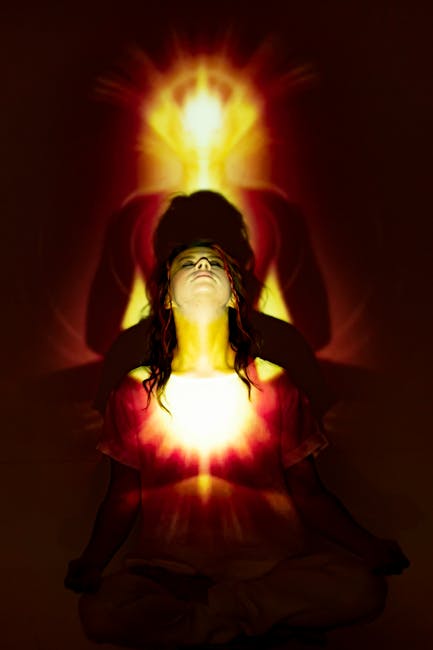
I remember the first time I really heard my breath—not like when you’re out of breath from running, or counting inhales and exhales like it’s some kind of assignment. But actually heard it, like it had something to say. I was on this old, shaky bench—wood cracked, splinters catching on my jeans—in a little temple garden outside Kyoto. The morning light was soft, barely there. Dew clung to the moss so heavy it looked like the earth was crying silver. No music, no bells, just birds fumbling into the day, half-awake, and this quiet rhythm in my chest. I wasn’t doing anything special. Just sitting. And then—this low hum, not in my head but deeper, like my ribs had tuned into a frequency I’d always known but forgot: I wasn’t breathing by myself. Something was breathing with me.

It didn’t feel mystical. No lights, no sudden calm. Just… recognition. Like catching a word from a dream you can’t quite remember. Since then, I don’t really ‘practice’ breathwork. That sounds too neat. Too rehearsed. I talk to it. Not like a method. More like checking in with an old friend who speaks a language I only half recall—words slipping away, but the tone still familiar.
The Body’s Secret Dialect
We treat breath like a machine part. Inhale, exhale—lungs doing their job. But try holding your breath for two minutes and you’ll feel it: the panic isn’t just about oxygen. It’s like your body’s shouting, Hey, we’re supposed to be part of something here! That rhythm—it’s not just keeping cells alive. It’s a kind of tuning. Like your pulse is trying to match a song playing under everything, just below the noise.
I think paying attention to breath is like translation. Not words, but something older. The pause at the top of the inhale? That’s not empty. It’s a doorway. Same with the bottom of the exhale. And breath—that’s how we step through. Not with drama. Just quietly. Again and again.
In Sanskrit they call it prana. Not just breath. More like… the hum beneath life. The old yogis weren’t doing lung reps. They were listening. When I inhale now, I try to feel it—not as air, but as something that’s been in pine trees, in whales, in stardust—long before me. And when I exhale? It’s not waste. It’s a note sent back. A quiet Here I am. I was here. Small. But real.
Walking Into the Field
There’s this moment—usually during long breath holds—when time gets thin. You’re not waiting for the next breath. You’re just… in it. Floating. And for a second, I swear, my nerves feel like they’re syncing with something. Not my heartbeat. Not my thoughts. Something outside. Like a radio finally landing on the right station.
Science calls it coherence—breath, heart, brain all humming together. But I think it’s more like remembering. Like hearing your name after years of forgetting.
I was in New Mexico once, high desert, cold dawn. Thirty of us in a circle, no talking, just breathing—four in, eight out. Simple. After twenty minutes, the air changed. I don’t mean that poetically. I mean, it felt different. Thicker. Alive. Someone said later, We were one body. I believed them. Not because I wanted to feel spiritual, but because I’d felt it. My breath wasn’t mine anymore. It was passing through me, like water through a channel. No words. But clear. Like the body knows the way even when the mind’s lost.
It’s not about disappearing. Not about losing yourself. It’s the opposite. You realize you were never really separate to begin with. The line between ‘me’ and ‘not me’? Porous. Breath shows that. We’re not taking air. We’re trading with it. Giving and receiving, every second.
The Grammar of Stillness
Language has rules. Even silence does. And breath? It’s got its own syntax. Inhale—it’s a question. An invitation. Exhale—it’s letting go. Holding it—it’s just being there. Together, they make a sentence: I am here. I receive. I let go. I wait. I return. Not perfect. Not always in order. But real.
When I pay attention, it feels like prayer. Not with words. With rhythm. A signal sent out: I’m listening. I’m part of this.
I teach it that way now—not as exercise, but as letter-writing. I tell people: imagine your inhale is the universe asking, Will you live? And your exhale is your answer: Yes. I am. You do this thousands of times a day, mostly without noticing. But when you do notice? It changes. The breath becomes a vow. A whisper. Repeated for a lifetime.
I was reading this piece on the Stanford Encyclopedia of Philosophy about consciousness—how does feeling come from flesh and bone? It doesn’t mention breath. But I kept wondering: what if breath is the bridge? Not the answer. Just the way the body asks the question.
When the Body Remembers How to Speak
We talk so much. Texts. Speech. Noise. But the oldest language—older than words, older than thought—is still running under everything. You hear it in a baby’s sleep. In someone gasping. In the deep sigh after crying.
When people come back to their breath—really come back—they don’t just relax. They feel… seen. Not by anyone. By the world itself. Like the body remembers a language the mind forgot.
I wrote about this a while back on Punyapaths—how simple breath rituals aren’t escapes. They’re portals. Not to leave the body, but to come home to it. Fully. Messily. Tenderly.
Breath isn’t just keeping me alive. It’s teaching me how to belong.
You don’t need a teacher. A cushion. A chant. Just a second. Sit. Let the next breath come. Don’t fix it. Don’t change it. Just let it be the first word in a conversation you’ve been having your whole life—without even knowing it was a conversation at all.
What if the universe isn’t silent? What if it’s been whispering all along—in a language we already know, every time we breathe?
Someone once asked me, ‘Does it matter if I breathe fast or slow?’ I said, ‘Not at first. What matters is whether you’re listening.’ Another asked, ‘Can breath really connect us?’ I said, ‘Close your eyes. Breathe with someone you love. Then tell me if you still feel alone.’