I crouched in the damp, crumbling earth under a beech tree that’s probably older than my country, poking at a tangle of pale, stringy stuff—like veins made of rice paper. Not roots. Not ivy. But it felt alive. Like it might twitch if I looked away.
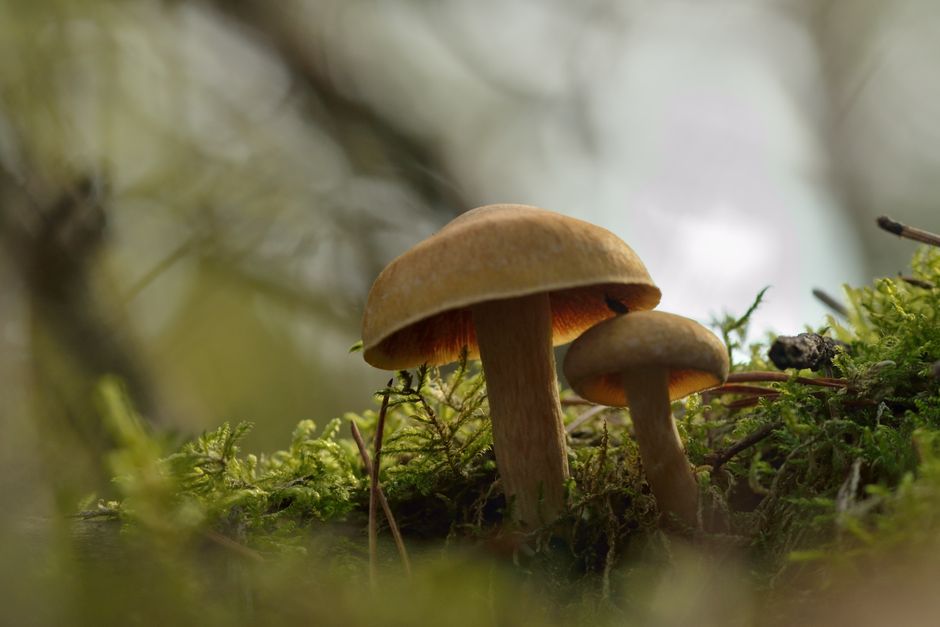
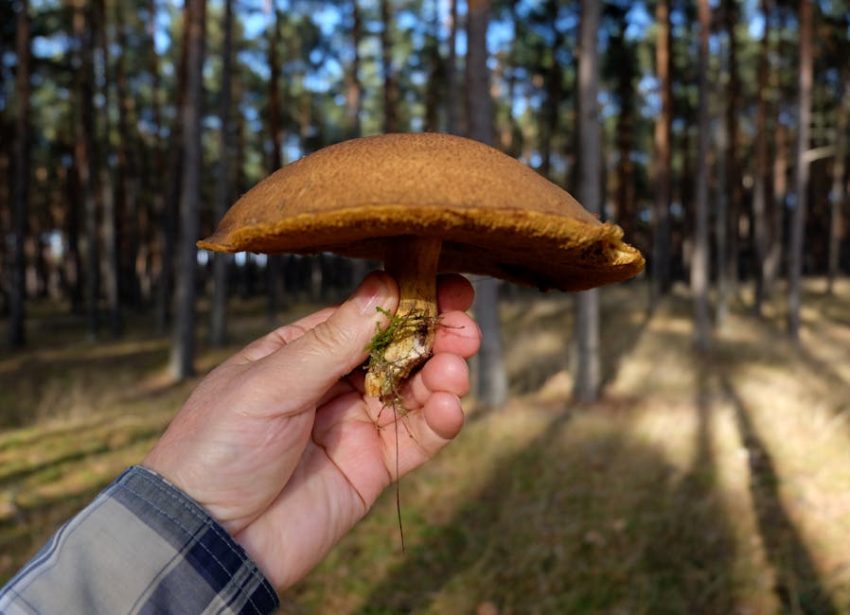
Lena dropped down beside me, knees crunching into the leaves. “That? That’s Paxillus involutus. But don’t think of it as just a fungus. Think of it as a goddamn telephone line.” She grinned. “It’s chatting with the tree. Right now. Trading secrets.”
I’d signed up for a “Scientific Mycology Walk”—sounded about as fun as a tax seminar. But out here, with the air thick and green and humming, it felt like we’d snuck into the backroom of the world. No signs. No gift shop. Just moss, muck, and something way older than us, doing its thing under our feet.
The Ground’s Got Gossip
Old forests don’t just sit there. They breathe. Not just the trees—though they do. I mean the soil. There’s a hum, a low buzz you feel in your molars if you stay still. Lena showed us how to lift the moss without ripping it—like sliding up the edge of a rug to see what’s underneath.
And there it was: mycelium. Threads so fine they looked drawn with a pen, spreading in every direction. She passed me a hand lens. Up close, it was like a subway map made by spiders. “Each thread’s a hypha,” she said. “Bundle enough, you’ve got mycelium. But here’s the wild part? That spruce over there? It’s sending sugar to that sad-looking birch fifty feet away. The beech is sharing nitrogen like it’s nothing. Not because they’re generous. Because it’s smart. Lose one, you risk the whole damn forest.”
She poked a finger into the dirt. “Forget fiber optics. This is the original network. Been running for millions of years. We just never bothered to listen.”
I remembered some biologist—Donna Haraway—used the word sympoietic. Making-with. Not survival of the fittest, but survival of the *linked*. That’s what this felt like. Not a forest of loners. A gossip chain of roots and fungus, keeping each other alive.
Proof, Not Poetry
Lena wasn’t just telling stories. She had gear. A little FTIR spectrometer—looked like something from a sci-fi garage sale. She scraped a bit of mycelium, zapped it, and pulled up a jagged graph on her tablet. “See these peaks? Sugar moving from tree to fungus. That dip? Phosphorus going back. It’s like watching a barter market underground.”
Later, we stood at a research plot where scientists had pumped radioactive carbon into one tree and watched it flow—like ink in water—through the network and right into a sapling three trees over. Data doesn’t lie. Trees aren’t standing alone. They’re holding hands under the dirt.
Then we hit a gap where a tree had gone down recently. Lena pointed: the mycelium here was thicker, bundled like electrical cables. “The network’s rerouting,” she said. “The dead tree’s still feeding the living. It’s not gone. It’s just… changed jobs.”
Suddenly I thought about my dad. My old apartment. The version of me that used to smoke and write bad poetry. Gone, sure. But not erased. Still feeding something.
Same Threads, Different Soil
Germany’s got its web, but it’s not special. In British Columbia, there’s a single honey fungus—Armillaria—that covers 3.7 square miles. One organism. Most of it’s been down there since before Jesus. You walk over it and never know.
In Japan’s Nagano mountains, they’ve got shiro—dense mats of mycelium that show up before matsutake mushrooms pop. Locals talk about the “veins of the mountain spirit.” Don’t laugh. After seeing this, you don’t.
Tasmania runs night hikes with UV lights. Shine them on the forest floor, and Mycena chlorophos glows that faint, eerie blue—like the earth’s pulse made visible. Not part of the network, really. But proof: we’re blind to half the world.
Bottom line? Soil’s not dirt. It’s alive. Breathing. Talking. And now, a few stubborn mycologists are dragging curious folks like me into the mud to see it. No luxury vans. No hand warmers. Just wet boots, dirty fingernails, and the mandatory tick check at the end.
You can read about the Wood Wide Web in journals. But until you’ve knelt in the rotting leaves, touched the threads, felt the chill rise up your spine—until then, you don’t know it.
What the Land Remembers
On the last day, Lena took us to a scar—a patch of forest logged out a hundred years ago. Trees had grown back, but the ground felt dead. Compacted. Silent. “Mycelium’s slow,” she said. “Takes time. And quiet. Without the network, trees are just… standing there. Lost.”
She handed me a tiny jar. Inside, a pale blob in agar. Laccaria bicolor. “Keystone fungus,” she said. “Helps Douglas fir get started. Plant it somewhere. Anywhere. You’re not just growing a fungus. You’re booting up a conversation.”
I carried that jar like it was fragile. Like it was holy. It sat on my windowsill for months—looked like old chewing gum. But I’d catch myself staring at it. Thinking about all the threads we pave over, plow under, pretend aren’t there. How we’ve built a world on forgetting.
And how, if you just shut up, get down in the mud, and look—not with your eyes, but with your gut—you might hear it. That quiet, constant hum. The forest talking. Not to us. But near us. With us.
Maybe that’s the real takeaway: not facts. Not photos. Just the gut punch of realizing you’re not above any of this. You’re in it. And beneath your feet, something ancient is still whispering—
—if you’ll stop long enough to listen.
More quietly wild stories at Punyapaths.
Got questions?
Yeah. Me too.
Can you actually tour fungal networks?
Not like spelunking. You won’t squeeze through glowing tunnels. But yeah—there are real walks, in real forests, led by people who know their shit. Mycologists. Ecologists. Nerds with backpacks full of gear. They’ll show you the threads, the data, the living web. Just don’t expect comfort.
Isn’t mold dangerous?
Some is. But the mycorrhizal stuff? Mostly chill. Guides know what to touch. What to avoid. Just don’t lick anything, and maybe hose off when you get home.
Can I grow this in my backyard?
Sure. Oyster mushroom kits are everywhere. But if you wanna help forests, go native. Ask around at mycological societies. And remember—it’s not about the mushrooms. It’s about the invisible web holding everything together.