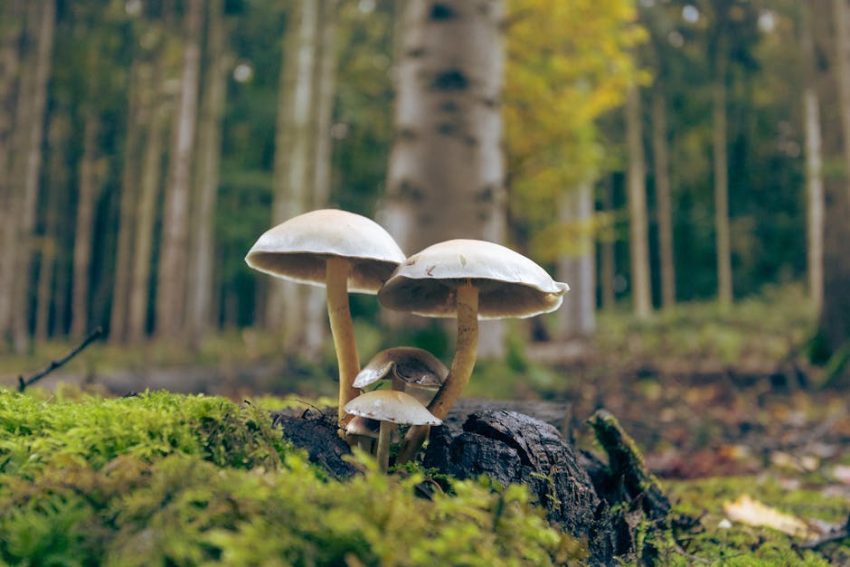
I felt it first in Oregon, though I had no clue what was going on. Just this… hush underfoot after a rain, like the woods were holding their breath. The ground gave a little when you stepped—kind of like it was breathing out. Moss everywhere. Trees hunched over like they were sharing secrets. The air was thick with the smell of wet bark and something sweet-rotten, so heavy you could taste it. Breathing felt like sucking air through a wet sock. A woman came down the trail, boots caked in mud, hands rough as sandpaper. She said, “The forest talks. You just have to listen through the roots.” I nodded, figured she was being poetic. Kind of charming, even. Later? Not so cute.

I was running—yeah, from the noise, sure, but mostly from that low hum in my head. The one that never shuts off. Like your brain’s stuck in reply-all mode. Thought I’d find peace in some empty desert or on a wind-battered ridge. But no. Found it underground. In mycelium. Who’d have guessed the real action wasn’t up here, screaming, but down there, muttering to itself?
Beneath the Soil, a Living Web
We see mushrooms and think: boom, showtime. Then it’s gone. But that’s like seeing a dandelion and ignoring the roots snaking through the dirt. The real body? It’s hidden. Mycelium. Just threads—endless threads—crawling through soil and deadwood, stretching for miles. I read somewhere that a teaspoon of forest soil might hold enough fungal strands to stretch the length of a football field. Or more. Sounds made up, right? But I believed it.
In British Columbia, I met Dan. Not a scientist, not really—he said titles are for people who need badges to feel smart. We walked through an old cedar forest, no GPS, just a coffee-stained scrap of paper with scribbled notes. He stopped, dropped to one knee, slapped his palm flat on the ground. Said, “This is the Wood Wide Web.” Dead serious. No joke. Like saying it was Tuesday.
Turns out, he wasn’t full of crap. Real science backs this—Suzanne Simard’s work, for one—showing trees communicate. Not with words. With chemicals. Through fungal threads. A dying birch gets sugar from a healthy fir uphill. Not charity. Just connection. Mycelium’s the middleman. Like an ancient, dirt-wired internet. No Wi-Fi, no updates. Just slow, steady conversation.
We found a log split open. Inside, white veins ran through the wood like lace. Dan broke off a piece, shoved it in my hand. Smell it, he said. I did. Earthy. Sharp. Like sourdough left too long in the basement. He said, “That’s life talking.” I snorted. Then I didn’t.
The Whispering Dark
Slovenia. Postojna Cave. I went for the blind salamanders, for the way the stone wept slow tears. But what got to me wasn’t what I could see—it was the nothing. The kind of dark that’s been there for thousands of years.
Deep in the cave—no light, ever. Yet fungi live there. Not on sunlight. On rock. On chemicals. Thin threads in the cracks, feeding on minerals, building networks in total black. I sat on a cold boulder for an hour, headlamp off, back against stone. Tried to feel something. Not sound. Not sight. Just… weight. Like something was moving, too slow to notice.
I read that mycelium can send tiny electrical pulses. Not thoughts. Not like ours. But—answers. A flicker. A warning. A ‘here’ or ‘not here.’ Sitting there, I wondered: were these the first mapmakers? Did they figure out the dark long before eyes ever opened?
The silence down there wasn’t empty. It was full. Thick. Like the air was holding its breath.
The City Beneath the Pavement
You don’t need old forests or caves. I found it in Berlin, of all places. A vacant lot near Tempelhof—used to be an airfield, now just weeds and dandelions cracking through concrete.
Lena met me there—Mohawk dyed orange like mushrooms after rain, fingers stained from digging. She’s with a crew tracking mycelium under the city. Soil samples, cheap DNA kits, hours crouched in alleys. They’re finding fungal webs under sidewalks, under train lines, even under war rubble.
“These fungi don’t give a damn about borders,” she laughed. “Grew through bombs. Now they’re feeding trees planted fifty years later. They remember.”
We dug a little. Found thick black cords under the grass—rhizomorphs, she called ‘em. Fungal highways. She held one up, grinned. “This was here before the Wall. It’ll be here after the last building falls.”
I thought about the internet. How flimsy it is. Cut one cable, lose power, everything dies. But this? No passwords. No cloud. Just growth. Decay. Ties that last. Renewal.
Learning to Listen
After that, I started walking different. Slower. No music. Hands out of pockets. I began noticing mushrooms—not just where they popped up, but how. In arcs. In lines. Like they were following something invisible.
I started touching the ground. Really touching it. Palm down, eyes closed. Once, I swear, I felt a pulse. Or maybe it was my heartbeat. Doesn’t matter. I felt something.
I went to a meditation trail in the Appalachians—Punya Paths—where they’ve marked “listening zones.” No talking. No phones. Just sit. Wait. I did. Twenty minutes in, a deer stepped into the clearing. Stood there. Looked around. Then dipped its head, like it was nodding to the earth.
That’s when it hit me: we’re not outside this thing. We’re tangled in it. Our food. Our dirt. Our guts—half of us isn’t even human, right? Fungi, bacteria, the whole mess. Maybe the real journey isn’t into the wild. Maybe it’s into noticing. Into feeling the hum under the noise.
I don’t know what mycelium’s saying. Maybe nothing. But I’m learning to shut up. To stay still. To let the ground do the talking.
Next time you’re in a forest after rain—kick off your shoes. Stand barefoot. Close your eyes. Feel the soil. It moves. Barely. But it does. Like breathing.
That’s not magic. That’s the network. Alive. Working. Waiting.
And honestly? It’s been watching you the whole damn time.
You: Do you think fungi are conscious?
Me: I don’t know. But I think they’re aware. There’s a difference.
You: Can you eat these underground networks?
Me: Not really. Mycelium’s not poison, but it’s not food. And honestly? Feels wrong. Like chewing a nerve.
You: Is this Wood Wide Web thing real?
Me: Yeah. Solid. Simard’s team tracked radioactive carbon moving between trees through mycorrhizal fungi. Not theory. Not myth. Soil science. Right there in the dirt.