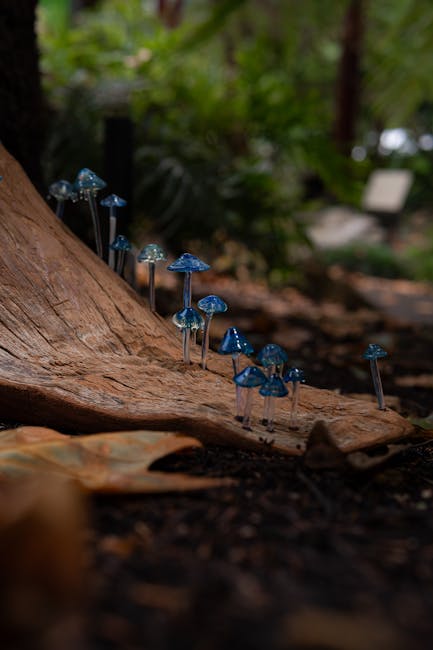
I didn’t plan on spending three days on my hands and knees in a dripping limestone hole, headlamp sputtering, knees torn up, notebook limp from the wet, probably sucking in fungus spores that were already ancient when Caesar was still in diapers. But there I was—crawling through a cave in New Zealand’s Waitomo, staring at these faint blue pinpricks on the ceiling like the Milky Way had gotten lost and curled up to die. Glowworms, sure, whatever—but that’s not the point. The real gut-punch wasn’t above me. It was under me. Not rock. Not muck. Something… awake.

I came for fungi. Not the supermarket kind—slice ‘em on a sandwich, call it a day. I wanted the quiet ones. The ones doing the real work, no applause, no credit. The deeper I got, the clearer it became: light’s a myth down here. Silence is currency. And in that silence? Fungi aren’t just hanging on—they’re thriving. Quietly. Relentlessly.
It’s Not Dirt. It’s Not Even Close.
Up top, we treat soil like trash. Scrape it off our boots like it’s nothing. But down in those caves—wet, tight, breathing like a living thing—every step bounced. Not moss. Not rot. Mycelium. Thick, spongy layers of it, like the earth had wrapped itself in a blanket made of roots and secrets. Eating through dead wood, turning decay into dinner, feeding what’s next before the last thing’s even cold.
Tama—my guide, lanky as a fence post, eyes like he’d seen the back of the world and liked what was there—leaned in like he was about to tell me how the universe started. ‘This cave breathes,’ he said. And no, he wasn’t being cute. He scraped back some moss, pointed at these white threads tangled in a black root. ‘Armillaria,’ he said. Honey fungus. Spreads for miles. Some of this stuff? Older than towns. Older than borders.’
I touched it. Felt like cold gauze, but with a low hum underneath—not electric, just… present. I’d read about the ‘Wood Wide Web’—trees whispering underground, elders feeding saplings, danger signals zipping through roots. But here, it wasn’t just trees. It was air. It was water. It was me, standing there, not coughing up a lung, all thanks to this invisible net doing its job in the dark.
A Forest That Glows When You Shut Up
From Waitomo, I headed north. Heard whispers about a place in Tasmania—Cradle Mountain, deep in the park—where the ground wakes up at night. Found it just after dark. Cold dropped like a hammer. Trees turned into silhouettes. And then, slow as a heartbeat, I saw them: tiny green dots. Not bugs. Not stars. Clinging to logs, tucked in moss, like embers someone left burning.
Omphalotus nidiformis. Ghost fungus. Doesn’t just live in the dark—it rewrites the dark.
Knelt again. Wet leaves, cold knees—feels like my life now. The glow wasn’t steady. It pulsed. Like it was breathing. Scientists argue: do bugs help? Is it just chemistry? Who cares. Standing there, no sound but my breath, it felt like the forest was dreaming out loud.
Under every glowing cap, the mycelium ran—threads through roots, breaking down wood, unlocking life, feeding the next season. This wasn’t rot. This was renewal. Each mushroom just a tiny flag on a network that’s been spreading for decades, maybe centuries. I once read about Paxillus involutus—a fungus up north that hooks into a dozen tree species at once. One thread, thinner than hair, stretches hundreds of meters. In some places, these networks cover entire valleys. We walk on them. We breathe because of them. And we don’t even blink.
More on bioluminescent fungi (if you’re into that kind of thing).
What the Ground Remembers
In India, years back, I met a monk in the Western Ghats. Said old Ayurvedic texts don’t see forests as trees. They see them as bodies. ‘Roots are veins,’ he told me. ‘Sap is blood. Mushrooms? That’s the earth sighing.’ I thought it was poetic nonsense. Now, crouched in the green flicker of ghost fungi, I’m not so sure.
Fungi don’t just connect trees. They connect worlds. I read about a study—some dying birch feeding a healthy fir across bare ground, sending carbon, nitrogen, like a final thank you. Not competition. Kindness.
And when we roll in with bulldozers, lay down asphalt, drown the soil in poison—we’re not just killing trees. We’re cutting phone lines older than speech.
I’ve written about slow travel—about staying in a place until it forgets to perform (Punyapaths, if you’re curious). But in the fungal deep, slow means something else. It’s not about time. It’s about noticing. Training your eyes to see what hides. Learning to listen to silence until it starts talking.
Last Night, I Walked Barefoot Into the Dark
No light. No phone. No notes. Just cold soil and the faint green flicker of mushrooms like the earth was holding its breath.
And I thought: we’ve spent centuries craning our necks—stars, gods, Mars—like wonder’s only up there. What if it’s been under our feet the whole damn time? Not in the sky. In the soil. Not rockets. Roots.
We don’t need to go looking for alien life. It’s already here. We just gotta shut up long enough to see it.
Someone asked if I was scared—down there, surrounded by things I couldn’t see. I laughed. But later, I turned it over. No. Not scared. If anything, I felt… held. Like something old—older than fear—was managing the air, filtering the water, feeding the trees. Maybe the mycelium. Maybe something else. Either way, I slept better underground than I have in years. Deeper. Quieter. Like the earth was breathing for me.