There’s a quiet kind of agony in waiting. Not the kind that makes headlines or demands sympathy, but the slow, internal stretching of days that don’t move, of answers that hover just beyond reach. I used to fight it—clench my jaw, check my phone twice a minute, rehearse every possible outcome like a script I might control. But over the years, I’ve begun to see that waiting isn’t just an obstacle. It’s a discipline. A thin place where the soul, stripped of distraction, finally has space to grow.
We don’t talk much about waiting as sacred. Our culture worships speed: fast results, instant feedback, solutions in under five minutes. But wisdom doesn’t arrive by express delivery. It seeps in like dawn light—gradual, subtle, almost imperceptible until you realize the shadows have shifted.
### The Unseen Work Beneath Stillness
I remember sitting in a doctor’s office years ago, clutching a referral letter, waiting to hear if something inside me was wrong. The clock ticked with unbearable slowness. My mind raced through worst-case scenarios. And yet, in the middle of that dread, something unexpected happened: I noticed my breath. Not in a performative mindfulness way, but because it had become ragged from anxiety. I followed it. In. Out. Again. And in that moment, I wasn’t trying to fix anything. I was just there.
That’s when I started to understand—waiting isn’t empty. It’s full of hidden labor. Like roots spreading beneath soil, unseen but essential. The mind may feel stalled, but the soul is arranging itself. It’s integrating old wounds, recalibrating desire, learning patience not as passive resignation, but as active trust.
In the Sufi tradition, there’s a concept called *sabr*—often translated as patience, but more accurately, a steadfast endurance rooted in faith. It’s not passive. It’s standing firm in uncertainty, believing that delay isn’t denial. The Persian poet Rumi wrote, *“Be like a tree and let the dead leaves drop.”* There’s a kind of surrender in waiting that lets go of dead expectations, making room for new growth.
### What We Resist, We Reinforce
We often treat uncertainty like an emergency. We rush to fill gaps with explanations, distractions, or false certainties. But when we do, we short-circuit the very process that could deepen us.
I once applied for a teaching position I was certain was mine. I had the experience, the references, the vision. When the rejection came, I was stunned. For weeks, I replayed every detail, wondering where I’d gone wrong. But six months later, I was invited to lead a retreat that reshaped my entire approach to spiritual teaching. The “no” had redirected me to a path I couldn’t have planned.
It’s humbling to admit how often I’ve mistaken timing for failure. How many times have I cursed a closed door, only to realize later it was protecting me from a room I wasn’t ready to enter?
The spiritual discipline of waiting asks us to hold that tension—between wanting and receiving, between striving and surrender. It’s not about becoming indifferent. It’s about learning to care deeply without clutching. To hope without demanding.
There’s a story in the Stoic philosophy of Epictetus about a man who prays to win a competition. Epictetus asks: What if winning isn’t aligned with your highest good? What if the loss is the lesson? The prayer, he suggests, should not be for a specific outcome, but for the wisdom to accept whatever comes.
### The Wisdom That Grows in Delay
I’ve come to believe that some truths can only be known through delay. Not because the universe is cruel, but because depth requires time. You can’t rush grief. You can’t hurry understanding. You can’t force love to arrive before the heart is ready to receive it.
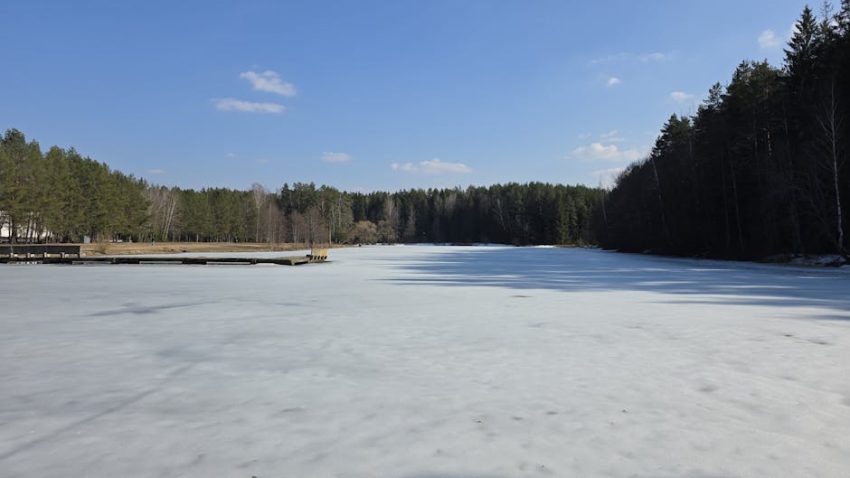
A few winters ago, I sat by a frozen lake, watching the ice slowly crack as the sun warmed its surface. It didn’t happen all at once. First, a hairline fracture. Then a soft pop. Then, over hours, the entire sheet began to shift. Nothing dramatic. Just the quiet insistence of thaw.
That’s how wisdom often comes—not in a flash, but in increments. Waiting creates the conditions for insight to surface. When we stop trying to force the river, we finally notice the current.
There’s a teaching in many contemplative traditions: silence is not the absence of sound, but the presence of listening. In the same way, waiting is not the absence of action, but the presence of attention. It’s the posture of the soul leaning forward, not with demand, but with receptivity.
I’ve started to mark my years not by accomplishments, but by the quality of my waiting. How long could I sit with uncertainty before reaching for a false answer? How deeply could I trust the process, even when it felt like stagnation?
It’s not that I’ve mastered this. Some days, I still scroll mindlessly, desperate to escape the ache of not knowing. But other days, I catch myself pausing—between breaths, between thoughts—and I remember: this, too, is part of the path.
The moments we spend in limbo aren’t wasted. They’re compost. They’re the dark soil where insight takes root.
If you’re in a season of waiting now—if the phone hasn’t rung, the letter hasn’t come, the healing hasn’t arrived—know this: you’re not behind. You’re being shaped. The stillness is not your enemy. It’s your teacher.
And when the answer finally comes, you’ll realize it wasn’t the waiting that delayed you. It was the waiting that prepared you.
You might also find wisdom in exploring the journey of self-discovery through ancient spiritual paths that honor timing and inner rhythm over external urgency.
### What Does It Mean to Wait Well?
I get asked sometimes: how do you wait without losing hope? I don’t know that there’s a formula. But I’ve found that small practices help—lighting a candle each morning as an act of trust, writing letters I never send, walking without destination. These aren’t distractions. They’re rituals of presence.
And I’ve learned to ask different questions. Instead of *When will this happen?*, I try *What is this moment asking of me?* That shift doesn’t bring answers, but it brings clarity.
Waiting well isn’t about perfection. It’s about showing up, again and again, in the ache of not knowing, and saying: I’m still here. I’m still listening.
What happens if I stop fighting the delay?
You might discover it was never delay at all—just the soul’s quiet way of catching up with itself.
You ever notice how the best things arrive just after you’ve stopped clutching?
Yeah. Me too.
What if the thing you’re waiting for isn’t late—just waiting for you to be ready?