Introduction: The Soul as a Living Poem
In the arid expanses of the desert and the candlelit corners of Sufi lodges, the soul has never been a static essence to be preserved, but a living poem—ever unfolding, trembling with emotion, caught in a sacred motion between the human and the divine. While modern spirituality often reduces the soul to a personal brand of peace or a tranquil self-image, Sufi mysticism offers a far more dynamic vision: the soul as a dance, a passionate interplay between divine love and human longing.
This dance is not metaphorical ornamentation. It is the very structure of spiritual awakening in Sufism—a rhythm of yearning, surrender, ecstasy, and return. To enter this world is to abandon the idea of the soul as a fixed identity and instead embrace it as a journey of transformation, fueled by love and shaped by absence.
The Sufi Conception of the Soul
Sufi teachings distinguish between several dimensions of the soul, each with its own role in the spiritual journey. The most commonly referenced terms are nafs and ruh, which, while sometimes translated as “ego” and “spirit,” carry richer, more nuanced meanings in the mystical tradition.
Nafs: Ego, Spirit, and the Journey Inward
The nafs is often misunderstood as merely the lower self or ego. But in Sufism, it is the evolving soul—the self in motion. The nafs passes through multiple stages: from the commanding soul (nafs al-ammarah), driven by desire and anger, to the reproachful soul (nafs al-lawwamah), aware of its flaws, and ultimately to the soul at peace (nafs al-mutma’innah), which rests in divine presence.
This progression is not moralistic but transformative. The nafs is not something to be crushed, but refined—like iron shaped by fire. Its struggles, desires, and resistances are all part of the dance. Even rebellion becomes sacred when it leads to deeper questioning.
Ruh: The Breath of the Divine
While the nafs is the soul in its human form, the ruh—often translated as “spirit”—is the divine breath breathed into Adam (Qur’an 15:29). It is not created; it is a spark of the infinite, a celestial guest within the body. The ruh does not evolve, but it awakens. It is the silent witness, the inner light that stirs the nafs toward remembrance.
In Sufi poetry, the ruh is the lover who remembers the Beloved even in exile. It is the reason the soul aches. It is why, even in moments of despair, there is a pull toward meaning, beauty, and return.
The Dance of Love and Longing
The heart of Sufi spirituality lies in the dynamic tension between divine love (ishq) and human longing (shawq). This is not a one-sided devotion, but a reciprocal movement—a dance in which both partners advance and retreat, draw close and separate, burn and are reborn.
Divine Love as Irresistible Force
In Sufism, divine love is not a gentle affection but a consuming fire. Rumi describes it as a “crazed ocean” that sweeps the soul from its moorings. It is not chosen; it chooses. The soul does not decide to fall in love with God—God’s love descends like lightning, shattering the illusion of separation.
This love is not sentimental. It demands everything. As the 10th-century mystic Al-Hallaj whispered before his execution: “I am the Truth.” His words were not arrogance, but the cry of a soul so consumed by divine love that the boundaries of self had dissolved.
Human Longing as Spiritual Compass
If divine love is the fire, human longing is the smoke that rises from it. Shawq—the ache of missing the Beloved—is not a flaw in the soul, but its deepest guidance. The Sufis say that God created the world out of love, and the soul was made to yearn.
This longing is not to be medicated away, as modern culture often suggests. Instead, it is to be honored. Every unmet desire, every heartbreak, every unanswered question becomes a thread pulling the soul back toward its origin. The pain of absence is proof of presence.
The Ecstatic Movement of the Soul
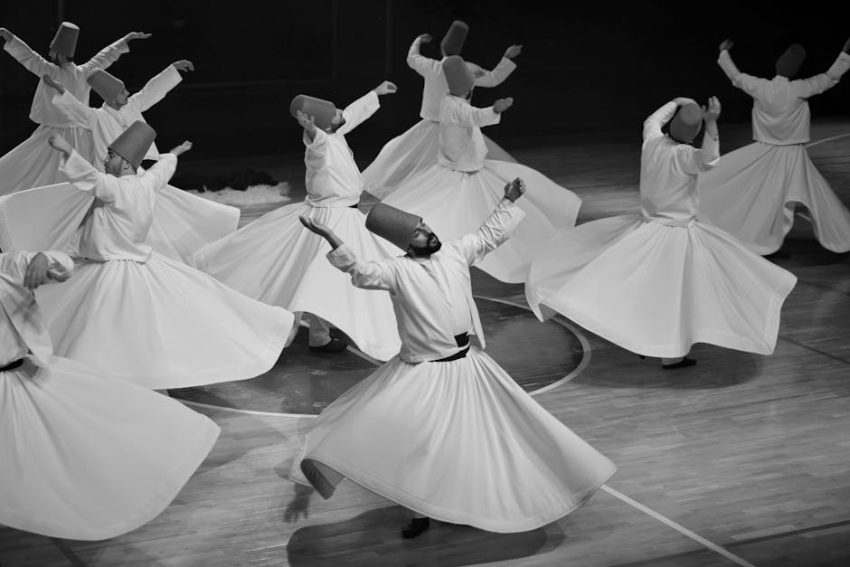
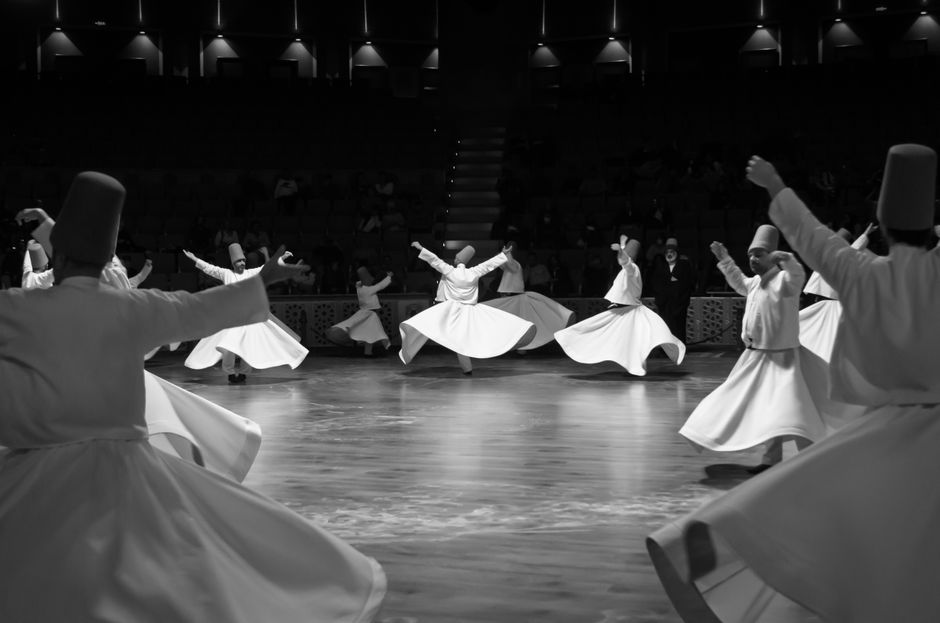
The soul, in this view, is never still. It whirls like the dervishes—not to escape the world, but to align with the cosmic rhythm of giving and receiving, seeking and finding. The dance is not metaphor; it is practice. In the whirling, the dervish surrenders control, allowing centrifugal force to mirror the soul’s centrifugal pull toward the divine.
This ecstasy (wajd) is not emotional indulgence. It is presence so intense it becomes unbearable joy. The soul dances not because it has arrived, but because it is on the way.
Sufi Practices That Nurture the Dance
Sufism offers concrete practices to keep the soul in motion, to sustain the rhythm of love and longing.
Dhikr: Remembrance as Rhythm
Dhikr—the repetition of divine names—is the heartbeat of Sufi practice. But it is more than mantra; it is a call-and-response between the soul and God. Each repetition is a step in the dance, a return to the Beloved after the distraction of the world.
When practiced in community, dhikr becomes a shared pulse, a collective yearning that mirrors the unity of all souls in love. The body sways, the breath deepens, the heart opens—this is not suppression of emotion, but its refinement into devotion.
Sama: The Music of the Soul
Sama, or spiritual listening, is the art of letting sound dissolve the self. In the presence of sacred poetry and music, the soul is stirred from its slumber. Rumi himself was said to have entered states of ecstasy upon hearing a simple reed flute, the sound of which echoed the lament of separation.
The reed, cut from the reed bed, becomes a metaphor for the soul: only by being severed from its source can it sing. The pain of exile becomes the condition for art, for prayer, for awakening.
Learn more about the philosophical roots of mystical longing in classical Islamic thought at Stanford Encyclopedia of Philosophy.
Solitude and Companionship on the Path
The Sufi path balances the need for solitude and community. The seeker must spend time alone, confronting the illusions of the nafs, yet also gather with others, where shared love amplifies individual longing.
The spiritual guide (shaykh) plays a crucial role—not as an authority figure, but as a mirror, helping the disciple distinguish between egoic desire and true yearning. This relationship itself becomes a dance, a dialogue of trust and surrender.
Reshaping Contemporary Spirituality
In an age of curated wellness and spiritual consumerism, the Sufi vision of the soul offers a radical alternative. It challenges the modern tendency to seek peace at all costs, to eliminate discomfort, and to package enlightenment as a product.
From Performance to Presence
Many contemporary spiritual practices emphasize performance: meditating correctly, eating mindfully, affirming positively. But Sufism invites us into presence—raw, unfiltered, trembling with emotion. It asks not “Are you peaceful?” but “Are you awake?”
The soul is not meant to be calm. It is meant to be alive.
Emotional Honesty in Spiritual Practice
Sufism honors the full spectrum of human feeling—grief, rage, ecstasy, doubt. These are not obstacles to spirituality but its very fuel. The poem of the soul is written in tears as much as in laughter.
Imagine a spirituality that does not pathologize longing, but sanctifies it. That does not silence the cry of the heart, but teaches it to sing.
Inviting Eros Back into the Sacred
One of the most radical contributions of Sufism is its reclamation of eros—the passionate, desiring force—as a path to the divine. In a world that has sanitized or sexualized eros, Sufism restores it as a sacred energy.
This is not about romanticizing relationships, but recognizing that the same force that draws us to another human being can draw us to God. The lover’s sigh, the poet’s verse, the mystic’s tears—all are expressions of the same fire.
For those seeking to integrate ancient wisdom into modern life, exploring the Dharma of Daily Life can offer complementary insights into purpose and presence.
Conclusion: The Soul as Eternal Dancer
The soul, in Sufi mysticism, is not a thing to be saved, but a motion to be lived. It is the ache in the chest when you hear a certain song. It is the restlessness that no achievement can quiet. It is the silent pull toward something you cannot name.
This is not a flaw in the human condition. It is the condition itself. To be human is to long. To be spiritual is to let that longing become a dance.
In the end, the soul does not reach God by becoming still, but by moving—spinning, weeping, singing, remembering. It arrives not by escaping desire, but by transforming it into love.
And so the dance continues, across deserts and decades, in silence and in song, between two hearts: one human, one divine.
FAQ
What does the Sufi concept of the soul say about suffering?
In Sufism, suffering—especially the pain of separation—is not meaningless. It is a sign of the soul’s awareness of the divine absence. Rather than avoiding suffering, the Sufi learns to let it refine the heart, turning grief into longing and longing into love. Suffering becomes a teacher, not an enemy.
How is the Sufi view of love different from romantic love?
While romantic love can be a reflection of divine love, Sufi ishq transcends personal attachment. It is unconditional, all-consuming, and directed toward the ultimate Beloved—God. Yet Sufis often use romantic imagery because it captures the intensity, vulnerability, and surrender that true spiritual love requires.
Can someone practice Sufi soul work without being Muslim?
Yes. While Sufism is rooted in Islam, many of its practices and insights—such as dhikr, sama, and the cultivation of inner longing—are accessible to seekers of all backgrounds. The path requires respect for its origins, but the dance of the soul speaks a universal language.
What role does the ego play in the Sufi journey?
The ego (nafs) is not rejected but transformed. It begins as the commanding self, driven by base desires, but through spiritual practice, it evolves into the soul at peace. The ego is not the enemy; resistance to self-awareness is. The journey is not about eliminating the self, but about aligning it with truth and love.