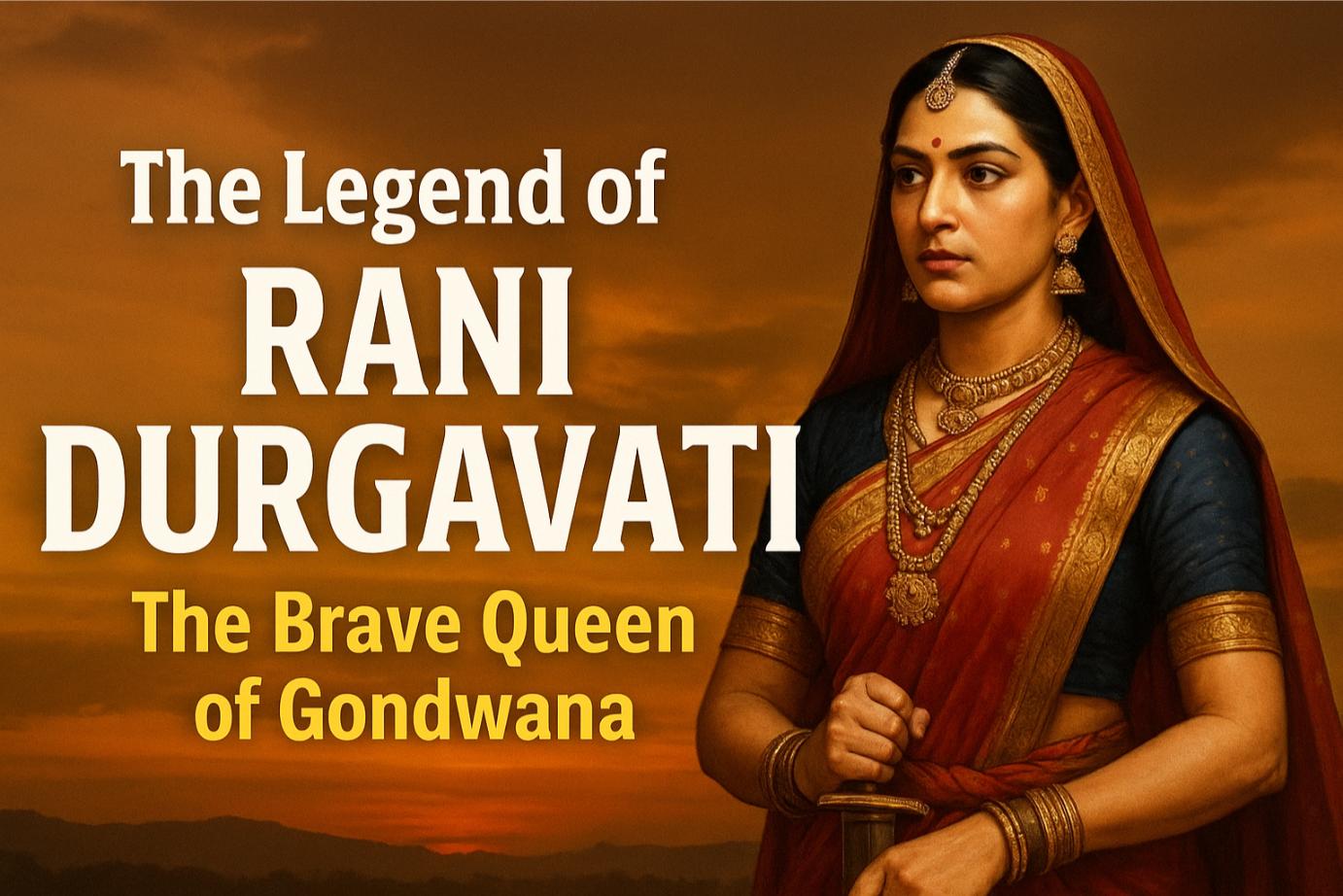
The Legend of Rani Durgavati – The Brave Queen of Gondwana
Category: History & Legends · Among India’s most inspiring historical figures stands Rani Durgavati, the legendary queen of Gondwana. Known for her courage, leadership, and sacrifice, she ruled central India during the 16th century and defended her kingdom against Mughal expansion. Her story is one of valor, resilience, and pride, making her a symbol of women’s empowerment in Indian history.
📜 Early Life of Rani Durgavati
Rani Durgavati was born in 1524 CE into the Chandel Rajput dynasty in Mahoba, Uttar Pradesh. She was the daughter of Raja Salbahan, a descendant of the famous Rajput ruler Raja Paramardi. Growing up, Durgavati was trained in martial arts, horse riding, archery, and sword fighting. Unlike most princesses of her time, she actively participated in hunting expeditions and battlefield training.
Her early education instilled in her the qualities of discipline, bravery, and strategy—traits that would later define her as a warrior queen.
👑 Marriage & Rule of Gondwana
In 1542, Rani Durgavati married Dalpat Shah, the son of King Sangram Shah of the Gond dynasty. After Dalpat Shah’s early death in 1550, Durgavati became the regent queen for her young son, Bir Narayan. As ruler, she displayed remarkable administrative skills, strengthening the kingdom of Gondwana (covering parts of modern Madhya Pradesh and Chhattisgarh).
Her reign was marked by prosperity, efficient governance, and patronage of art and culture. She also maintained a strong military, ensuring the safety of her kingdom.
⚔️ Military Bravery & Wars
Rani Durgavati is best remembered for her valiant resistance against the Mughals. In 1564, Mughal general Asaf Khan, under Emperor Akbar, attacked Gondwana with a large force. Despite being outnumbered, Durgavati led her army fearlessly.
- Battle Tactics: She fought on an elephant, symbolizing strength and leadership.
- Battle of Narrai (1564): Rani Durgavati and her small army of Rajputs and Gonds fought bravely in the Narrai valley between two rivers.
- Final Stand: Severely wounded in battle, she chose death over dishonor. On June 24, 1564, she ended her life with a dagger to avoid capture by the Mughals.
🌟 Legacy of Rani Durgavati
- National Heroine: Remembered as one of India’s greatest women warriors.
- Rani Durgavati University: Located in Jabalpur, Madhya Pradesh, named in her honor.
- Statues & Memorials: Several monuments and institutions commemorate her bravery.
- Inspiration: Her story continues to inspire women and leaders across India.
📚 Cultural & Historical Importance
Rani Durgavati’s life is often compared with other warrior queens like Rani Laxmi Bai of Jhansi. Her ability to govern effectively while defending her kingdom reflects the strength and resilience of women in Indian history.
Her tale is preserved in folk songs, local traditions, and historical texts, keeping her memory alive among generations.
🛣️ Gondwana Region – A Historical Journey
Travelers today can visit places connected to Rani Durgavati’s legacy:
- Jabalpur: Known as the cultural capital of Gondwana, home to the Rani Durgavati Museum.
- Narrai Valley: The battlefield where she made her final stand.
- Balancing Rock of Jabalpur: A natural wonder associated with legends of her reign.
✨ Rani Durgavati in Modern Times
In modern India, Rani Durgavati is celebrated for her courage and sacrifice. Her story is included in textbooks, research studies, and cultural programs. Every year, June 24 is observed as Balidan Diwas (Day of Sacrifice) in Madhya Pradesh to honor her memory.
💡 Lessons from Rani Durgavati’s Life
- Courage in Adversity: Even when outnumbered, she chose to fight.
- Leadership: She inspired loyalty among her soldiers and citizens.
- Honor Above All: She preferred martyrdom to surrender.
- Empowerment: A role model for women breaking societal barriers.
✨ Conclusion
The story of Rani Durgavati is not just history—it is a legend of bravery and sacrifice that continues to inspire India and the world. As a warrior queen, administrator, and symbol of honor, she left behind a legacy that shines brightly in the annals of history. In 2025, her life remains a reminder that true leadership is defined not by power but by courage, integrity, and resilience.