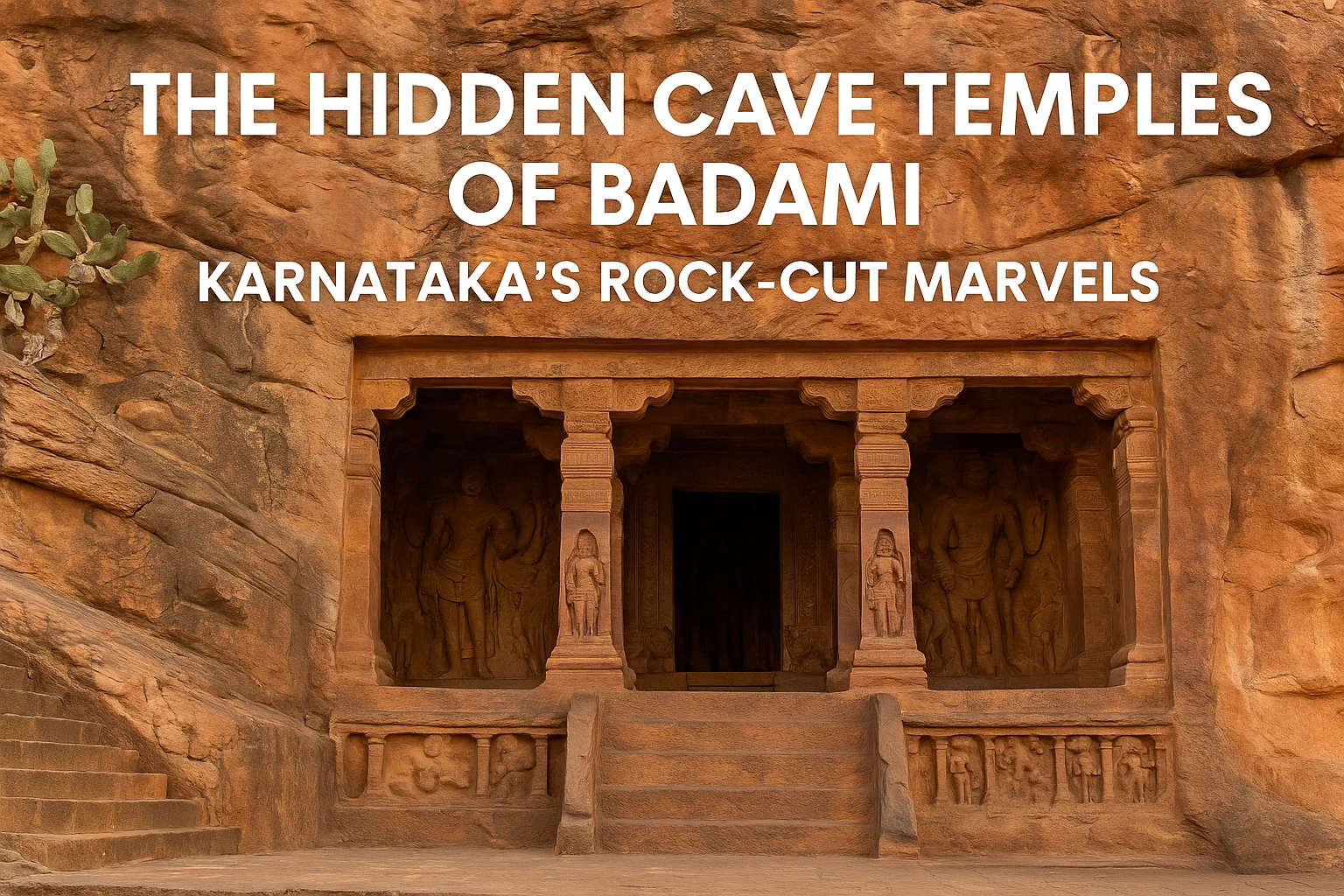
The Hidden Cave Temples of Badami – Karnataka’s Rock-Cut Marvels
Category: Hidden Temples · Nestled amidst rugged sandstone cliffs in northern Karnataka, the Badami Cave Temples are masterpieces of Indian rock-cut architecture. Built during the reign of the Chalukyas (6th–7th century CE), these temples are carved into cliffs overlooking the serene Agastya Lake. While Hampi and Pattadakal often steal the limelight, Badami remains a lesser-explored treasure trove of myth, devotion, and art. This guide uncovers the history, legends, and travel details of Badami’s hidden marvels.
📜 History & Significance
The Badami Cave Temples were built by the Chalukya dynasty, who ruled much of the Deccan between the 6th and 8th centuries. Known for blending Nagara and Dravidian styles, these temples reflect the Chalukyan experimentation that influenced later architecture in Aihole and Pattadakal. The caves are primarily dedicated to Hindu deities, along with Jain traditions, showcasing the religious harmony of the period.
🏛️ The Four Main Cave Temples
- Cave 1 (Shiva Temple): Dedicated to Lord Shiva, with a majestic 18-armed dancing Shiva (Nataraja) carved into the rock. Other carvings include Ardhanarishvara and Harihara.
- Cave 2 (Vishnu Temple): Features Lord Vishnu in his Varaha (boar) and Trivikrama (Vamana) avatars, symbolizing the victory of good over evil.
- Cave 3 (Vishnu Temple): The largest and most elaborate, with stunning reliefs of Vishnu in Narasimha and Anantasayana forms. Inscriptions date back to 578 CE.
- Cave 4 (Jain Temple): Dedicated to Jain Tirthankaras, with depictions of Mahavira and Parshvanatha, highlighting the region’s multi-faith tolerance.
🌄 Legends of Badami
According to legend, the twin sons of sage Agastya, Vatapi and Ilvala, once ruled the area. Vatapi would disguise himself as a goat and be served as food to unsuspecting guests, only to be revived by Ilvala’s chants. Sage Agastya ended their tyranny by digesting Vatapi, giving the town its ancient name Vatapi, now known as Badami.
🌟 Architectural Highlights
- Rock-cut architecture with intricate carvings directly chiseled into sandstone cliffs.
- Blend of religious themes – Shaivism, Vaishnavism, Shaktism, and Jainism.
- Murals and inscriptions providing insights into Chalukya history and art.
- Panoramic view of Agastya Lake and the surrounding hills from the caves.
🛣️ How to Reach Badami
- By Air: Nearest airport is Hubli (105 km), connected to Bengaluru, Mumbai, and Hyderabad.
- By Train: Badami Railway Station (5 km) connects to Hubli, Hospet, and Bangalore.
- By Road: Well-connected via NH367; buses and taxis available from Hubli, Bijapur, and Hospet.
🏨 Where to Stay
- Luxury: Heritage resorts near Badami and Hospet.
- Mid-range: Hotel Badami Court, Clarks Inn.
- Budget: Lodges and guesthouses in Badami town.
📅 Best Time to Visit
- October – March: Ideal weather for exploring caves and nearby attractions.
- April – June: Hot summers; visit in the morning or evening.
- July – September: Monsoon adds greenery but pathways can be slippery.
🎉 Nearby Attractions
- Aihole: The cradle of Indian temple architecture, just 35 km away.
- Pattadakal: A UNESCO World Heritage Site with Chalukyan temples.
- Banashankari Temple: A revered shrine located 5 km from Badami.
💡 Travel Tips
- Carry water and wear comfortable shoes, as climbing is required.
- Hire a local guide to understand the mythology and symbolism of the carvings.
- Photography is allowed, but respect temple sanctity.
- Combine Badami with Aihole and Pattadakal for a full Chalukyan heritage tour.
🌟 Conclusion
The Badami Cave Temples are hidden gems that tell the story of India’s architectural brilliance and spiritual diversity. From the dance of Shiva to the meditations of Jain Tirthankaras, every carving whispers tales of devotion and artistry. Visiting Badami in 2025 offers not only a spiritual journey but also an unforgettable dive into India’s cultural and historical roots.