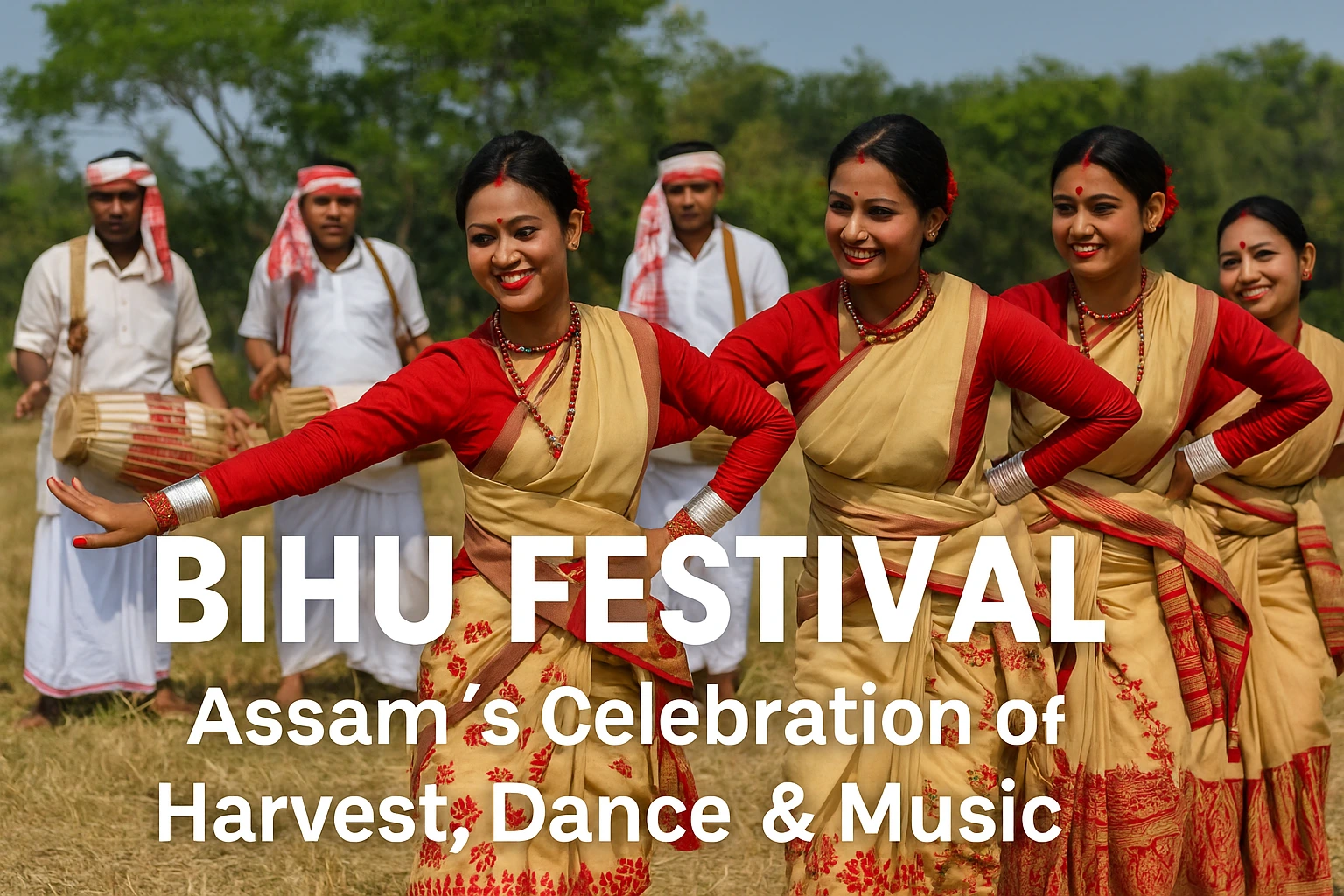
Bihu Festival – Assam’s Celebration of Harvest, Dance & Music
Category: Local Culture · Among India’s most colorful festivals, Bihu from Assam stands out for its blend of agriculture, culture, and community. Celebrated three times a year—Rongali (Bohag) Bihu, Bhogali (Magh) Bihu, and Kongali (Kati) Bihu—it marks different phases of the farming cycle. More than just a harvest celebration, Bihu is a symbol of Assam’s identity, uniting people across castes, creeds, and religions through dance, music, and feasting.
🌸 The Three Bihus Explained
1. Rongali Bihu (Bohag Bihu)
Celebrated in April, Rongali Bihu is the Assamese New Year and the most vibrant form of Bihu. It marks the onset of the sowing season and the arrival of spring. This is when young men and women perform the famous Bihu dance to the beats of the dhol, pepa (buffalo horn pipe), and gogona (reed instrument). New clothes, community feasts, and cultural events make this a carnival-like celebration.
2. Bhogali Bihu (Magh Bihu)
Falling in January, Bhogali Bihu is the harvest festival. Bonfires (Meji and Bhelaghar) are lit in open fields, where people gather to feast on rice cakes (pitha), sesame sweets, and fish. The next morning, devotees worship the rising Sun before enjoying communal meals. It’s a time of abundance, joy, and togetherness.
3. Kongali Bihu (Kati Bihu)
Observed in October, Kongali Bihu is quieter and more solemn. It is associated with protecting crops and seeking blessings for growth. Families light earthen lamps (sakhi) in paddy fields and near the Tulsi plant, symbolizing prayers for prosperity and warding off evil.
🎶 The Essence of Bihu Dance & Music
The Bihu dance is perhaps the most famous cultural export of Assam. Young men and women dance in circles or rows, with energetic movements symbolizing fertility, love, and the joy of harvest. The Bihu songs (Bihu geet) celebrate love, youth, and village life, performed with instruments like dhol, pepa, toka, and gogona. Today, Bihu dance troupes perform globally, representing Assamese pride and culture.
🍴 Traditional Bihu Foods
- Pitha: Rice cakes stuffed with coconut or sesame.
- Laru: Sweet balls made from sesame seeds and jaggery.
- Fish Curry & Rice: Staple celebratory meal.
- Apong: Traditional rice beer, especially in rural festivities.
📅 Best Time to Experience Bihu
- Rongali Bihu (April): For colorful dances, fairs, and cultural shows.
- Bhogali Bihu (January): For bonfires, feasts, and winter festivities.
- Kongali Bihu (October): For traditional rituals and agricultural practices.
📍 Where to Celebrate Bihu in Assam
- Guwahati: Hosts large Bihu festivals, fairs, and stage shows.
- Sivasagar & Jorhat: Experience authentic rural celebrations with traditional music and dance.
- Tezpur & Dibrugarh: Smaller towns where community Bihu functions are deeply rooted in tradition.
🛣️ How to Reach Assam
- By Air: Lokpriya Gopinath Bordoloi International Airport (Guwahati) is the main gateway.
- By Rail: Guwahati Junction connects to Kolkata, Delhi, and other Indian metros.
- By Road: Assam is well connected with National Highways and state transport services.
🏨 Where to Stay
- Luxury: Radisson Blu, Vivanta Guwahati.
- Mid-Range: Hotel Dynasty, Lilawati Grand.
- Budget: Homestays and guesthouses in villages for authentic cultural immersion.
💡 Travel Tips
- Book flights and hotels early during Rongali Bihu as it’s peak season.
- Don’t miss cultural performances at local Bihu pandals or fairs.
- Respect traditions—ask before photographing rituals.
- Carry light cotton clothes in April; warm clothes in January.
🌟 Conclusion
Bihu is more than a festival—it’s the soul of Assam. With its music, dance, food, and rituals, it showcases the spirit of togetherness, gratitude, and joy. Experiencing Bihu in Assam is not just about witnessing a cultural event, but about feeling the rhythm of life in this beautiful northeastern state.