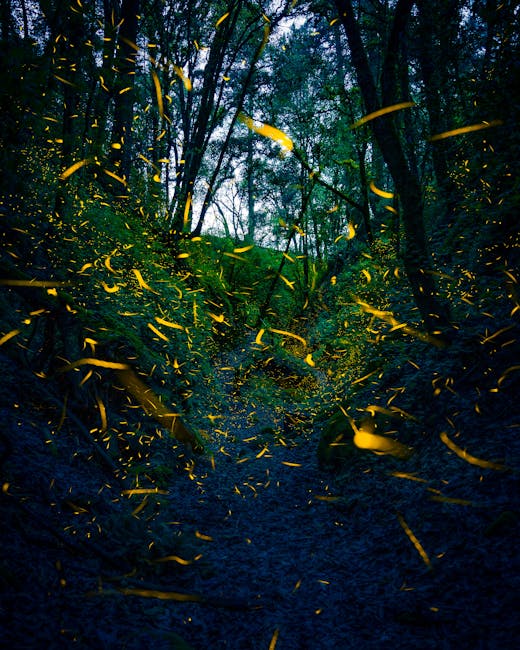
I stepped off the trail just after dusk, my boots sinking into the thick, spongy muck of the Olympic Peninsula. The air hung heavy—pine, sure, but underneath, something older. Wet bark, rot, that slow, quiet hum of life turning back into dirt. My guide, Mara, had these sharp green eyes and fingers stained like she’d been digging through logs for weeks. She held up a hand. “Wait,” she said. “Let your eyes go blank. Forget light.”
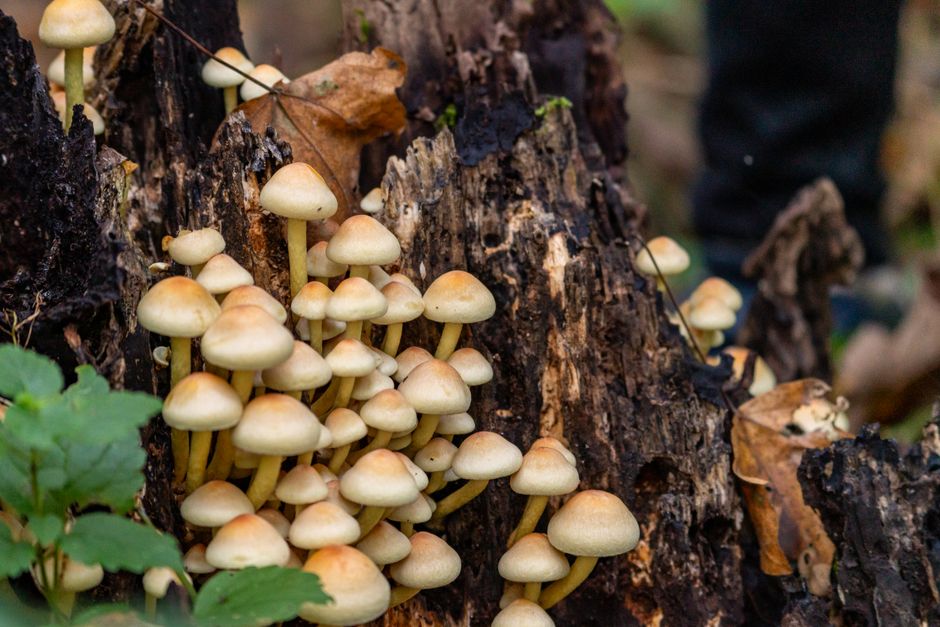
We’d turned off our headlamps. This wasn’t about seeing. It was… I don’t know. Paying a kind of rent. Finally noticing what’s been underfoot the whole time, whispering beneath the soil.
The Forest That Breathes Underground
At first, it was just a buzz under my feet—like blood rushing back after sitting too long. Then, under a fallen cedar, a flicker. Faint, but real. Green. Like someone dragged a dying glow stick through moss. I dropped to my knees. The light pulsed. Not fast. Slow. Like something breathing deep under the wood. Mara crouched beside me, quiet. “That’s Armillaria,” she said. “But not the mushroom. The mycelium. The real body.”
I’d read about it—trees chatting, swapping sugar, sending fungal messages underground. But reading’s one thing. Standing there, watching the ground breathe light? Felt like I’d stumbled into a conversation older than language.
In places like Olympic, the Smokies, or tucked corners of Glacier, a few small groups run these ‘bioluminescent immersions.’ Not tours. That word’s too loud, too cheerful. These are more like quiet invitations. You show up. You shut up. And if the forest feels generous, it lets you see a little.
Sure, people take photos. The glow—thin blue-green threads weaving through rot, roots, leaf litter—shows up online sometimes. But cameras miss most of it. The light’s too soft, too quick. And honestly? The real thing isn’t about capturing it. It’s about standing there, feeling like a total outsider in your own skin, while the earth hums beneath you.
Most fungi don’t glow. Only a few oddballs do—Mycena chlorophos, Omphalotus nidiformis, honey fungus (Armillaria ostoyae). And even they only light up when it’s just right: wet, dark, left alone. Scientists still don’t know why. Lure bugs? Waste light? Or just some weird leftover chemistry? Who knows.
Listening with Your Knees
Another night. The Smokies. Fog hanging like wet wool. I sat cross-legged in a clearing, palms flat on the ground. Eight of us. Told to keep quiet for ten minutes. No notes. No phones. No whispering, “Is that it?”
Then I felt it. Not with my eyes. In my ribs. A low throb, like the forest was tuning a cello underground. Later, Mara said it might’ve been mycelium shifting—responding to moisture, temperature, who knows. “They’re not plants,” she said. “They’re nets. Hungry ones. But they don’t chase. They grow through.”
I thought about those maps scientists make—glowing lines under the soil, whole forests wired together. One network in Oregon covers 2,000 acres. In Glacier, some colonies might be older than the mountains. But we never see them. Only when they pop mushrooms—odd little caps, puffs, crusts—do we notice. The rest? Invisible. Ghostwork.
Except on nights like this.
The Light Is Not for Us
It’s easy to get poetic. Think the glow’s for us. A hello. A sign. Mara shot that down quick. “The light isn’t for us,” she said. “It’s just… happening. We’re just here to watch.”
And I’m damn glad we can. These walks? Tightly controlled—permits, small groups, only in season. Park rangers work with mycologists to keep things low-impact. Boots scrubbed. No touching. No taking. Just showing up and not messing it up.
Still, I caught myself crouching, whispering thanks. Not because the fungi care. But saying it changed something in me. It’s hard to believe we’re the smartest thing on Earth when you’re staring at a root web that’s been sharing warnings and nutrients for thousands of years.
“Wood Wide Web”—always hated that name. Sounds like a tech gimmick. But out there, in the dark, it made sense. Trees feeding baby seedlings. Firs silently screaming when beetles hit. Mother trees nursing saplings. All running on this quiet, glowing mesh.
One night in Olympic, I saw a patch flare when a deer stepped over it. Pressure? Reaction? No clue. But for a second, it felt like I saw the forest’s nervous system blink on.
When the Map Doesn’t Matter
The best part? No goal.
You’re not hiking to a view. You’re not “reaching” the glow. It shows up where it wants. Some nights, nothing. Others, the ground looks stitched with green thread. Like the earth’s quietly healing itself in the dark.
I asked Mara how she finds the spots. She just smirked. “I don’t. They find us. Or they don’t.”
That uncertainty gets in your bones. You can’t plan it. Can’t brag about it and expect the same magic. The glow’s too faint for most cameras. The silence too big for words. All you can do is stand still and let the forest remember you’re there.
These walks? They’re not really about fungi. They’re about remembering how small you are. How to listen with your skin, your breath, the part of you that still knows how to belong.
If you get the chance—say yes. Even if you’re skeptical. Bring layers. Leave your phone in the car. And if you see a flicker under a log, don’t yell. Just breathe. That light’s been traveling for centuries just to hit your eyes.
For those who walk slow and listen close, there’s something simmering over at Punyapaths, where fungal trails and quiet feet meet.
If you’re curious how the glow works, the science of bioluminescent fungi remains one of nature’s half-whispered secrets.
You: Do these tours happen year-round?
Me: Mostly spring and fall—when the air’s thick with moisture and the nights drag on. Summer’s too dried out in most spots, winter’s risky. But some parks run short winter walks in sheltered areas. Check locally.
You: Can kids come?
Me: Yeah, but it’s not a show. Best for quiet kids—10 and up, maybe. More like sitting meditation than adventure.
You: Have you ever touched the glowing stuff?
Me: Never. Against the rules. But once, a thread brushed my sleeve when I leaned in too close. I swear I saw it pulse. Or maybe I just wanted to.”