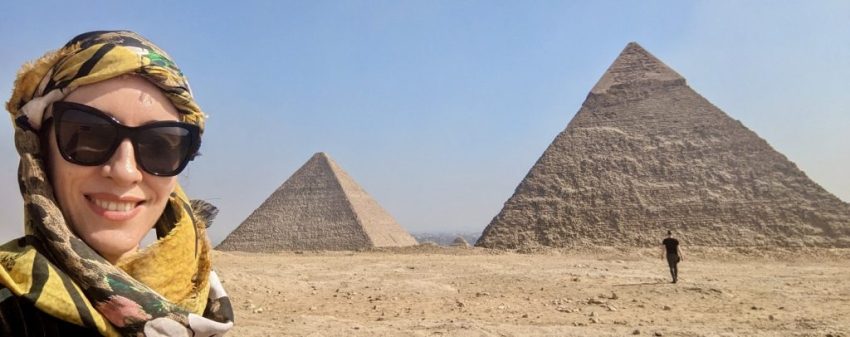
As a special birthday present, my husband treated me to a visit to Egypt. It’s been a lifelong dream to see the ancient sites of Giza (I blame my obsession with Stargate SG1!) and get a taste for contemporary Cairo
Day 1:
After arriving by about 11pm the night before, we got up early on our first morning to enjoy a traditional breakfast of coffee, flatbreads, savoury salads, and honey on the hotel’s rooftop terrace while taking in the views. Despite it being January, the temperature was warm and the weather was beautifully sunny, so it really felt like we were on holiday.
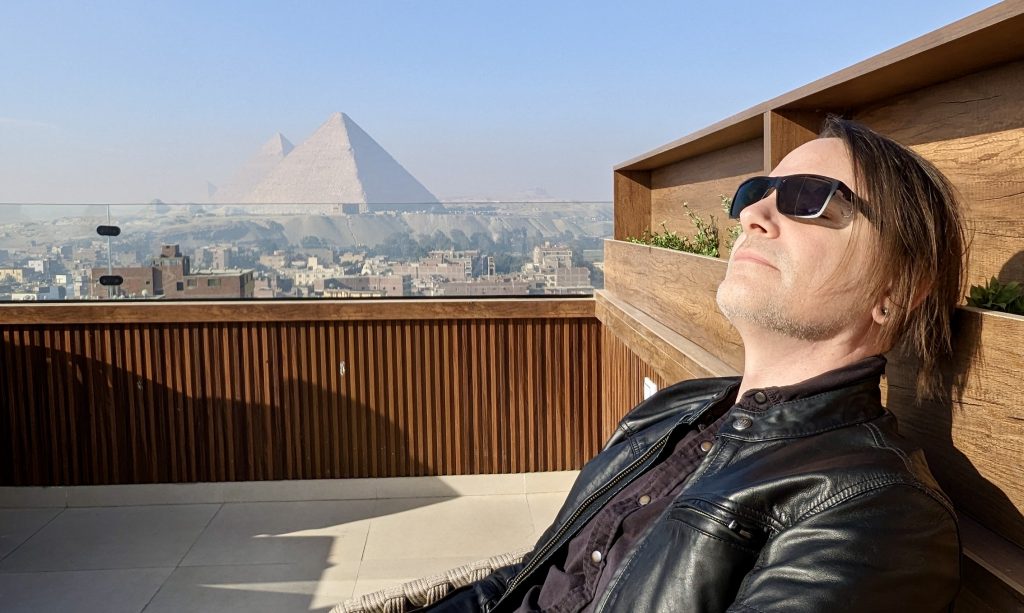
It was fascinating to get a bird’s-eye view of the city that has grown substantially with tourism and local population growth, so much so, that we had an amazing view of the Great Pyramids which were much closer than I’d anticipated!
Our agenda for the day was to visit the ancient sites of Giza. We’d opted to hire a lovely local guide and driver, who collected us from the hotel and got us underway to our first stop of the day: the Giza Pyramid complex.
The three large pyramids (Great Pyramid, the Pyramid of Khafre, and the Pyramid of Menkaure) were built between 2600 – 2500 BCE during the Fourth Dynasty of the Old Kingdom of ancient Egypt, thought of as a “Golden age” of prosperity, hence the grand funerary monuments. The Great Pyramid is the oldest of the Seven Ancient Wonders of the World, the only one that’s still standing, and it held the title of the tallest man-made structure in the world for almost 4,000 years!
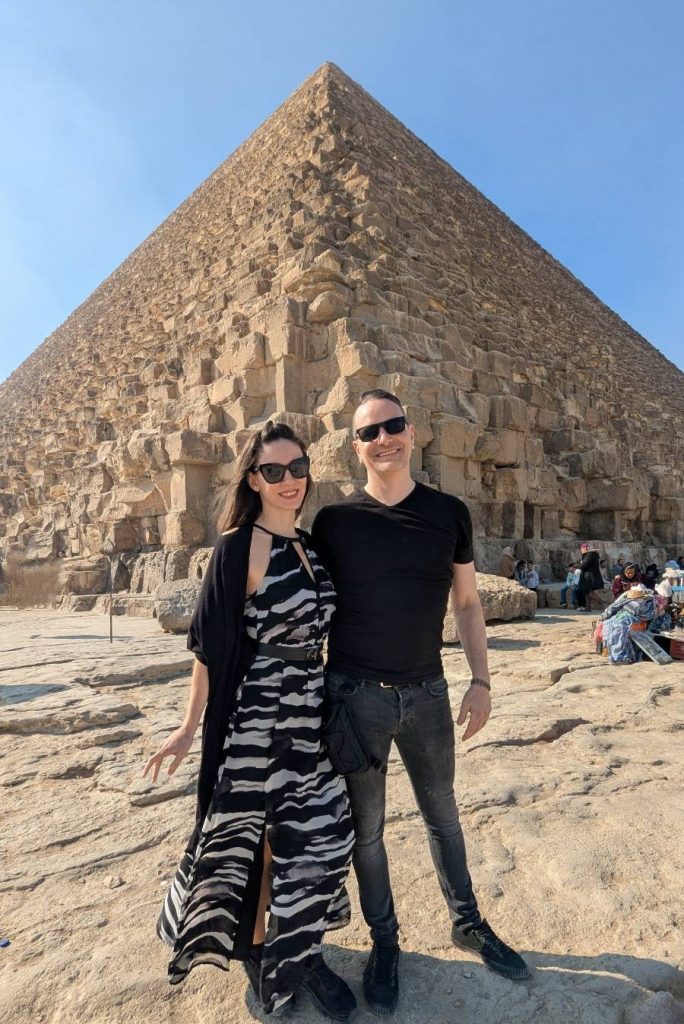
We walked around the base of the Great Pyramid, marvelling at how large the individual blocks of stone are and reflecting, as countless visitors have before us, on the miraculous feat of construction using ancient tools and equipment. It was amazing to see some of the outer, smooth white limestone remaining and imagine how impressive the pyramids must have been when completely covered and reflecting the sunlight. I’m a tactile person, so I was very happy to be able to get up close and touch the blocks – the thought that I’ve laid my hands on something that ancient Egyptians would have also touched, is very cool!
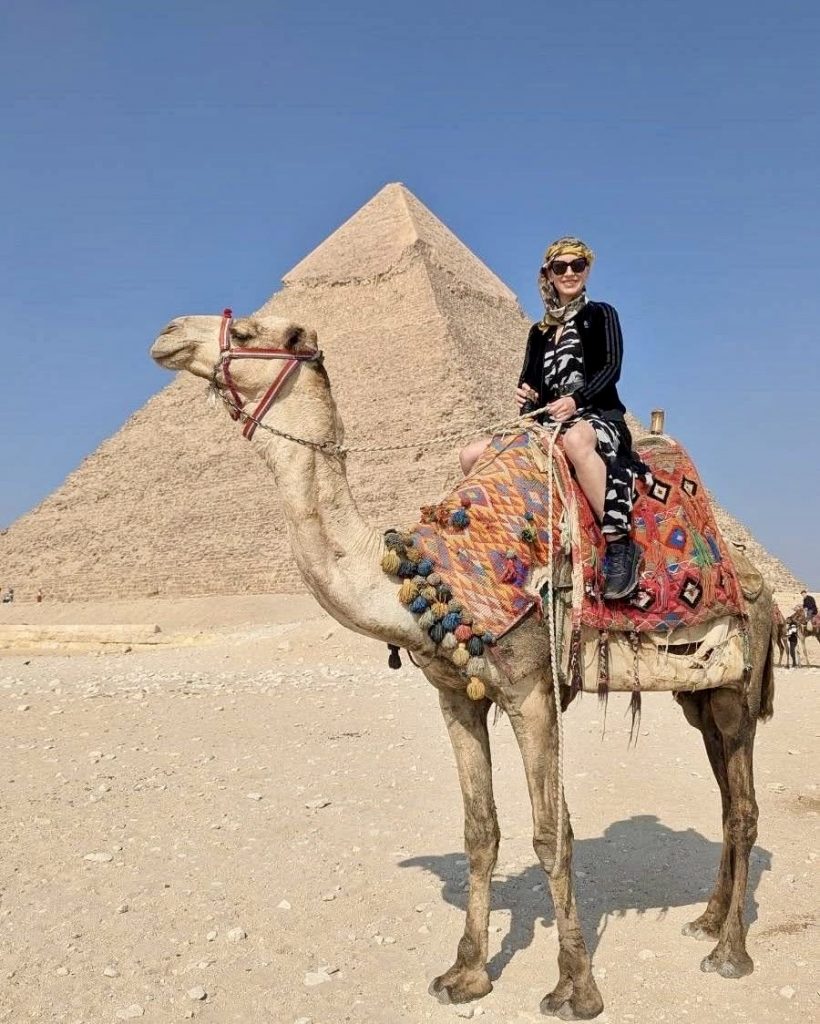
Next, our guide led us to a stand of camels- it was at this point that I started getting nervous! As a surprise bonus, we had a ride out into the desert. Our guide tied my scarf around my head in preparation, and I climbed onto the kneeling camel. They were very sweet, but also incredibly tall, and their lumbering gate had me gripping on with my knees for dear life! It was a pretty cool experience, but not one I’d recommend to those with vertigo.
When we’d climbed back down to sea level, we jumped back in the car and moved on to another iconic site: the Sphinx. It was incredibly busy on the road leading to the viewpoint, so we didn’t linger for long, but it was cool to see this iconic kitty in its ancient context.
Back in the car, we drove to Memphis (not that one, the ancient capital). Along the way, we saw more of Egypt beyond the tourist sites, driving past street vendors and families crammed into vehicles of all different types. Once there, we spent most of our time marvelling over the Colossus of Rammeses II. Again, the sheer scale of this and the detail of the carving were breathtaking.
this is thought to be among the oldest large-scale man-made stone constructions on the planet…
Our final historical stop was the oldest pyramid at a site called Saqqara: the Pyramid of Djoser, sometimes referred to as the Step Pyramid (for obvious, visual reasons!). Incredibly, this is thought to be among the oldest large-scale man-made stone constructions on the planet.
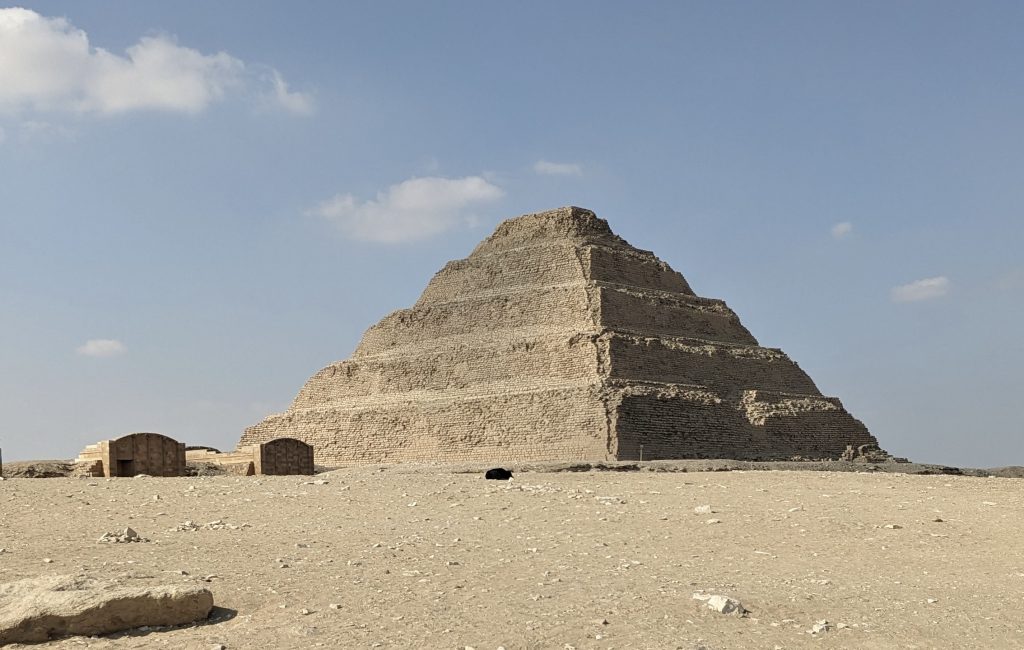
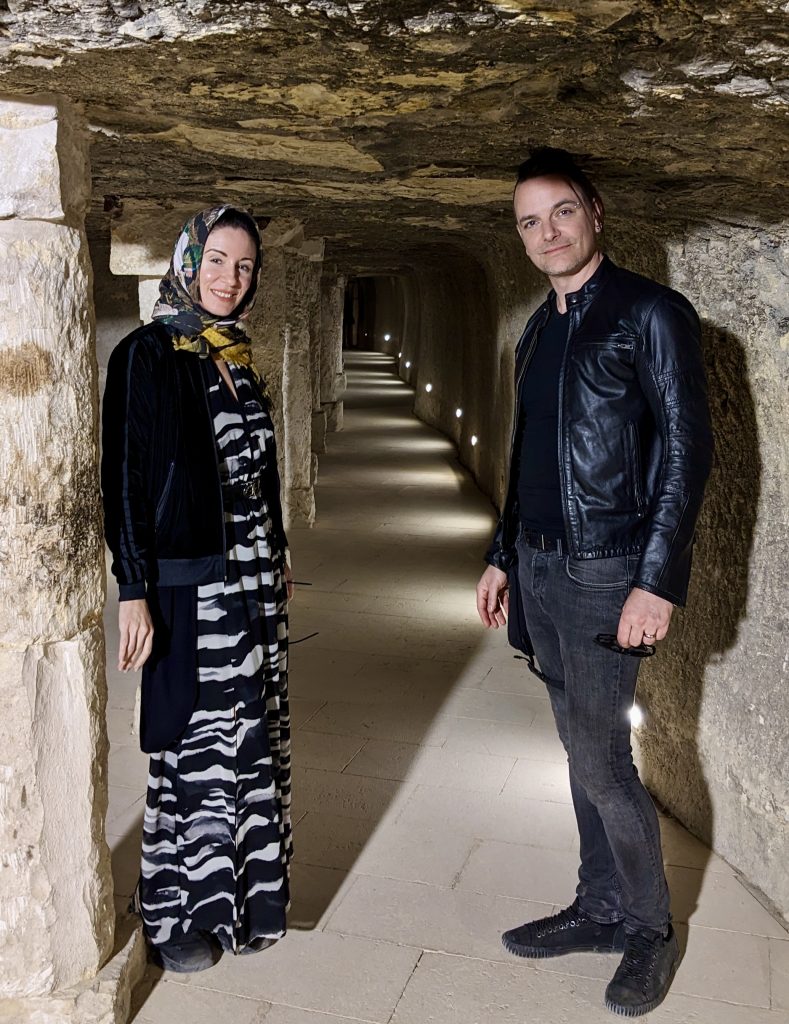
This site was much less busy and there were no queues to go inside the pyramid – unlike at the hectic Giza Pyramid complex. It felt really special to step inside and explore the silent, stone-lined tunnels leading to the vast cavern where the ancient sarcophagus lay, several stories deep.
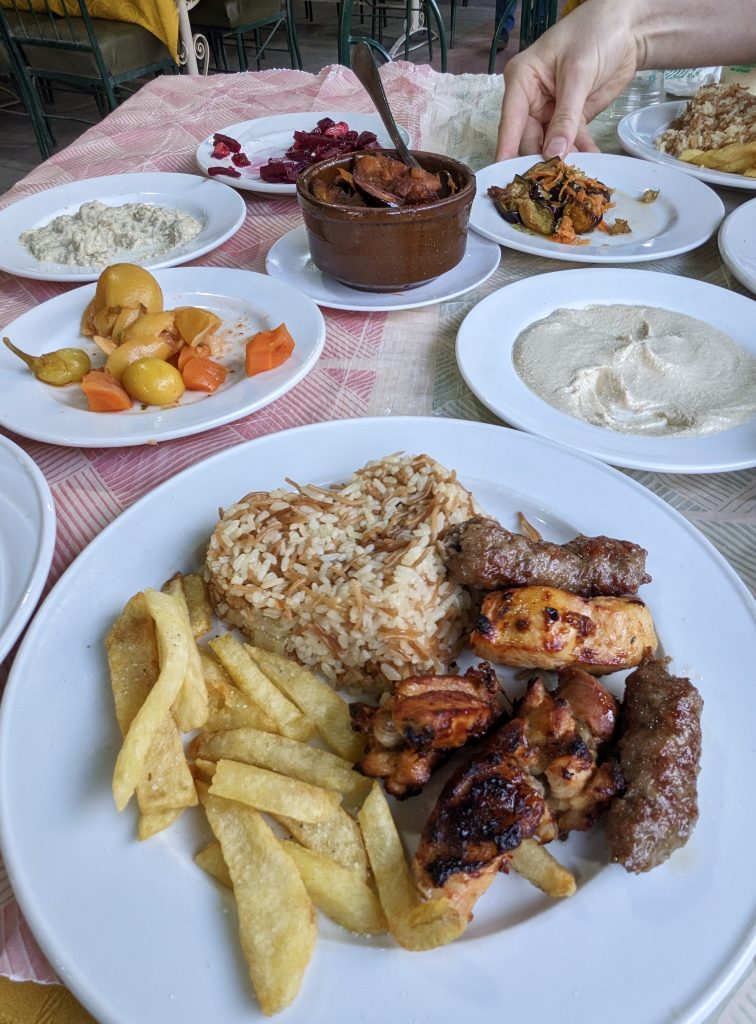
On our way back to Giza, we stopped for a late lunch at a cosy family-run restaurant. We were served traditional Egyptian food in very generous portions. Our favourite dishes were the freshly baked flatbreads and grilled meats- delicious!
Later, we stopped at a perfume shop, where we were given a sweet hibiscus drink and guided through traditionally made Egyptian scents. Sadly, as we only had hand luggage, we couldn’t bring any back home with us, but it was fun to learn about the history of these iconic fragrances and the important role perfume played in ancient cultures. We also visited a papyrus shop, where they demonstrated the painstaking and rather unlikely process of turning the plant into an ancient writing material. I did get suckered into (and probably ripped off!) buying a print depicting an ancient dancer for my office wall – but hey, I’m contributing to the local economy!
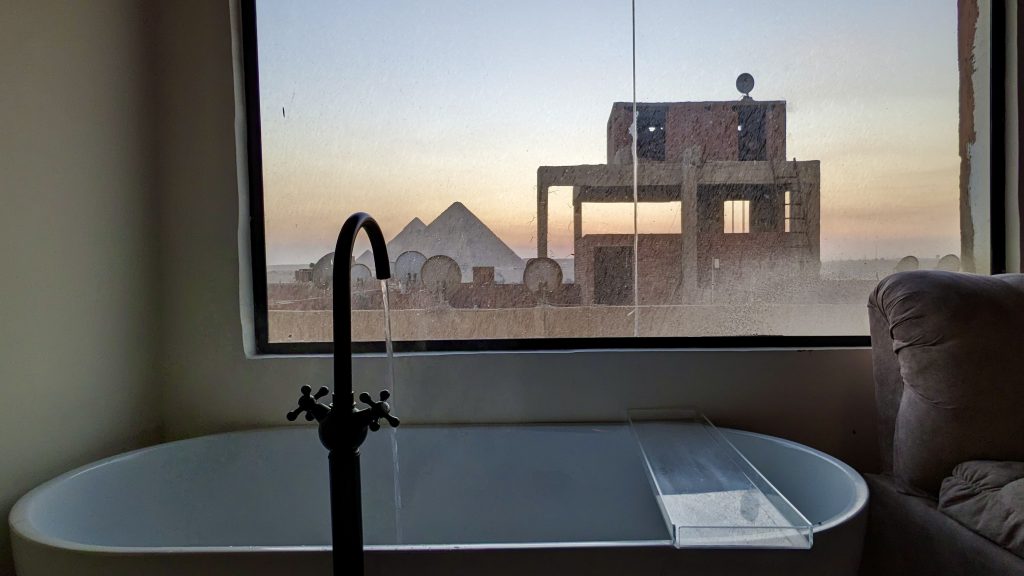
That night, we ate delivery food in our hotel room, too tired and suitably awe-struck by everything we’d seen that day, to explore local restaurants. We had a (shallow, for obvious ethical reasons) bath in our pyramid-view bathtub and headed to bed.
Day 2:
On our second day in Giza, we visited the Grand Egyptian Museum. The museum building itself is spectacular – very modern, but with many nods to ancient design. The large open atrium at the centre features another colossus of Rameses II as the centrepiece, greeting visitors with a stern stare as they enter. There is a window pane purposefully missing from the building’s façade so that on the equinox, the sunlight can shine through to the face of the statue, replicating an ancient tradition – how cool is that!
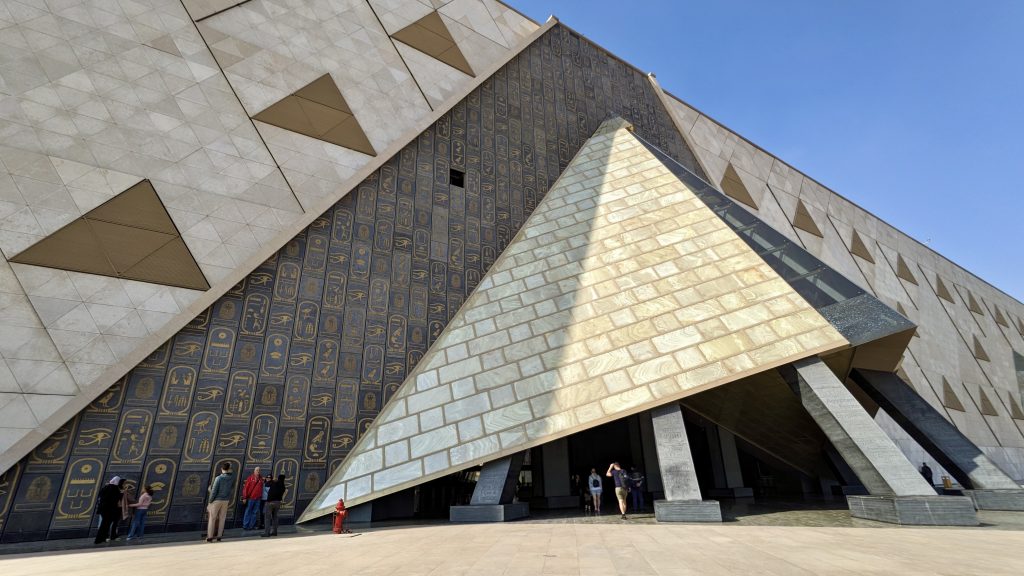
There are also some very nice coffee shops and restaurants within the vast museum. We enjoyed a lovely coffee and pastry while looking out into the atrium, taking in the opulence of the building and the relaxing sound of running water from the small fountains outside.
as “beginners” to the history of this region, we opted for a guided tour of the collection highlights
When we visited in January 2025, the museum wasn’t fully open yet, with around another quarter of the collections yet to be moved from The Egyptian Museum in Cairo, including the famous Tutankhamun tomb artefacts. There were still plenty of ancient treasures to learn about, though. As “beginners” to the history of this region, we opted for a guided tour of the collection highlights. I can definitely recommend this as a perfect starting point to explore the museum, or a great time-saver if you only have half a day there.
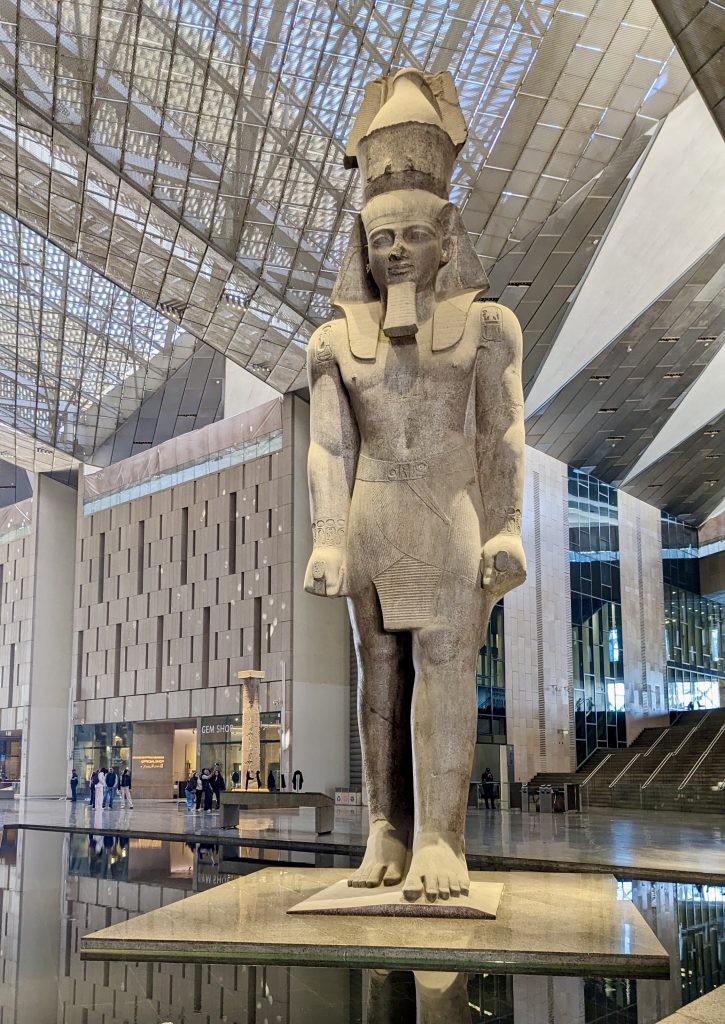
The museum experience starts by joining an escalator that moves visitors slowly up several stories, passing large-scale statues and sculptures. It felt very leisurely to listen to our guide through our headphones, telling us about the artefacts as we effortlessly glided by! Once at the top, we enjoyed a wonderful view straight towards the Great Pyramid (the building has been strategically located on key sight lines), then proceeded with our chronological tour of history by working our way down the museum galleries back to ground level.
Needless to say, there were so many mind-bendingly old artefacts in incredibly good condition to learn about. I was, of course, drawn to the more unusual items and those used in daily life. The ceremonial headdresses and grand statues are cool, but I like to get a feel for the more mundane- the objects ancient Egyptians might have interacted with every day.
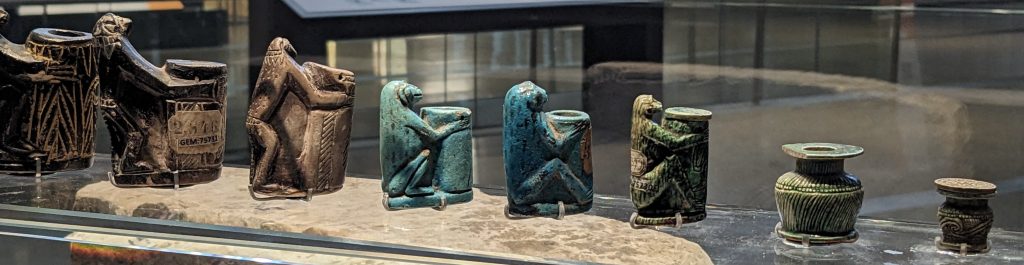
For me, a highlight was a hairpiece and a display of makeup items, including intricately carved jars for storing kohl and blush. One was a fabulous locust, while others featured monkeys.
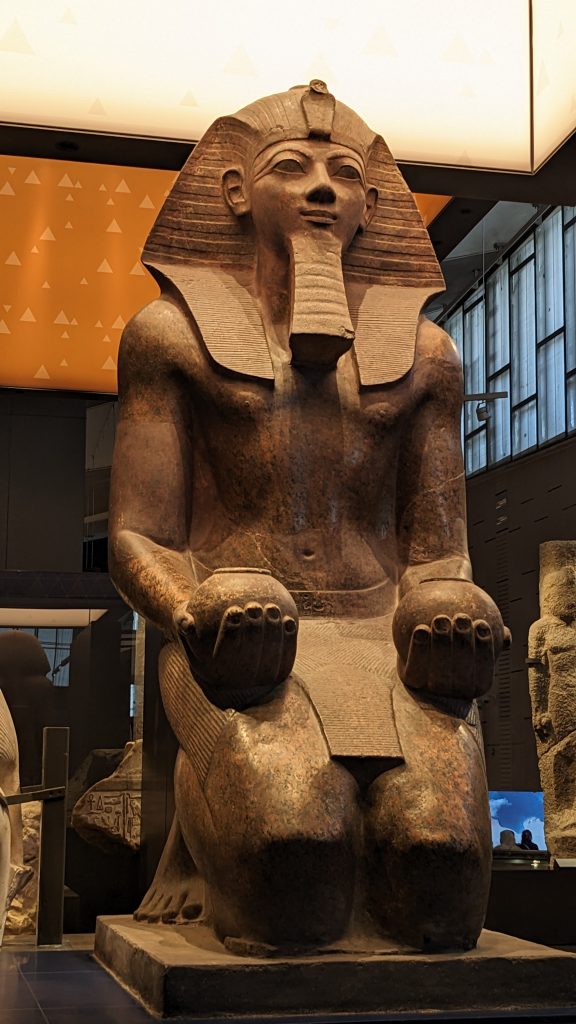
I was particularly fascinated by the role of women in ancient Egypt and the several notable female rulers. The collections cover plenty about Queen Cleopatra, but also other, earlier period pharaohs like Queen Hatshepsut (c. 1479–1458 BC), a powerful and wealthy ruler, who was famously depicted in statues with a false beard and “male” attire to symbolically seal her position as both Mother and Father (aka the ultimate boss!) of Egypt.
It was also interesting to see the change in artistic style once the Classical Roman influence began to be felt in Egypt. At first, there were hybrid designs, then a full switch to the more “naturalistic” Roman style, exemplified in statues of Egyptian rulers with exuberantly curly hair! While totally normal in Classical design, after spending two days immersed in ancient Egyptian aesthetics, this was a stark contrast!
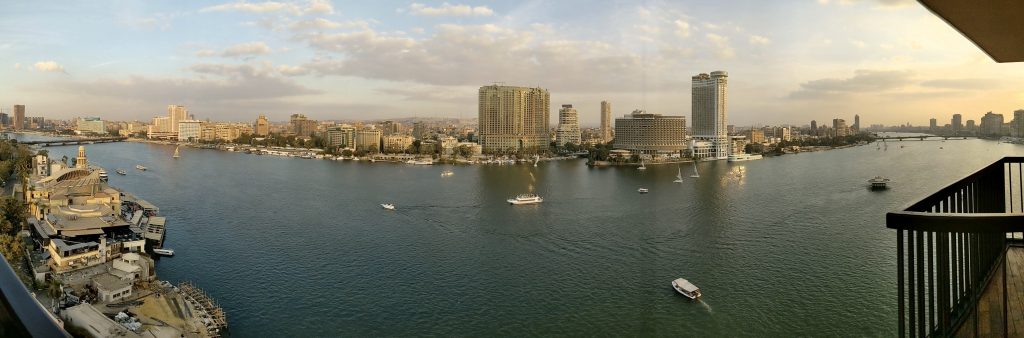
In the late afternoon, we caught a taxi to our next stop: Cairo. Our hotel was in a beautiful location on a promontory on the banks of the River Nile. We watched the sunset on our lovely balcony, enjoying the city skyline views. Later, we ventured out for dinner at a highly rated “small plates” restaurant a few blocks away, taking a taxi as we didn’t fancy navigating the extremely busy roads.
Day 3:
On our first full day in Cairo, we explored several highlights of the Old Cairo area.
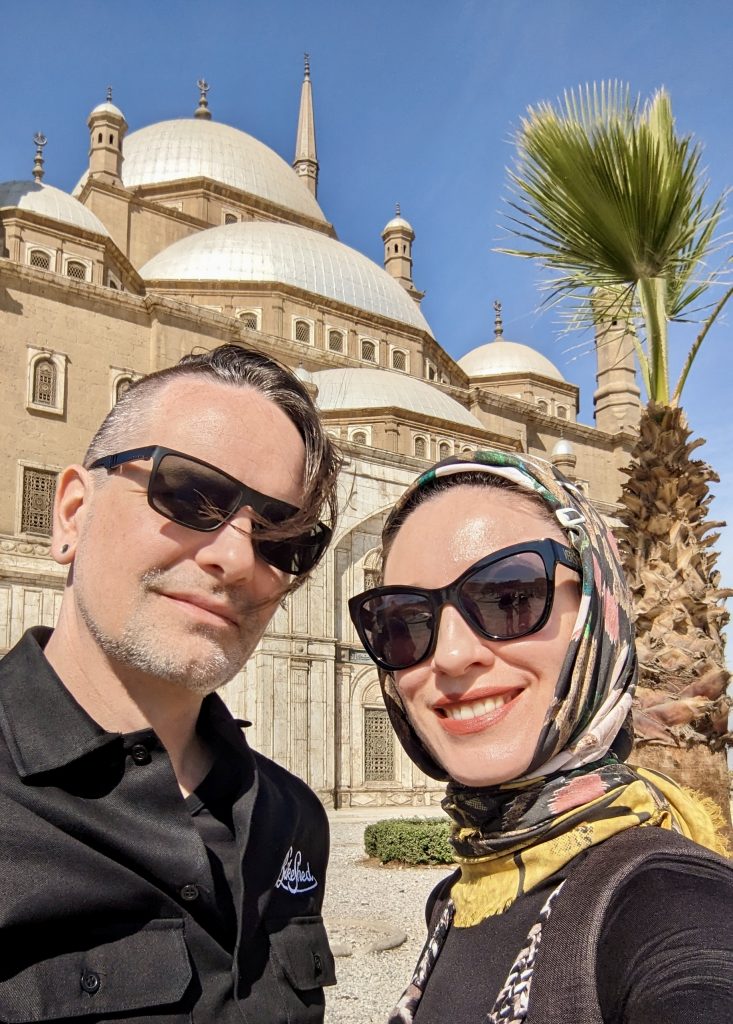
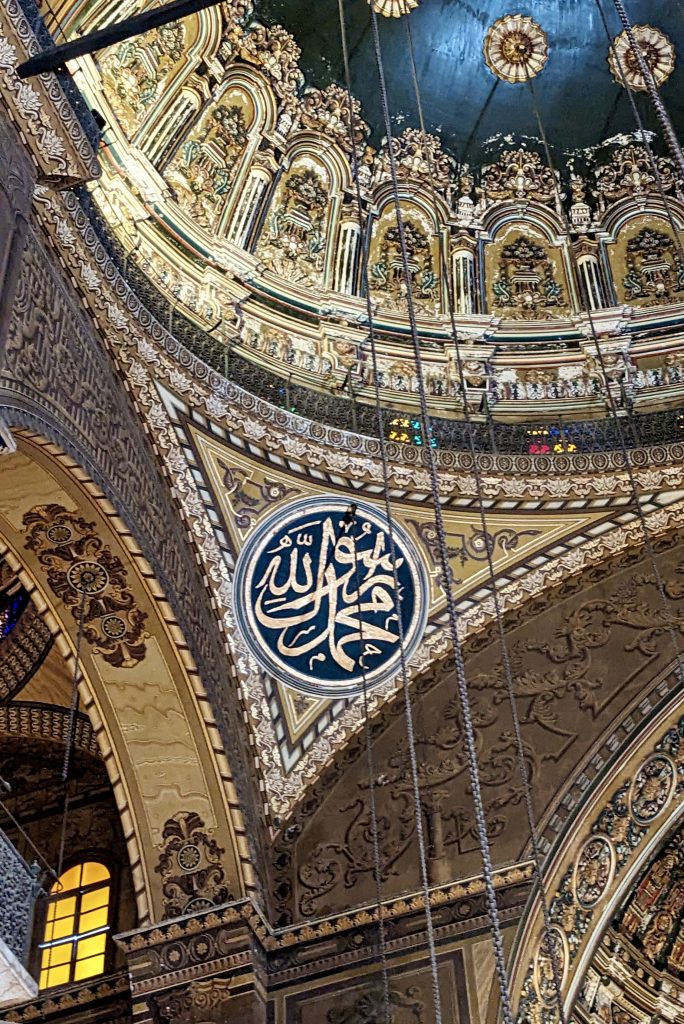
We began our day at the Saladin Citadel, an imposing fortress and walled complex built by Saladin, the first combined ruler of Egypt and Syria, in the 12th Century for protection against the Crusaders. Within this complex, we visited the Mosque of Muhammad Ali (not that one!), which features grand Ottoman-style architecture and large domes. The views over the city from the walls were extensive- we could see our hotel on the river in the distance.
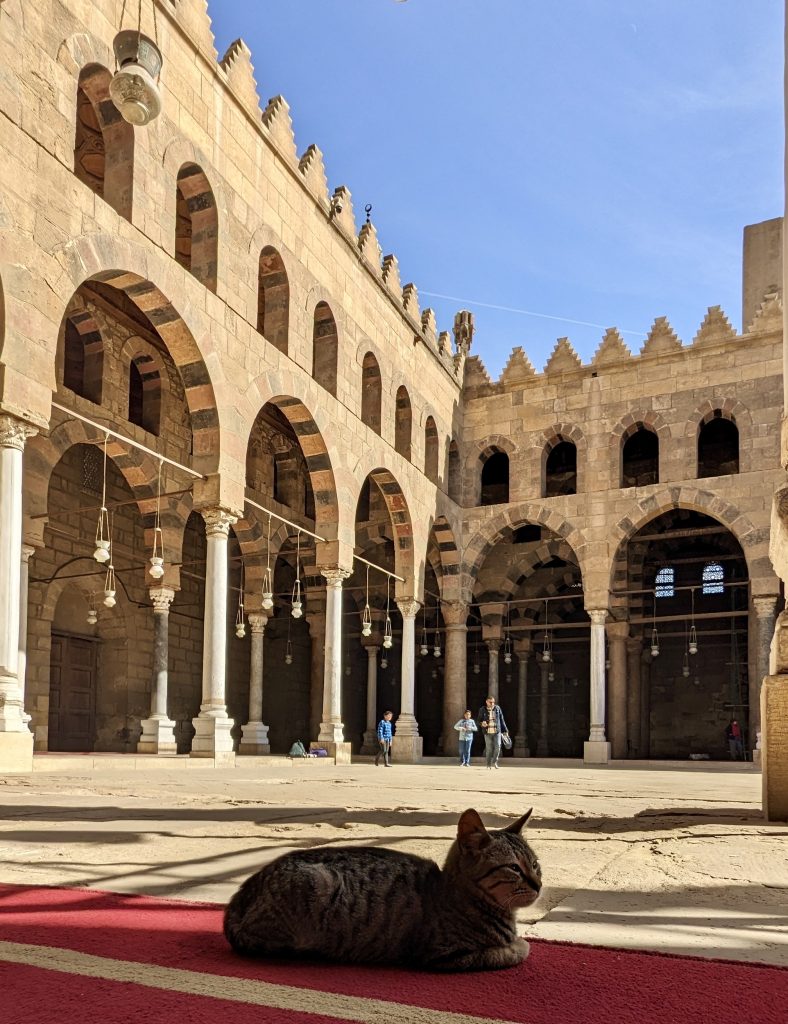
We also visited the Sultan Al Nasir Muhammad Mosque on the site, where I was charmed by a resident cat and impressed by the interesting twisted stone spires.
Our next taxi took us to Al-Muizz Street in the heart of bustling Old Cairo. We entered through the enormous Bab al-Futuh fortified gate, constructed in 1087, and spent the rest of the day moving slowly down the street, popping in to the many sites of interest along the way.
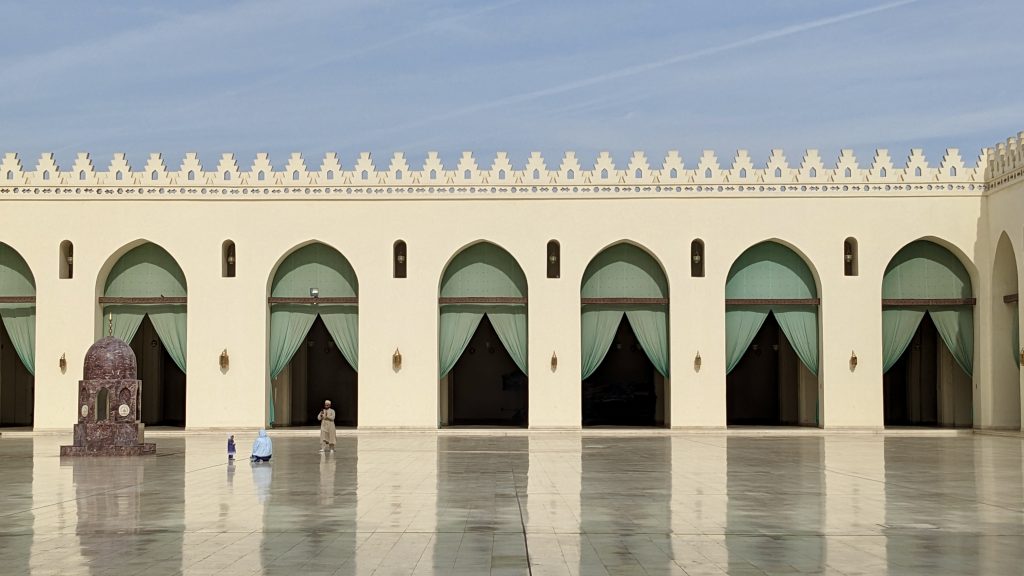
Our first stop was the beautiful Al-Hakim Mosque, known for its smooth white marble. This 10th Century mosque has a grand entrance, a large inner courtyard with an almost reflective floor surface, and two minarets. I enjoyed the relative peace here – both of the more pared-back architecture, the cooling white stone, and as there weren’t many other visitors.
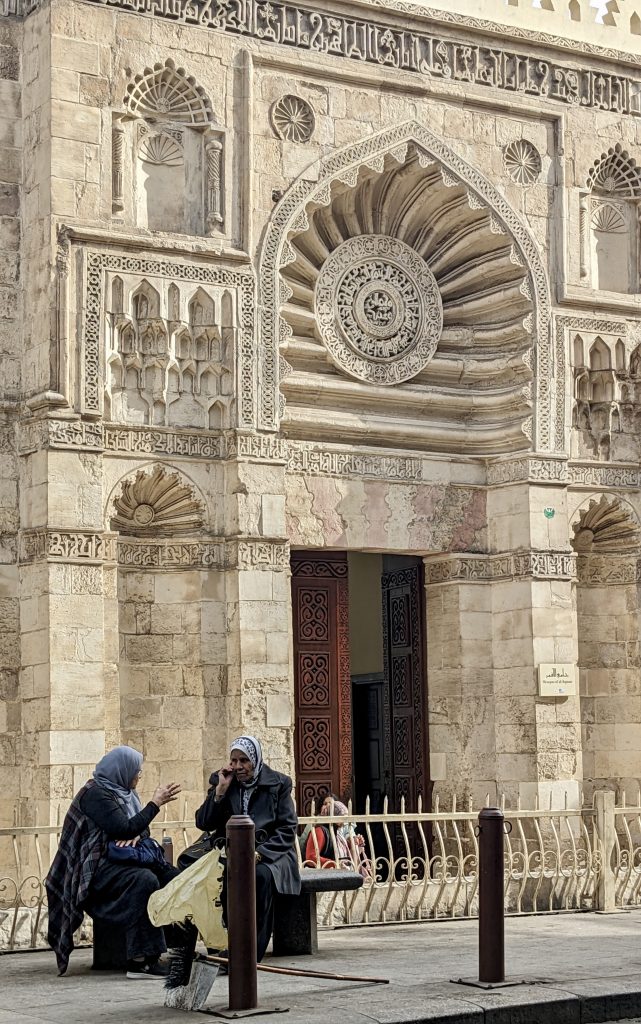
We made our way down to the Al-Aqmar Masjid mosque, a grand building dating from the 12th century. We actually stopped to have a coffee in a cafe opposite the entrance so we could enjoy taking in the ornate carvings and inscriptions on the façade before exploring the inner courtyard. The people-watching was great from this spot – we saw a TV show being filmed down the street, two older ladies having an animated chat on a bench outside the mosque, and teenage shopkeepers with blinged-out shoes setting out their stalls ready for the evening tourist trade.
Next, we indulged in some retail therapy with a visit to the Khan el-Khalili, a huge souk selling souvenirs, crafts, jewellery, clothing, and spices. This was a lot of fun and actually very beautiful architecturally. I loved weaving through the meandering labyrinth of streets with stalls crammed into every centimetre of space.
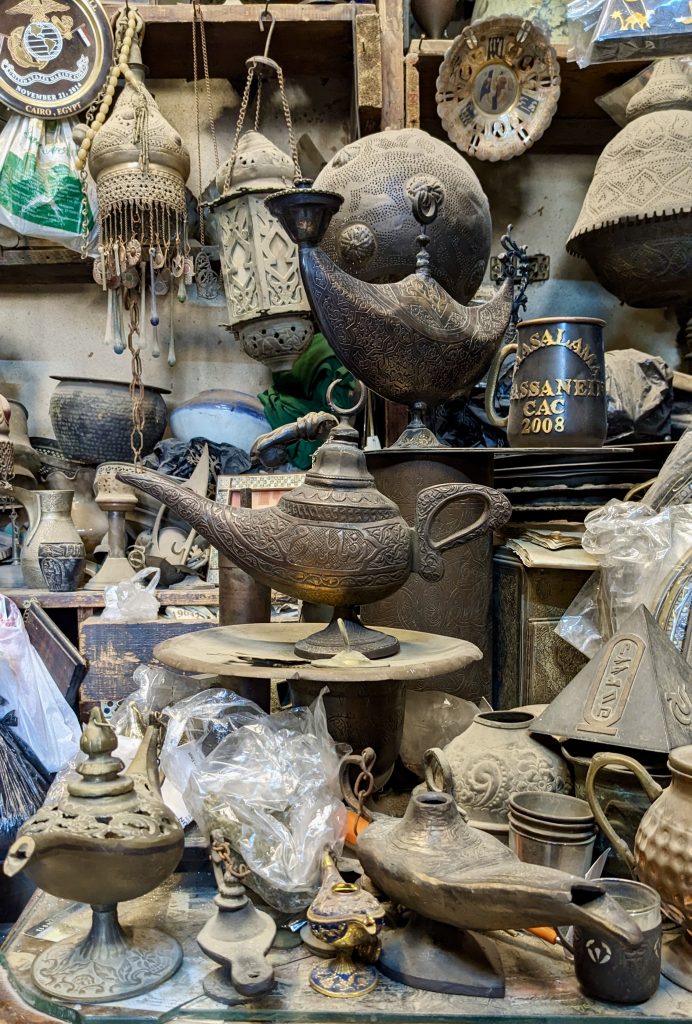
we had fun digging through the chaotic array of items and even found a couple of dusty lamps, but opted not to tempt fate by rubbing them…
We haggled to buy some souvenirs: two small brass cups from a junk shop selling tarnished metal antiques owned by a friendly older gentleman. We had fun digging through the chaotic array of items and even found a couple of dusty lamps, but opted not to tempt fate by rubbing them! To avoid stress, I bought some additional items from government-licensed stores that offer fixed prices on the exact same items you see across many of the stalls. This was certainly a good move, and I still use my Egyptian pharaoh-printed coffee cup (classy!) every day.
For dinner, we found a well-reviewed restaurant and sampled the local version of “pizza” called feteer, made with delicious layers of flaky pastry. This was a winner! Feeling thoroughly immersed in Cairo’s busy vibes, we took another taxi back to our hotel and enjoyed a local beer on our balcony.
Day 4:
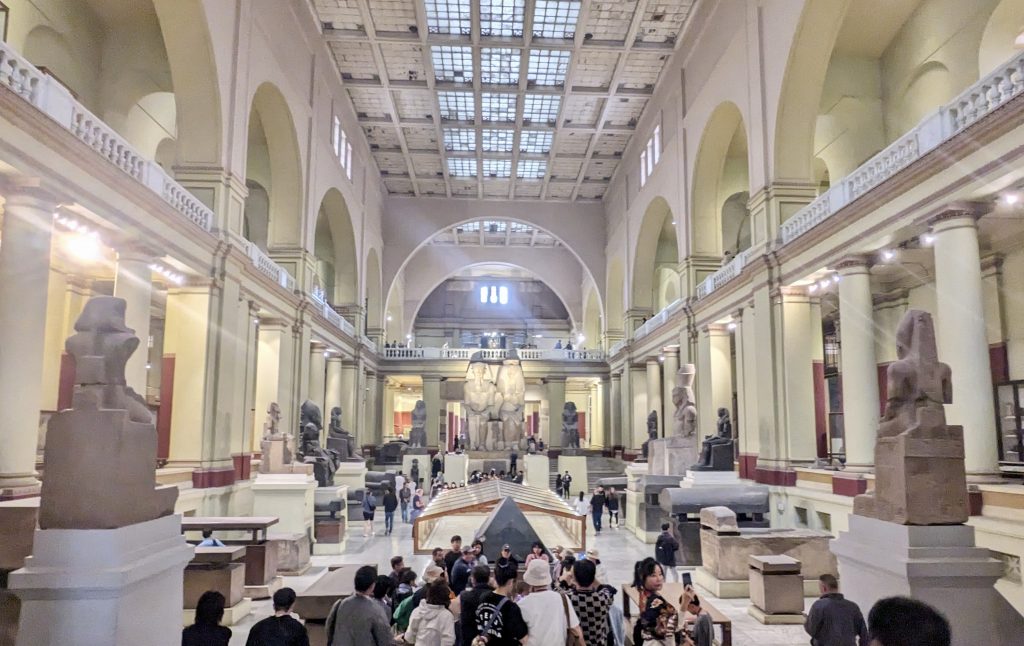
On our fourth day, we spent most of our time at the Egyptian Museum in Cairo. This was a stark contrast to the hyper-modern new museum in Giza- the displays were like stepping back in time to a Victorian museum!
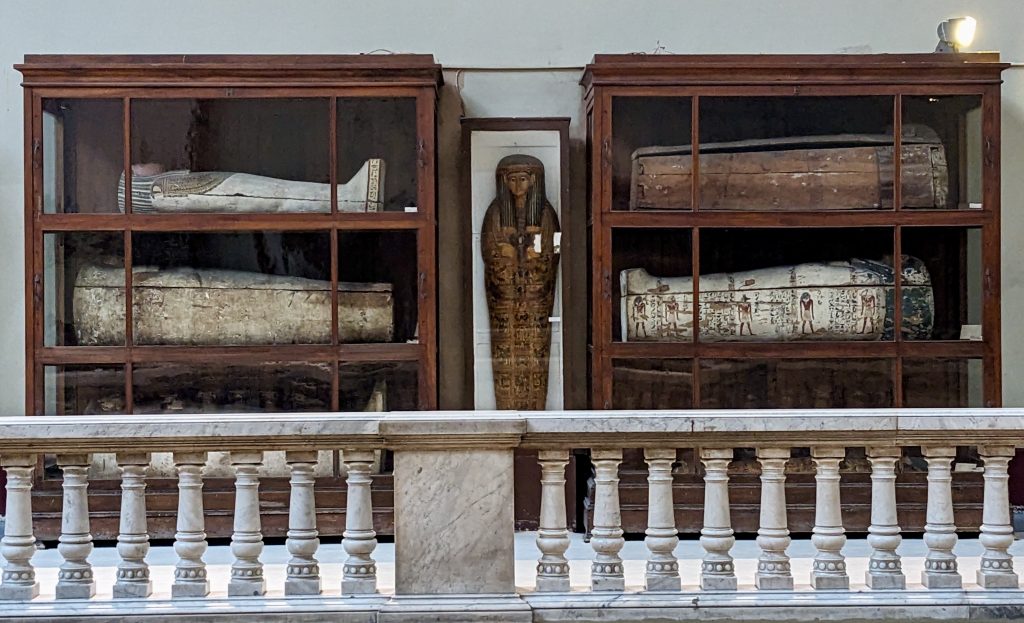
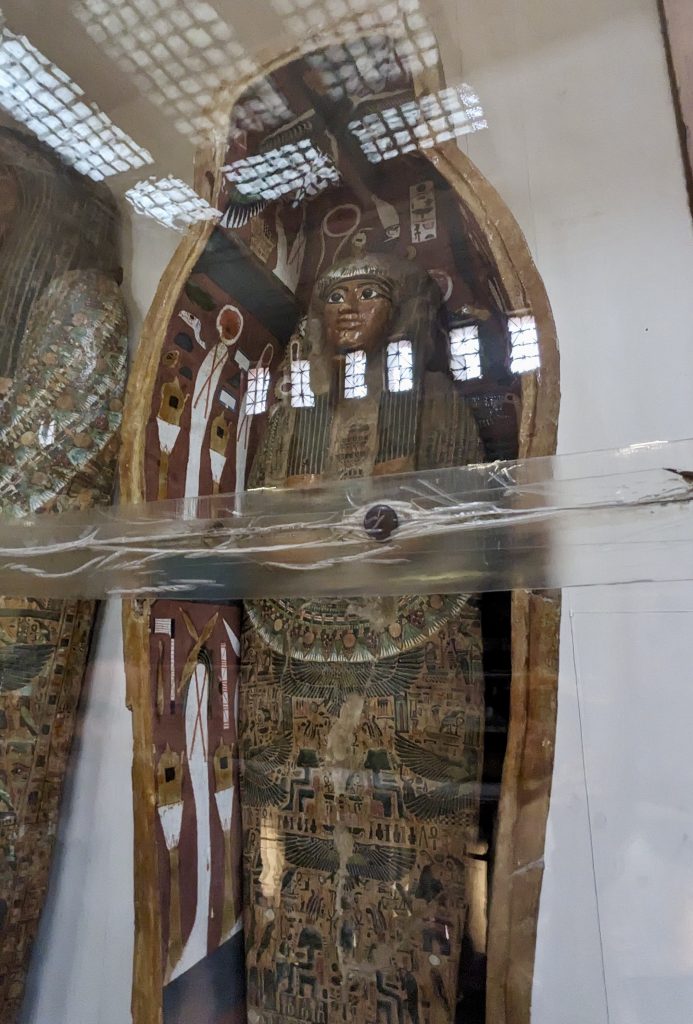
Mummies, which in the UK would have been displayed in central prominence, were stacked in bookcase-type displays, one on top of the other. There were also cracks in the old glass, with attempts to seal the display from the air using ageing yellow tape. The wooden display cases had drawers below that you could pull out and discover treasures (much like the Pitt Rivers Museum in Oxford). I found this quite charming as it felt like you had to search for the information and get involved, plus you never knew what you’d find when opening a drawer!
We visited the display of artefacts from Tutankhamun’s tomb, which is certainly one of the collection’s highlights. I think it’s a good thing that these have since moved to the new museum, as I found the existing experience quite stressful. The collection was housed in two small rooms with a queuing system in place and no photographs allowed. Progress was relatively slow, and every few minutes a surly guard would yell at everyone to “Keep moving! No photos!” This was distracting when you were trying to read a display label in a hurry, and alarming when crammed in with so many other people. The artefacts themselves were sublime – gleaming gold, turquoise, and red jewels – and visually, they were truly breathtaking!
Day 5:
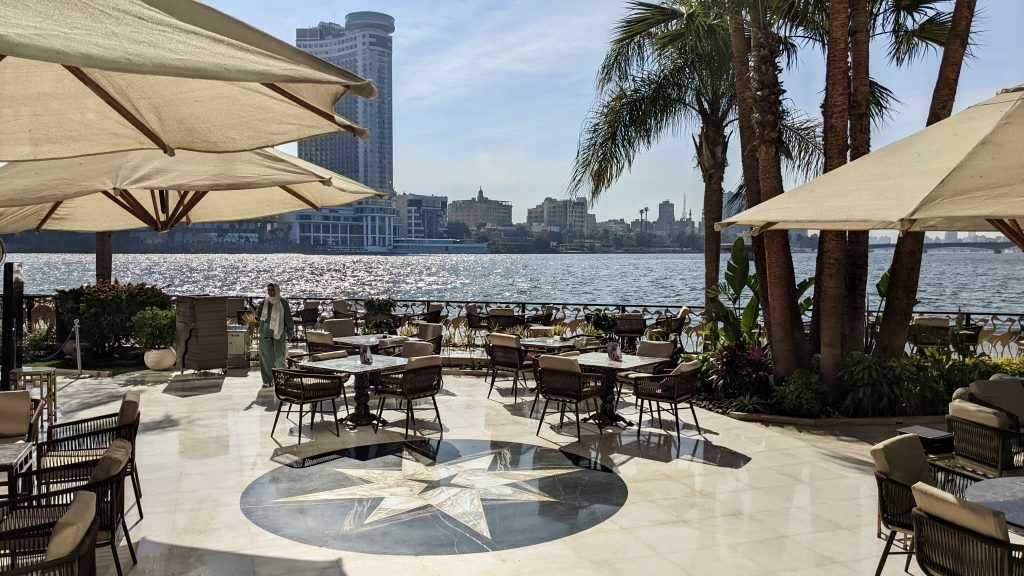
We slept in on our last morning and had a cool juice drink in the sun in our hotel bar right on the Nile.
We took a taxi to a Lebanese-style restaurant near Giza and enjoyed excellent service and deliciously creamy hummus, baked eggs, and a zingy tabbouleh, plus more hibiscus and pomegranate juices. We headed to the airport for our afternoon flight to return to London, with an extra feteer “pizza” in our bag for the journey!
This was definitely one of the most special and unforgettable birthday gifts! Having breakfast with the Great Pyramid *right there* was extremely special, The Grand Egyptian Museum was overwhelming in its majesty, having a beer overlooking the River Nile was epic, and walking the bustling streets of Cairo was a unique experience! Egypt’s beach resorts aren’t really my scene, but I’d love to return to explore more of the ancient sites along the Nile Valley and see the new museum at its full evolution – watch this space!
Thanks for reading  Check out my Instagram and YouTube channels for more (Un)Popular content!